Two tablecloths can look almost identical in a product photo — and be completely different in quality. One stays crisp and beautiful after a hundred washes; the other shrinks, fades, and frays within weeks. The difference is rarely visible on a screen, but it is easy to spot once you know what to look for. This guide shows you how to judge a tablecloth the way textile buyers do, so you can avoid paying for problems you cannot see.
1. The Fabric: Weight and Thread Count
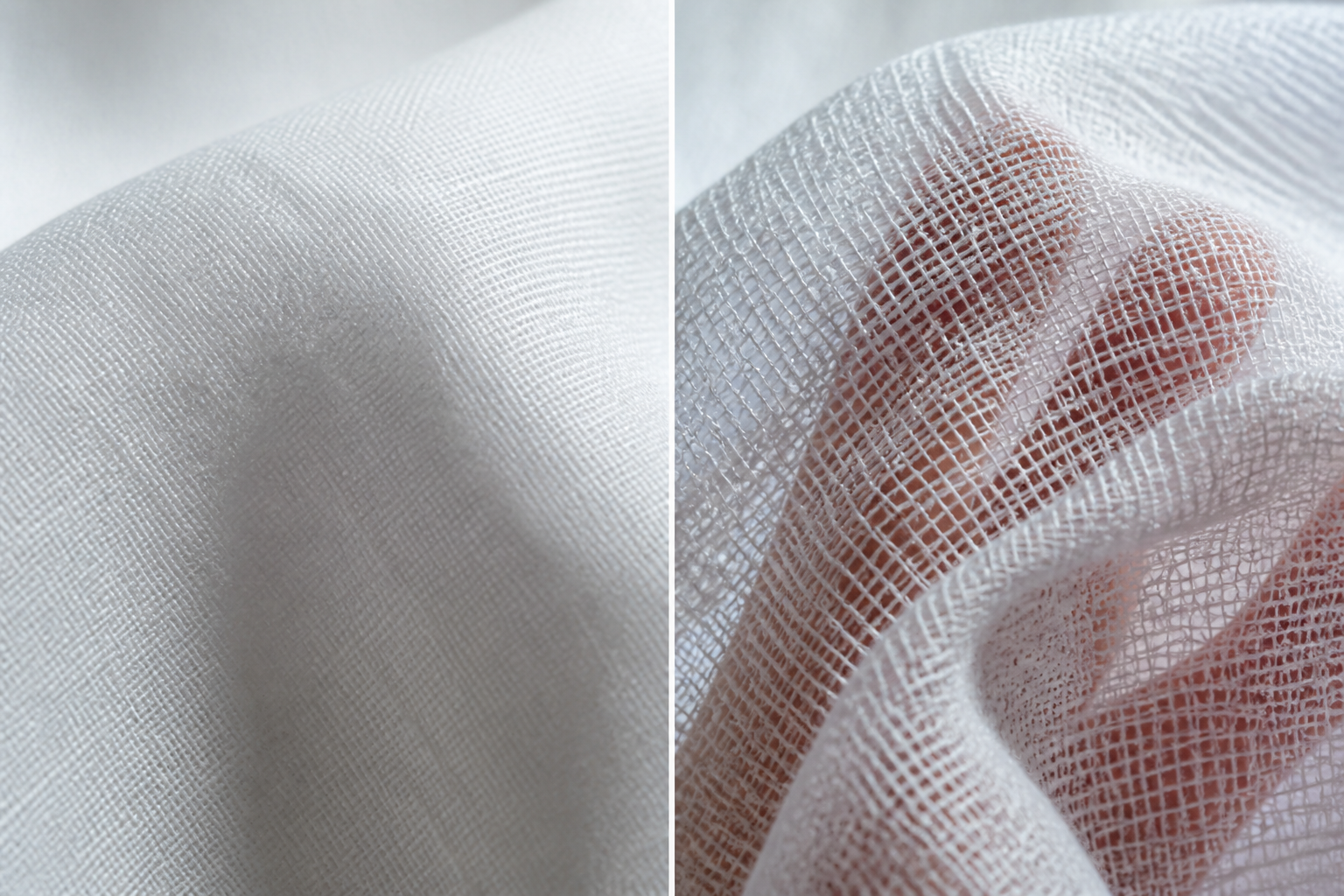
Fabric quality starts with weight and density. A good tablecloth uses heavier yarns and a denser weave: it feels substantial in your hand, drapes with weight, and never shows the table through it. A cheap one is thin and loose — hold it up to the light and you can see gaps in the weave, sometimes right through to the table beneath. As a rough guide, quality tablecloths typically start around 180–200 gsm for polyester and higher for cotton and linen blends. If the fabric feels flimsy, everything else will disappoint too.
2. The Weave and Finish
Look closely at the surface. A quality fabric has a smooth, even, consistent weave — threads lie flat and uniform, with no slubs, thin spots, or fuzzy surface. Cheap fabric often shows uneven yarn thickness, loose threads, and a slightly “hairy” surface that pills quickly. Finishing matters too: good tablecloths go through proper finishing (singeing, calendering, or brushing) that locks the weave and gives a clean, even hand feel. Jacquard and woven patterns should be sharp and defined; printed patterns should have crisp edges without bleeding.
3. The Hem and Seams
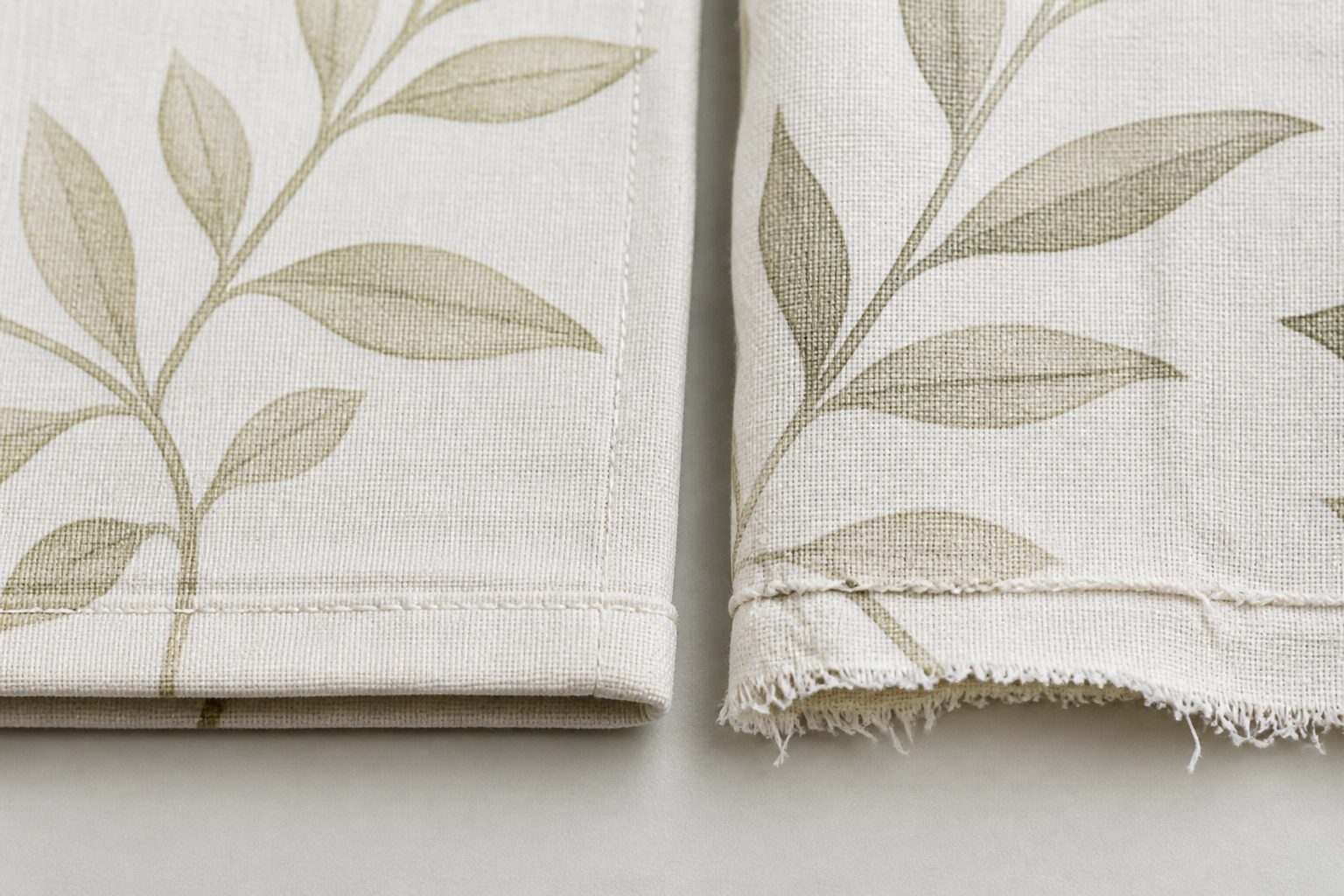
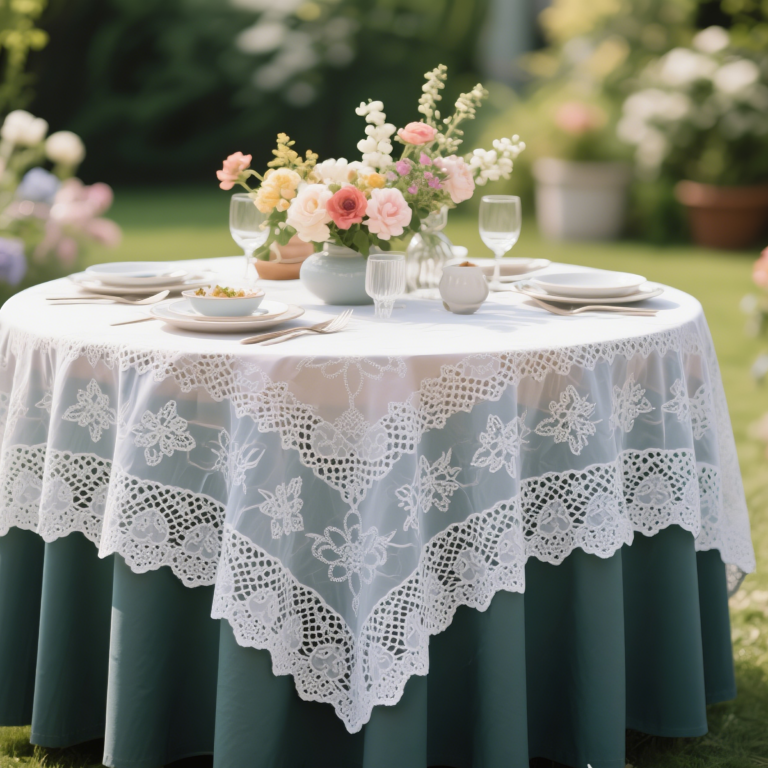
The hem tells you more about workmanship than any other detail. A quality tablecloth has a clean, even, double-folded hem — or a properly serged edge — with straight, uniform stitching and no loose threads. Corners should be square and neatly mitered. Cheap tablecloths often have single-fold hems, uneven stitch spacing, wavy edges, and exposed thread ends that unravel in the first wash. Run your finger along the edge: you should feel a firm, even finish, not a flimsy roll of fabric.
4. Color and Print Quality
Color is where cheap tablecloths fail fastest. Good fabric uses quality dyes with proper colorfastness — colors are deep, even, and consistent across the whole piece, with no shade variation between batches. Cheap dyed or printed tablecloths fade quickly, develop uneven tones after washing, and can even bleed color onto other linens. Check the print alignment at seams and edges, and ask suppliers about colorfastness ratings (wash and light fastness) before ordering in bulk. For white and ivory cloths, look for a pure, bright tone — cheap whites often turn grey or yellow.
5. Drape and Hand Feel
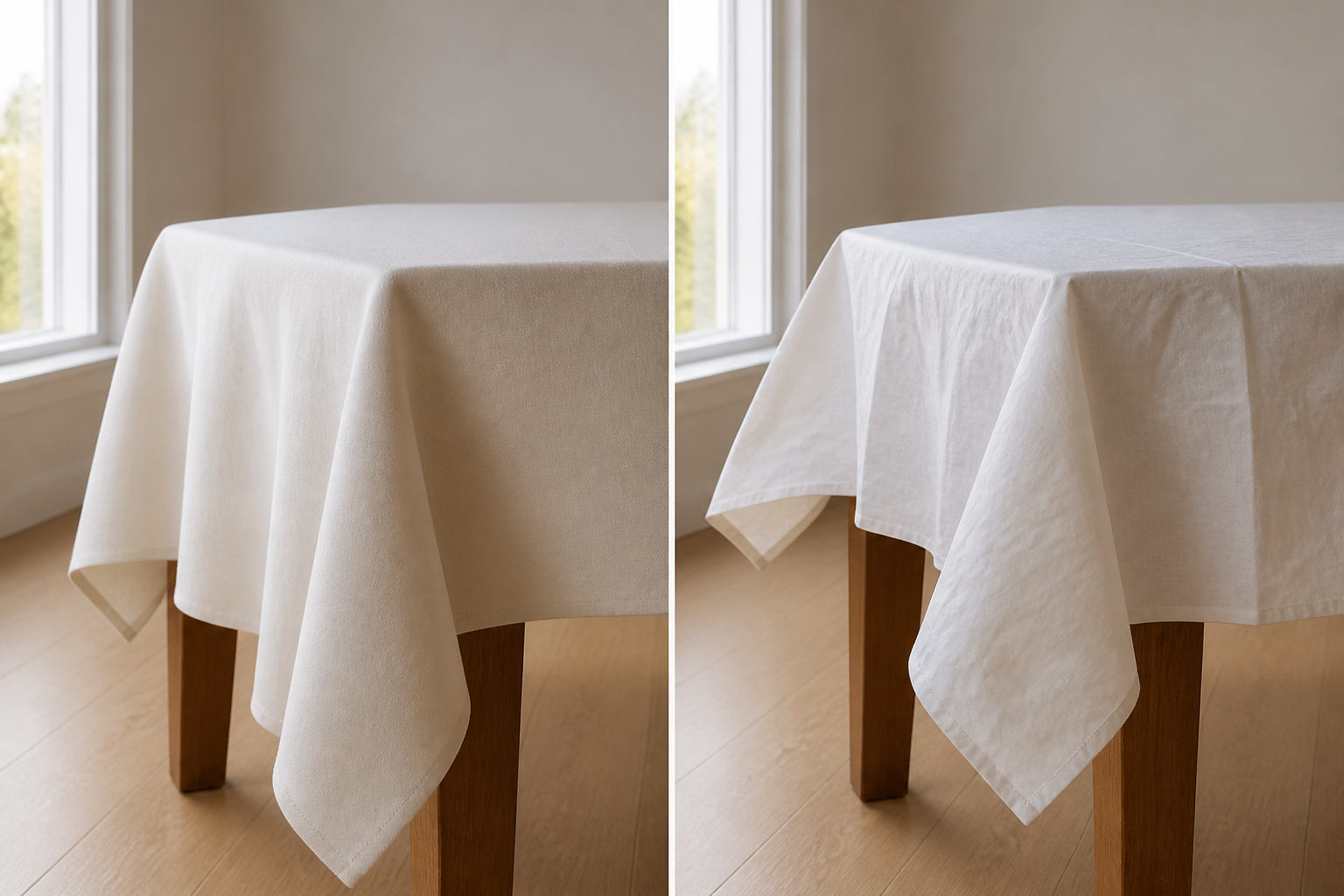
Drape is the personality of a tablecloth. A quality fabric falls in smooth, soft folds, hugs the table’s shape, and recovers well from creasing. A cheap, stiff fabric stands away from the table edge, forms sharp unnatural creases, and looks “papery” the moment it is set. The hand feel should be pleasant and consistent — not rough, not slick, not scratchy. This is subjective, but your fingers know: a good cloth feels like quality, a cheap one feels like plastic or cardboard.
6. Shrinkage and Durability
The real test of a tablecloth is the wash cycle. Quality fabric is pre-shrunk: it keeps its size and shape wash after wash, with minimal shrinkage and no twisting or skewing of the weave. Cheap fabric shrinks unevenly — the cloth comes out of the dryer crooked, shorter on one side, and never lies flat again. Durability follows the same pattern: good tablecloths resist pilling, fraying, and seam failure for years of commercial use; cheap ones develop pills within weeks and start to fray at the hem. Always ask for shrinkage data and wash-test results before committing to large orders.
7. The Four-Step Inspection Method
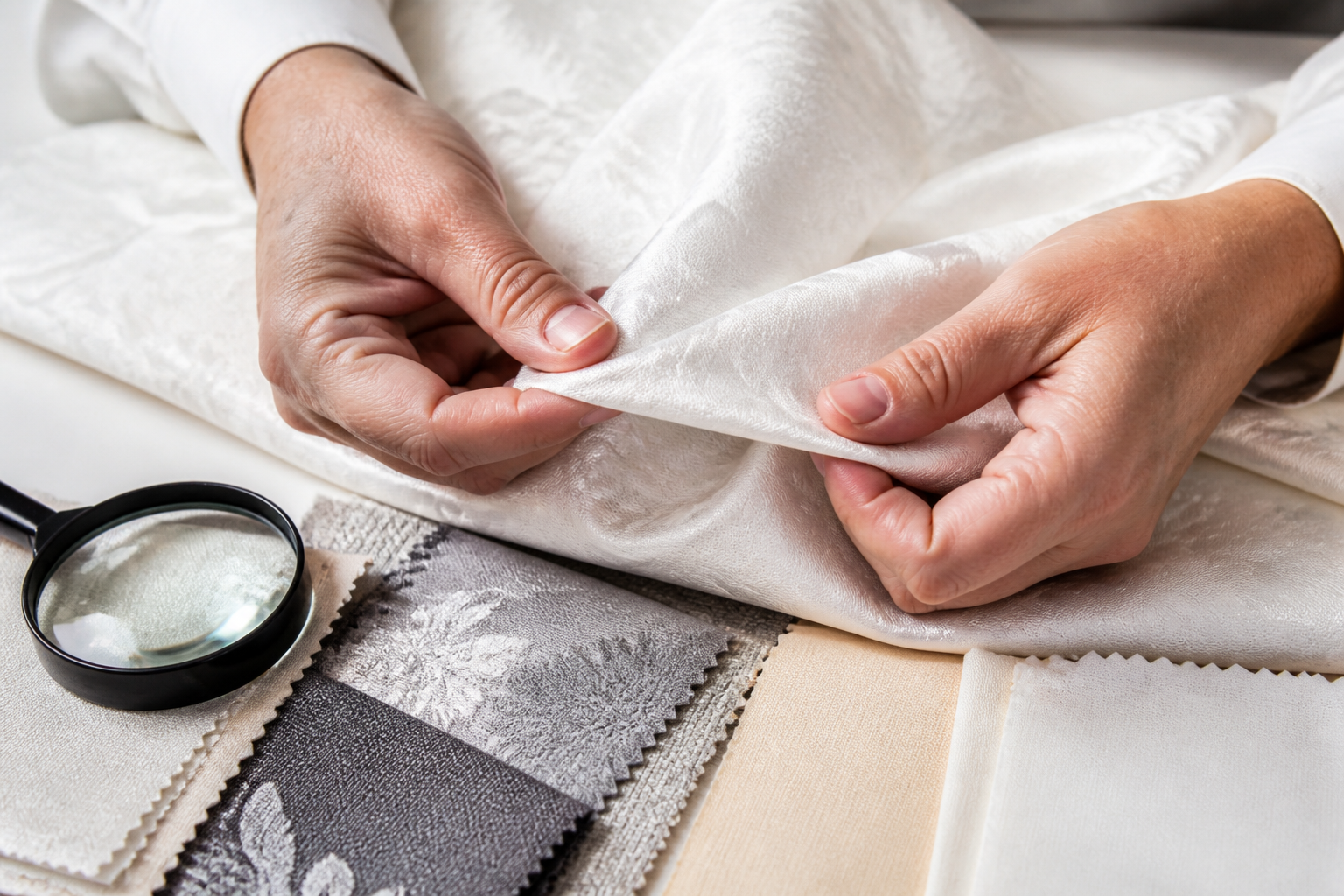
- Look. Hold it to the light: check weave density, uniformity, print sharpness, and color evenness. Check the hem and corners for clean stitching.
- Feel. Rub the surface, bend it, and crush it in your hand. Quality fabric feels substantial and recovers; cheap fabric feels thin, stiff, or slippery.
- Pull. Gently stretch the fabric in both directions and tug the hem. It should resist distortion and the stitches should hold firm.
- Wash. Wash a sample once or twice before bulk ordering. Check for shrinkage, color bleed, pilling, and seam distortion — this single test reveals more than any other check.
8. Common Price Traps to Avoid
- “Same photo, different price.” Listings reuse photos; the actual fabric may be far lighter than it looks. Always order a sample.
- Fake weight specs. A seller can quote any gsm. Verify with a sample and, if possible, a scale.
- Hidden shrinkage. The cheapest cloths often shrink most. Confirm pre-shrunk fabric and wash-test data.
- Bleeding colors. Deep colors on cheap fabric bleed. Ask for colorfastness ratings in writing.
- Polyester called “linen.” Linen-look is fine when labeled honestly; beware of inflated fiber claims.
9. A Checklist for B2B Buyers
- Order physical samples before bulk orders — never rely on photos alone.
- Ask for fabric weight (gsm), fiber content, and shrinkage data in writing.
- Request wash-test results and colorfastness ratings for your intended colors.
- Check hem construction, stitching density, and corner mitering on the sample.
- Confirm batch consistency: the color and weight of your bulk order must match the approved sample.
- Work with manufacturers who can show their weaving, dyeing, and finishing process — not just a catalog.
Final Thoughts
A good tablecloth is not about the highest price — it is about honest materials, careful construction, and predictable performance. When you know how to check fabric weight, weave, hem, drape, color, and wash behavior, the difference between good and cheap becomes obvious in minutes. Spend your inspection time up front, and your tablecloths will keep paying you back in looks and longevity for years.
We manufacture tablecloths, runners, napkins, and event linens in our own factory — from fabric weaving and dyeing to cutting and finishing, all under one roof. If you want to compare quality before you buy, we will send you samples and walk you through the details. Contact us for samples, MOQs, and wholesale pricing.