Some tables should never meet a woven tablecloth: the terrace table that gets rained on, the family kitchen where juice lands mid-sentence, the prep counter that sees oil every day. For those surfaces there is a different family of product — the coated, wipe-clean tablecloth. It looks like a printed tablecloth and behaves like a waterproof surface. This guide explains the construction behind it and how the main coating types differ.
1. How a Coated Tablecloth Is Built
A wipe-clean tablecloth is a layered product: a woven or non-woven base fabric carries a printed design, and a continuous protective coating is bonded to the surface. The base gives the cloth its strength, drape, and printed look; the coating is what makes it impermeable. Because the barrier is a separate layer rather than a treatment applied to the fibers, the surface resists liquids entirely — spills sit on top until they are wiped away.
2. The Three Main Coating Types
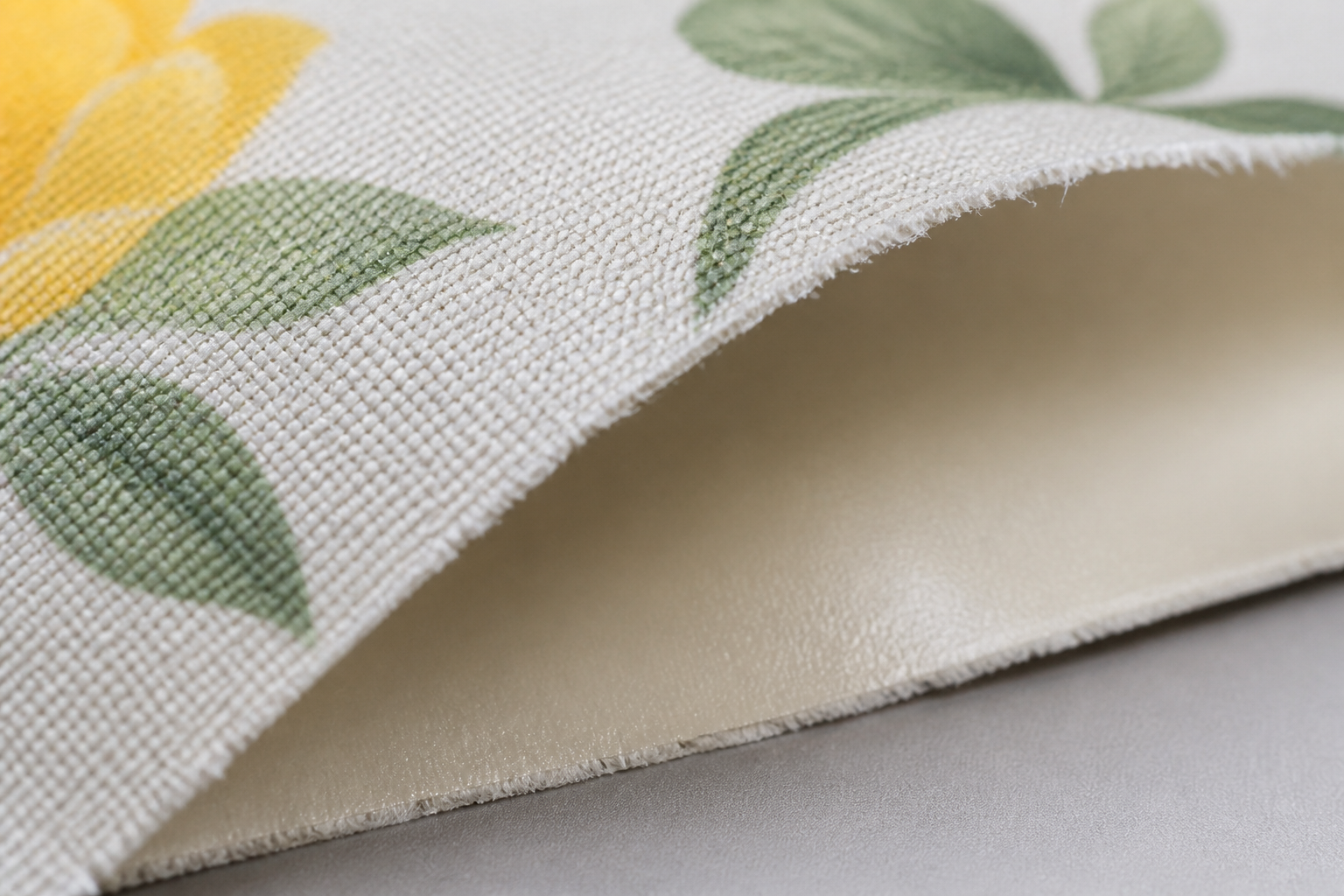
- Traditional oilcloth: The original wipe-clean cloth, with a smooth, slightly glossy finish and a long association with farmhouse kitchens and garden tables. It has a distinctive look that many customers seek out deliberately for its vintage character.
- PVC-coated tablecloth: A vinyl coating bonded to a fabric base. It is durable, fully waterproof, and the most common choice for high-use outdoor and family applications. PVC coatings are produced in a wide range of thicknesses, prints, and finishes.
- PVC-free / PEVA-coated tablecloth: The newer, more environmentally considered option. PEVA (and similar PVC-free formulations) delivers the same wipe-clean performance without chlorine-based chemistry, and can be produced without the plasticizer concerns that have prompted restrictions in some markets. It has become the default specification for buyers supplying markets with stricter chemical requirements or customers who ask for PVC-free products.
3. Why Wipe-Clean Actually Works
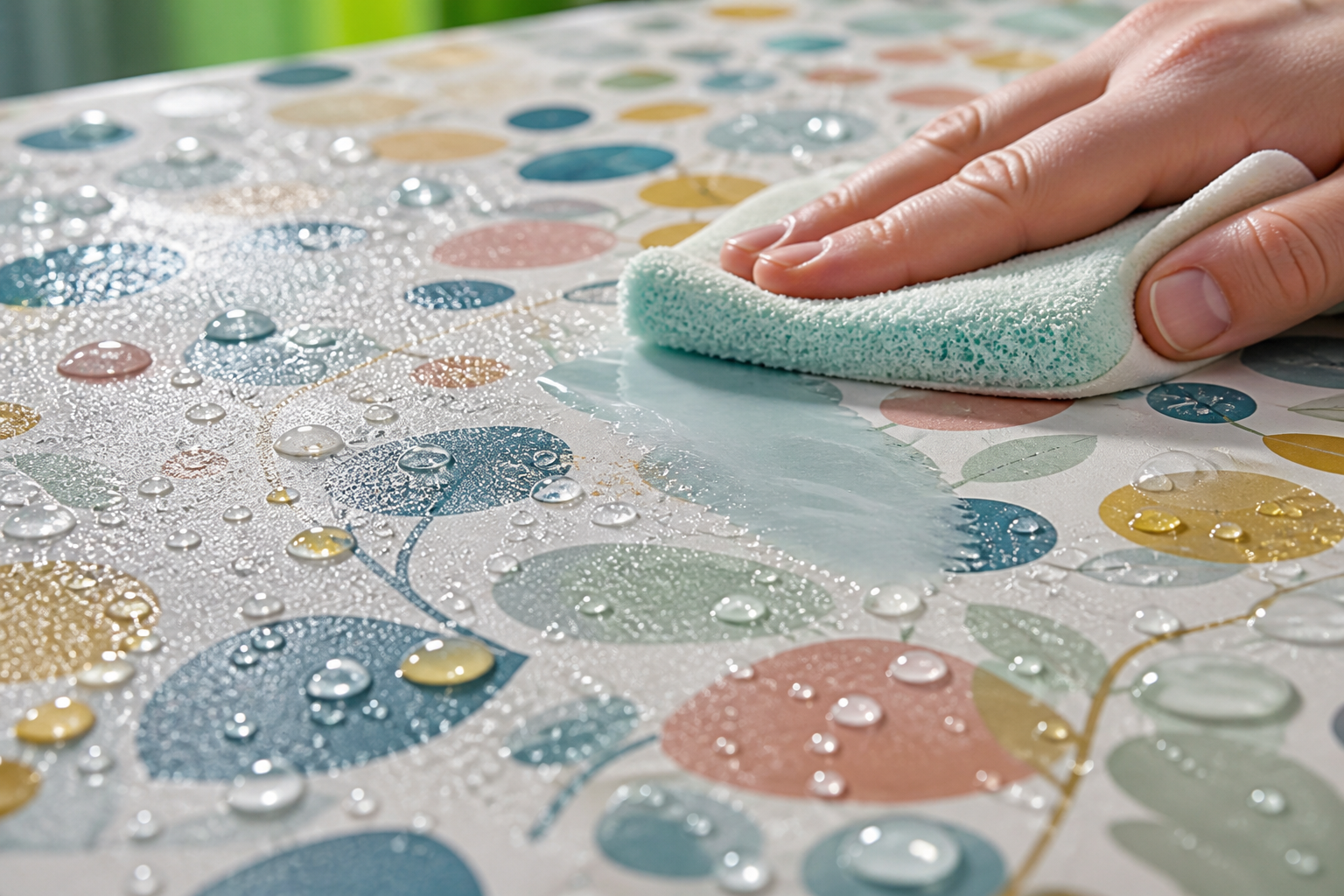
- No absorbency: Where cotton wicks liquid into the fiber, a coated cloth lets it pool on the surface.
- No staining mechanism: Because the coating is non-porous, wine, oil, and fruit juice have nothing to soak into.
- Fast turnaround: A wipe or a quick rinse resets the table — no laundry cycle, no drying time, no pressing.
- Built for outdoor use: The surface shrugs off damp grass, humidity, and light rain, which is why coated cloths dominate terrace and garden dining.
4. The PVC-Free Trend
Chemical requirements for consumer and hospitality products differ from market to market, and coated products are a category where buyers increasingly need to ask questions. Practical steps when ordering:
- Confirm the coating formulation in writing. Ask whether the product is PVC or PVC-free, and request the material declaration.
- Ask about plasticizers. Some markets restrict certain phthalate plasticizers in coated consumer goods; a PVC-free option avoids the question entirely.
- Check destination-market requirements for the country you are supplying rather than assuming one standard applies everywhere.
- Request an odor and residue check on the sample — a well-produced coated cloth should have minimal smell and no tacky surface.
5. Where Coated Tablecloths Win
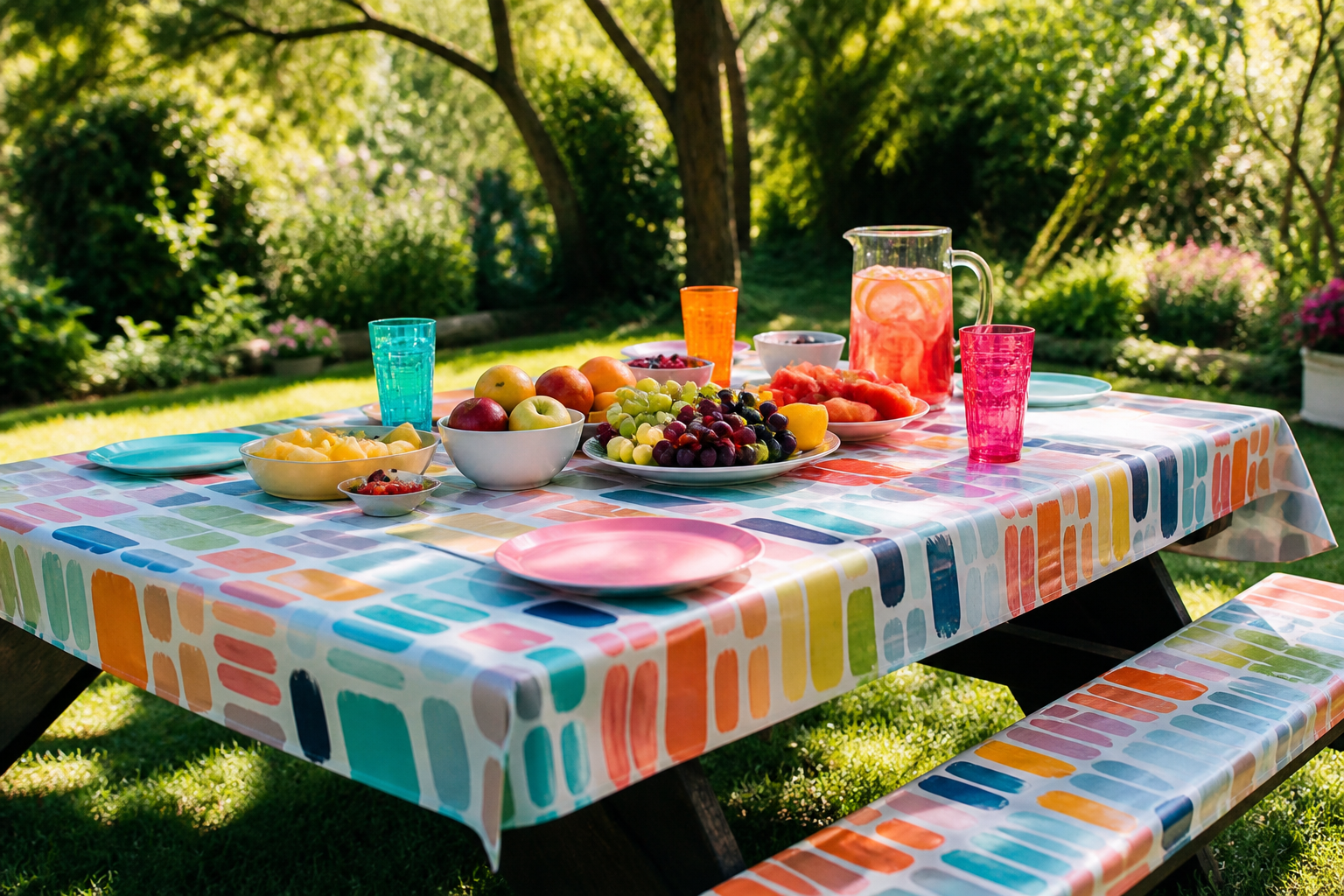
- Terraces, gardens, and outdoor dining: Weather-tolerant and outside the laundry loop.
- Family homes, especially with young children: Spills are wiped away in seconds; the printed surface hides everyday marks.
- Cafés, bakeries, and casual restaurants: Fast table turnaround between covers, with a styled printed look.
- Picnics, camping, and events: Lightweight, foldable, and unaffected by grass or damp ground.
- Craft, workshop, and utility surfaces: A protective, printable covering for work tables.
- Retail and seasonal collections: Strong print-led products that refresh with the season, with low laundry demands.
6. Specifying a Bulk Order
- Coating type and thickness. Specify PVC or PVC-free, and the coating weight in gsm — a thicker coating lasts longer and resists creasing better.
- Base fabric. The base determines how the cloth hangs and how well it prints; confirm the substrate along with the coating.
- Print quality and colorfastness. Confirm the printing method and test how the print reacts to wiping with a damp cloth and mild cleaner.
- Size and drop. Coated cloths are usually cut to standard sizes; confirm the exact finished dimensions for the tables in use.
- Edge finishing. Ask how edges are sealed or hemmed — a well-finished edge resists peeling and fraying over time.
- Roll or fold packing. Coated cloths crease sharply when folded tightly; confirm packing method for your shipping and storage conditions.
7. Care and Handling
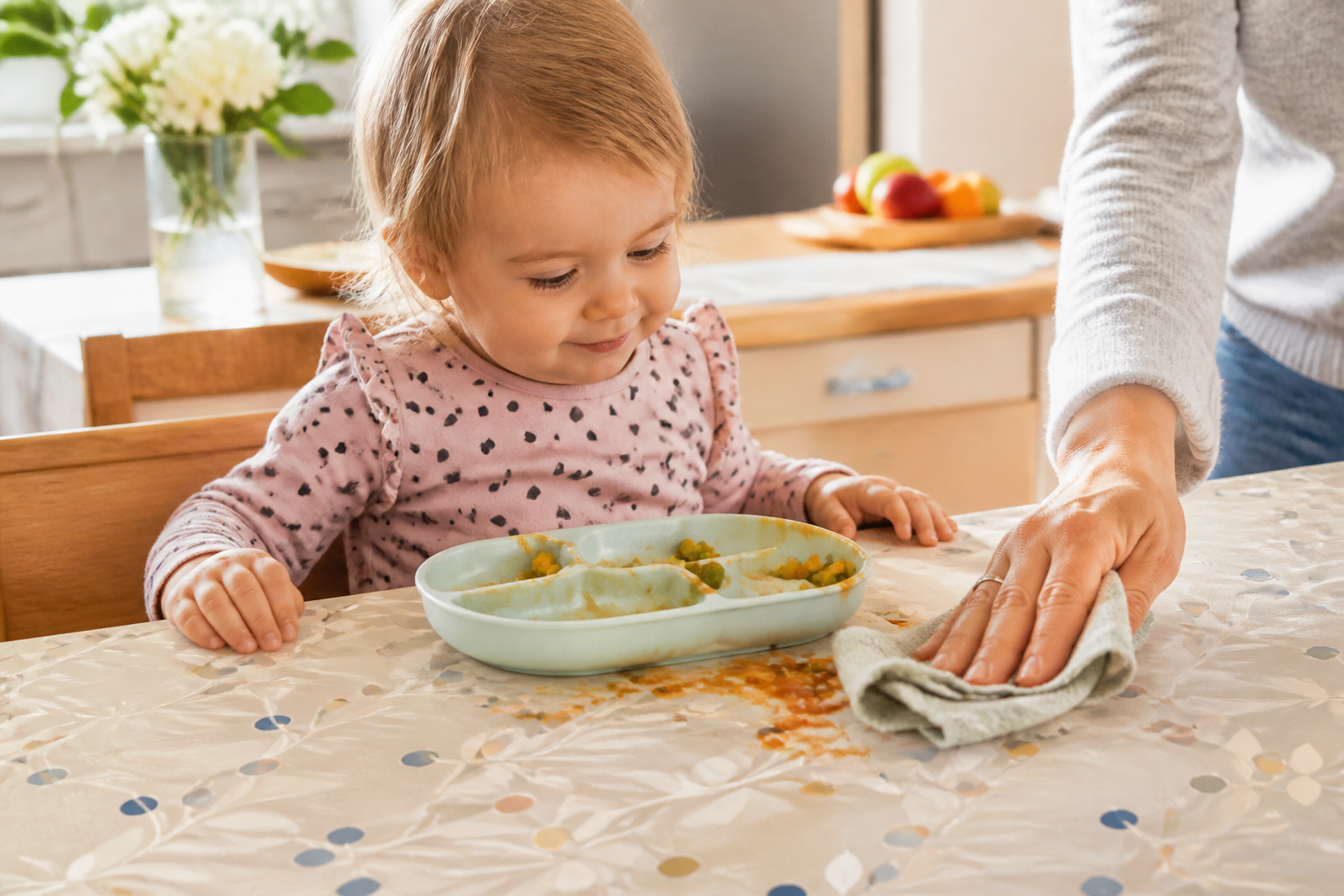
- Wipe, do not machine wash. A damp cloth with mild soap handles almost everything; harsh washing shortens coating life.
- Avoid abrasive cleaners and solvents. Scouring pads and strong solvents dull or damage the surface permanently.
- Keep heat sources away. Hot pans should never sit directly on a coated surface.
- Store flat or loosely rolled. Tight, long-term folding creates permanent creases in the coating.
- Air before storage. Let a damp cloth dry fully before putting it away to prevent surface dulling.
8. Coated Tablecloth FAQs
Is a PVC tablecloth the same as oilcloth?
They are closely related but not identical. Traditional oilcloth refers to the classic coated cloth with a smooth, slightly glossy character; modern PVC-coated tablecloths are the vinyl-coated version of the same idea, produced in a wide range of finishes and weights.
Can coated tablecloths be used indoors?
Yes. They are popular indoors for family kitchens, children’s tables, cafés, and craft surfaces — anywhere quick cleanup matters more than a soft fabric hand.
How long does a coated tablecloth last?
Life depends mainly on coating thickness and how it is treated. A quality PEVA or PVC-coated cloth used gently on a family or café table typically serves far longer than a woven cloth in the same messy conditions — because it never enters the laundry cycle.
Are coated tablecloths customizable?
Yes — coating type, base fabric, print design, size, and edge finishing can all be specified, which makes coated cloths a popular choice for private-label and seasonal collections.
Final Thoughts
Coated tablecloths solve a problem woven linen cannot: they make spills a non-event. The main decision is the coating — traditional oilcloth for character, PVC for heavy-duty performance, or a PVC-free option for markets and customers with stricter chemical preferences. Get that choice right, and you have a product that keeps looking good through weather, kids, and daily service.
We produce coated and wiped-clean tablecloths in PVC and PVC-free PEVA, with custom prints, sizes, edging, and private-label packaging. Contact us for swatches, material declarations, MOQs, and wholesale pricing.