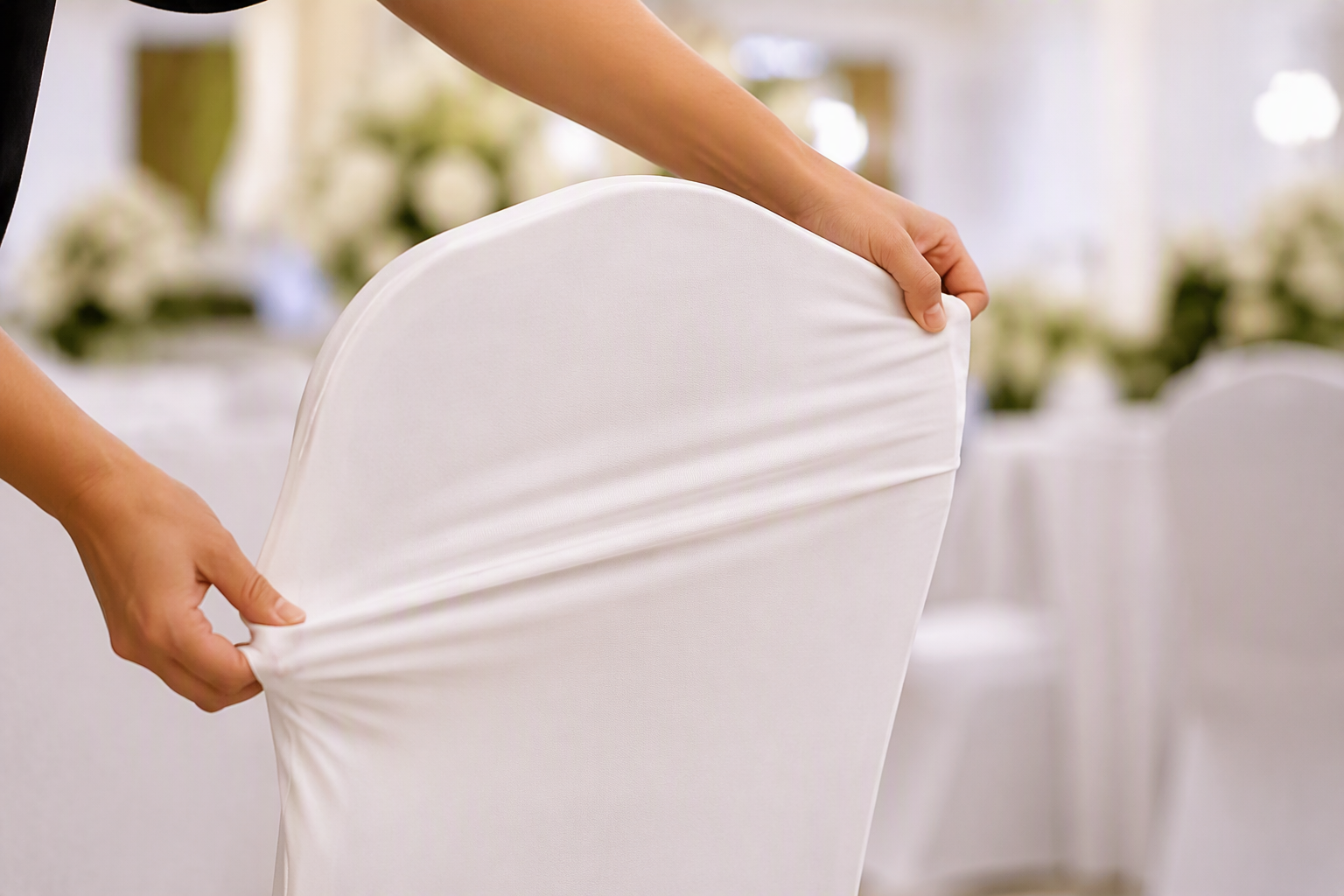
A chair cover is the one linen product whose main selling point is elastic. The fabric has to stretch over the chair, conform to it, and spring back — hundreds of times, across hundreds of washes. Get the care wrong and the failure is visible at once: a cover that sags, gapes, or never quite recovers its shape after being taken off. Getting the care right is what separates a chair cover program that looks new for years from one that ages badly within a season.
1. Why Care Is a Purchasing Cost
- Elasticity is the product. For stretch covers, the fit is the value. Every wash at the wrong temperature or chemical load eats a little of the recovery that makes the cover work.
- One cover dresses one chair, every time. Unlike a tablecloth, a chair cover’s flaws have nowhere to hide — a snag, a sag, or a colour shift is on display at eye level for the whole event.
- Covers are bought in the hundreds. A venue program is 50, 100, 300 covers at once. A care error that costs one bad cover in a small program costs thirty in a big one — the program size multiplies both the risk and the reward of getting it right.
- Life cycle cost, not unit cost. A well-cared-for cover survives dozens of events; a mistreated one retires after a handful. The wash program is where the real cost of a chair cover program is decided.
2. Before the First Service
- Pre-wash new stock before use. First washes release sizing, test the colour and the elasticity in your actual cycle, and confirm how the fabric recovers — problems found in week one are cheap; the same problems found at the wedding are not.
- Sort by fabric before anything else. Stretch, polyester, cotton, and velvet covers each need different handling; a mixed load is how the delicate pieces get destroyed by the program written for the sturdy ones.
- Read the care label on every new delivery. If the label is missing, generic, or contradicts the fabric, that is a specification question for the supplier — a care label is part of the product.
- Test-fit a sample on the actual chair. Before the full program goes on, one cover on the real chair confirms the fit, the sash attachment, and how the fabric behaves on that chair’s shape.
3. Washing
- Temperature follows the fibre, not the habit. Stretch and most synthetic covers want cold to warm on a gentle cycle; heat is the enemy of elasticity. Cotton and polyester slipcovers tolerate more, but the gentler cycle still costs nothing.
- Detergent: enough to clean, never excess. Heavy detergent loads leave the same residue buildup that ages whites — on stretch fabric it also stiffens the blend and dulls the recovery.
- Never chlorine bleach on stretch covers. Chlorine attacks spandex fibres — it is the single fastest way to kill elasticity and to yellow the fabric. Oxygen-based bleach is the correct option for whites.
- Sashes and bows: check how they attach. A cover with a sewn-in sash may need the sash removed or protected in the wash; a separate satin sash is a different fibre with different limits — wash it on its own terms.
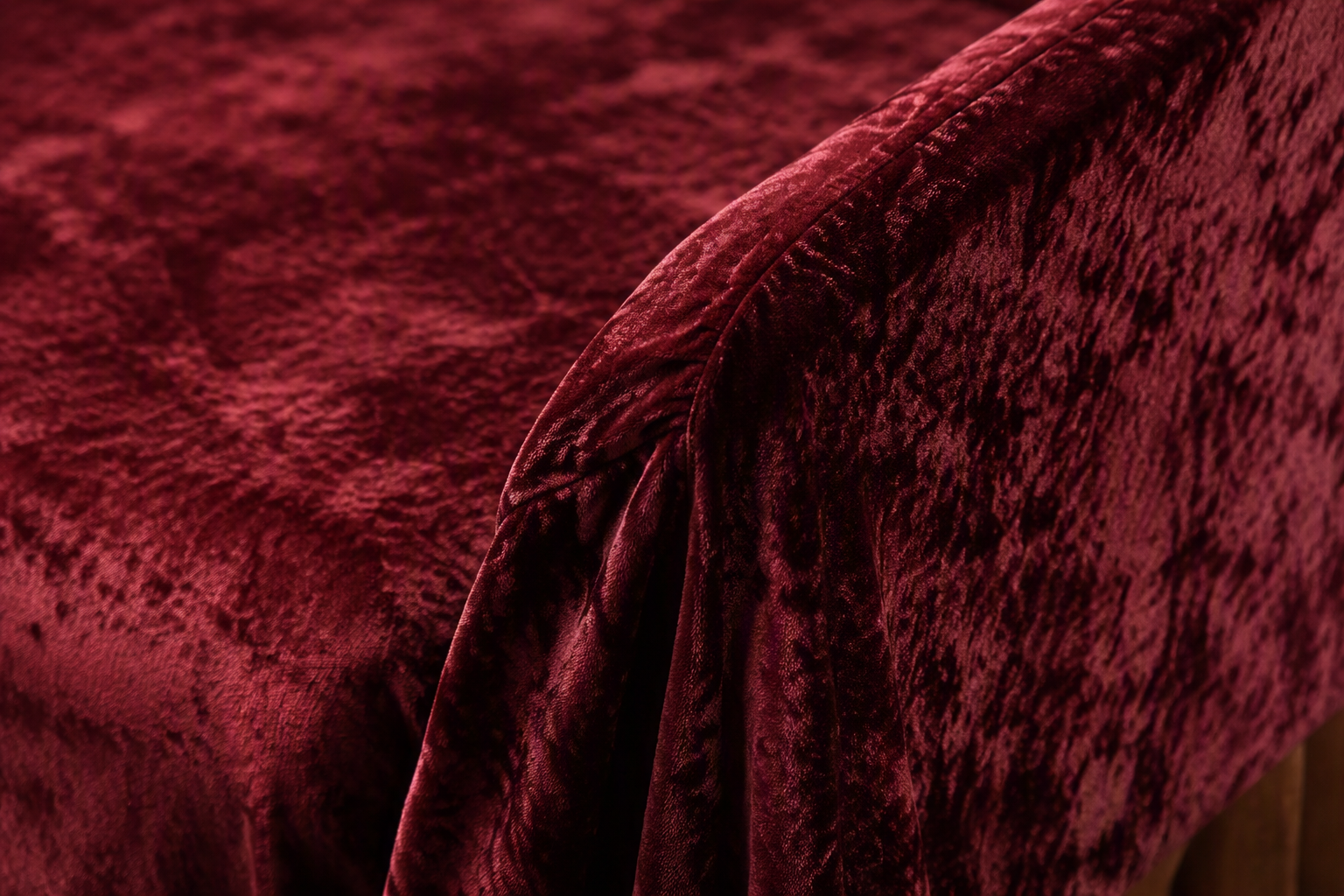
- Velvet goes in on its own. Velvet and crushed velvet need a gentle cycle, no agitation against other fabrics, and no bleach at all — and they should never share a load with stretch covers, whose snagging potential is the velvet’s worst enemy.
- Do not overload the machine. Covers are bulky; a packed drum means an uneven wash and extra friction between covers, which is where snags and pilling start.
4. Drying
- Heat is the enemy of recovery. High tumble heat permanently degrades spandex. Air-dry or low-heat only for stretch covers — the rule that matters most in the entire chair cover care program.
- Take stretch covers out promptly and hang them. Hanging a damp stretch cover on the chair (or on a padded rail) lets it dry in shape and is itself a pass of re-fitting — wrinkles fall out and the recovery re-sets.
- Never hang a wet stretch cover by one point. The weight of the water stretches a single zone out of shape; the whole cover should be supported, or laid flat.
- Cotton and polyester slipcovers can take a normal tumble on low — remove while still slightly damp if they will be pressed, because that is the easiest state to smooth.
5. Pressing and Finishing
- Stretch covers rarely need pressing. Most wrinkles release when the cover is hung or refitted to the chair; steam at a distance is enough for stubborn lines, and a hot iron directly on spandex is a way to scorch and flatten the finish.
- Cotton covers press best slightly damp, as with any cotton linen — crisp without the heat stress of dry ironing.
- Velvet is never directly ironed. The finish is restored by brushing the nap gently in one direction; crushed velvet is smoothed with a lint brush or a low setting fabric shaver used carefully, always following the nap.
- Finish each cover back to its shape. The last step of care is the cover sitting on the chair looking fitted — that is the standard every wash cycle is serving.
6. Snags and Damage Management
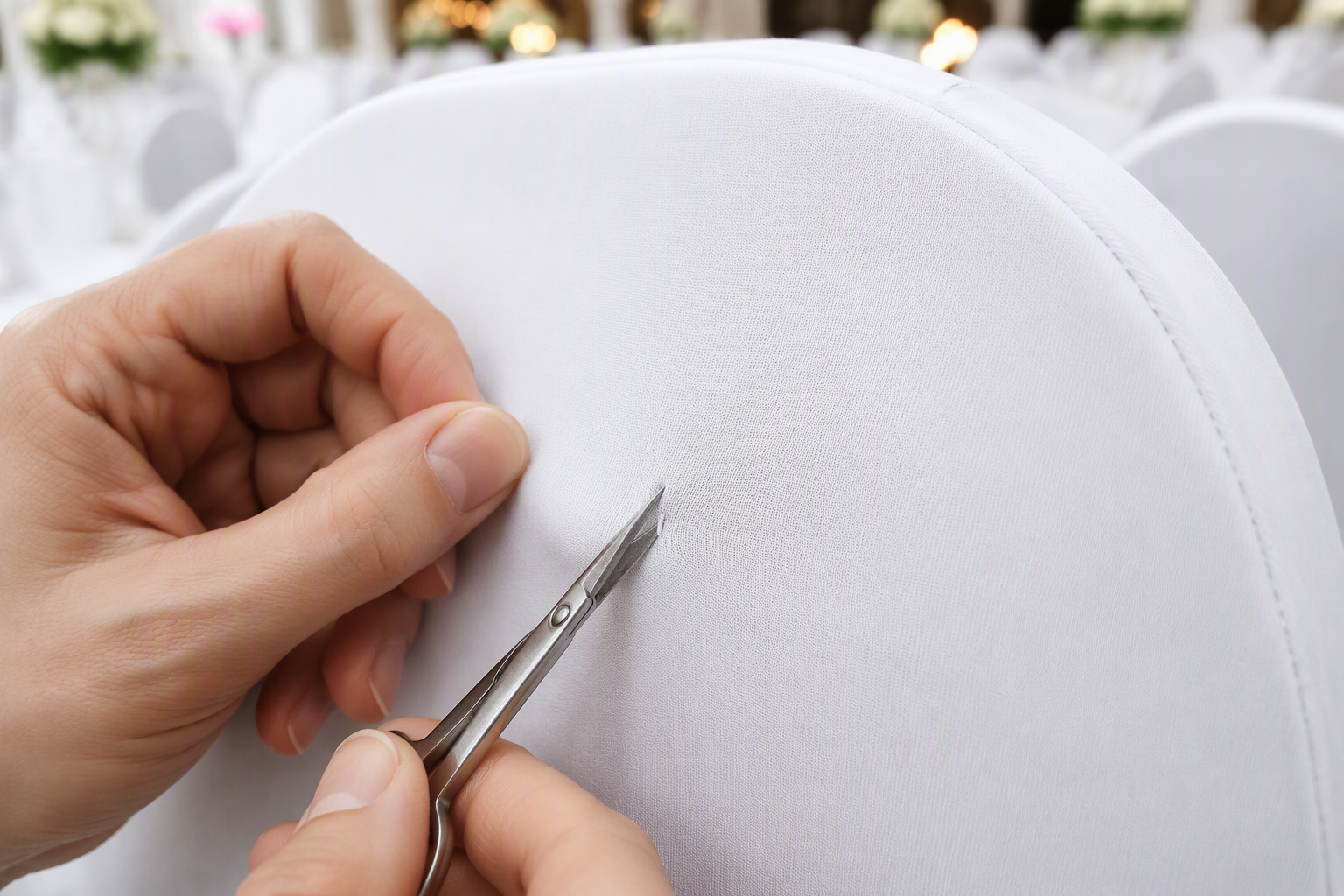
- Snags come from metal and edges: rings, watch clasps, cuticles, and the hard edges of chair frames are the usual culprits. The cheapest prevention is a quick check of hands before fitting, and covers fitted in a controlled setup area rather than over dressed guests.
- When a snag happens: trim, don’t pull. Cut the loose loop flat with small scissors and smooth the area — pulling it through the fabric converts a 2 mm snag into a visible run.
- Elasticity failure is the retire signal. A cover that no longer recovers its shape, that sags at the seat, or that gapes at the back has reached the end of its working life — it cannot be washed back. The care program slows the day; it does not stop it.
- Run a repair-or-retire box. Damaged covers leave the service stock the day they are spotted, into a holding box — not back into the stack where they quietly age the standard of the rest.
7. Storage
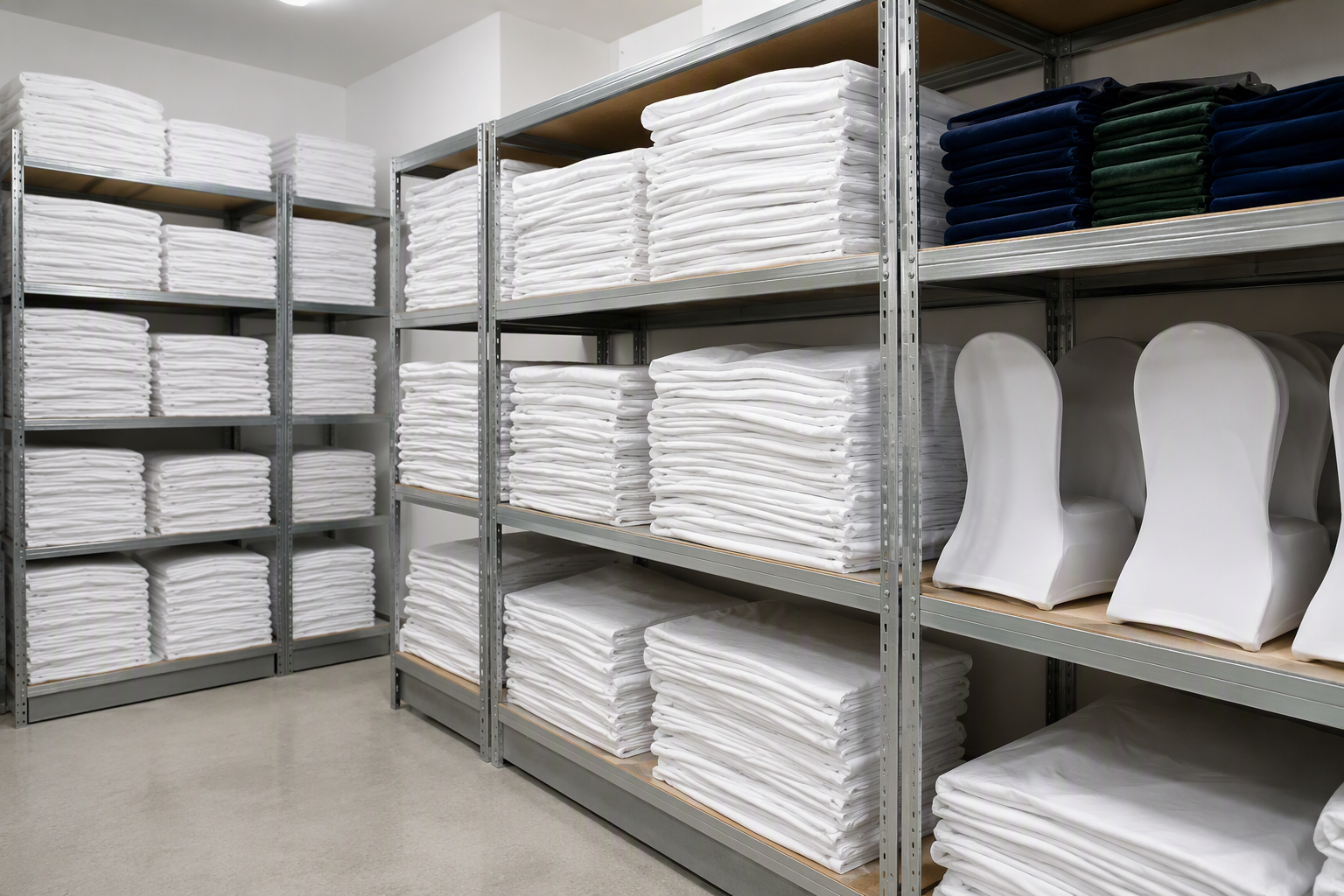
- Store dry, cool, and out of light. Damp storage is how mildew and set-in odours are born; prolonged light fades colour. A linen closet or shelf room beats a garage or a sunlit window.
- Stretch covers fold or hang — but not stretched. Folded neatly they store fine; if hung, on padded hangers so the shoulder line does not hold a permanent crease. Never store a stretch cover stretched over a dummy or left under tension.
- Keep velvet separate and loose. Velvet stored compressed under a heavy stack keeps the crush lines; it wants its own shelf, folded loosely, with the nap brushed back in place before storage.
- Sort by fabric and by event. A shelf labelled by fabric (stretch / polyester / velvet) and by the event or colour run makes the next wash load and the next setup both faster and safer.
- Seasonal stock gets a pre-season check. Covers coming out of long storage get a look-over and a wash before the season — an elastic that has set during storage needs to be re-tested, not assumed.
8. Lifespan and Rotation
- The early signals: slower recovery after fitting, a seat that sags by the end of an event, pilling on high-contact areas, a velvet nap that no longer brushes back to life, and colour that has gone flat under the lights.
- Rotate the whole stock evenly. If the same covers always dress the same rows, those covers age out while the rest sit new — rotate by event so the wear spreads across the program.
- Plan the refresh rate, not the surprise. A working stretch cover program retires a slice of its stock each year; knowing that slice in advance turns replacement into budget line, not emergency.
- Mix new with worn at reorder time, so the visible standard of the room does not step down the day the old covers come out — the refresh should be invisible.
9. What to Ask Your Supplier
- Stretch recovery behaviour: how the fabric recovers after repeated fitting and washing — ask for the spandex content and any recovery testing the factory runs.
- Seam and edge construction: where the stress is, how it is finished, and what that means for the cover’s working life — seams are where stretch covers usually fail first.
- Wet and light fastness for coloured covers, the same two numbers that matter on any dyed linen.
- A correct care label on every piece, matching the actual fibre content — and the factory’s written care guidance with the order.
- Sash and bow construction, including whether they are sewn-in or detachable, and their wash limits — because the sash often needs different care than the cover.
10. Chair Cover Care FAQs
Can I put stretch chair covers in the dryer?
Low heat only, briefly, and out promptly — but air-drying or hanging is the safer default, because heat is what permanently degrades the spandex. When in doubt, skip the dryer.
How many washes will a good stretch cover survive?
Working covers in a venue program should last dozens of events with a correct care cycle. The number that matters is recovery: retire the cover when the fit is gone, regardless of the wash count.
My velvet covers look crushed and flat. Can I restore them?
Often, yes — brush the nap gently in one direction after steaming at a distance; a low-setting fabric shaver handles matted areas carefully. If the pile no longer responds to brushing, that piece is done.
Do chair sashes need the same care as the covers?
No — a satin sash is its own fibre with its own limits (gentle, cool, no bleach, no tumble). Wash sashes on their own terms, and check whether sewn-in sashes need removing before the cover goes in.
Final Thoughts
Caring for chair covers is really one rule with a few specific applications: protect the fit. Wash gentle and cool, never chlorine on stretch, dry low and hang back into shape, keep velvet brushed and separate, trim snags instead of pulling them, store dry and sorted, and retire a cover the day the recovery is gone. Follow that program and a chair cover investment keeps its shape — and its look — for the whole working life of the venue’s events.
We supply stretch, slip-on and velvet chair covers with spandex recovery specification, correct care labels, and written care guidance included with every order — and matched sashes to the same standard. Contact us for samples, fabric data, MOQs, and wholesale pricing.