The linen tablecloth has the look and the cotton tablecloth has the work, and the program that wants both ends up at the same cloth: the cotton-linen. It is the natural-fiber tablecloth that gives the flax its texture and the cotton its manageability, and it is the one the bistro, the fine-dining room and the home program all reach for when they want the natural look without the pure-linen work. But the cotton-linen is also the cloth that is most easily mis-specified, because it is a blend, and a blend is not one fabric — it is a ratio. The same cotton-linen at two different blends is two different cloths, and the program that does not state the ratio is the one that gets the wrong one. This guide is about specifying cotton-linen the way the program needs it — the blend, the texture, the weight, the colour and the care — so the cloth holds its look for the length of the program.
1. Why the Blend Exists
- Neither pure fiber wins on its own. The pure linen carries the slub and the texture that reads as made, at the price of the harder press, the sharper shrink and the stiffer hand. The pure cotton carries the manageability and the softness, at the price of the look — the smooth ground that does not read as natural. The blend exists because the program wants the look of one and the work of the other.
- The cotton-linen is the engineered middle. The blend is not the compromise of the two fibers, it is the specification of the two fibers — the ratio of the flax to the cotton set so the cloth takes the texture of the linen and the behavior of the cotton. The middle is where the table wants to be, and the blend is how it gets there.
- It is the natural look at the work the program runs. The cotton-linen presses softer than the pure linen, washes cleaner than the pure linen and drapes fuller than the pure cotton, and the room that wants the natural table without the pure-linen laundry is the room the blend is built for.
- It is the honest step up from the faux. The cotton-linen is the real fiber doing the work the faux-linen polyester only imitates, and the program that is judged on the hand and the texture is the one that ends up at the blend, not the imitation.
2. Where Cotton-Linen Sits Between Linen and Cotton
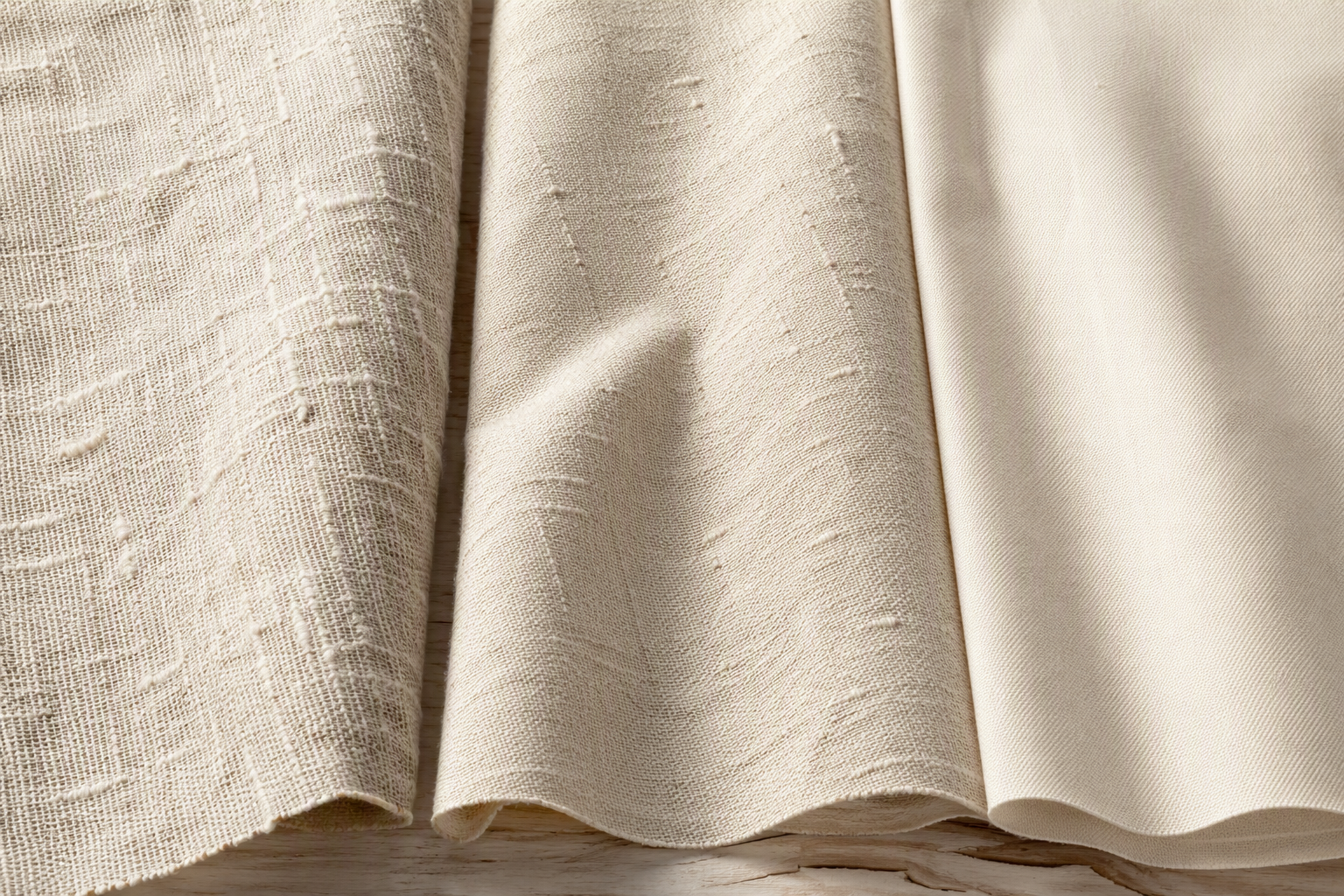
- It reads as linen, and that is the point. At the distance of the table, the cotton-linen reads as the natural textured cloth, and the slub of the flax in the yarn is what carries the read. The program is buying the look of the linen, and the blend is how it is delivered at the work of the cotton.
- It works like cotton, and that is the value. In the laundry, the blend behaves to the cotton in the yarn — it takes the press softer, it holds the size better and it forgives the handling the pure linen does not. The value of the blend is not on the table, it is in the back of house.
- The hand is the test. Laid side by side, the pure linen is the stiffer, the more structured cloth, the pure cotton is the softer, the smoother one, and the blend sits between them with the texture of the first and the give of the second. The hand is where the blend is confirmed, and it is confirmed on the sample, not the swatch card.
- It is the cloth the program is judged on both. The guest reads the linen, and the laundry reads the cotton, and the blend is the one cloth that passes both judgments. That is why it is the default of the room that wants the natural look at the volume of the program.
3. The Blend Ratio Is the First Specification
- The ratio is what the cloth actually is. Two cotton-linens that look alike on the hanger can be two different blends, and the blend is the first line of the specification, before the size, the colour and the finish. The cloth that arrives is the ratio that is stated, and the ratio is stated in writing.
- Even is the classic. The fifty-fifty blend is the default of the natural table — the balance where the texture of the flax and the behavior of the cotton are equal, and the cloth that reads as linen and works as the program needs. When the spec says cotton-linen and nothing else, this is almost always the cloth under it.
- Cotton-heavy is the workhorse. The blend that leans to the cotton carries more of the manageability — the softer press, the steadier size, the cleaner wash — at the cost of a little of the texture. It is the blend of the room that runs the covers and the washes and wants the natural look to hold through them.
- Linen-heavy is the statement. The blend that leans to the flax carries more of the texture and the structure, the stiffer hand and the sharper slub, and it is the blend of the room that wants the pure-linen look with a step of the cotton’s forgiveness. It presses harder and shrinks more, and it is specified to the program that can run it.
- The ratio sets the shrink, the press and the price. The more flax in the yarn, the more the cloth moves in the wash and the harder it takes the press, and the more the cloth costs. The ratio is not a style decision, it is the decision the rest of the specification is built on.
4. The Weave and the Slub
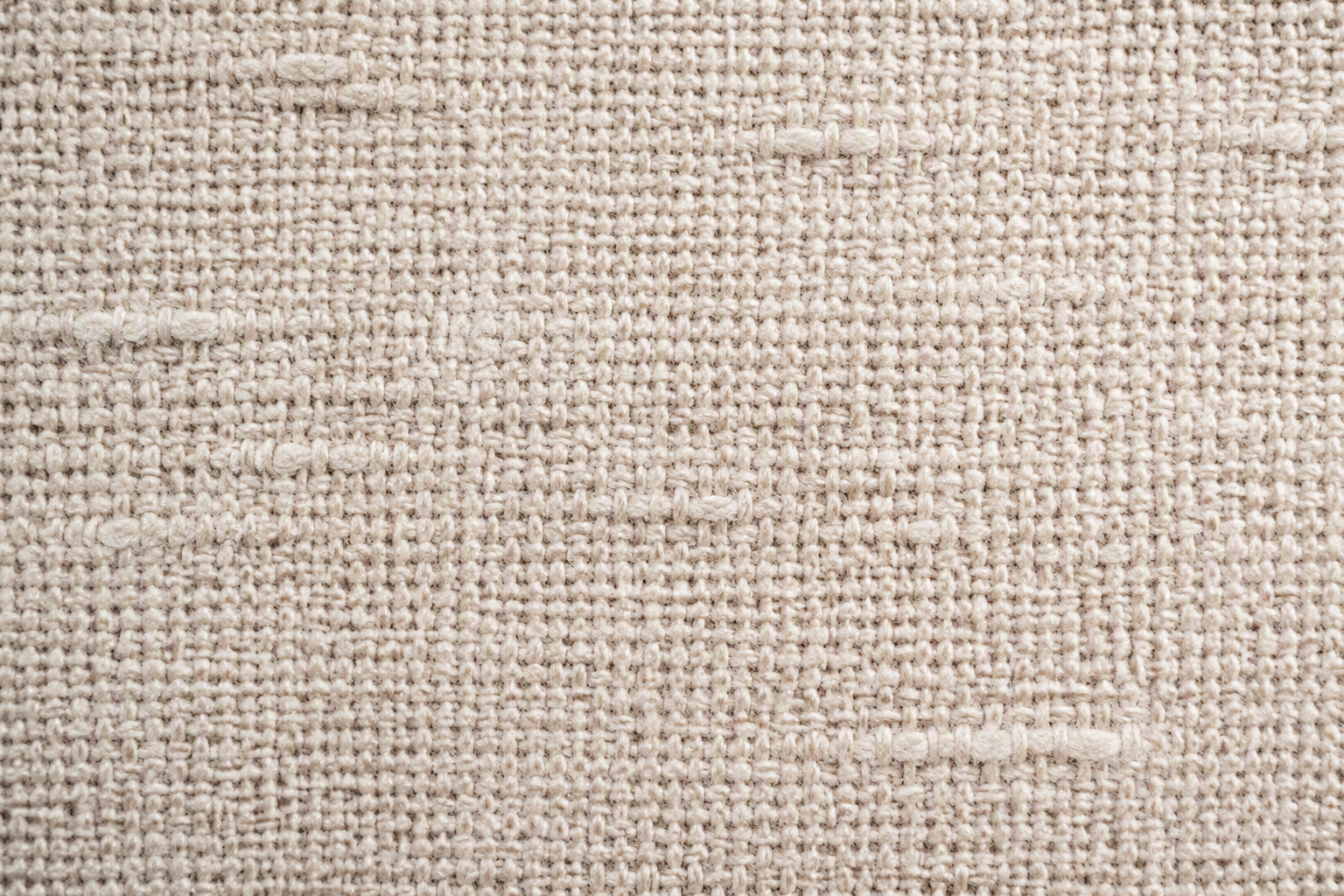
- Plain weave is the ground. As with the pure cotton, the cotton-linen tablecloth is built on the tight, even plain weave, the basket that holds the size and takes the press. The blend does not change the weave, it changes the yarn in the weave.
- The slub is the flax showing. The irregular thick-thin in the yarn is the slub, and it is the signature of the natural fiber in the cloth — the texture the program is buying. The slub is not a fault, it is the point, and the cloth without it reads as the cotton it is partly.
- The slub count is a specification. The density of the slub — how often the irregular yarn runs through the ground — is the figure that sets how much texture the cloth carries, and it is stated on the spec so the run holds the texture of the sample. The slub count is how the blend is kept consistent from lot to lot.
- The twill brings the drape. The cotton-linen in the twill weave lies softer and drapes fuller than the plain, and it is the weave the heavier blends move to when the program wants the natural texture with the fuller fall. The weave is read on the flat, as all weaves are, before the run is released.
5. Weight and the Drape It Holds
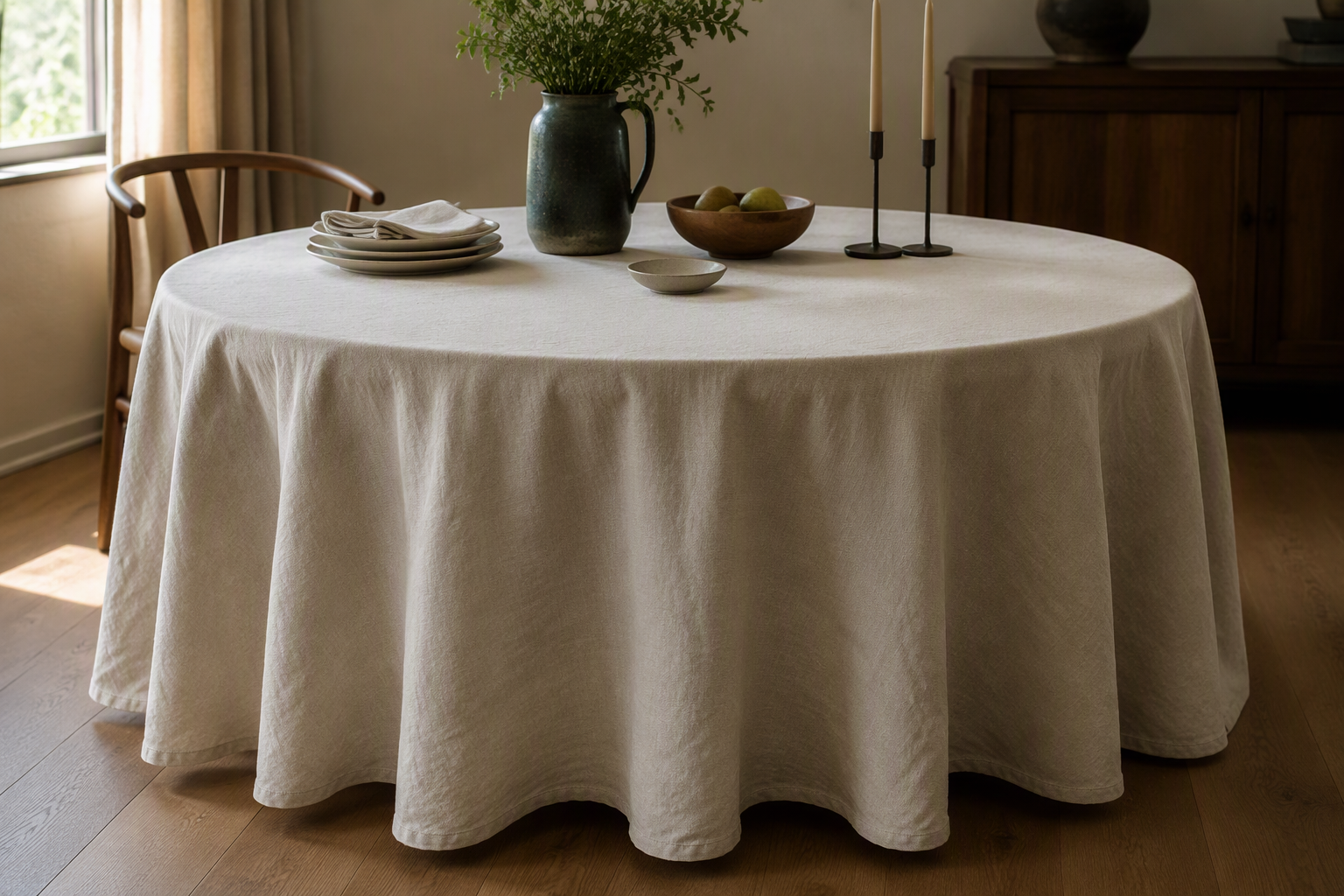
- The weight sets the drape, as it does on every cloth. The gsm is the figure the factory works to and the sample is checked against, and it is the number behind how the cloth falls on the table and holds the line of the drop. The weight is matched to the size, as the sizing is done in the size guide.
- The blend falls between the pure fibers. The cotton-linen drapes softer than the pure linen, which holds its structure, and fuller than the pure cotton at the same weight, which lies flatter. The drape of the blend is the middle look, and it is the look the natural table is built on.
- The weight sets the life, and the blend changes the math. The heavier the cloth, the more fiber there is for the wash to wear against, and the blend takes the wash of the cotton it carries in the yarn. The weight is chosen to the wash count, as on the pure cotton, and the blend is the cloth that holds the natural look to a higher count than the pure linen.
- The crease is part of the look, and the weight sets it. The cotton-linen creases the way the natural fiber creases, and the crease is not the fault of the cloth, it is the hand of the table. The weight and the press set how the crease reads — the heavier the cloth, the cleaner the crease presses out.
6. Colour and the Dye
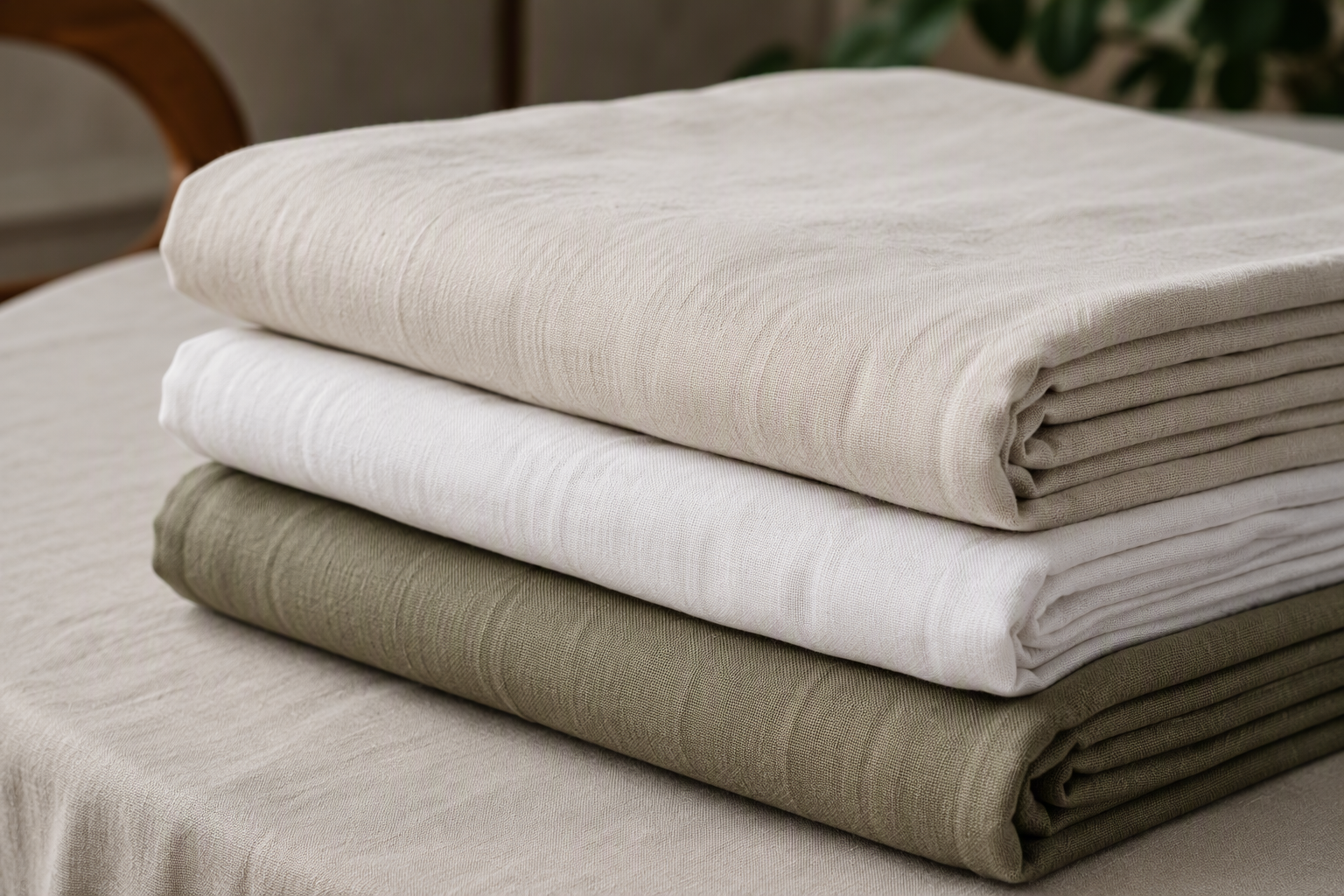
- Natural ecru is the signature colour. The untouched cotton-linen is the warm, textured off-white that reads as made, and it is the colour the blend is bought for most — the ground that does not need the dye to carry the natural look. The ecru is the default, and it is the one the sample is cut from.
- The bleached white is the step up. The bleached cotton-linen is the bright white that the fine-dining table wants, and the bleach is the decision, as on the pure cotton — the way the white is made is what the program is specified to. The white of the blend carries the slub, and the slub in the white is the texture that reads as natural.
- The tinted blend is the colour decision. The dyed cotton-linen carries the depth the flax gives the dye, and the colour is tested to the wash it will run, as on every cloth in the program. The tint is chosen against the ground, in the room’s light, the way the rest of the program’s colour is chosen.
- The lot is the texture, and the lot is matched. The natural slub varies from lot to lot, and the lot that is not matched is the program that shows a line of texture across the tables as well as a line of colour. The lot match is a line on the order, and the sample is cut from the lot that will be run.
7. Shrinkage: The Two Fibers Moving Together
- The blend shrinks like both fibers, and it is planned like both. The flax in the yarn moves more than the cotton, and the shrinkage of the blend is the shrinkage of the ratio — the more flax, the more the cloth moves. The shrink is worked into the cut, and the finished size is the number the spec carries, not the cut size.
- Pre-shrunk is the commercial standard, as on the cotton. The cloth that is shrunk before it is cut is the one that holds its size through the program, and the blend is pre-shrunk the way the pure cotton is, to the ratio it carries. The finish is stated on the spec, and the sample is checked to it.
- The shrink is tested on the sample, to the ratio. The blend that is tested at the wrong ratio is tested for nothing — the shrink the sample takes is the shrink the ratio carries, and the cut is set to the number the sample proves. The sample that has not been washed has not been specified, as on every natural fiber.
- The blend is the step that buys the look with less shrink. Against the pure linen, the cotton-linen is the cloth that holds its size better in the same program, and the shrink it does take is the step down from the pure flax. The ratio is how the program buys the look at the shrink it can run.
8. Cotton-Linen in the Commercial Wash
- The wash is run to the blend, not to either pure fiber. The temperature, the chemical and the handling are set to the ratio in the yarn, and the program that washes the blend at the pure-linen setting is the one that overworks the cotton in it, and the one that washes it at the pure-cotton setting is the one that underworks the flax. The care is specified to the blend, and the laundry runs to the spec.
- The press is the middle step. The cotton-linen presses softer than the pure linen and holds the press better, and the steam is set to smooth the ground without crushing the slub. The press is the step that turns the washed blend into the tablecloth, and it is the step the program is judged on, as on the natural table.
- The crease comes back, and the crease is managed. Between the services, the cotton-linen takes the crease of the use, and the crease is smoothed by the press and by the drape of the cloth. The room that runs the blend is the room that runs the press, and the press is what keeps the natural table reading as made.
- The count is the life, and the blend holds it. The cotton-linen is bought for a wash count, and the count it holds — the texture, the colour and the size — is the figure it is compared against the pure linen and the pure cotton. The blend that holds its program to the last count is the one that earns the natural look at the commercial work.
9. Where Cotton-Linen Tablecloths Work Best
- The bistro and the café that want the natural table. The ecru and the olive cotton-linen are the cloths of the room that reads as warm and as made, and the blend is the default of the natural table at the volume of the service.
- The fine-dining room that wants the texture without the pure-linen work. The bleached cotton-linen is the white that carries the slub, and it is the cloth of the table that wants the natural read at the press the program can run.
- The hotel that programs the natural ground. The cotton-linen is the cloth of the program that wants the natural fiber across the rooms, and the pre-shrunk blend is the one that holds the size across the tables and the washes.
- The home program that wants the made look to last. The cotton-linen at home is the cloth that is washed and re-washed and kept, and the blend is the one that carries the natural look through the home program longer than the pure linen asks it to.
- The event that wants the classic natural table. The cotton-linen is the cloth of the event that wants the table to read as proper and as made, and it is the ground that carries the monogram and the border when the program is embroidered.
10. B2B Specifications for Cotton-Linen Tablecloths
- State the blend ratio first, in writing. The ratio of the flax to the cotton is the first line of the order, and it is the line the rest of the specification hangs from. The cloth that arrives is the ratio that is stated, and the ratio is confirmed on the sample before the run.
- Fix the weave and the weight. The weave and the gsm are the two figures the cloth is built on, and they are stated on the spec so the sample is checked to them and the run is cut to them, as on the pure cotton.
- Set the slub count and the colour. The density of the slub and the colour of the ground are the two figures the look is set by, and they are the ones the sample is cut from and the order is matched to, lot by lot.
- Approve a washed, pressed finished sample at the ratio. The cotton-linen that has not been run through the program’s wash and press at the stated ratio has not been specified. The finished sample, washed to the count and pressed to the table, is the piece that carries the decision, and the flat, unwashed swatch is only the starting point.
- Set the size to the finished, not the cut. The shrinkage of the ratio is worked into the cut, and the size on the order is the size the cloth will be after the break-in, so the program is set to the cloth it will actually run.
11. Cotton-Linen Tablecloth FAQs
How do you tell cotton-linen from pure linen?
By the hand and the work, not the look — at the table they read alike, and the blend is built to. The pure linen is the stiffer cloth, the one that holds its structure and creases the sharper, and the cotton-linen is the one with the give of the cotton in the hand. In the laundry the difference is clearer still: the pure linen presses harder and shrinks more, and the blend forgives both. The test that settles it is the wash — the blend that moves less than the linen it is sold as is the cotton doing its work, and the sample washed to the program’s cycle is the one that proves the cloth is what it is specified to be.
How do you tell cotton-linen from a cotton that imitates it?
By the slub and the dye. The cotton that imitates the linen carries a mechanical slub, a regular thick-thin that repeats the way the machine set it, and the real flax in the yarn carries the irregular slub that runs where the fiber ran. The imitation also takes the dye the way cotton takes it, flat and even, and the blend takes it the way the flax takes it, with the depth and the variation the natural fiber gives the colour. The sample in the room’s light, held against a known linen, is where the two are told apart, and it is the step that keeps the program from buying the imitation for the natural.
Why blend at all, instead of buying the pure fiber?
Because the program is built on two judgments at once — the look the guest reads and the work the laundry runs — and the pure fibers each win one and lose the other. The pure linen wins the look and loses the work, the pure cotton wins the work and loses the look, and the blend is the cloth that is specified to pass both. The ratio is how the program buys the balance it wants, and the blend is the answer when neither pure fiber is the answer on its own.
Will cotton-linen shrink, and how is it kept to size?
It will, the way the two fibers in it move — the flax more than the cotton, and the ratio sets how much the cloth moves. The fix is the same as on the pure cotton: the pre-shrunk finish, where the cloth is shrunk before it is cut, and the size specified to the finished cloth, not the cut. The shrink is tested on the sample at the stated ratio, washed to the program’s cycle, and the cut is set to the number the sample proves — so the cloth that arrives is the size the program is set to, and the size it stays.
Final Thoughts
A cotton-linen tablecloth is the program’s natural table — the cloth that reads as linen and works as the program can run, and the one the blend ratio is built to deliver. Get the ratio to the look, the slub to the texture, the weight to the drape, the colour to the dye and the shrink to the cut, and the cotton-linen cloth holds its natural look through the count it is built for. That is the difference between a cloth that is a blend and a cloth that is a program.
We supply cotton-linen tablecloths to your specification — the blend ratio, the weave and the weight, the slub count and the colour, with the shrinkage worked to the finished size and a washed, pressed sample approved at the ratio before the full run. Contact us for cotton-linen tablecloth designs, samples, sizing, MOQs, and wholesale pricing.