Ask ten buyers why one napkin outlasts another and a surprising number will point at the edge. The border of the cloth takes the mechanical stress — folding, handling, washing, pressing — and it is where wear announces itself first. The edge finish is also one of the clearest signals of the whole piece: a sharp mitered corner says commercial linen; a raw edge says styled linen. Choosing the finish is choosing how the napkin looks and how it lasts, in one specification.
1. Why the Edge Matters
- It carries the stress. Every fold, every grab, every wash cycle works on the border first; the rest of the cloth is largely at rest.
- It is the first thing to fail. Fraying, loose thread, and split corners all start at the edge — a napkin with a weak edge ages visibly while its centre looks fine.
- It defines the look. The finish is visible in every stack, on every plate: the edge is how a napkin reads as formal, casual, or styled.
- It is a specification, not a default. Most buyers have never asked a supplier what edge they are getting. Naming the finish in the order is the single most under-used control point in a napkin specification.
2. Mitered Corner (the commercial standard)
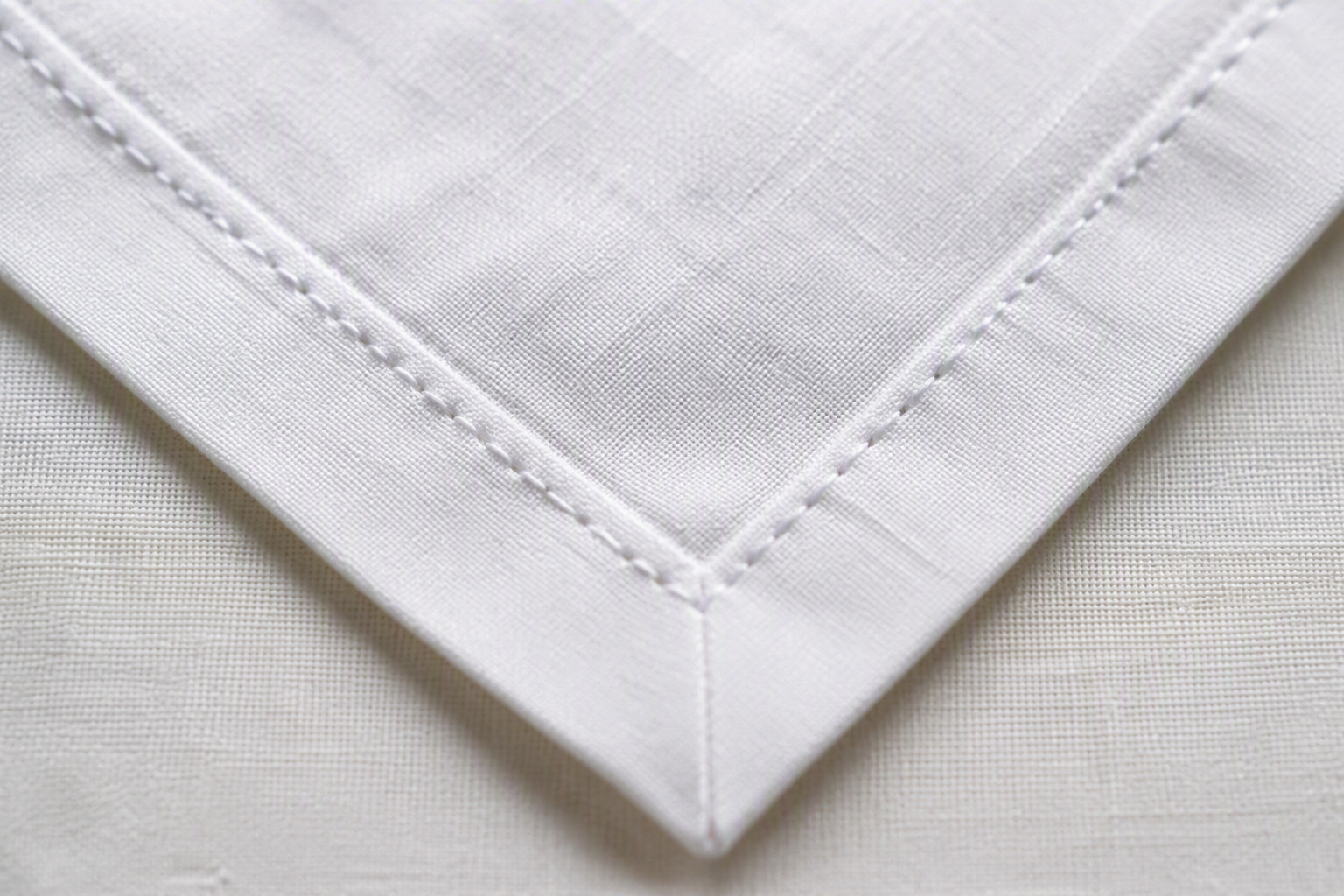
- How it works: the corners are folded on the diagonal and sewn, hiding the raw cut edge inside a crisp 45-degree angle.
- The look: sharp, formal, and uniform — the default for restaurant, hotel, and banquet linen, and the finish most guests associate with “good linen”.
- Durability: high. The double-sewn diagonal is strong under folding and washing; the hidden raw edge has no exposed thread to catch.
- Best for: commercial programs in white and solid colours, high-turnover service, and anything pressed and folded to a standard.
- What to check: the corner should be aligned (not off-angle) and the stitching even; a crooked miter shows on every piece in the stack.
3. Serged (Overlocked) Edge
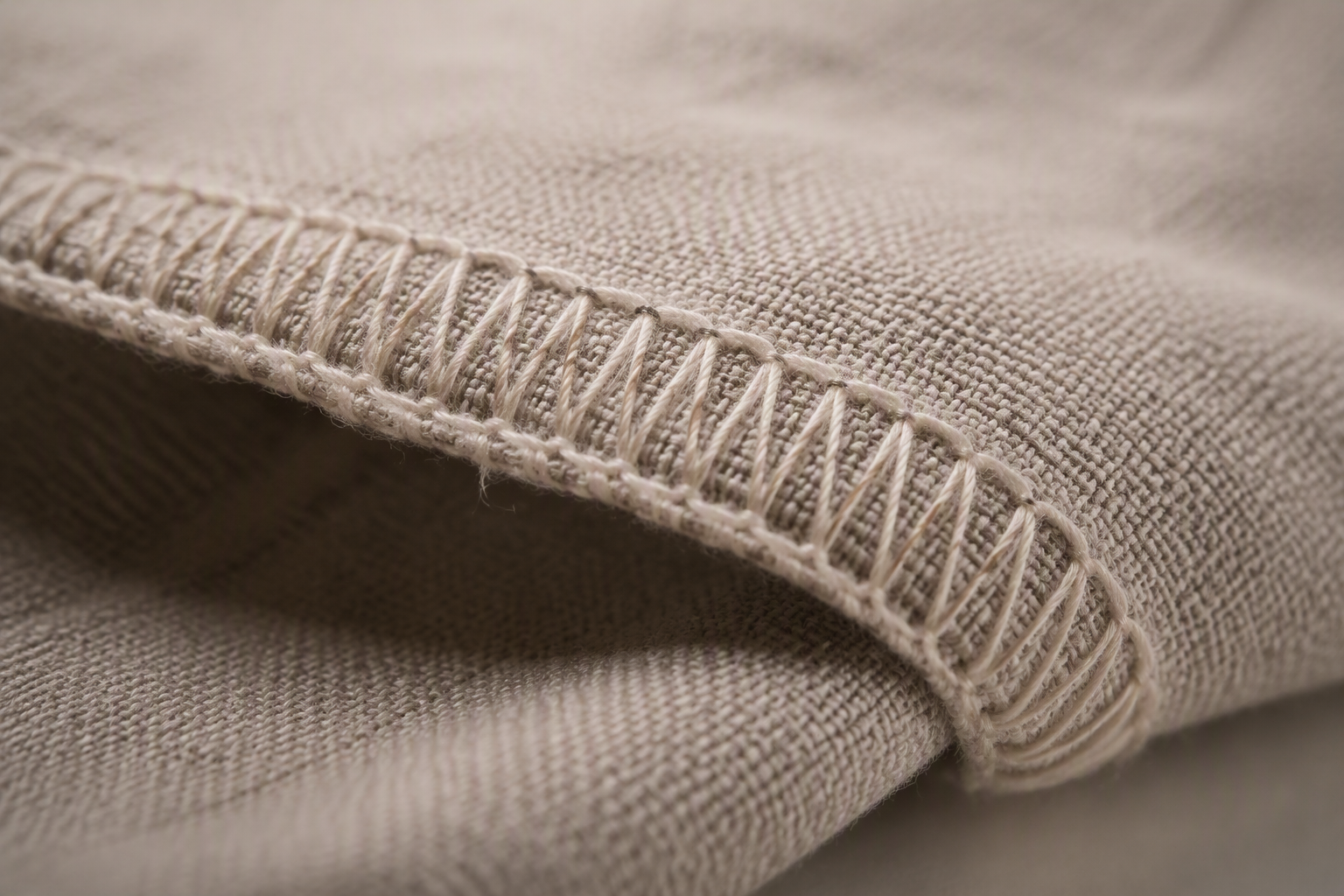
- How it works: the edge is finished with an overlock/serge stitch that wraps the cut border — the stitching is visible on the face.
- Look: casual and practical; it reads as a working linen rather than a formal one, which suits many venues perfectly.
- Durability: good for most service levels. The stitch secures the edge and prevents fraying, though the visible thread can catch more readily than a hidden miter under very heavy mechanical handling.
- Cost and speed: generally the most economical finished edge, which is why it dominates high-volume and value programs.
- Best for: cafés, casual dining, institutional use, value ranges, and bulk programs where the finish should be honest rather than decorative.
- What to check: stitch density and thread colour match — a serged edge in a thread that doesn’t match the fabric is the fastest way to make a napkin look cheaper than it is.
4. Laser-Cut Edge
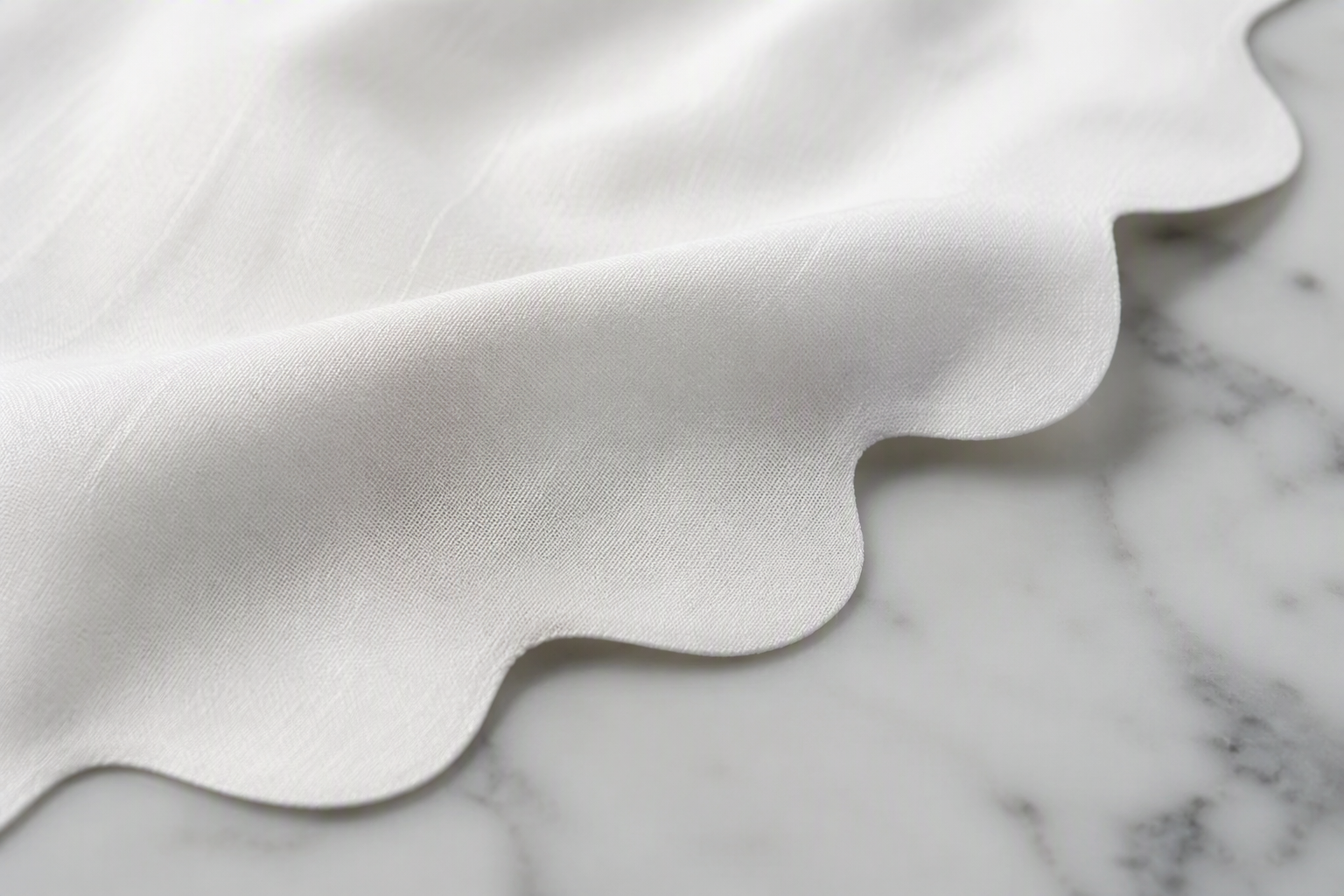
- How it works: a laser trims the edge and simultaneously seals the cut, preventing fraying without any stitching.
- Look: minimal and modern; the border is clean with no visible thread, and the technique handles curves and shapes (rounded corners, cut motifs) that sewn edges cannot.
- Durability: good for most synthetic and blended fabrics, which fuse cleanly; natural fibres behave differently — confirm the finish holds on your specific fabric, because a laser edge on the wrong cloth can still let fibres work loose over time.
- Best for: modern styling, shaped or cut-edge napkins, synthetic and blend programs, and designs where a stitched border would get in the way.
- What to check: a sample after washing — the sealed edge should stay sealed and crisp through the full care cycle your venue actually uses.
5. Raw (Unhemmed) Edge
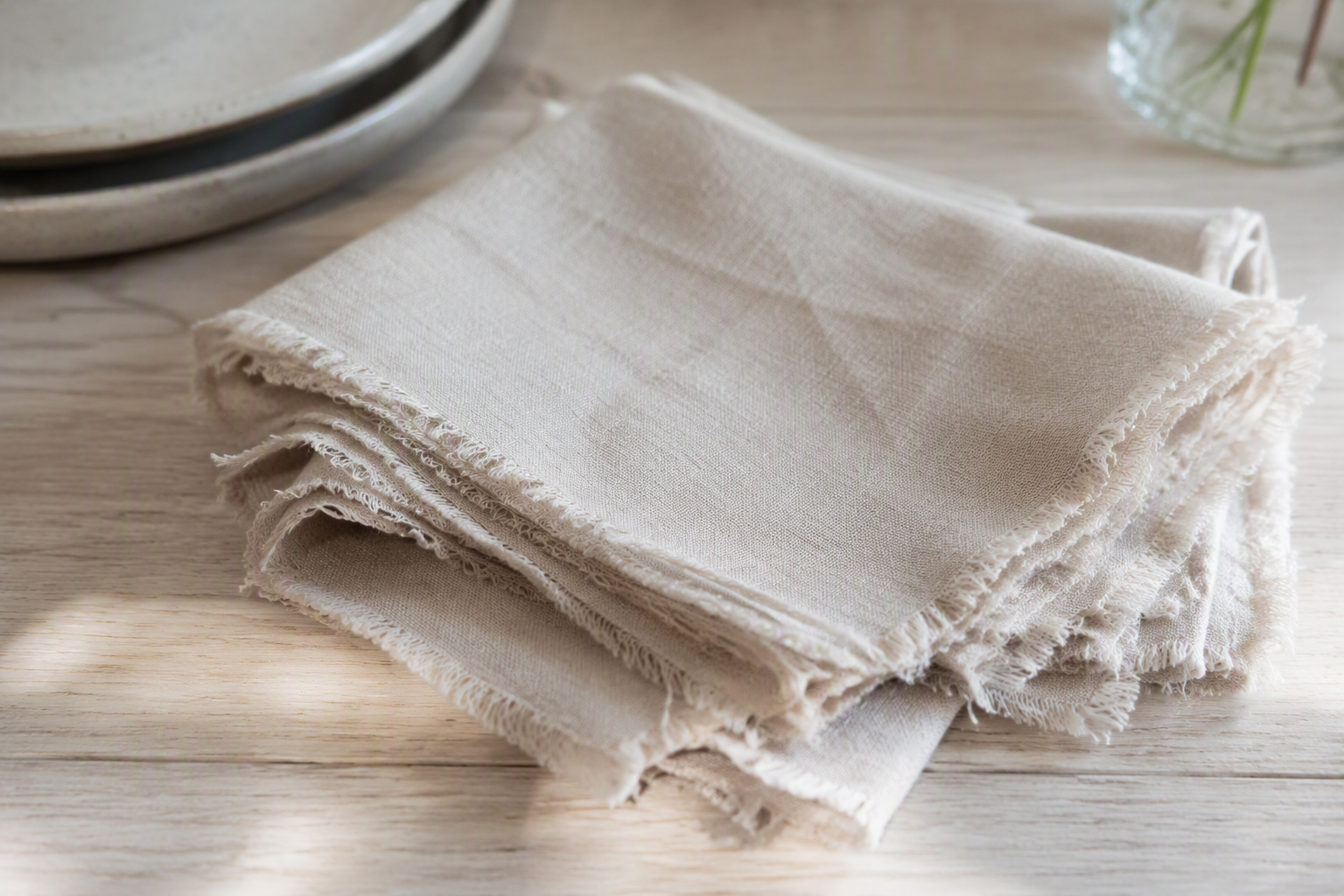
- How it works: the cut edge is left unsewn, allowed to soften and fray slightly with use.
- Look: relaxed, textured, and deliberately informal — a staple of modern Scandinavian, organic, and styled-table looks.
- The honest caveat: a raw edge is a design decision, not a shortcut. On the wrong fabric or in high-turnover commercial service it can fray beyond the intended look; on the right fabric (typically linen or a loose weave) it is a finish in its own right.
- Best for: styled restaurants, boutique venues, and home-linen retail ranges — anywhere the relaxed look is the point.
- What to check: the initial cut quality (a clean, even cut frays predictably) and how the fabric behaves after a few washes, from a supplier who knows the fabric will be sold raw-edged.
6. The Comparison at a Glance
| Finish | Look | Durability | Best for |
|---|---|---|---|
| Mitered corner | Sharp, formal, uniform | High — double-sewn diagonal, hidden raw edge | Commercial programs, hotels, banquets, pressed service |
| Serged edge | Practical, visible stitching | Good — secures the edge, thread can catch | Cafés, casual dining, institutional, value ranges |
| Laser-cut | Minimal, no visible thread | Good on synthetics/blends — fabric-dependent | Modern styling, shaped edges, synthetic programs |
| Raw edge | Relaxed, textured, frayed | Stylistic — frays by design, fabric-dependent | Styled venues, boutique, home-linen retail |
The choice is rarely about which finish is “best” in the abstract — it is about which finish serves the venue’s look and its service intensity.
7. Decorative Edges (Beyond the Four)
- Scalloped edges add a shaped border that reads as classic and decorative — a finish we have covered in depth as its own subject, including how scallop depth and fabric interact.
- Embroidered edges carry the decoration in thread rather than in the cut, and pair the edge finish with a branding element in one construction step.
- Combined finishes exist in practice — for example a mitered corner with an embroidered border, or a laser-cut shape with an embroidered motif — where the edge does the structural work and the decoration does the visual work.
- When mixing finishes across a program, keep the structural finish consistent per venue and vary only the decorative element — it keeps the stack and the care program manageable.
8. Specifying the Edge on an Order
- Name the finish in writing — “mitered corner”, “serged edge”, “laser-cut”, or “raw edge” — rather than assuming the supplier’s default.
- Approve a finished sample with the actual edge, not just a fabric swatch; the edge only exists in the finished piece.
- State the thread colour for sewn edges, so the match is part of the specification.
- Check consistency at delivery — corners aligned on mitered pieces, stitch density even on serged edges, seals intact on laser-cut, cuts clean on raw edges.
- Keep the approved sample with the stock record, so reorders are matched against the same construction, not just the same fabric.
9. Edge Finish FAQs
Which edge lasts longest in commercial service?
The mitered corner is the standard for a reason — the double-sewn diagonal with the raw edge hidden inside holds up well under heavy folding, washing, and pressing. Serged edges follow closely for most service levels.
Can laser-cut edges work on natural fibres?
Not always — the fusion behaviour depends on the fabric, and some natural fibres do not seal cleanly. Always confirm with the supplier that the laser finish holds on your specific cloth, and verify with a washed sample.
Is a raw edge a cheaper option in disguise?
It can be, and the venue ends up paying for it in appearance. A raw edge intended as a style on the right fabric is a finish; a raw edge that is fraying unpredictably in a high-turnover room is a defect. Judge the fabric and the service level, not just the price line.
Do I need to specify the edge, or is it standard?
Every supplier has a default, but defaults vary and they are not visible in a swatch. Naming the edge, approving a finished sample, and recording it in the spec is what keeps reorders consistent.
Final Thoughts
The edge is the part of the napkin that works hardest and shows most. Choose the finish to fit the venue’s look and its service intensity — mitered for formal commercial programs, serged for practical high-volume use, laser-cut for modern and shaped edges, raw for styled settings — then specify it in writing and approve it on a finished sample. The napkin that wears best is usually the one whose edge was decided on purpose.
We finish napkins to your specification — mitered corners, serged edges, laser-cut shapes, and raw edges, with matching thread and finished-edge samples approved before production. Contact us for edge-finish samples, swatches, MOQs, and wholesale pricing.