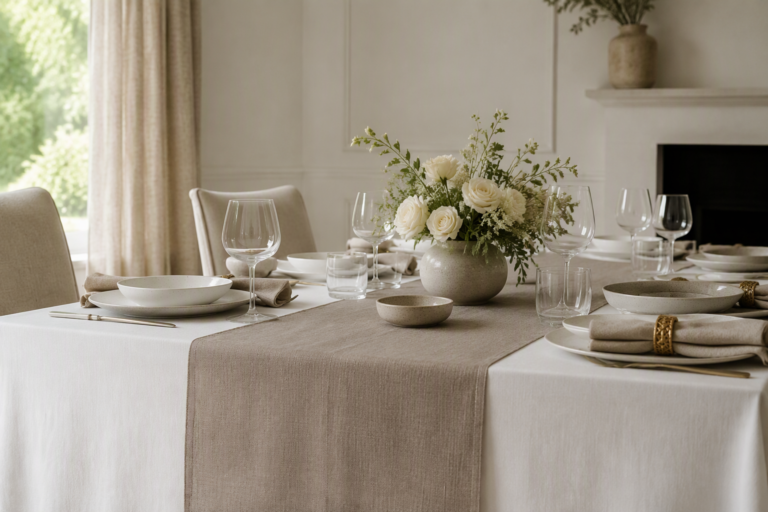
Every restaurant and hotel owner faces the same decision: cloth napkins or paper? On the surface, paper looks like the obvious budget choice — a few cents per napkin against a dollar or more for cloth. But that comparison is misleading, because a cloth napkin is not used once. It is washed and reused hundreds of times. This guide breaks down the real cost-per-use math, plus the quality, branding, and sustainability factors that the price tag does not show.
1. Why Unit Price Is the Wrong Number
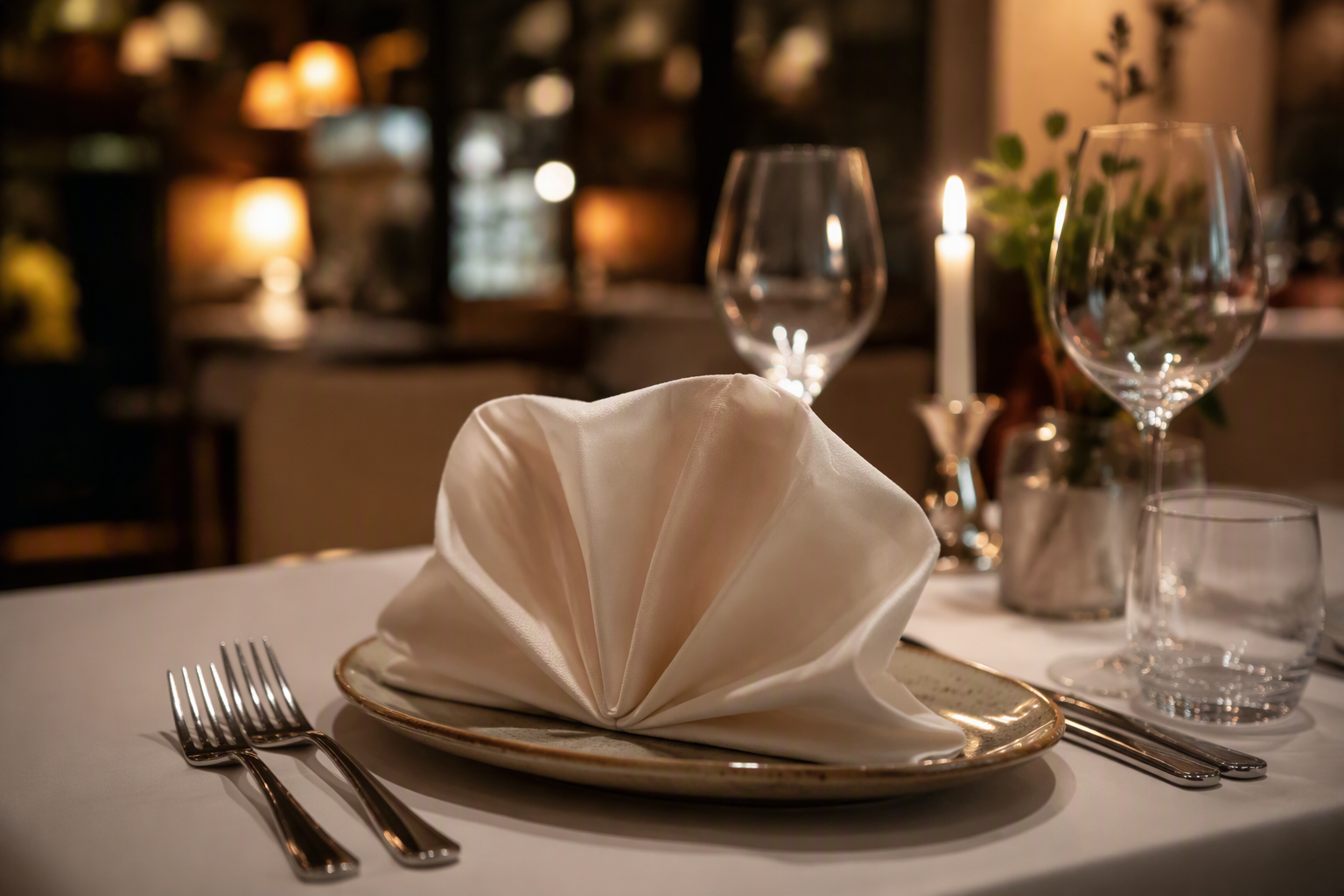
A paper napkin costs a few cents and is used exactly once. A cloth napkin costs more per piece, but it serves 200–400 meals over its life before it is retired. Comparing the two on unit price is like comparing the cost of buying one paper cup against one reusable glass — without counting how many times each is used. The number that matters for your budget is cost per use, not cost per piece.
2. How to Calculate True Cost-Per-Use
For cloth napkins, the real cost has two parts: the purchase price spread across every wash, plus the laundering cost each time:
- Cloth cost per use: purchase price ÷ number of usable washes (a quality cloth napkin typically lasts 200–400 commercial washes).
- Laundering cost per use: detergent, water, energy, and labor (or outsourced laundry fees) divided per napkin.
- Paper cost per use: simply the purchase price per napkin — it is used once and discarded.
Use your own numbers in this calculation — prices vary by market, quality, and laundry arrangements. When buyers run the math with their own figures, cloth often comes out competitive on cost alone, before counting the quality and branding benefits below.
3. What the Price Tag Does Not Show
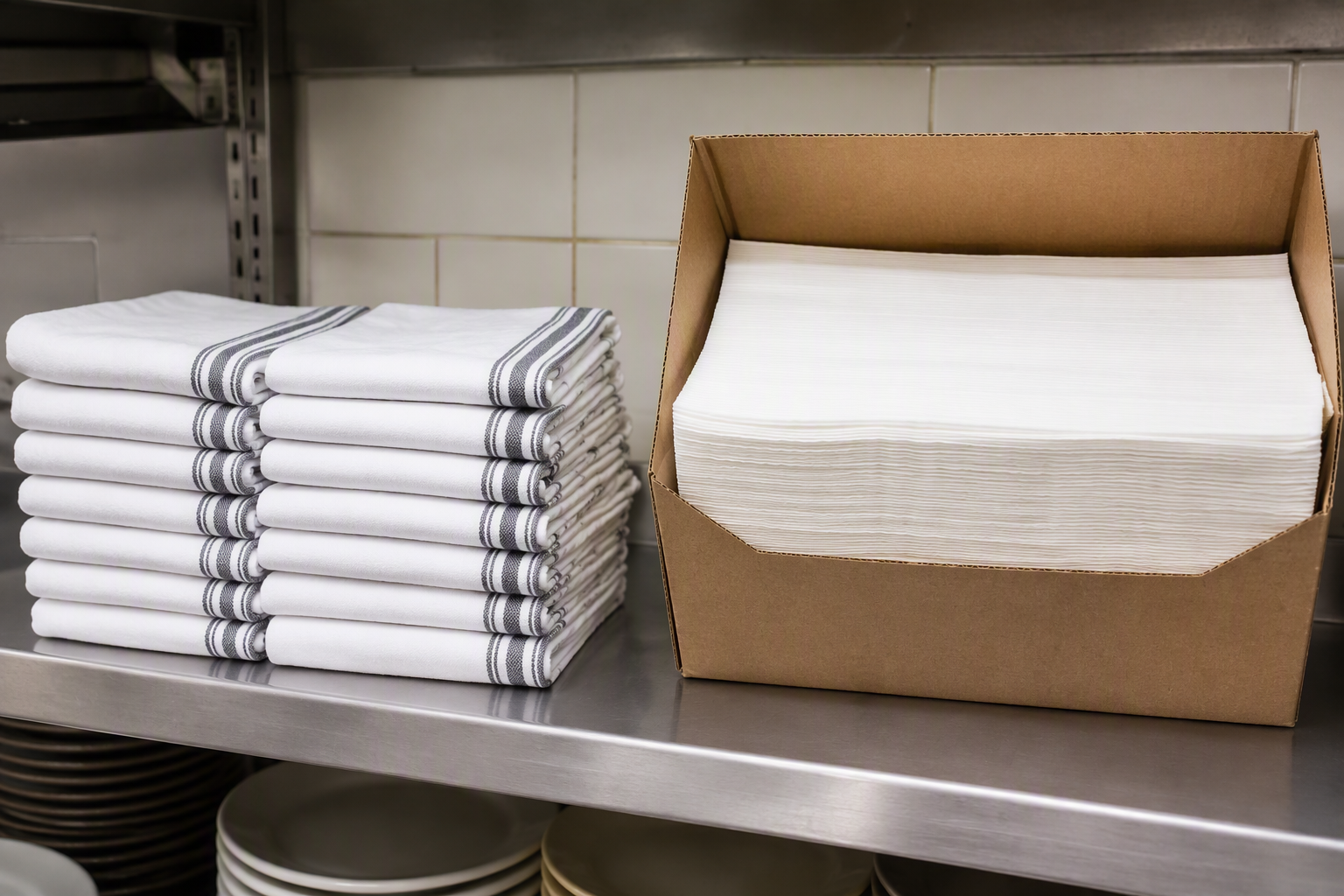
- Guest experience. Cloth napkins are part of the dining experience — the weight, texture, and fold signal a level of care that paper cannot match. Restaurants using cloth are consistently perceived as higher quality.
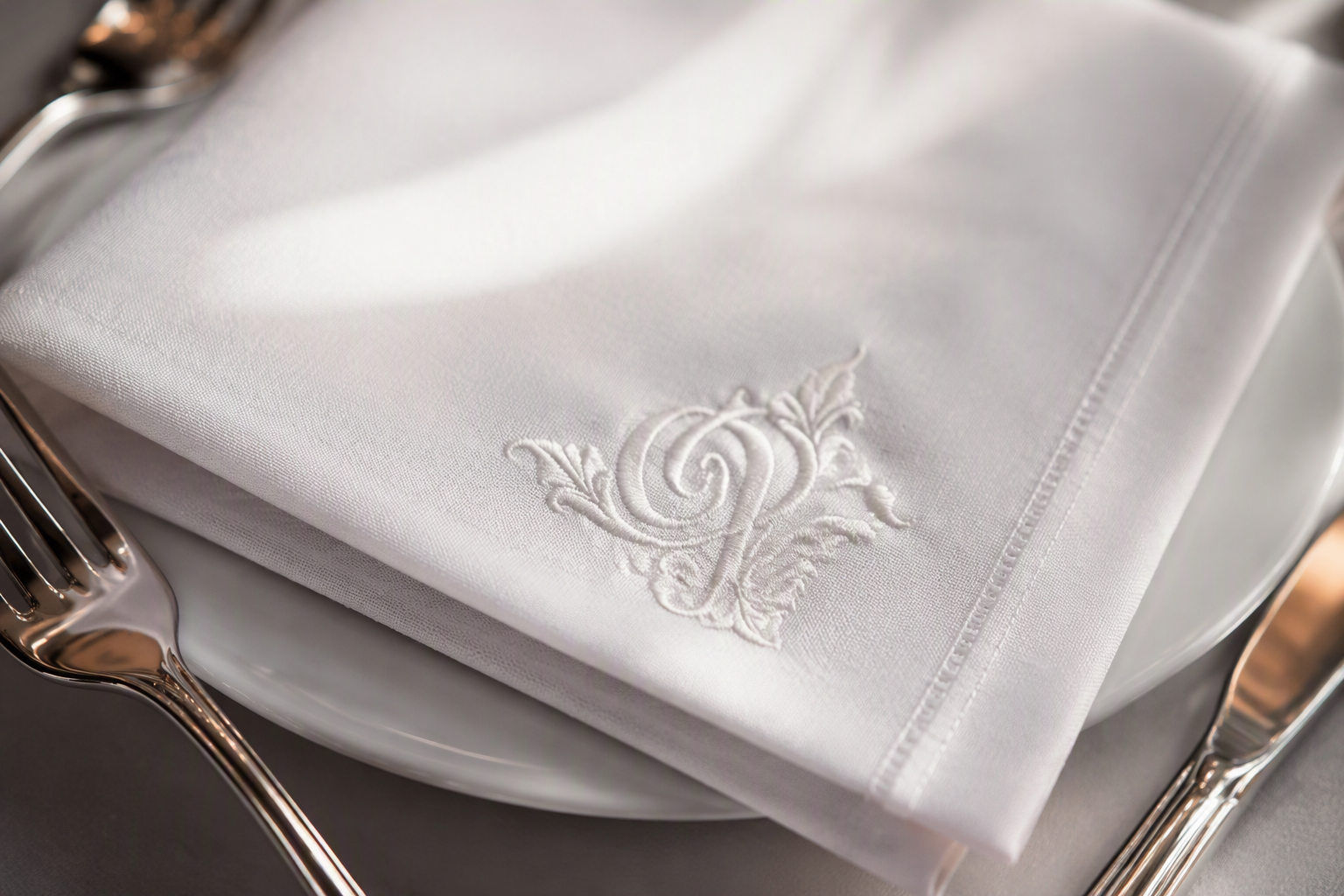
- Branding. Cloth napkins take embroidery and printing beautifully, turning every table into a branded touchpoint. Paper branding is possible, but the impression is different.
- Sustainability. A reusable cloth napkin replaces hundreds of single-use disposables — less waste, fewer resources consumed over its life. For businesses with ESG goals, this is a measurable win.
- Storage and logistics. Paper needs constant reordering and storage of bulky cartons; cloth needs a linen inventory and a laundry workflow. The two models demand different operations.
- Hygiene perception. Guests associate freshly laundered cloth with cleanliness and care; paper is seen as practical, but rarely as premium.
4. Which Model Fits Which Business
- Fine dining and upscale restaurants: Cloth is expected. Guests judge the table before they taste the food — cloth napkins are part of that judgment.
- Hotels and banquet venues: Cloth is standard for events and dining rooms, where presentation drives the booking.
- Casual dining: A common middle path — cloth for dine-in, paper for takeaway and high-turnover service.
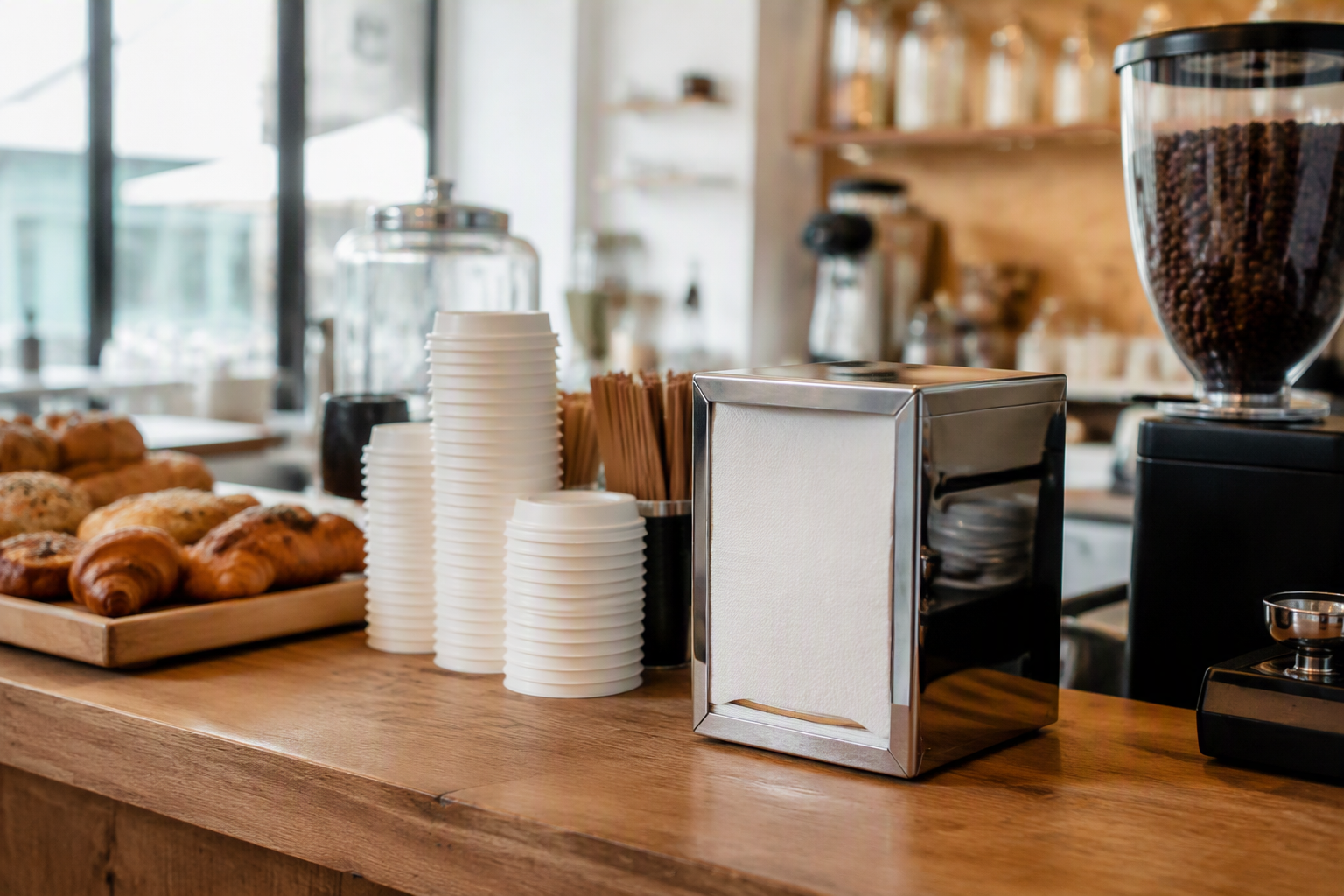
- Cafés, fast food, and delivery: Paper fits the speed, volume, and disposable nature of the service.
5. The Hybrid Strategy
Many successful operations use both. Cloth napkins set the tone in the dining room, where guests linger and the experience matters; paper handles takeaway bags, delivery orders, and high-turnover counter service where a reusable napkin would never return. This hybrid approach captures the premium impression of cloth where it counts and the practicality of paper where it does not.
6. Buying Advice for Businesses
- Run the numbers with your own prices. Do not copy someone else’s conclusion — calculate cost-per-use with your laundry costs and napkin quality.
- Start with a trial. Test cloth napkins in one dining area for a month and watch guest feedback, staff workflow, and actual laundry costs.
- Choose fabric by use. Polyester and blends are easiest to launder; cotton feels premium; linen signals luxury. Match the fabric to your price point.
- Factor in the spare ratio. You need 4–6 times your daily seat count in cloth napkins to cover laundry cycles — plan the inventory, not just the per-piece price.
- Consider outsourcing. If in-house laundry is costly, professional linen services can change the whole cost equation for cloth.
7. Cloth vs. Paper FAQs
Are cloth napkins really better for the environment?
Over their full life, reusable cloth napkins typically consume fewer resources than the hundreds of single-use paper napkins they replace — especially when laundered efficiently in bulk. The exact comparison depends on your laundry method and local water and energy costs.
How many cloth napkins do I need?
A common rule is 4–6 times your maximum seated covers, so you always have clean stock while the rest are in the laundry cycle. Venues running multiple meal services need more.
Do customers notice the difference?
Yes — cloth napkins are one of the first visual and tactile signals of a restaurant’s price point and care. Studies and guest surveys consistently associate cloth with higher perceived quality.
Can I get cloth napkins with my logo?
Yes. Cloth napkins take embroidery and printing well, and custom colors, sizes, and monograms are standard from most manufacturers — a durable branding investment that paper cannot match.
Final Thoughts
The cloth-versus-paper decision is not really about cents per napkin — it is about cost per use, guest perception, branding, and the experience you want to deliver. Run your own numbers, consider a hybrid approach, and let your concept decide. For most dining rooms that want to feel premium, cloth pays for itself in impression and quality — not just in the ledger.
Planning to switch to cloth or refresh your table linens? We manufacture and customize cloth napkins, tablecloths, and runners in our own factory — with embroidery, printed logos, custom sizes, and colors. Contact us for samples, MOQs, and wholesale pricing.