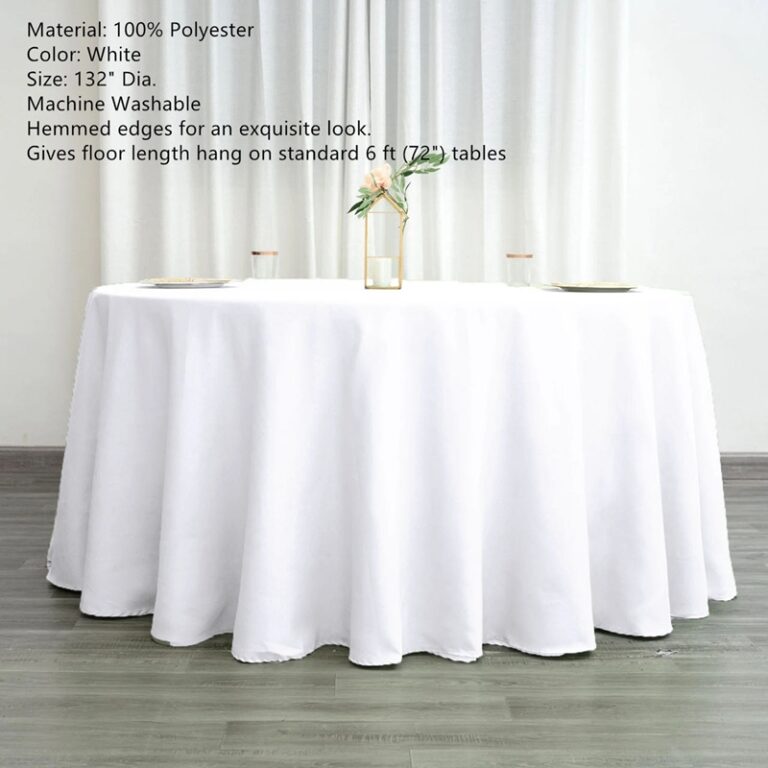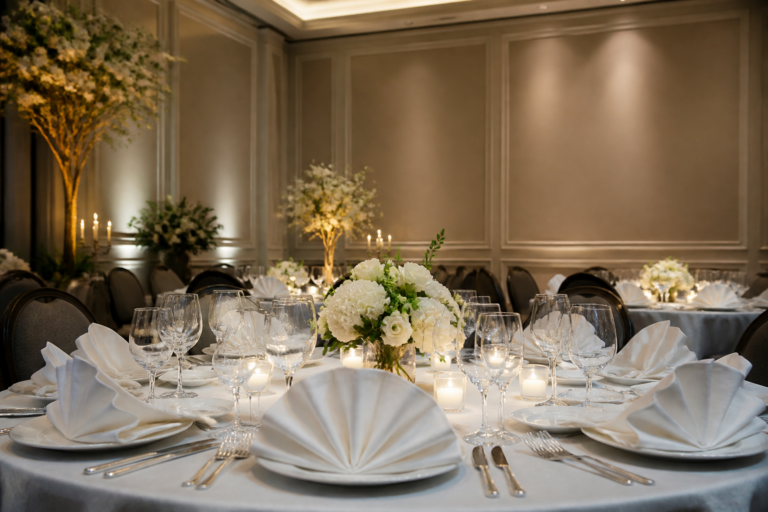
Some napkins simply hold food off your clothes. Others make a statement before a single course is served. Damask napkins belong to the second group: woven with fine satin patterns in a single color, they catch the light, fold into crisp shapes, and signal a level of formality that plain-weave napkins never can. For hotels, caterers, and fine-dining restaurants, damask is the classic choice — and it pays to understand the weave before you buy.
1. What Makes Damask Different
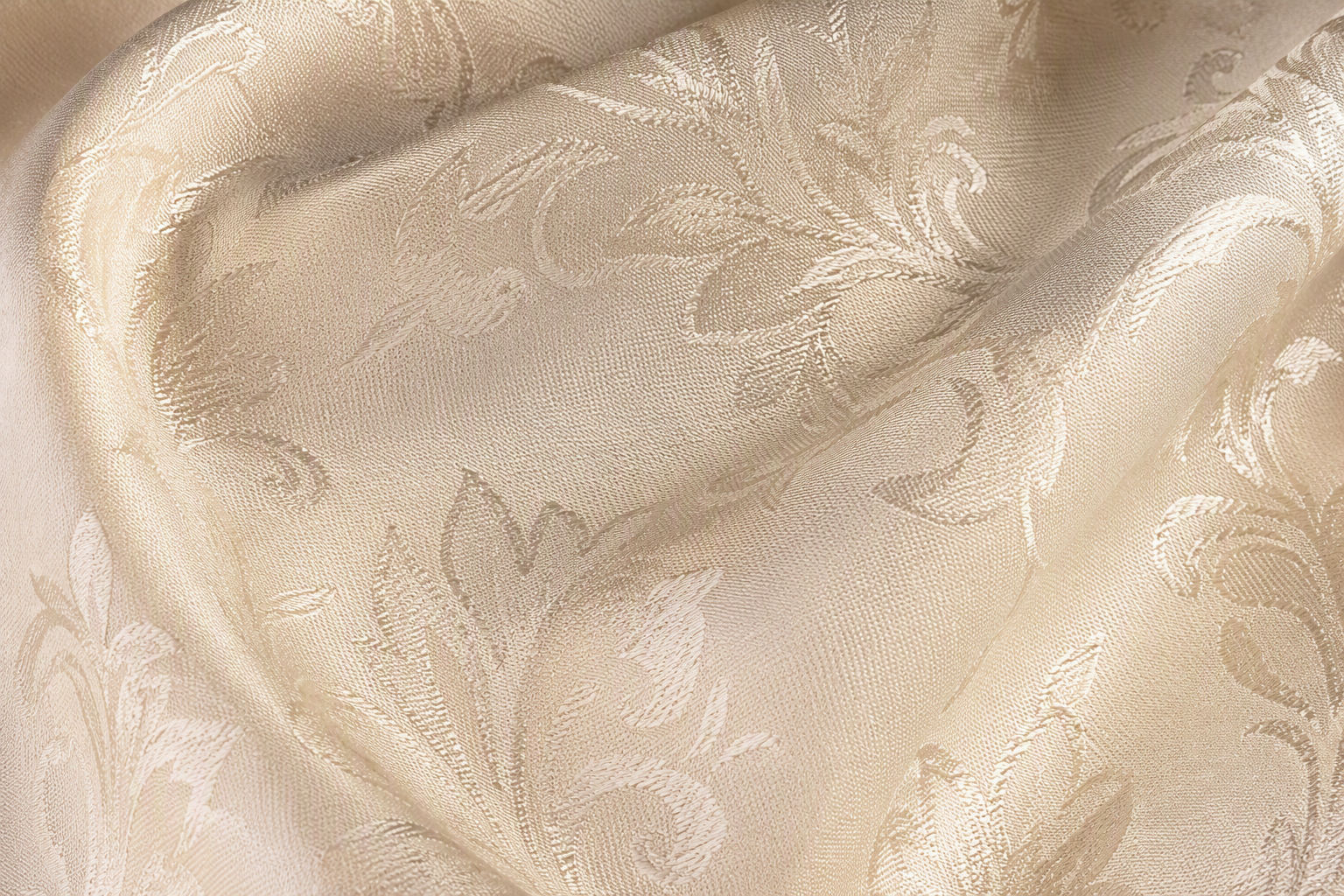
Damask is a jacquard weave technique that creates a pattern with contrasting light reflection: the motif is woven in satin weave while the background uses a different weave structure, all in a single color. The result is an elegant, tone-on-tone pattern that appears and disappears as light moves across the fabric. Because the design is woven rather than printed, it never washes out, cracks, or fades — a key advantage for linens that are laundered constantly.
2. The Signature Reversible Design
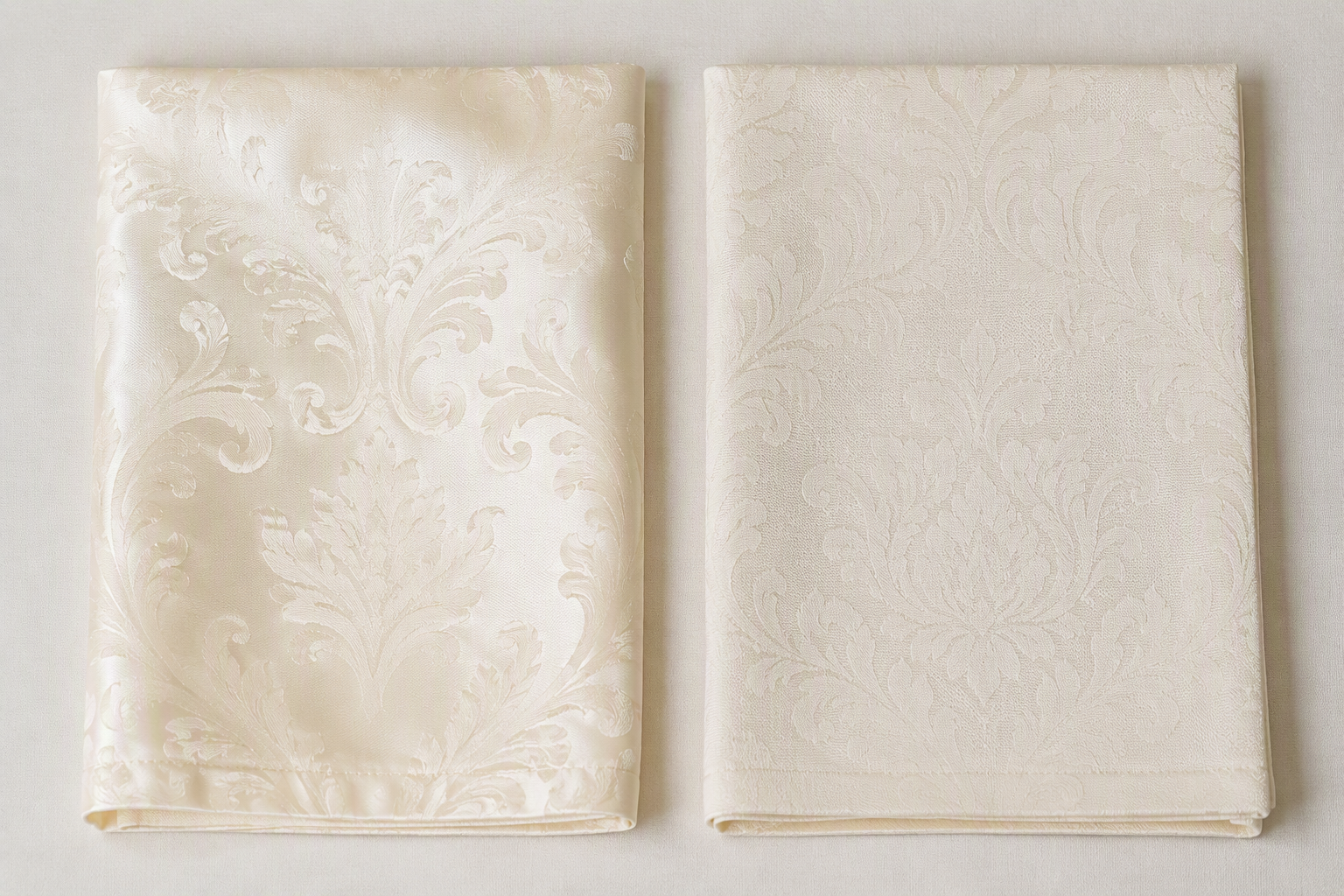
A hallmark of true damask is its reversibility. Turn the napkin over and the pattern is still there, mirrored: where the front shows a glossy satin motif on a matte ground, the back shows the matte motif against a satin ground. This two-sided beauty means damask napkins can be folded or draped either way and always look intentional — and it doubles the practical life of the linen, since both faces are presentable.
3. Damask vs. Other Fine Napkin Fabrics
| Napkin type | Look | Durability | Care | Typical use |
|---|---|---|---|---|
| Damask (jacquard) | Woven tone-on-tone pattern, satin sheen | Excellent — pattern cannot fade or peel | Standard commercial laundry; press to restore sheen | Formal banquets, fine dining, luxury hotels |
| Satin | High gloss, no pattern | Good; snags on rough use | Gentle cycles, low heat | Gala dinners, premium events |
| Embroidered | Added stitch detail on ground fabric | Good; thread can catch | Careful washing, protect embroidery | Weddings, boutique restaurants |
| Plain cotton / polyester | Simple, clean | Good | Easy, forgiving | Everyday hotel and restaurant service |
4. Fabric Blends for Damask Napkins
- 100% cotton damask: The traditional premium choice — breathable, absorbent, and softens with washing while keeping its woven pattern.
- Cotton-polyester damask: The workhorse of commercial hospitality — the cotton gives the classic hand feel, the polyester adds wrinkle resistance and easy-care laundering.
- Polyester damask: Budget-friendly and exceptionally durable; sheen is easy to maintain, though the hand feel is less natural.
- Linen damask: The rarest and most luxurious — crisp, lustrous, and increasingly expensive. Found in top-tier venues.
Yarn count and weave density matter as much as fiber content. A finely woven damask with a high thread count drapes better, holds a fold crisply, and launders more gracefully than a loose, low-density version.
5. Sizes and Presentation
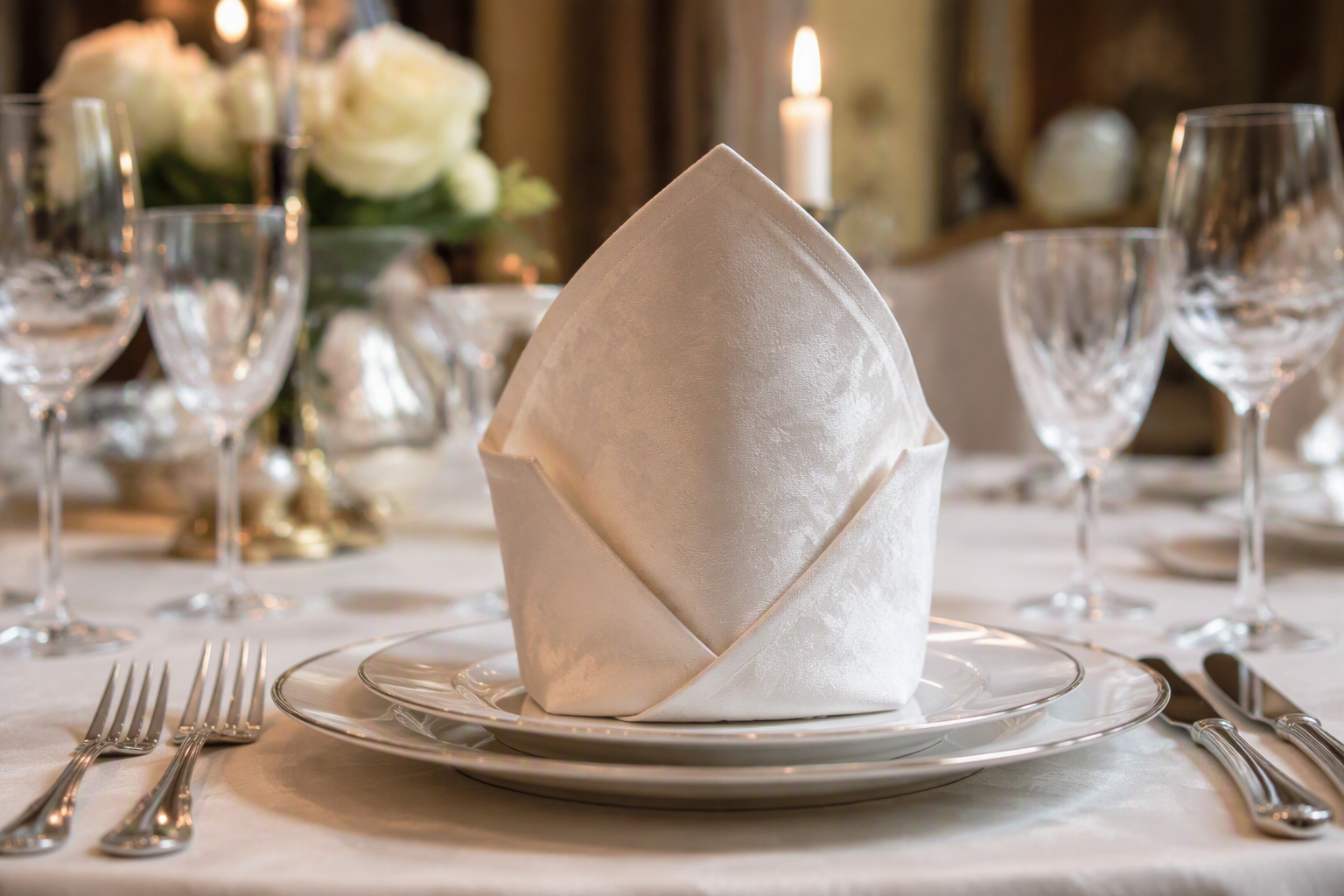
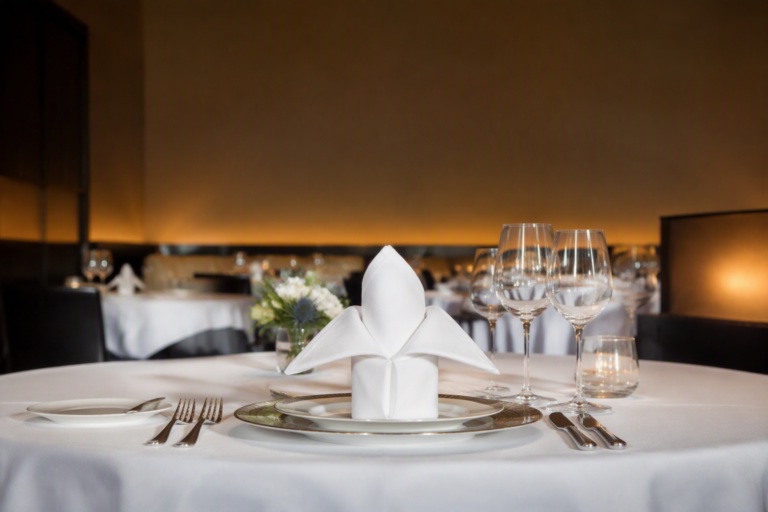
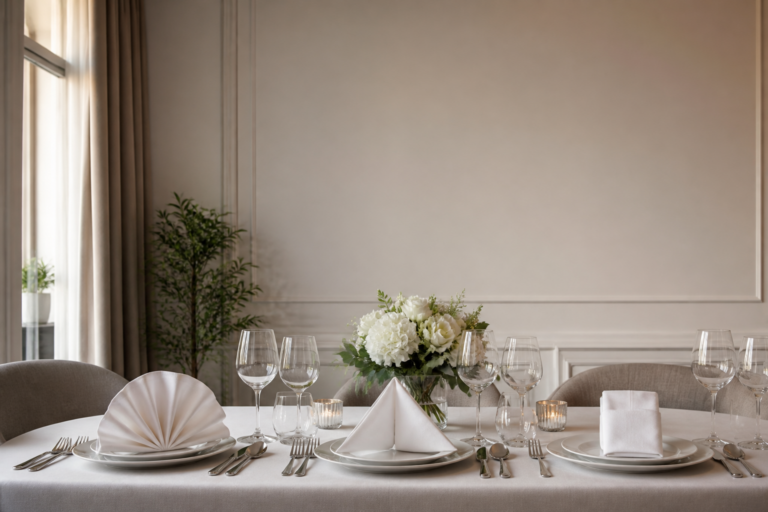
Dinner napkins of 20″ x 20″ (about 50 cm) are the standard for formal service; oversized 22″ napkins are popular for high-end banquets, and 18″ luncheon sizes suit lighter service. Damask napkins shine when folded so the pattern faces the guest — classic bishop’s hat, fan, and crown folds all display the weave to its best advantage. Because the design is tone-on-tone, damask suits both traditional monograms and minimalist modern tablescapes.
6. Caring for Damask Napkins
- Wash warm, not hot. Commercial warm cycles protect the weave and the sheen; very hot water and harsh bleach dull the satin face over time.
- Bleach whites only, and gently. Oxygen bleach is safer than chlorine for preserving the luster of white damask.
- Press to restore the sheen. A flatwork ironer or steam pressing brings back the crisp, glossy finish that defines damask — the single most important step for presentation.
- Fold along clean lines. Consistent folding prevents set creases and distributes wear evenly.
- Sort by color and use. Separate white, ivory, and colored damask, and keep formal banquet stock apart from daily service linens.
7. Buying Damask Napkins for Your Venue
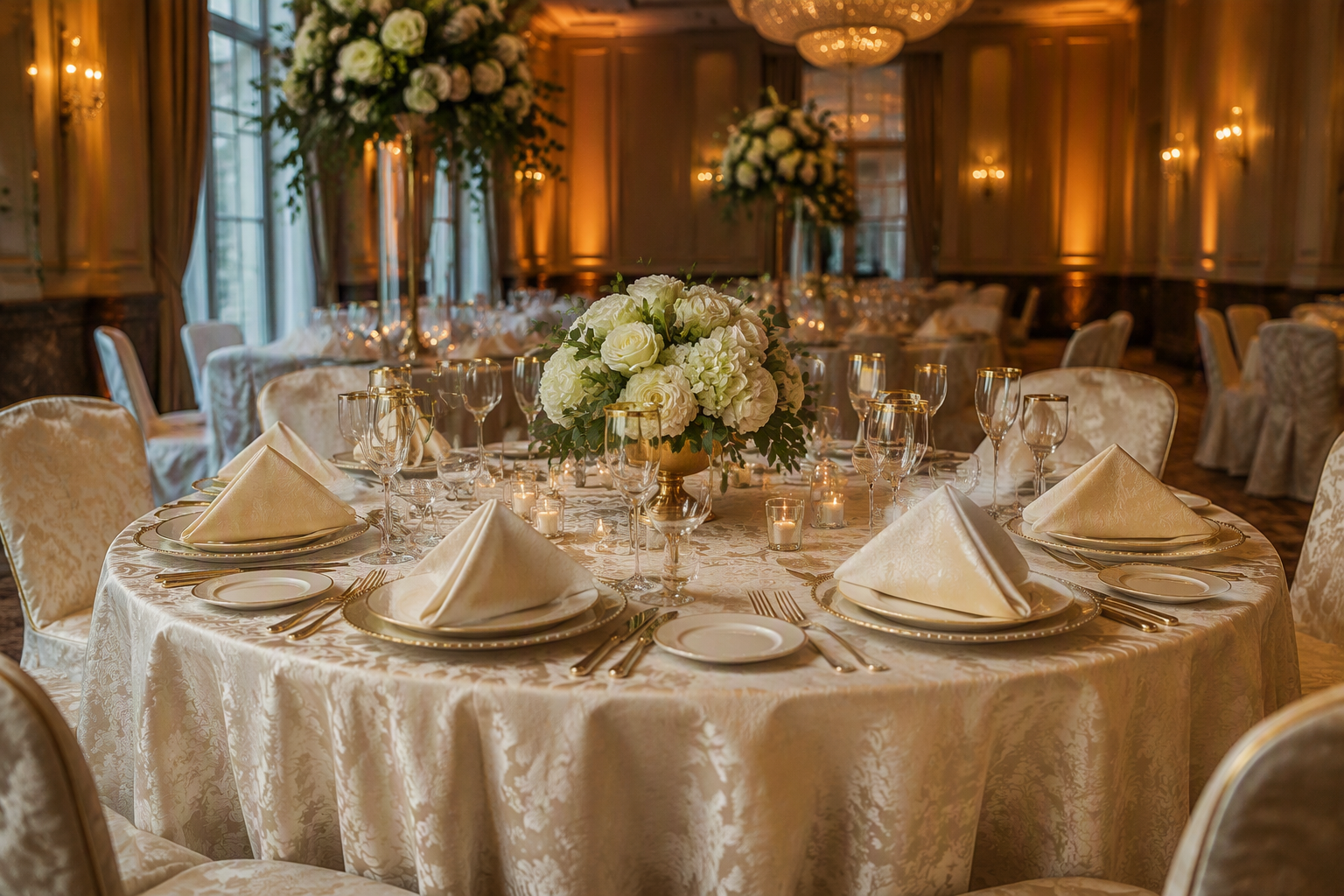
- Order matching sets. Damask napkins are most impressive alongside a damask tablecloth of the same pattern and color — one pattern family ties the whole table together.
- Verify weave density with a sample. Ask for a strike-off or sample napkin first: feel the hand, hold it to the light, and wash it once to check the finish holds.
- Choose blends by your laundry. If you use an outside linen service, cotton-polyester damask performs best; in-house laundry with good pressing capacity can manage 100% cotton.
- Plan your par level. Formal venues typically keep 4–6 napkins per seat cover to cover laundry cycles and event peaks.
- Confirm pattern continuity. For large orders that may be reordered later, confirm the mill can reproduce the exact pattern and dye lot consistency.
8. Damask Napkin FAQs
What is the difference between damask and regular jacquard?
All damask is jacquard-woven, but not all jacquard is damask. Damask specifically means a single-color, reversible weave with contrasting satin-and-matte structure. Multi-color jacquard patterns are usually not called damask.
Do damask napkins need ironing?
For formal service, yes — pressing is what restores the crisp satin sheen that makes damask distinctive. This is normally done with commercial flatwork ironing equipment.
Are damask napkins suitable for outdoor events?
They are better suited to indoor formal settings. For outdoor events, most venues use sturdier or more casual linens, since damask’s refined finish is best appreciated in controlled light.
Can I get damask napkins in custom colors and monograms?
Yes. Damask is woven to order, so custom colors and woven monograms are available — an excellent way to carry a brand or venue identity into the table setting.
Final Thoughts
Damask napkins are more than table linen — they are part of the room’s architecture, weaving light, pattern, and formality into every place setting. For venues that serve a premium experience, the investment in woven damask pays back in impression, durability, and a finish that printing can never imitate.
We weave damask tablecloths and napkins in our own factory — from custom patterns and colors to woven monograms and matched banquet sets. Contact us for samples, pattern options, MOQs, and wholesale pricing.