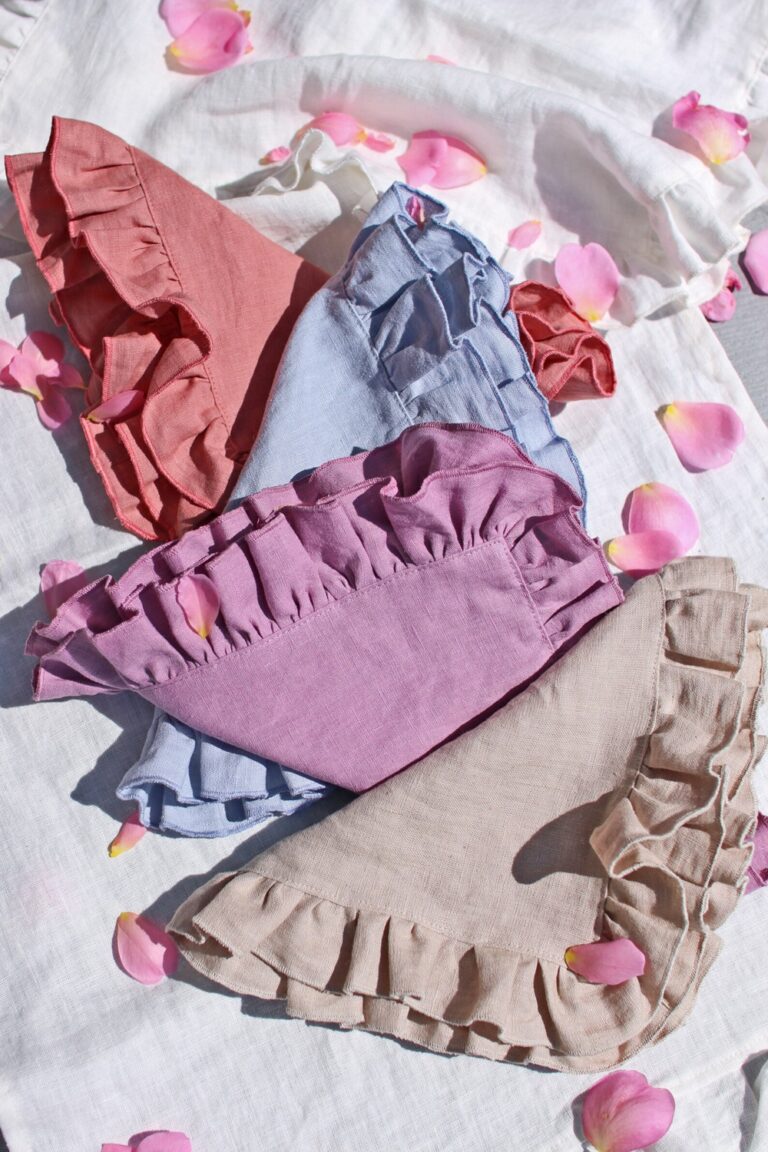
Table runners look like the simplest item in a linen program, and they are the one buyers most often get wrong. A tablecloth only has to cover a table; a runner has to sit correctly across the width, run the right distance down the length, and hang with an even drop at both ends. Get any of those three wrong and the whole table looks improvised.
1. Two Dimensions, Two Ways to Fail
- Width problems: Too narrow and the runner looks like a decorative strip that happened to land on the table; too wide and it stops reading as a runner at all and starts looking like a mismatched tablecloth.
- Length problems: Too short and it floats in the middle of the table with no drop at either end; too long and it pools on the floor or folds awkwardly over the edge.
Both are specification failures, not styling ones — and both are solved before ordering.
2. Standard Runner Widths
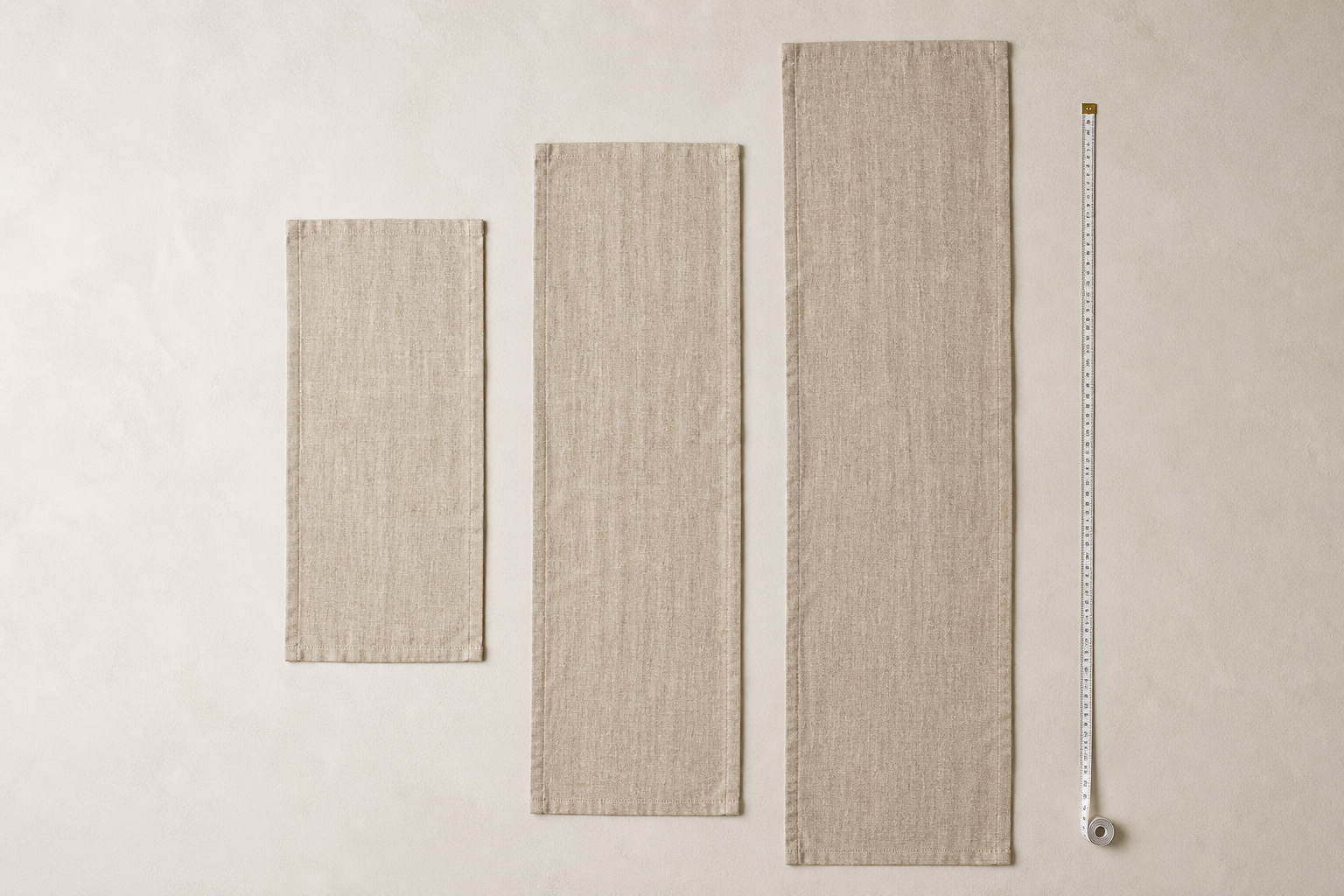
- Narrow (approx. 8″–10″): A slim accent line — best for minimal settings, narrow tables, and layering on top of a full tablecloth.
- Standard (approx. 12″–14″): The most versatile width. It reads clearly as a runner, leaves room for place settings on either side, and works on most table sizes.
- Wide (approx. 16″–20″): A statement width for long banquet tables and generous settings, or where the runner is doing most of the visual work — often layered over a plain tablecloth.
As a rule of thumb, a runner should occupy roughly a third of the table’s width when used over a bare table, or be noticeably narrower than the tablecloth beneath it when layered.
3. Runner Length and Drop
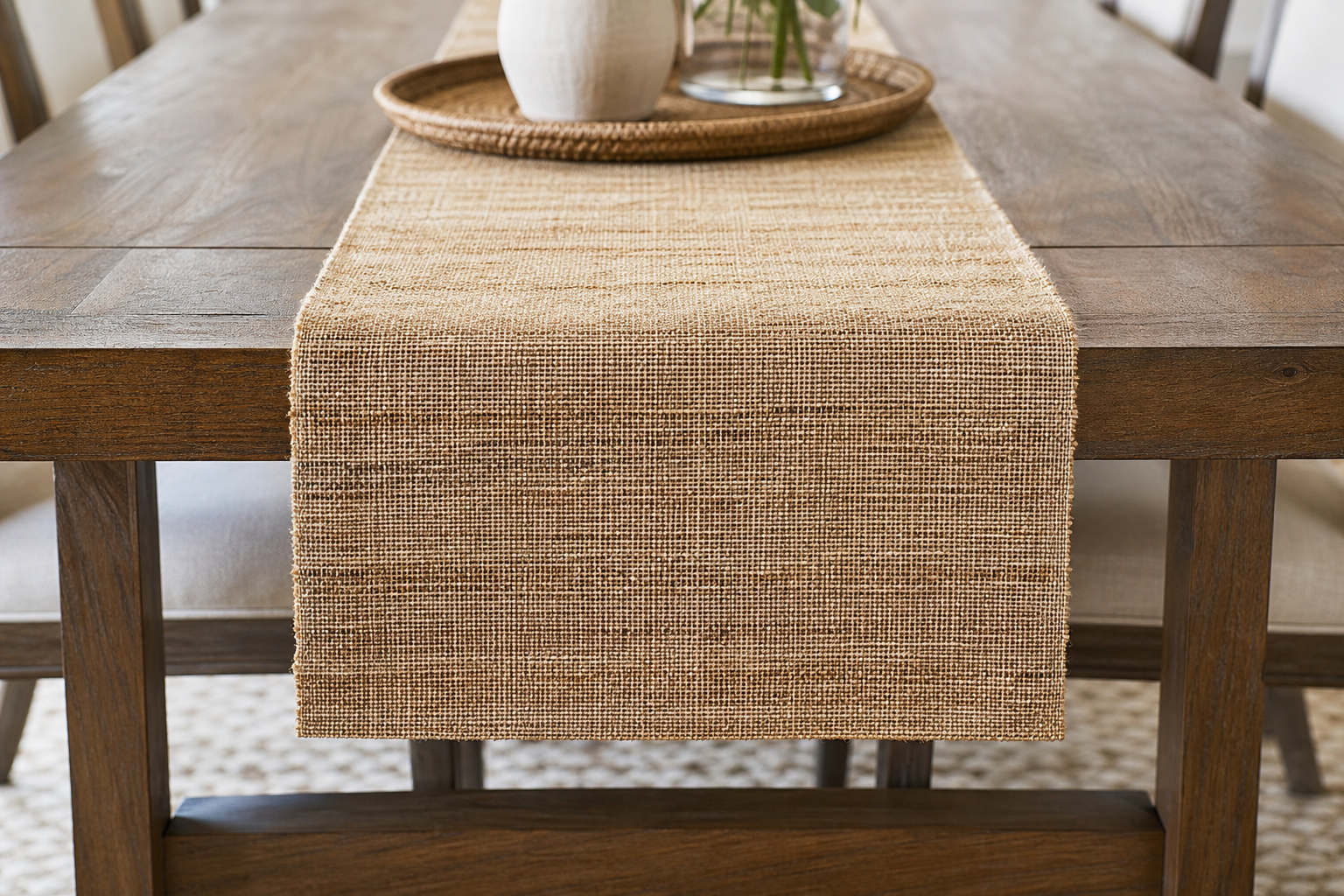
The formula is simple:
Runner length = table length + (2 × desired drop)
For a typical 72″ table with a 15″ drop at each end, that calls for a runner of about 102″ — which is why standard stock lengths sit where they do. Common finished lengths include roughly 13″×72″, 13″×90″, 16″×108″, 16″×120″, and 16″×144″, with the longer formats intended for banquet and event tables.
Drop preferences in practice:
- Short drop (approx. 6″–8″): Tidy and modern; suits casual dining and café tables where chairs move constantly.
- Standard drop (approx. 12″–18″): The classic look for restaurants and hotels — enough fabric to register as intentional, not enough to interfere with seating.
- Long drop (approx. 20″+ or floor length): A formal, event-driven look. Check chair placement and foot traffic before specifying, because long drops snag.
4. Size by Table Type
| Table type | Typical table length | Suggested runner length | Notes |
|---|---|---|---|
| Small dining table (4–6 seats) | Approx. 60″–72″ | Approx. 90″–102″ | Standard 12″–14″ width works well |
| Long dining table (6–8 seats) | Approx. 84″–96″ | Approx. 108″–120″ | Confirm chair clearance at the ends |
| Banquet / event table | Approx. 120″ and up | Approx. 144″ and up | Often layered over a floor-length cloth |
| Round table | Diameter approx. 36″–60″ | Approx. 72″–90″ | A runner crosses the centre; ends hang naturally |
| Buffet / sideboard | Varies | Approx. 36″–72″ | Decorative — short drops are usually enough |
Treat these as planning ranges and confirm the exact finished dimensions with your supplier: nominal sizes vary between manufacturers, and a runner labelled “90 inch” is not always 90 inches finished.
5. How Fabric Affects the Drop
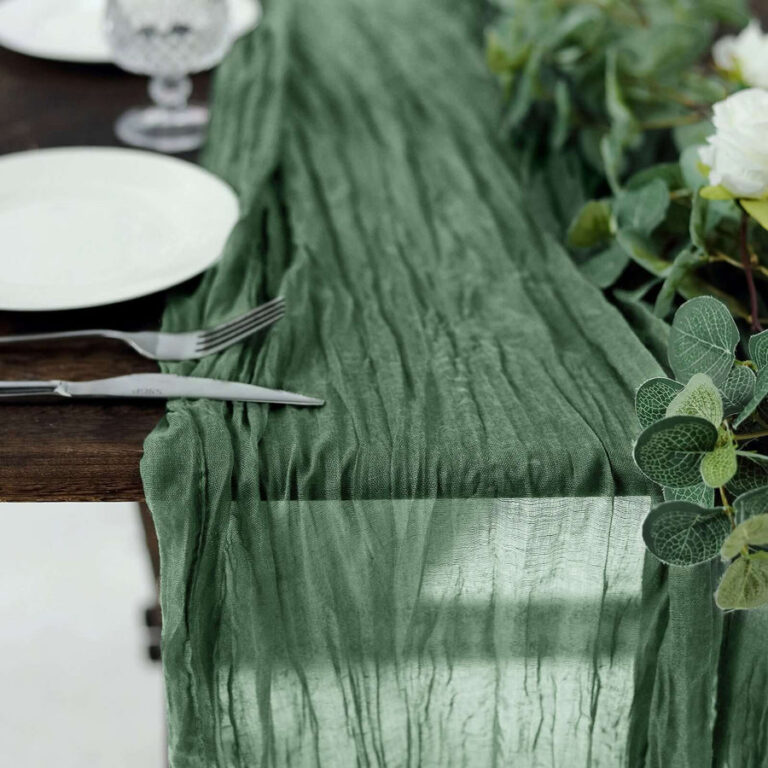
- Light and fluid fabrics (gauze, voile, chiffon) fall softly and gather — they suit longer drops and casual styling, but crease easily.
- Mid-weight woven fabrics (linen, cotton, spun polyester) hold a straight, even drop and are the safest choice for commercial use.
- Heavy and structured fabrics (jacquard, velvet, coated cloths) hold their shape and resist hanging, so shorter drops and wider widths generally look better.
This is why identical dimensions can look completely different in two fabrics — specify width and length together with the fabric, not in isolation.
6. Coordinating with the Tablecloth
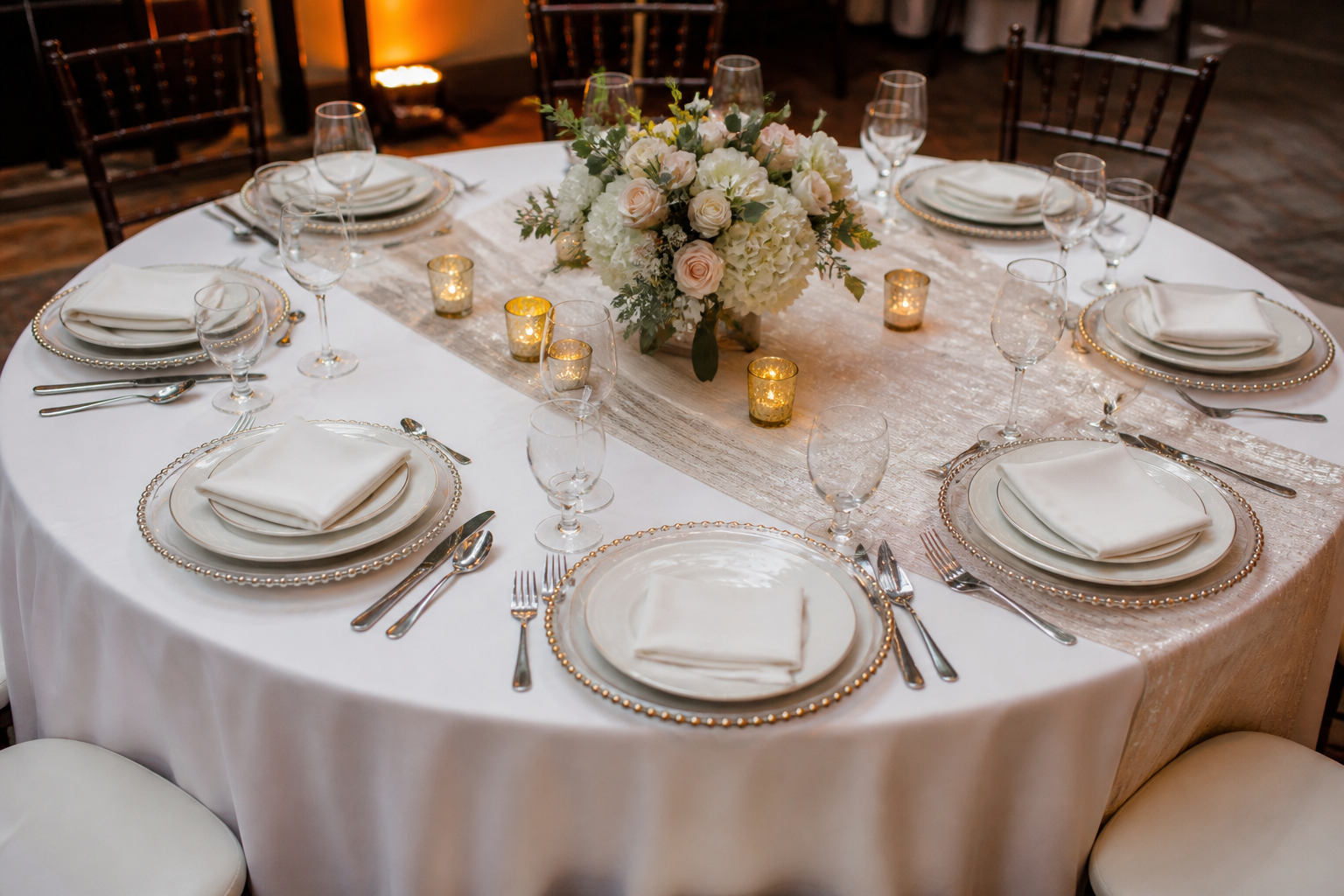
- On a full tablecloth: Choose a runner at least two steps narrower than the table width so the cloth remains visible on both sides.
- On a bare table: A wider runner can carry more of the look; make sure the drop clears the seating.
- On round tables: Use a shorter runner as a centre feature rather than a length that crosses the whole setting.
- Match the drop language: If the tablecloth is floor length, a runner with a very short drop can look unfinished; if the cloth has a standard drop, a runner reaching almost to the floor looks heavy.
7. Buying Runners in Bulk
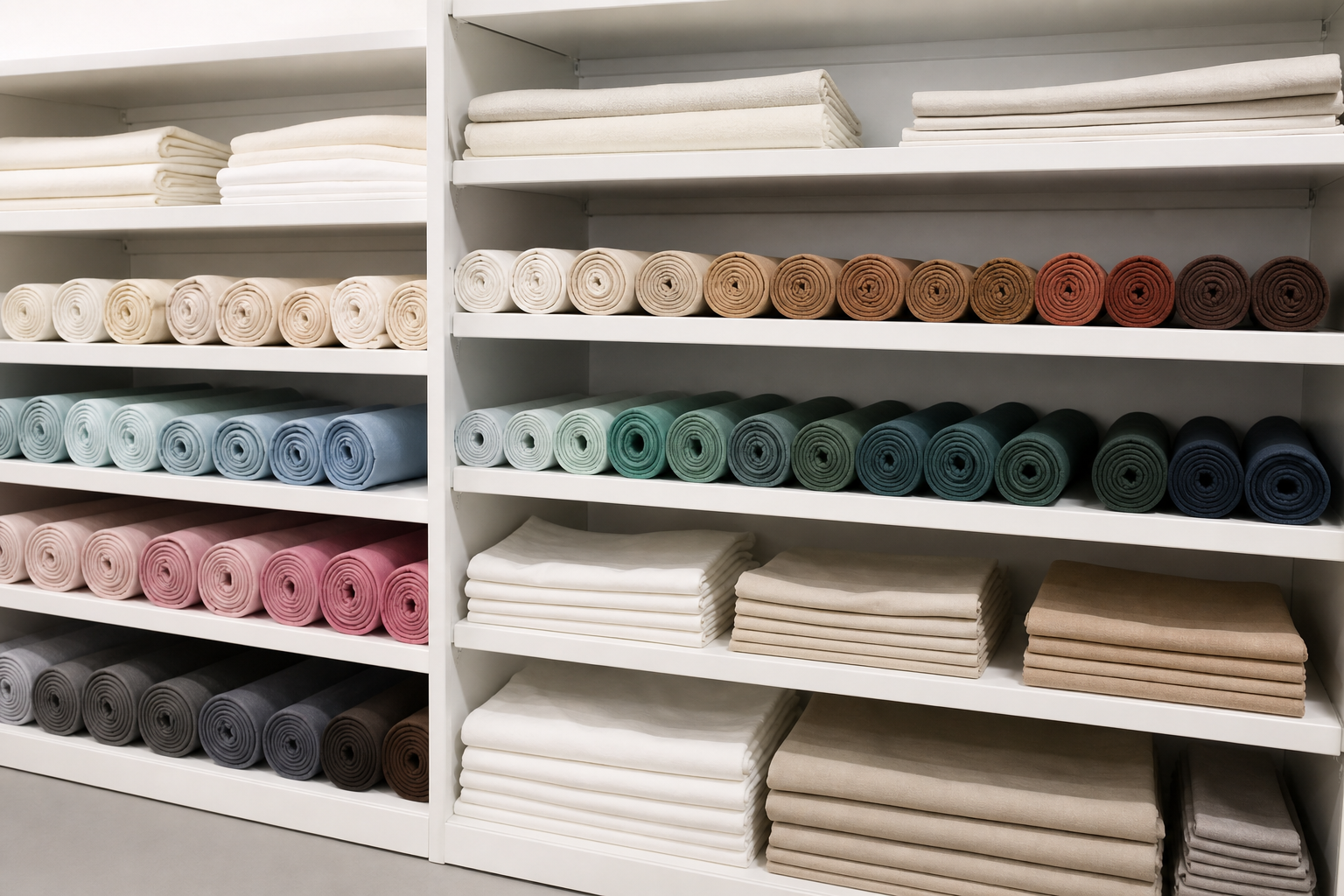
- Standardize two or three sizes. Most venues need one dining-table length and one banquet length rather than a full size ladder.
- Confirm finished dimensions in writing, including whether the stated size is cut size or finished size.
- Plan a generous spare ratio. Runners are decorative, frequently changed, and often stained first — stock accordingly.
- Order with matching tablecloths and napkins from a single production run to avoid dye-lot variation across the set.
- Ask about custom lengths. For long banquet tables or specific drops, custom-cut runners are straightforward to produce to a stated dimension.
8. Table Runner FAQs
What is the most common table runner size?
A roughly 12″–14″ width in a length between about 72″ and 90″ covers the majority of home and restaurant tables. Banquet tables generally need lengths of about 120″ and above.
Should a table runner hang over the ends of the table?
Yes, in most settings. A drop of roughly 12″–18″ at both ends reads as deliberate; a runner that stops at the table edge usually looks too short.
Can I use a runner without a tablecloth?
Yes, and it is a common look for casual and modern settings. Choose a wider runner so it carries the design on its own, and make sure the drop clears chairs and knees.
Do runners and tablecloths need to match?
They need to relate, not necessarily match. Same fabric in a contrast colour, or a plain cloth with a patterned runner, are both reliable combinations.
Final Thoughts
Runner sizing comes down to two numbers and one habit: choose a width that reads as a runner on that table, calculate the length from the table plus the drop you want at each end, and confirm the finished dimensions in writing before the order is placed. Do that, and the runner becomes the most quietly effective piece of linen on the table.
We manufacture table runners in a wide range of widths and finished lengths — in cotton, linen, spun polyester, jacquard, and event fabrics — with custom dimensions and mitered hems available on request. Contact us for swatches, size guidance, MOQs, and wholesale pricing.