Napkin size is one of the least discussed decisions in table linen — and one of the easiest to get wrong. Order too small and the napkin looks skimpy next to the plate; order too large and it reads as a towel instead of a napkin. Neither mistake is expensive to fix, but both are avoidable, and getting the size right is what makes a linen program look properly thought through.
1. The Five Standard Napkin Sizes
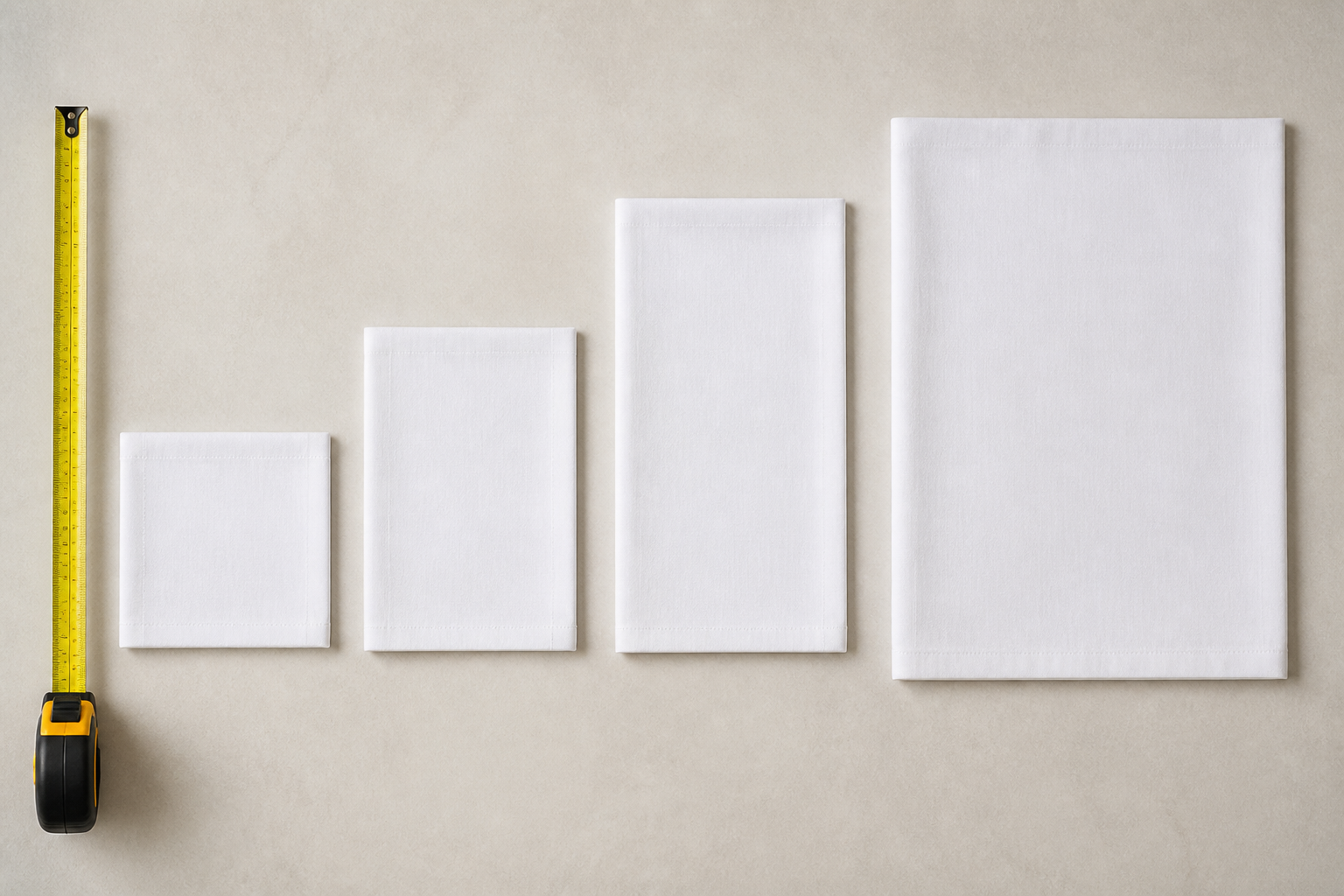
| Type | Common size | Typical use |
|---|---|---|
| Cocktail / beverage | Approx. 5"–6" square (larger bar versions to about 10") | Cocktail hours, bars, drinks service, canapés |
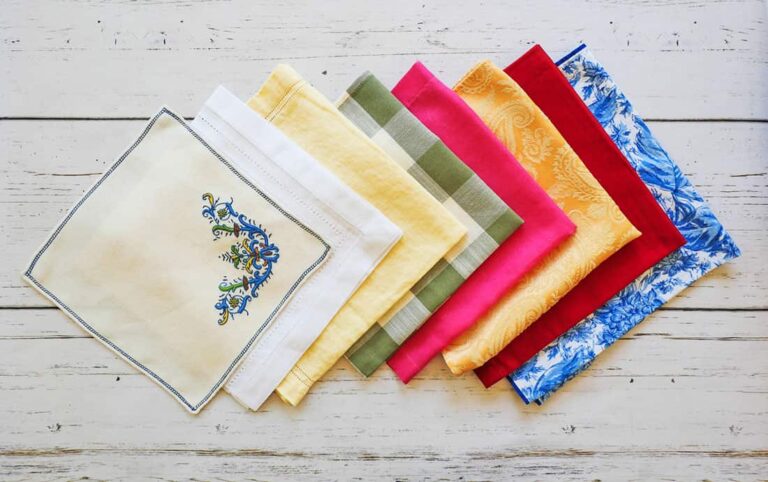
| Luncheon | Approx. 12"–16" square | Lunch service, cafés, casual dining, buffets |
| Dinner | Approx. 16"–20" square | Main dinner service, restaurants, hotel dining rooms |
| Banquet / oversized | Approx. 20"–22" square | Weddings, banquets, formal events, upscale dining |
| Decorative / display | Varies by fold style | Feature folds, banquet presentations, show tables |
Exact dimensions vary by supplier and market, so always confirm the finished size in inches or centimetres rather than relying on names alone — “luncheon” and “dinner” are labels, not measurements.
2. Matching Napkin Size to the Occasion
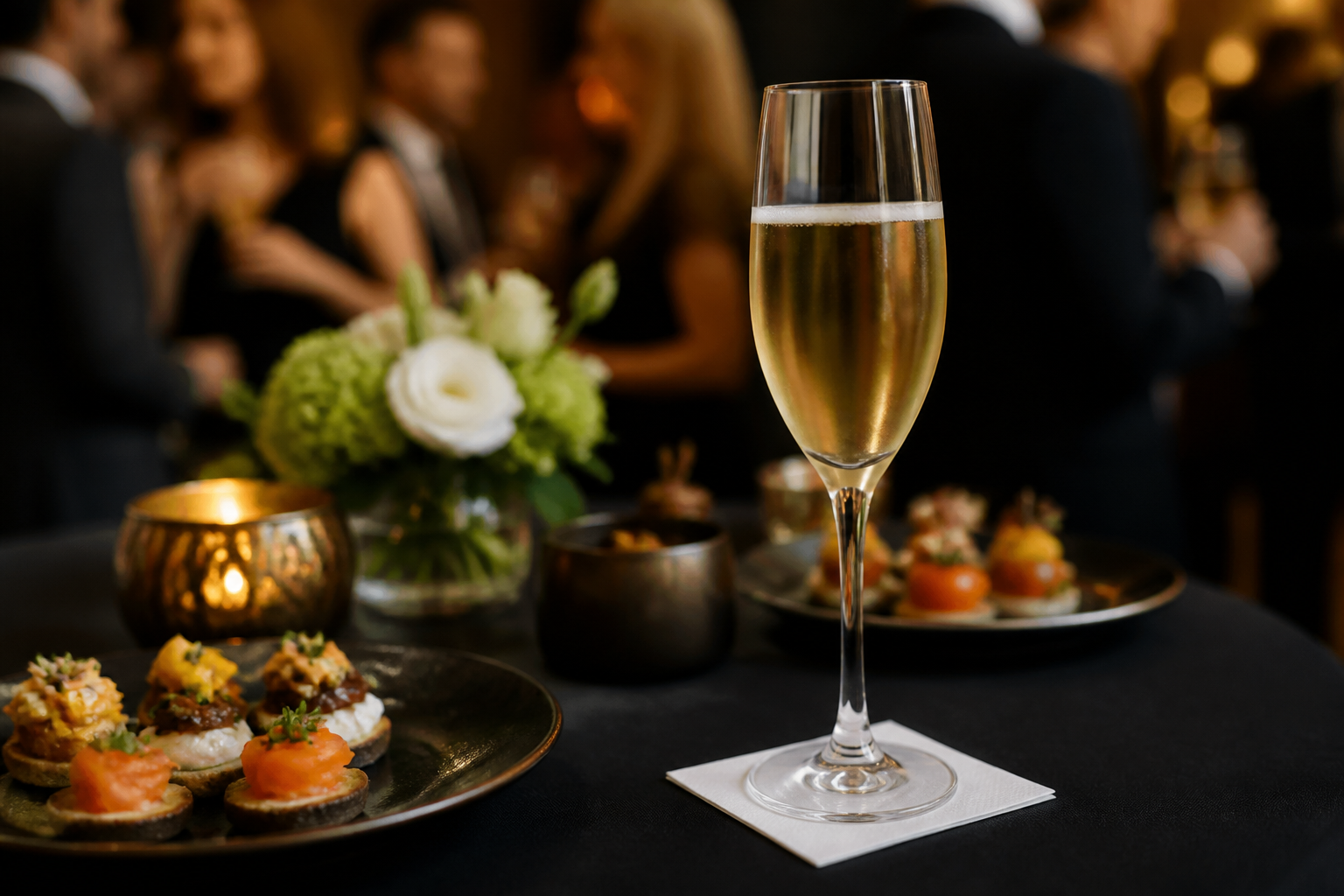
- Cocktail hours and bars: Small, usually 5"–6". Guests are standing, holding a glass, and eating canapés — a large napkin is awkward to hold in one hand and gets in the way.
- Cafés, bakeries, and lunch service: Luncheon size. Large enough to be usable with a plate, small enough to sit neatly on a small table.
- Restaurants and hotel dining rooms: Dinner size for most main service — the standard that covers a lap and looks right beside a full place setting.
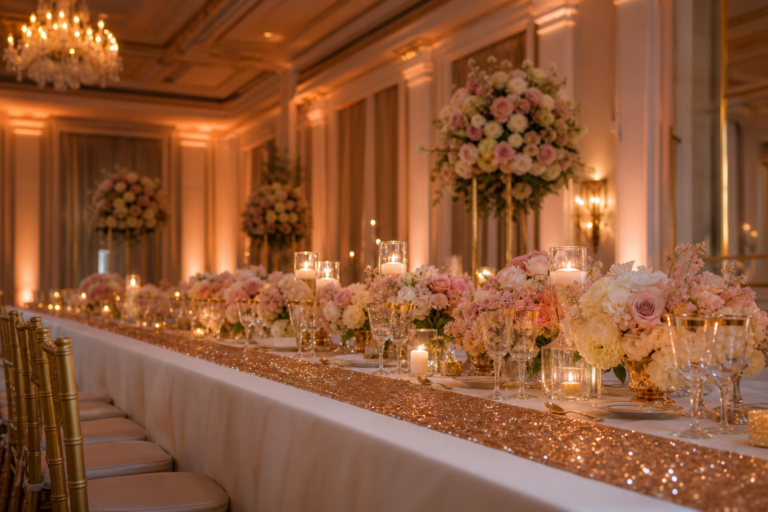
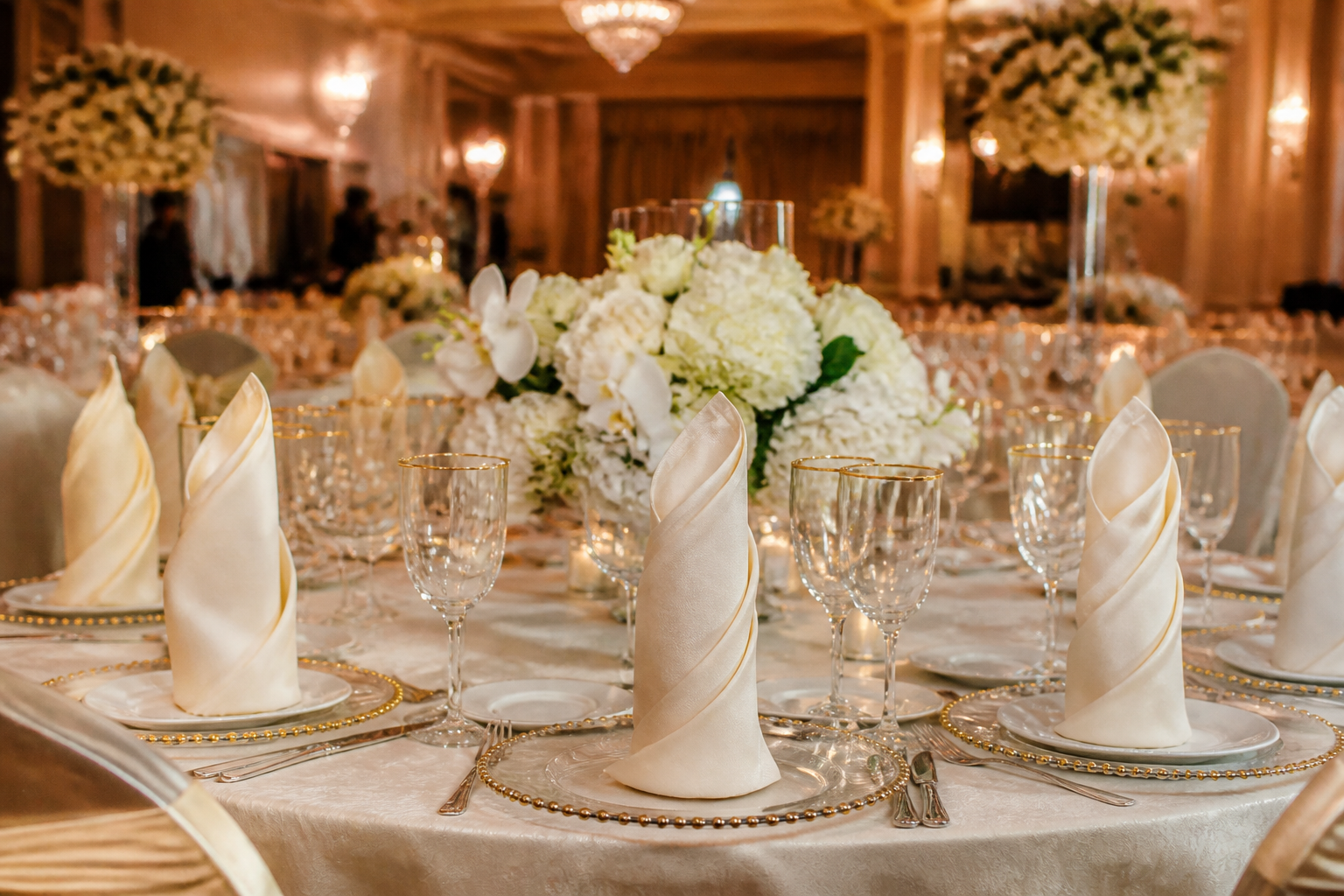
- Weddings, banquets, and formal events: Banquet or oversized, especially when the linen is folded decoratively. The larger surface carries an elegant fold and reads as premium on a dressed table.
- Buffets and self-service: Size up rather than down. Guests handle more cutlery and plates, so a slightly larger napkin is more practical.
3. Proportion: Napkins, Tablecloths, and Tables
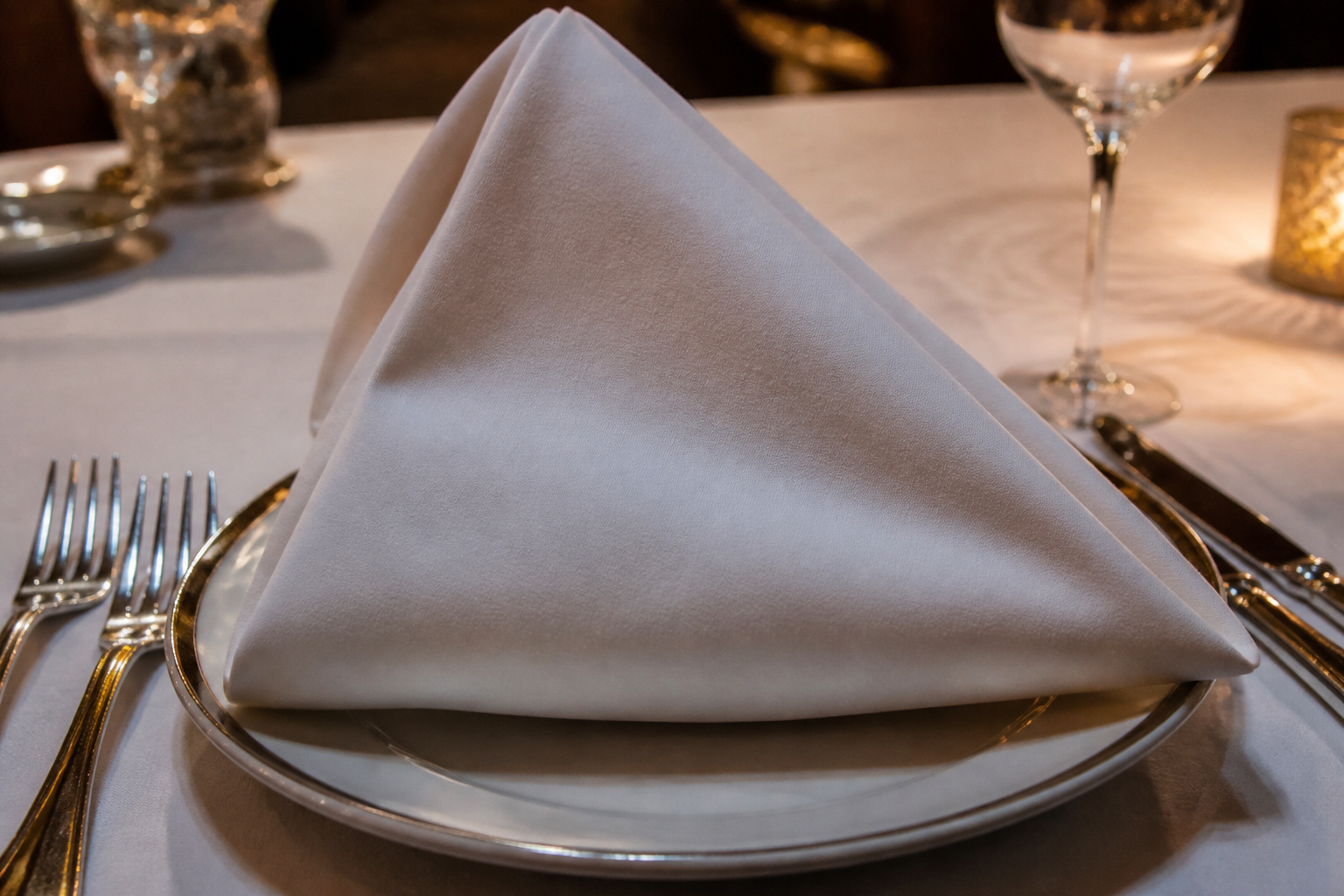
Napkins do not exist in isolation — they are read against the plate, the tablecloth, and the room:
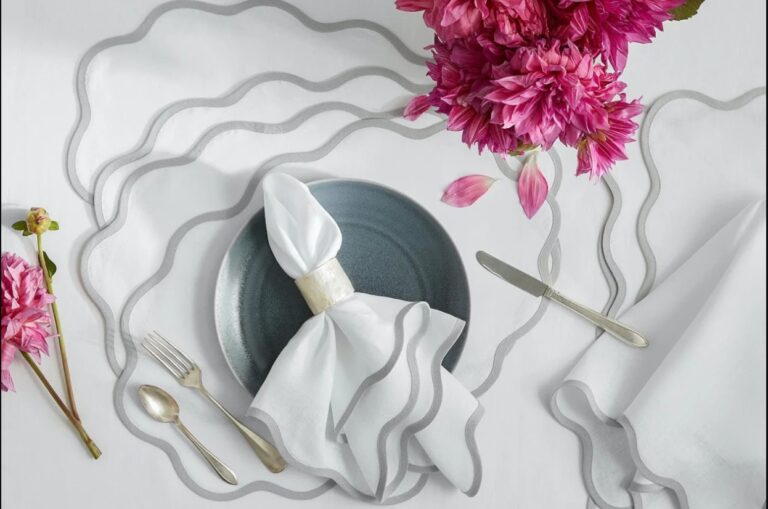
- Against the plate: A napkin folded on the plate should sit comfortably within the rim. If it spills well past the plate on both sides, the setting looks heavy.
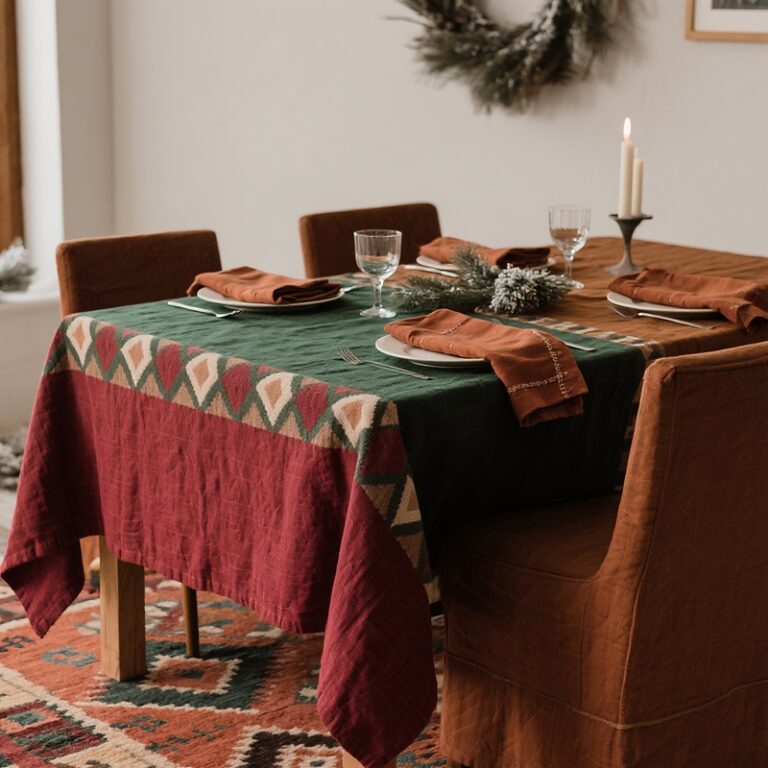
- Against the tablecloth: Keep napkin fabric and tablecloth fabric consistent or intentionally complementary; a heavy banquet napkin on a light cloth can look mismatched.
- Against the table size: Small bistro tables suit luncheon and cocktail sizes; large round banquet tables take banquet-size napkins without crowding the setting.
- Across a program: Consistency matters more than any single size. Choose one proportion language for the venue and apply it to every table.
4. How Fabric Thickness Affects Size
- Lightweight fabrics (fine linen, lightweight cotton) drape and fold tightly — they can carry a larger size without looking bulky.
- Heavier fabrics (heavy cotton, spun polyester, damask) hold shape and take up more volume — a slightly smaller size often looks better, and folds stand taller.
- Stiff or coated fabrics behave differently again: they rarely fold softly, so choose sizes suited to simple, structured folds.
A useful rule: if the same size in two different fabrics looks noticeably different on the table, specify by fabric quality and weight rather than size alone.
5. Size and Folding
- Small (5"–6"): Simple presentation — quarter folds, or a napkin placed under the glass.
- Luncheon (12"–16"): Basic folds with a little structure — simple pouch, basic pocket, angled fold across the plate.
- Dinner (16"–20"): The most versatile size for folding — classic pocket, bishop’s hat, standing fan, and most restaurant-standard presentations.
- Banquet (20"–22"): Needed for tall, elaborate folds — large fans, roses, and presentation folds that genuinely occupy space.
If a fold is central to your presentation, test it in the intended size before ordering in bulk. A fold that looks striking in a photo often collapses in a smaller format.
6. Buying Advice for Bulk Orders
- Standardize the sizes you stock. Most venues run one main dinner size plus a smaller cocktail size rather than stocking every size available.
- Confirm finished dimensions in writing. Ask for the measured size, not the category name, and check whether it is cut size or finished size.
- Plan the spare ratio. Food service turns napkins far faster than tablecloths — plan for a larger rotation, plus replacements.
- Order napkins and tablecloths together. Matching fabric and colour across both, from one production run, avoids dye-lot variation.
- Ask about custom sizes. For signature venues or unusual tables, custom-cut napkins can be produced to a specified dimension.
7. Napkin Size FAQs
What is the most common napkin size?
For restaurant dinner service, a size in the region of 18"–20" square is the most widely used. Luncheon napkins sit smaller, around 12"–16", and cocktail napkins much smaller again.
Are bigger napkins always better?
No. Larger napkins suit formal and banquet settings, but on a small café table or during a standing cocktail service they feel oversized and awkward. Size should follow the service style.
Do napkin sizes differ between markets?
Yes — naming conventions and standard dimensions vary between regions, which is why specifying the finished measurement is safer than ordering by a name like “dinner napkin”.
Should cocktail and dinner napkins match?
They should relate. Many programs use the same fabric and colour in two sizes so the cocktail and dining service read as one coherent look.
Final Thoughts
Napkin size is a proportion decision, not a packaging detail. Match the size to how guests actually use the napkin — standing at a bar, seated at lunch, or dining formally — then check that it sits correctly against the plate, the tablecloth, and the table. Get that right, and the linen quietly does its job in every part of the venue.
We manufacture cloth napkins from cocktail to banquet size — in cotton, linen, spun polyester, and damask — with custom dimensions, mitered hems, and embroidery available on request. Contact us for swatches, size guidance, MOQs, and wholesale pricing.