Two restaurants can use the same three products — a tablecloth, a runner, and a set of placemats — and one table looks designed while the other looks like everything was put out at once. The difference is not the products. It is whether the layers are doing separate jobs and following a shared colour logic.
1. Why Layering Works
- Visual depth: Layered textiles create shadow lines and texture changes that a single cloth cannot produce.
- Practical protection: A runner or placemat takes the wear and the stains, which means the large tablecloth is washed less often.
- Flexibility: One base cloth plus a few interchangeable runners and mats can restyle the same room for different services or seasons.
- Commercial value: Coordinated sets are a natural way for suppliers and retailers to sell more than one item — and a way for venues to get a more considered look from the linen they already own.
2. The Three Layers and What Each One Does
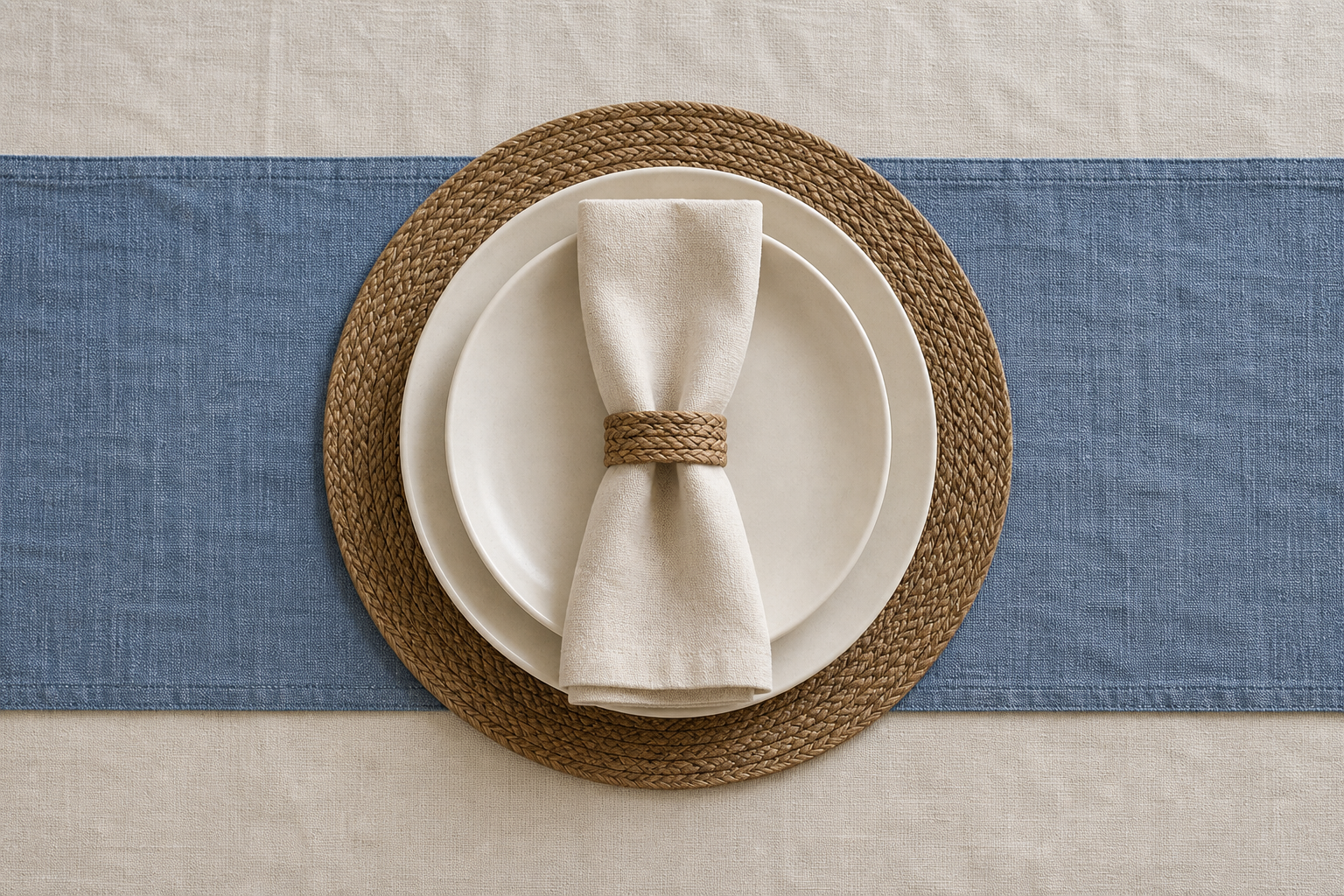
- Layer 1 — Tablecloth (the base): Sets the overall background and scale. This is the largest colour field on the table, and the layer that determines whether the setting reads light, warm, formal, or casual.
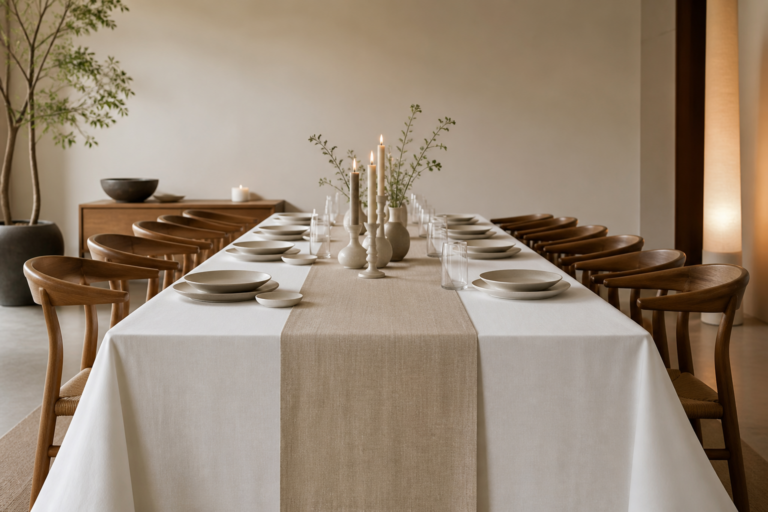
- Layer 2 — Runner (the focal band): Creates a centre line that organises the eye and carries the accent colour or texture. On long tables it controls the visual length of the setting; on round tables it frames the centrepiece.
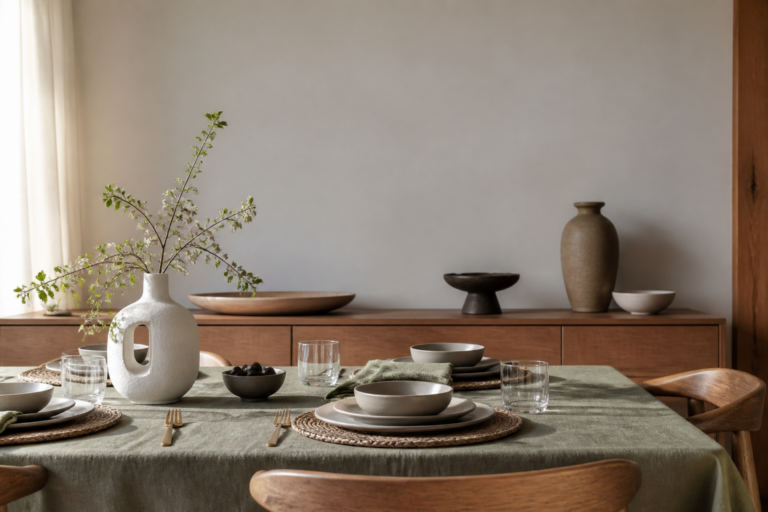
- Layer 3 — Placemats (the personal space): Define each guest’s area and handle the practical wear. They also break a large cloth into individual settings, which makes long tables feel more hospitable.
Napkins sit on top of this system rather than inside it: they carry the third colour and the finish detail, and follow the same palette as the layers below.
3. When to Use One, Two, or All Three
| Setting | Tablecloth | Runner | Placemats |
|---|---|---|---|
| Fine dining / formal service | Yes — this is the base | Optional, centred accent | Usually no — competes with the cloth |
| Casual bistro / café | Yes — standard drop | Yes — often the colour accent | Optional, for high-turnover tables |
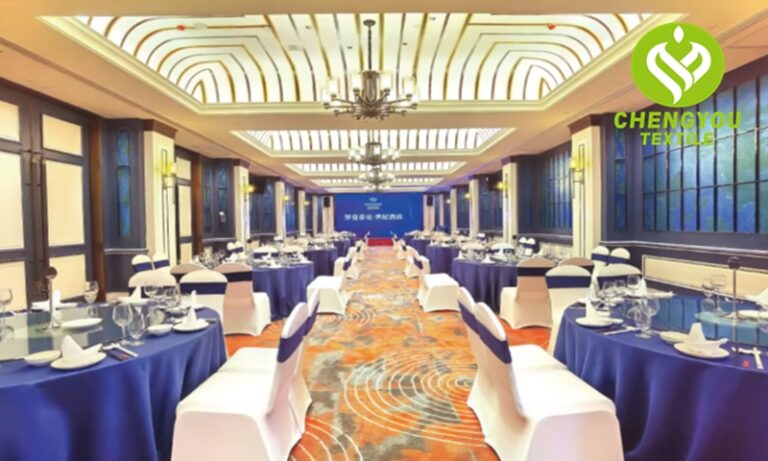
| Weddings & banquets | Yes | Yes — the decorative focus | Usually no — visual clutter on large tables |
| Everyday home dining | Optional | Yes — decoration plus protection | Yes — easiest to clean and replace |
| Bar and high tables | No | Small runner or mat only | Not practical |
| Buffet and service stations | Yes — full cover | Optional | No — replaced by labels and trays |
| Retail display | Yes | Yes — shows the range | Yes — merchandise presentation |
The practical rule: add a layer only when it has a job. A third layer that does nothing except cover the second makes the table look busy and hides the products people paid for.
4. Three Pairing Rules That Always Work
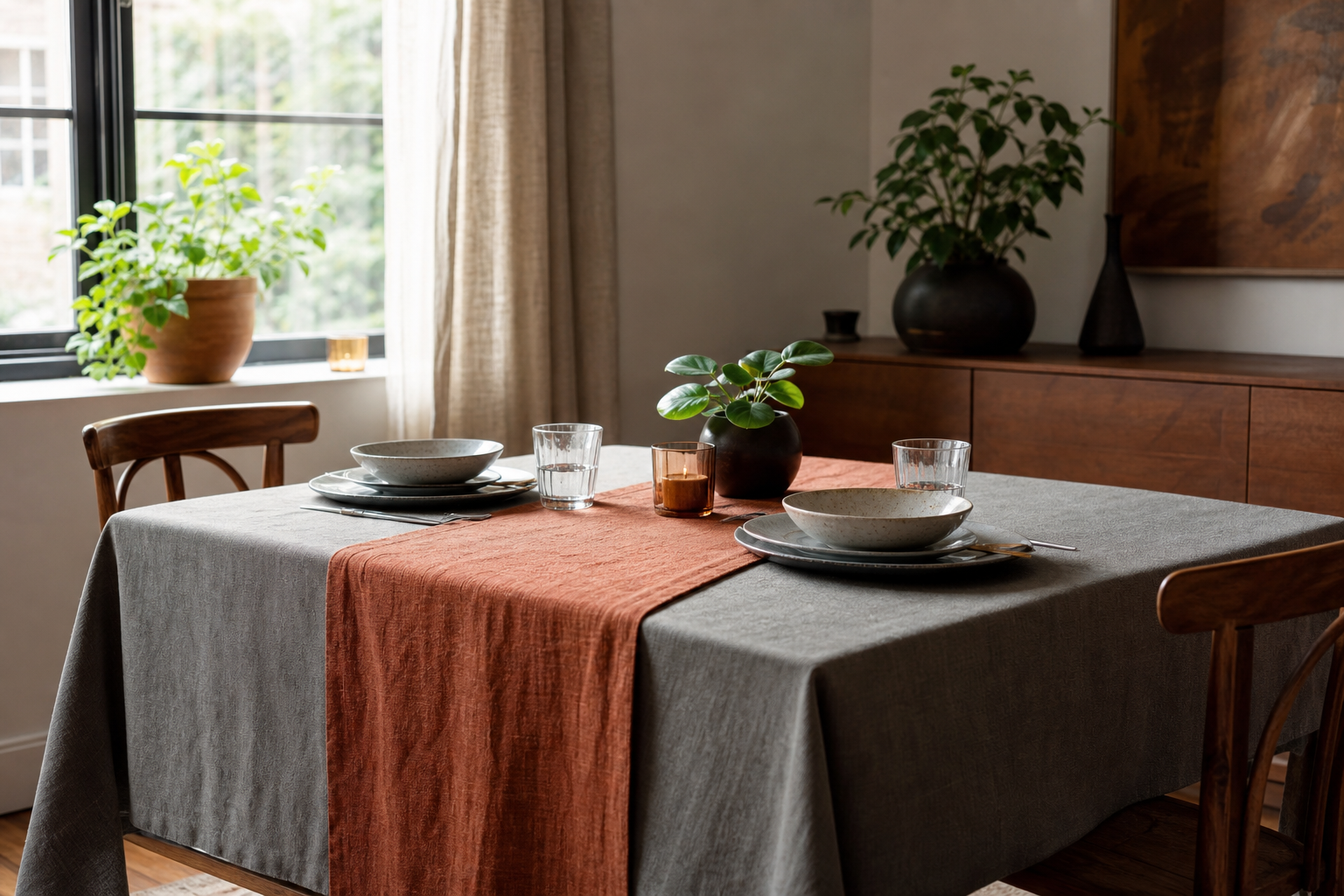
- Rule 1 — One busy layer, the rest quiet. If the runner is patterned, keep the tablecloth plain. If the tablecloth is patterned, keep the runner and mats plain. Two competing patterns is the most common layering mistake.
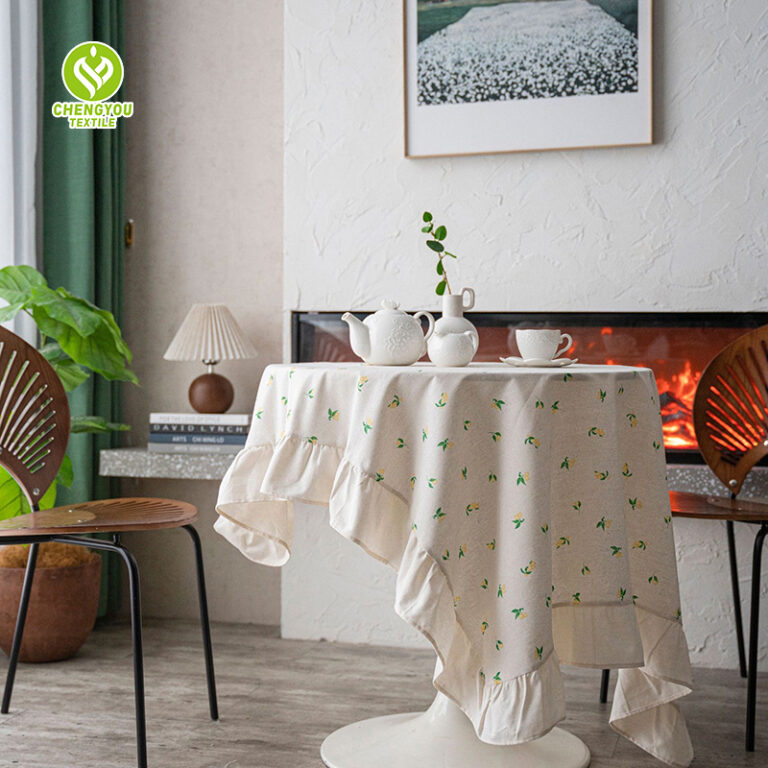
- Rule 2 — Colour: share a base, vary the accent. Most successful sets use one neutral base (white, ivory, oatmeal, grey) with one accent colour repeated in the runner and napkins. This keeps the look coherent while allowing seasonal variation.
- Rule 3 — Contrast the material, not just the colour. Smooth against textured (satin over linen), or matte against shine (linen over a subtle sheen) creates interest that colour alone cannot.
5. Proportion: Getting the Sizes to Agree
- Tablecloth drop sets the formality. A longer drop is more formal; a short drop reads casual. Decide this first, because the runner and mats will be judged against it.
- Runner width should leave the cloth visible — roughly a third of the table width, or clearly narrower than the cloth beneath when layered.
- Placemats should sit inside the cloth’s field with a clear margin from the runner, so the base layer still reads as the base.
- Keep the proportions consistent across tables. Mixing drops and widths between tables in the same room is the fastest way to make a venue look improvised.
For exact dimensions, work from the table size outward — our guides to tablecloth sizes and drop and napkin sizes cover the measurement side in detail.
6. Layering by Setting
- Fine dining: Full cloth, minimal runner, no mats. The cloth is the statement; restraint signals quality.
- Contemporary bistro: Plain cloth plus a contrast runner, with mats only on high-turnover tables.
- Weddings and events: Cloth plus a decorative runner as the focal layer; keep mats off large banqueting tables.
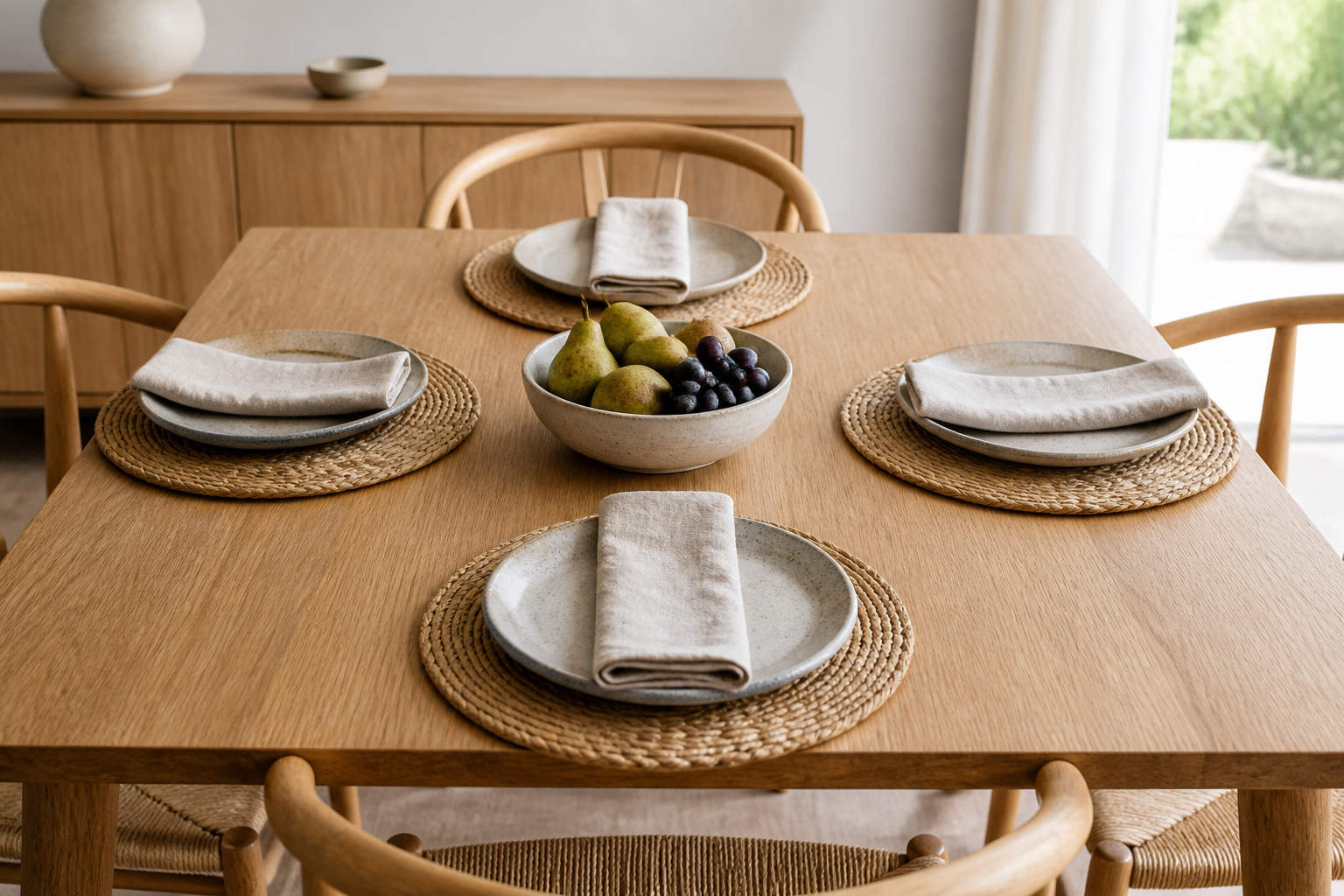
- Home and everyday dining: Runner plus placemats on a bare table is often the most practical and attractive combination — the wood becomes part of the look.
- Retail display: Show the whole system together. Layered displays communicate how the products are meant to be used, which increases basket size.
7. Buying and Selling Coordinated Sets
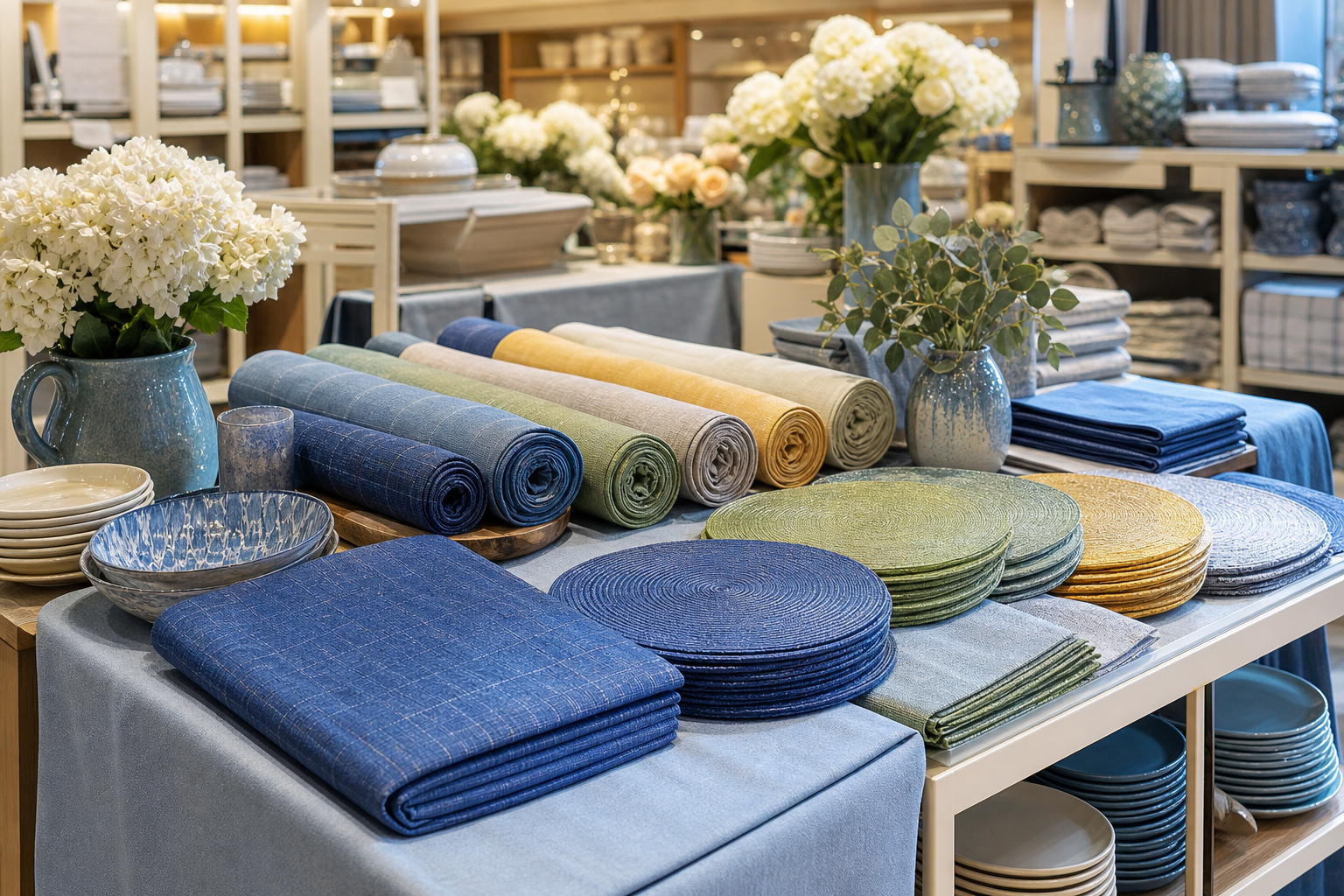
- Sell the set, not the item. Coordinated tablecloth, runner, napkin, and mat sets help customers commit to one look instead of assembling it piece by piece.
- Plan realistic ratios. A venue typically needs far more napkins and mats than tablecloths, because they soil faster and turn over more often.
- Build evergreen combinations. Develop a small number of reliable palettes (neutral base plus one accent) that can be reordered consistently instead of chasing new colours each season.
- Order the set from one production run where possible — mixing dye lots across layers is the most common cause of a set that does not quite match.
- Offer guidance, not just product. Buyers who understand the three-layer system order more coherent sets and reorder more predictably.
8. Layering FAQs
Is it too much to use a tablecloth, runner, and placemats together?
Not necessarily — but each layer must do a different job, and at least one should stay visually quiet. Three patterned layers almost always look cluttered.
Should the runner match the tablecloth?
It should relate. Same fabric in a contrast colour, or a plain cloth with a textured or patterned runner, are the two most dependable combinations.
Can I use placemats on top of a tablecloth?
Yes, and it is common in cafés and casual restaurants where the mats take the daily wear. Keep the cloth plain so the mats stay legible.
What is the easiest way to refresh a dining room seasonally?
Change only the top layer — the runner and napkins. Keeping the base tablecloth neutral makes seasonal changes inexpensive and always coordinated.
Final Thoughts
Layering is not about using more linen. It is about giving each layer a clear job and a shared colour logic: a quiet base, one accent band, a personal space that can take the wear. Get those three in proportion with each other, and the table looks considered — with the same products, in the same room, at no extra cost.
We manufacture coordinated table linen sets — tablecloths, runners, napkins, and placemats — in matching fabrics, colours, and finishes, with consistent dye lots and custom sizing. Contact us for swatches, palette guidance, MOQs, and wholesale pricing.