Tablecloth orders are large, and the problems are expensive — but almost every common defect is cheap to catch at the right moment. The right moment is twice: at sample stage, where a fix is a conversation, and at delivery, where a fix is still a conversation but a late discovery is a dispute. This guide is the working checklist for both stages.
1. Why Inspecting Tablecloths Matters
- The stakes are the whole program. A flaw in one tablecloth shows up on one table. A flaw in the production standard shows up on every table at once, and on every reorder.
- Dye lots are permanent. Colour variation between batches cannot be washed out or ironed away — it can only be prevented by checking early and ordering in matched lots.
- Shrinkage happens once. Natural-fibre tablecloths shrink on the first wash; if the finished size wasn’t checked with shrinkage in mind, every table in the venue ends up slightly short.
- Hem quality decides wear life. The hem is the most mechanically stressed part of the cloth. A weak hem starts failing at the fold lines within months of commercial use.
2. Inspecting the Sample: Before You Commit
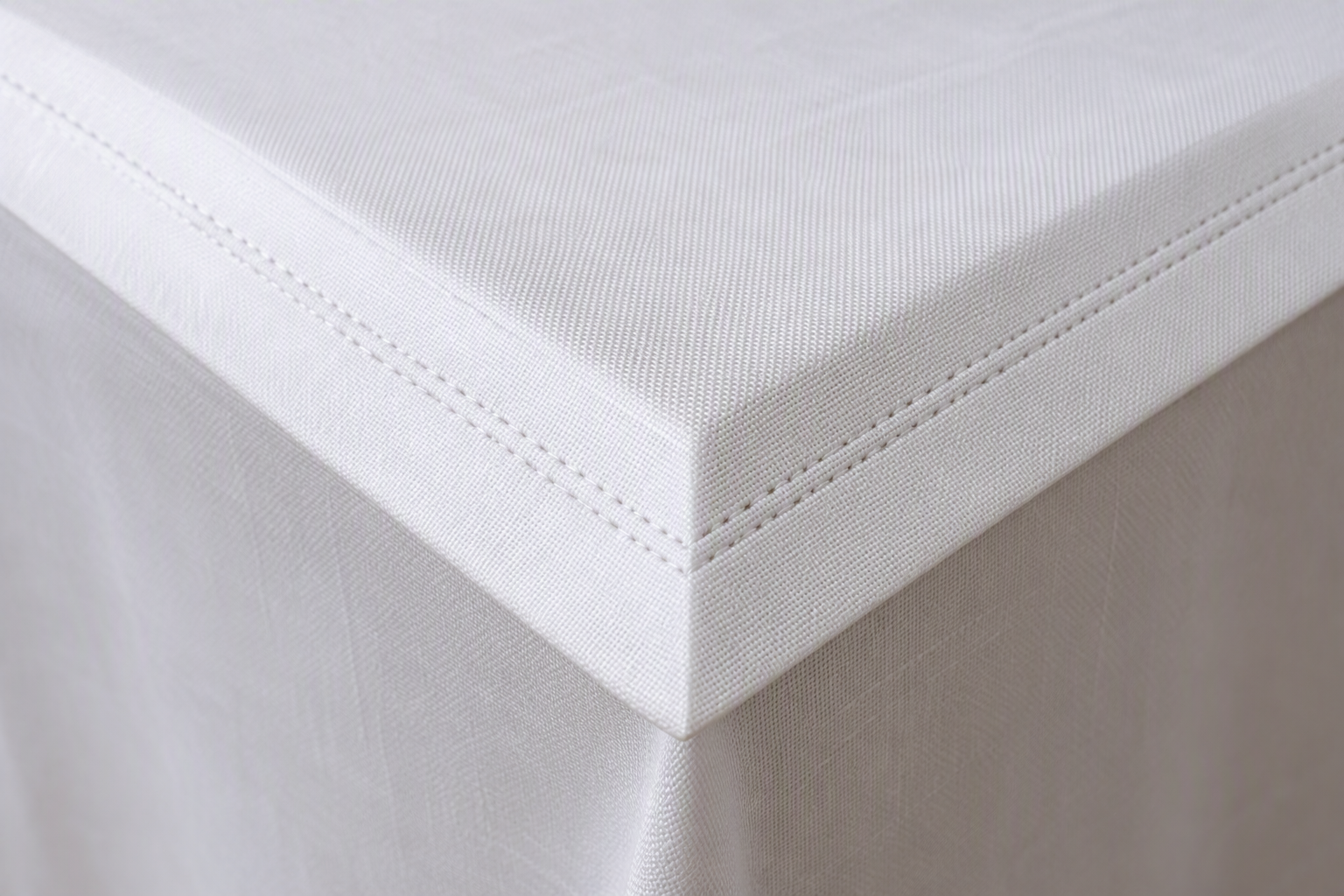
Request a production sample (not just a swatch) — the actual finished tablecloth at the actual size with the actual hem. Then check:
- Fabric weight and hand. Weigh a known area and compare against the stated weight. The hand feel — stiffness, drape, density — is what the guest will see, and no specification replaces touching the fabric.
- Hem construction. Check the corner finish (mitered, serged, or other), stitch density, and thread matching. Run a finger along the hem: it should feel flat and secure, not catch on loose thread.
- Colour accuracy. Compare the sample against your approved colour standard — in the light you will use it in. A colour that matches in daylight can read different under warm restaurant lighting.
- Colourfastness. Ask the supplier for the wet and light fastness ratings of the colour; for a dark or patterned cloth, do your own wet-sponge test on the hem area.
- Finished dimensions. Measure the sample after one wash cycle if it is a natural fibre — the measurement you approve should be the post-wash measurement that lands at your target size.
- Pattern alignment (patterned cloths). Check placket, corner, and edge placement; a pattern that is off-centre on one piece usually is off on the whole run.
Approve the sample in writing, keep a marked sample (a “sealed sample”) for the delivery check, and note the exact fabric, hem, colour, and dimensions you are approving.
3. Inspecting the Delivery: When the Order Arrives
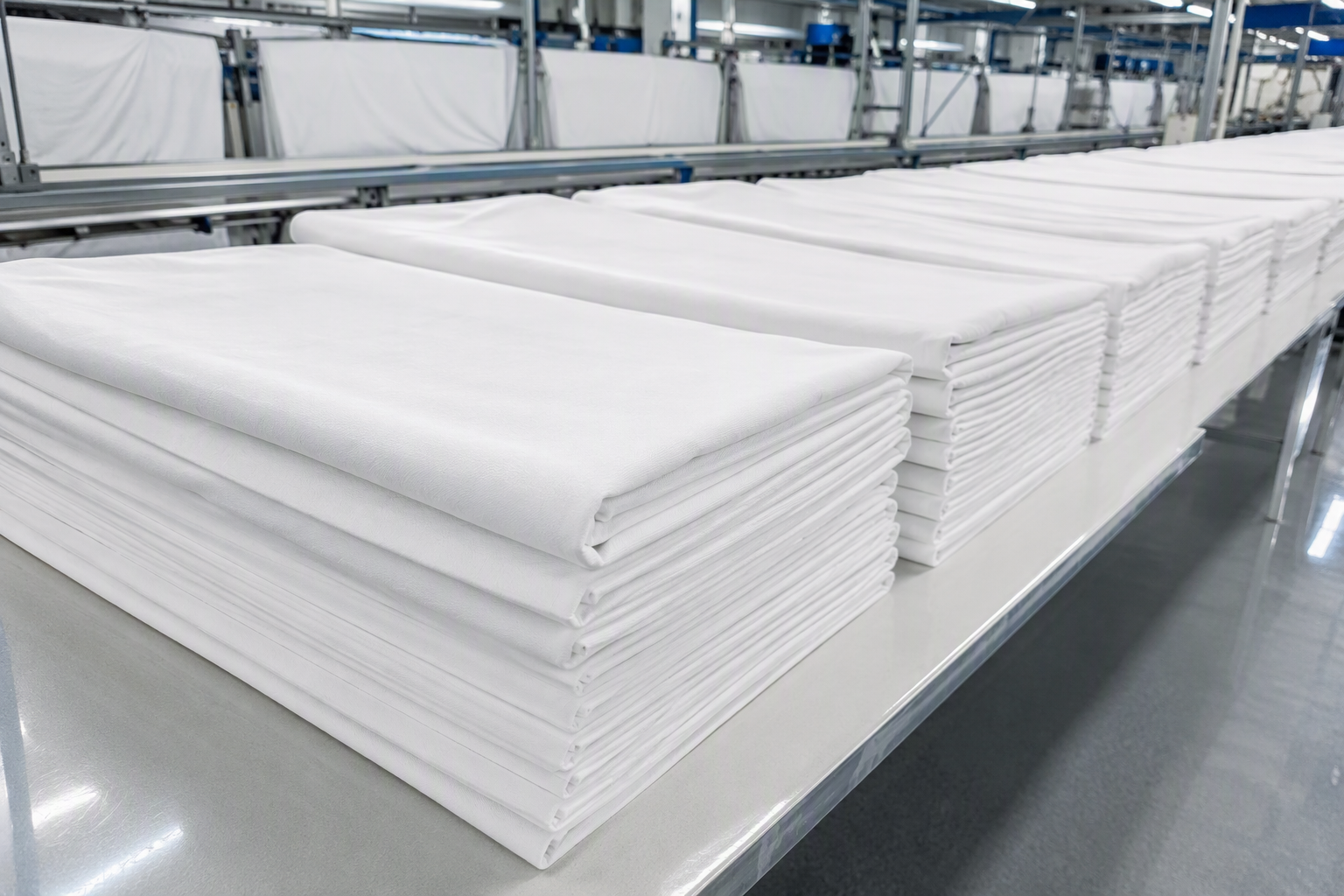
Do not sign for a large shipment without an inspection plan. The standard commercial approach:
- Paper first. Match the packing list against your order — quantity, size, colour, fabric, and hem style per carton. Discrepancies on paper are the easiest to resolve and the cheapest if caught now.
- Sample across, not down. Pull pieces from different cartons and different positions in the shipment, not a dozen from the top box. This is how dye-lot mixing and production-phase variation get caught.
- Colour check in daylight. Lay pieces side by side in natural light. Slight shade variation between pieces from the same carton is sometimes acceptable; visible variation across cartons is not.
- Measure a spread. Check finished dimensions on a spread sample of pieces. If the size is short after your first wash, the shrinkage was not built into the cut — and it is now fixed.
- Spot-check the hem. Open the corners on a sample of pieces; mitered corners should be aligned and stitches even. Fraying, loose thread, or an off-corner flags a quality drop somewhere in the run.
- Check for stains and marks. Fold lines, press marks, and small oil or dye spots are common at this stage — count them, photograph them, and make them part of the record before the cartons are closed.
- Document everything. Photograph any defect with a scale or reference next to it, note carton number and piece count, and send the record to the supplier in writing the same day.
4. Common Defects and What They Mean
| Defect | What you will see | Usual cause |
|---|---|---|
| Shade variation | Visible colour difference between pieces | Mixed dye lots, or unlevelled dyeing in one lot |
| Size short after wash | Cloth smaller than specified after first wash | Shrinkage not built into the cut for natural fibres |
| Loose or frayed hem | Threads catching at the corner or edge | Weak hem construction, over-tight sewing tension, or rough finishing |
| Oil or dye stains | Small spots on the fabric surface | Handling or packing without protection between finishing and packing |
| Pattern misalignment | Off-centre placket or edge on patterned cloths | Cutting not matched to the pattern repeat |
| Pilling | Small fibre balls on the surface | Low fibre quality or weak yarn twist in the weave |
| Uneven edges | Wavy or jagged hem line | Poor pre-hemming press or cutting accuracy |
| Creases and press marks | Permanent lines across the cloth | Packed hot or damp straight after pressing |
Each of these is solvable at supplier stage — the cost of a fix is measured in days and a conversation, not in a replacement program that has to match the dye lot again.
5. Documents to Ask a Factory For
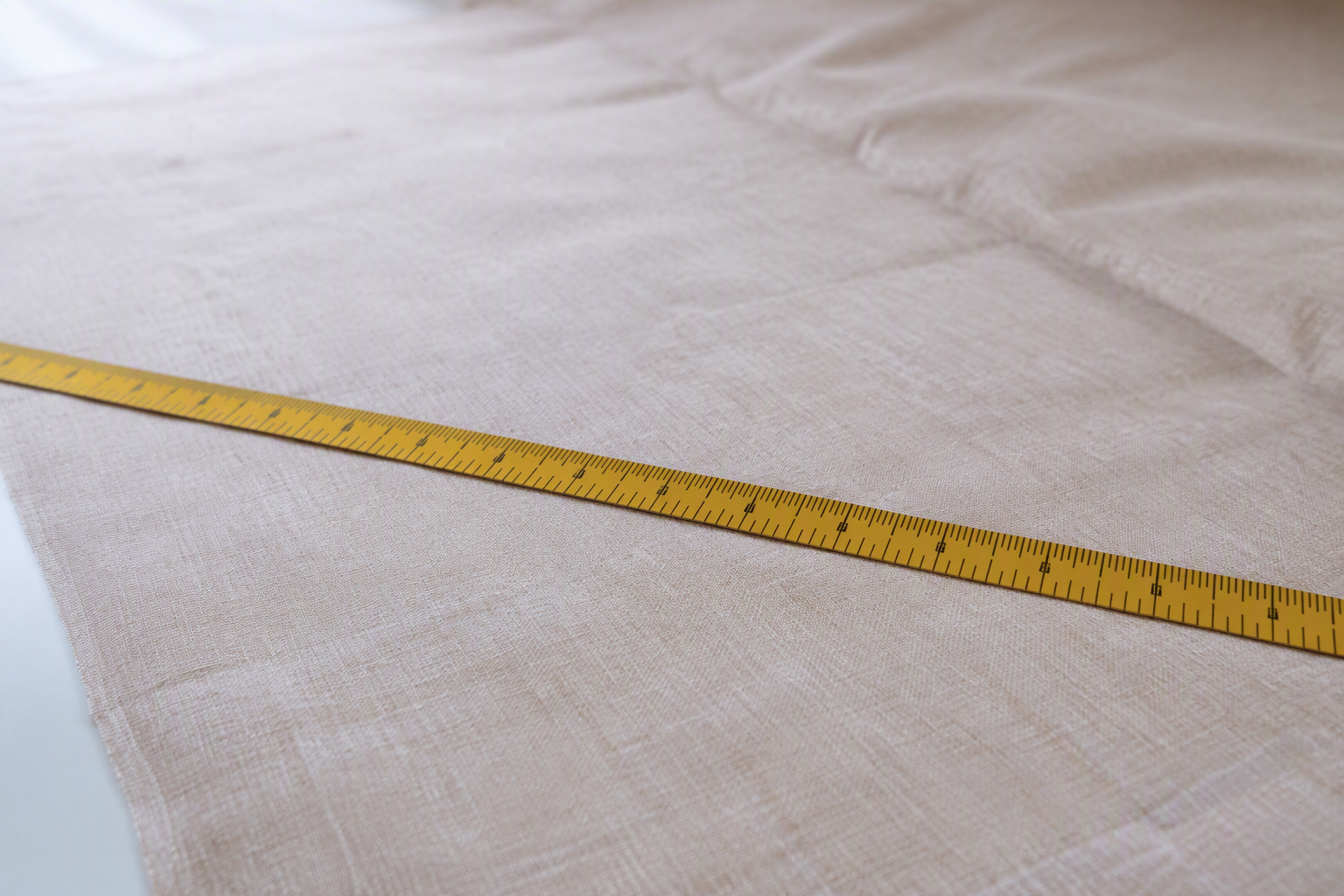
- Spec sheet per style: fabric composition, weight (GSM or oz/yd²), weave, finish, and hem style — as the supplier states it, in writing.
- Colourfastness ratings: wet and light fastness for each colour, not just “good colour retention” in general.
- Shrinkage figures: for natural fibres, the measured post-wash shrinkage — this is what determines the cut size.
- Dye lot codes: so you can request the same lot for reorders and track variation within a shipment.
- Inspection record: what the factory checked before shipping, with pass/fail counts. A supplier who does not record pre-shipment inspection is telling you something.
6. A Practical Receiving Protocol for Commercial Buyers
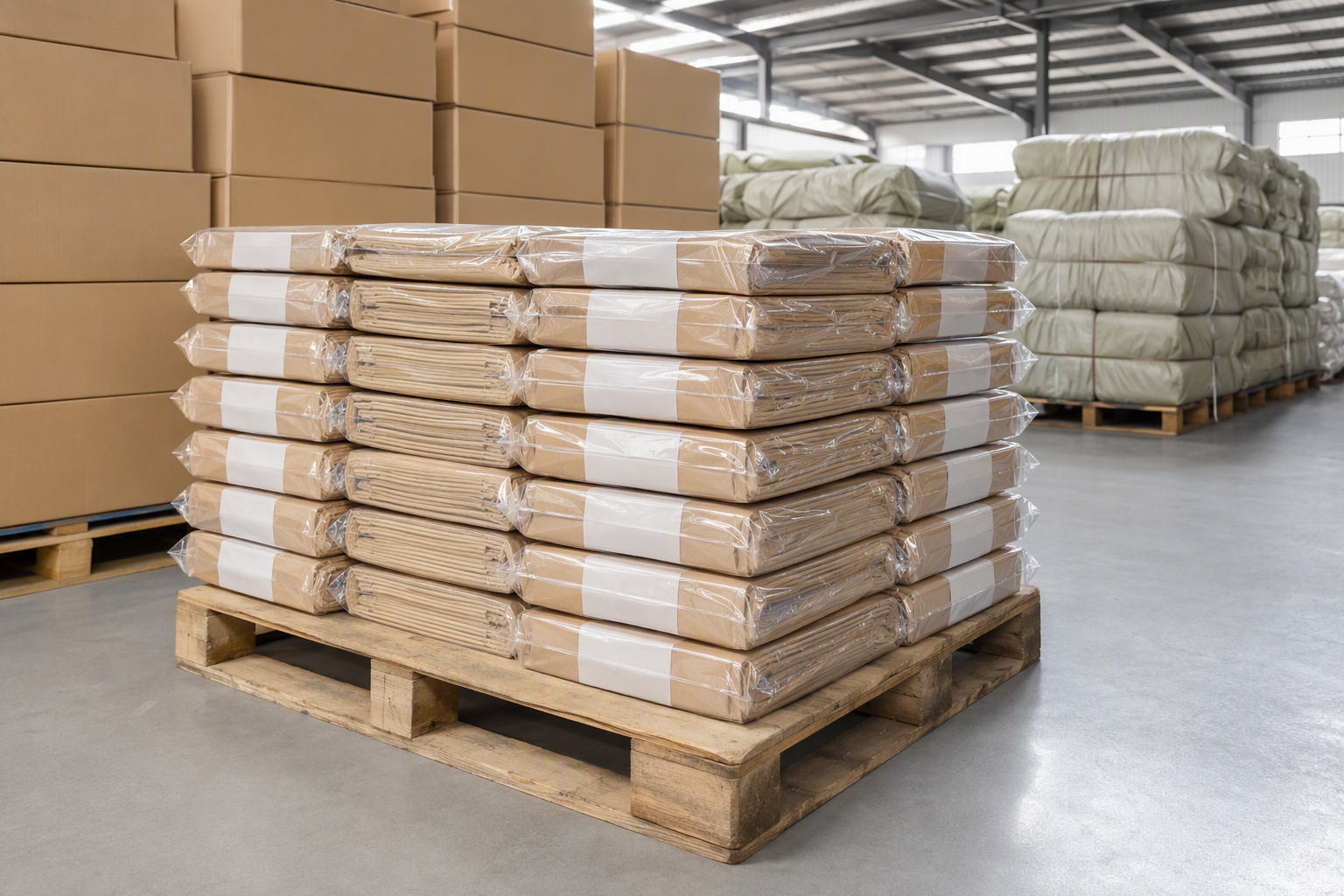
- Agree acceptance criteria before production starts. Define what counts as acceptable shade variation, how many pieces will be sampled, and what happens when a carton fails. Written criteria at the start prevent disputes at the end.
- Use a sampling plan. For large orders, pull pieces at fixed intervals across the shipment (e.g. from every nth carton, plus first and last) rather than a random handful from one corner.
- Set a threshold, not a zero-defect expectation. Textiles have a normal defect rate; the professional approach is to agree the maximum acceptable percentage and the treatment of items above it (replacement, credit, or return) in the order terms.
- Keep sealed samples from every production run. A stored sample from run one is your reference when run two needs to match — and your evidence if it does not.
- Close the loop in writing. Acceptance, conditional acceptance, or rejection — each should be documented the same day, with photographs attached.
7. Inspection FAQs
How many pieces should I inspect?
For small orders, checking a spread across every carton is practical. For large commercial orders, use a sampling plan at fixed intervals across the shipment plus first and last cartons — the goal is to represent the whole run, not to open every box.
What is a reasonable defect rate to accept?
It depends on the product and the buyer, and the professional answer is to agree it in writing before production — a small percentage of minor, repairable defects is normal in textiles, and the terms should say what happens above that line.
Should I inspect before or after washing?
Both, for different reasons. Inspect the delivery as packed (stains, hems, colour, size on the dry cloth), then run a wash on a sample piece to verify shrinkage and colourfastness before the program goes live.
Is it worth paying for a third-party inspection?
For large first-time orders or high-value programs, an independent pre-shipment inspection is cheap insurance — it catches problems while they are still the supplier’s problem to fix, not yours to absorb.
Final Thoughts
Inspecting tablecloths is not about distrust — it is about moving the conversation to when it is cheapest. Check the sample carefully, agree the acceptance terms in writing, sample the delivery across the shipment rather than down it, and keep sealed samples of every run. Do that, and a tablecloth order becomes a reliable, repeatable purchase instead of a gamble you hope works out.
We inspect every tablecloth order before it ships — fabric weight, hem construction, colour, and finished dimensions are checked against the approved sample, with a written record and sealed sample kept per run. Contact us for swatches, spec sheets, test reports, and wholesale pricing.