Cloth napkins are a long-term purchase, and a lot of their value depends on what happens after delivery. A napkin that is washed too hot, bleached badly, or stored damp can lose its finish, its colour, or its shape within a few months — and no amount of fabric quality can fully rescue it. Getting the care right is what separates a linen program that looks new after two years from one that looks tired in six.
1. Why Care Matters to the Buyer
- Life cost, not unit cost. A well-made napkin that survives hundreds of washes is cheaper per service than a cheap one replaced every few months. Care practices directly move that ratio.
- Consistency of appearance. Uneven washing and pressing create a mixed look — napkins from the same batch ageing at different speeds — which hurts the whole program, not just the damaged pieces.
- Colour and finish retention. Dyes, embroidery, and edge finishes all have care limits. Exceeding them fades colour and loosens detailing faster than normal wear does.
- Hygiene is not the same as harshness. Clean does not require the hottest water or the strongest chemicals — the wrong assumption causes more damage than dirt ever will.
2. Before the First Wash
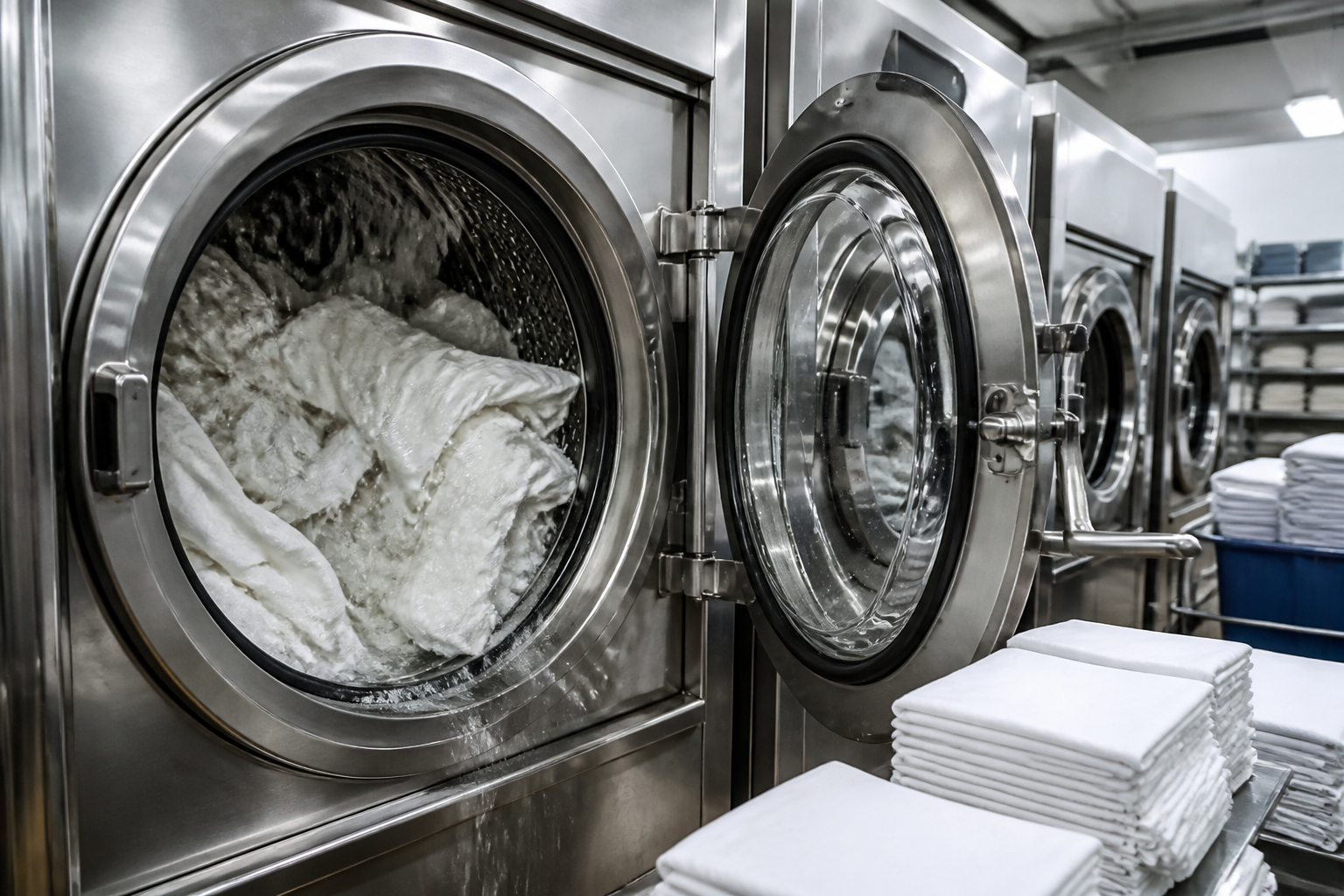
- Wash new napkins before first use. New fabric carries finishes, sizing, and loose fibres that come out in the first wash; using napkins straight from the pack transfers all of it to guests.
- Sort before washing. Separate by fabric (linen, cotton, spun polyester), by colour, and by finish (embroidered, printed, plain). Each group has different limits.
- Check the care label. Quality suppliers label each item with fibre content and washing guidance; keep the label with the stock record so laundry staff can follow it.
- Remove loose threads before the first wash, especially on embroidered and cut-edge napkins — they tangle in machines and drag on stitching.
3. Washing Do’s and Don’ts
Temperature
- Hot water helps with hygiene, but every napkin has a practical ceiling. Cotton and spun polyester tolerate high temperatures well; linen should be washed cooler to protect its structure and prevent excessive shrinkage.
- Use the hottest water the fabric and colour allow, then add mechanical action (proper machine loading) rather than more heat for extra cleanliness.
Detergents
- Use the minimum detergent that does the job. Overdosing leaves residue that greys the fabric, weakens fibres, and makes napkins stiff — the fastest way to make good linen look old.
- Match the detergent to the water (soft or hard) and to the fabric; alkaline-heavy formulas are the usual cause of yellowing on whites.
Bleach
- Chlorine bleach is the biggest avoidable killer of cloth napkins: it degrades fibre strength over time, yellows some whites, and destroys colours and embroidery.
- For whites, oxygen (non-chlorine) bleaching is far safer for long-term use; for coloured and decorated napkins, avoid bleach entirely.
Embroidered and printed napkins
- Embroidery: wash normally, but avoid excessive agitation on high loads — thread can fray at the backing over many cycles if machines are overloaded or over-spun.
- Printed napkins: follow the print’s care rating; some prints are rated for repeated hot washing, others only for cool gentle cycles.
4. Drying and Pressing
- Dry before storing. Damp napkins develop odour, water marks, and mould; the drying stage matters as much as the wash.
- Tumble dry on low to medium heat for most cotton and polyester napkins — high heat weakens fibres and can distort embroidered areas. Linen is often air-dried or lightly tumbled to keep its drape.
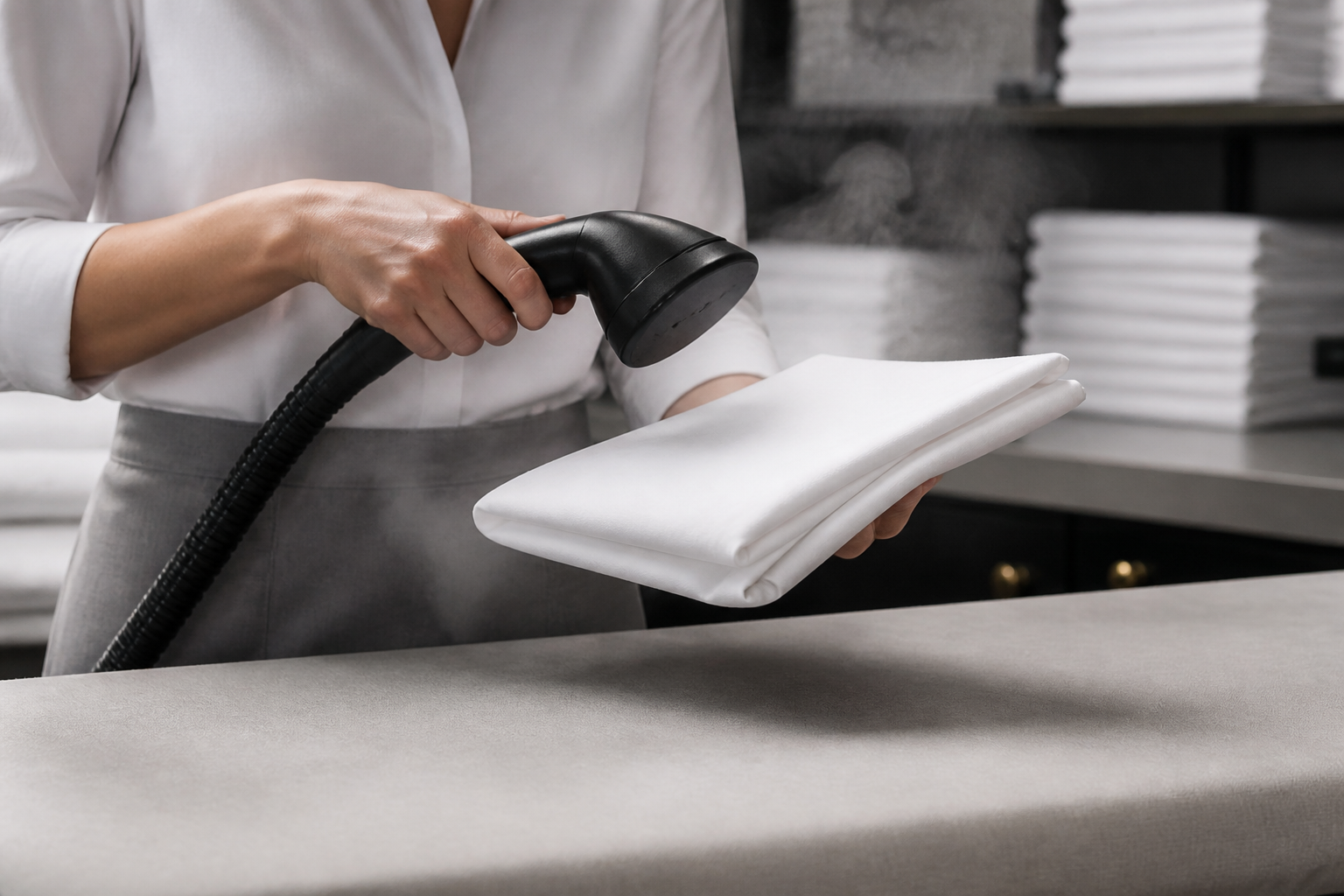
- Press while slightly damp or use steam. A hot dry iron leaves hard creases and can scorch; steam pressing is softer and better for delicate finishes and decorative edges.
- Iron embroidered areas from the reverse and lightly — direct heat flattens stitches and can damage thread.
- Don’t over-fold before pressing. Deep permanent creases in the same place each time create weak lines that crack with age; rotate fold directions where possible.
5. Folding and Storage

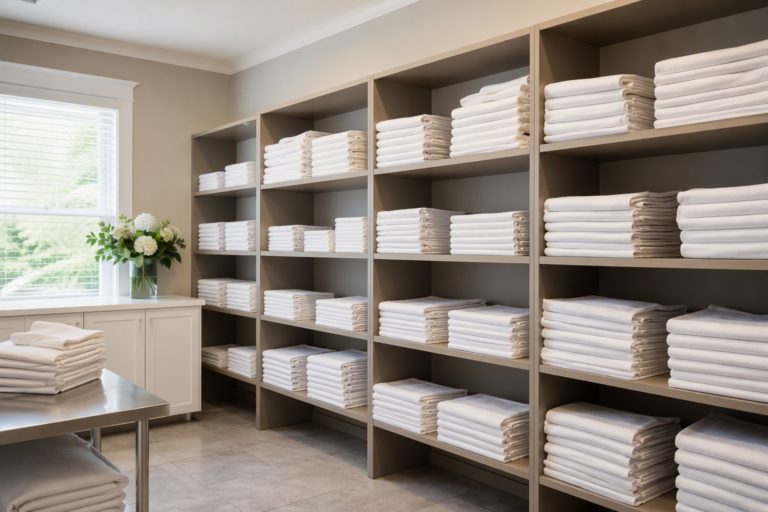
- Store only fully dry napkins, and store them off the floor — damp, low, and unventilated is the classic failure combination in small kitchens.
- Keep stacks in the same orientation for daily service so the table setting looks uniform even as pieces rotate in and out.
- Protect from light and pests. Long UV exposure fades colour; sealed storage keeps linen safe from insects in long-term storage.
- Keep a service rotation. Not all napkins should be in use at once — rotate stock so pieces rest between services and wear is distributed evenly.
- Mark out damaged pieces early. One stained or holed napkin in the stack contaminates the impression of the whole set — have a pull-out box for items needing repair or retirement.
6. Extending Service Life
- Watch the early warning signs: greying (detergent residue), edge fraying (too much mechanical action), yellowing (alkaline chemicals), and loss of shape (overdrying or heat). Each points to a specific fix.
- Keep a small retirement ratio in stock — replacing a few worn pieces before the set looks tired keeps the overall presentation consistently clean.
- Consistency beats intensity. The same moderate wash, press, and store routine repeated for years outperforms occasional deep-cleansing sessions that stress the fabric.
- Record your process. Once you find the wash settings that keep the linen in shape, write them down and train to them — care programs die every time the person who knew the settings leaves.
7. What to Ask a Supplier Before Buying
- The intended wash rating of the fabric and finish — can it take repeated hot commercial washing, or is it rated for cooler cycles?
- Colourfastness test results for coloured and printed napkins, especially if your laundry uses bleach or high temperatures.
- Shrinkage figures for natural fibres — this determines the finished size you should specify so napkins still fit your setting after the first wash.
- Whether the edges are mitered, serged, or laser-cut — cut-edge behaviour matters for long-term fraying.
- Embroidery thread and backing quality for embroidered napkins, since thread is usually the first decorative element to give way.
8. Cloth Napkin Care FAQs
How often should cloth napkins be washed?
Every service in food service — napkins go out, come back, get washed, and return to the stack. That is the normal cycle, and fabric quality and care settings should be chosen to survive it many times over.
Can I use chlorine bleach on white napkins?
Technically you can, but it shortens the life of the fabric and any detailing. Oxygen-based bleaching gives most of the whitening benefit with far less damage over hundreds of cycles.
Why do my white napkins look grey even though I wash them often?
Usually detergent residue — overdosed detergent or too cool a final rinse leaves film that darkens the fabric. Reducing detergent and raising final rinse temperature typically fixes it.
How many washes should I expect from a cloth napkin?
A well-made, well-cared-for napkin in a commercial program commonly lasts through many hundreds of washes before it is retired for appearance or wear; care practices and fabric weight are the main variables.
Final Thoughts
Cloth napkins pay for themselves over time, but only if the care program supports the quality you bought. Wash within the fabric’s limits, skip the chlorine, press with steam, store dry and off the floor, and retire worn pieces before the set shows it. Do that, and the same napkin keeps its finish for years — and the cost per service keeps falling.
We manufacture cloth napkins with commercial-grade fabrics and finishes built for repeated washing — with care ratings, colourfastness testing, shrinkage figures, and finished edges specified on request. Contact us for swatches, fabric guidance, MOQs, and wholesale pricing.