Wrinkled taffeta is one of the fastest-moving fabrics in the table linen trade right now — and the interest makes sense. It gives a table the visual weight of silk taffeta, a modern textured surface that a flat satin cannot match, and the practical, easy-care behaviour of a commercial polyester. For buyers it sits in a useful gap: more character than plain sateen, far less fuss than a delicate natural silk finish.
1. Why Wrinkled Taffeta Is Trending
- It reads as premium at a distance. The lustrous, crinkled surface catches light across the whole table, so the tablecloth is the first thing a room — or a photograph — registers. That is the look restaurants and wedding venues are moving toward.
- The texture is the point. A flat glossy cloth can look cheap when the weave is coarse; the controlled crinkle of wrinkled taffeta breaks up the surface and hides minor weave variation, which is exactly why the finish photographs so well.
- It behaves like a workhorse cloth. Because the base is a polyester taffeta, the fabric is wrinkle-tolerant, colourfast, and easy-care — the crepe surface means minor creases read as texture rather than as damage.
- The colour range is broad and consistent. Dyed taffeta takes colour cleanly, so the same look extends across a full palette for multi-venue or seasonal programs.
2. What Wrinkled Taffeta Actually Is
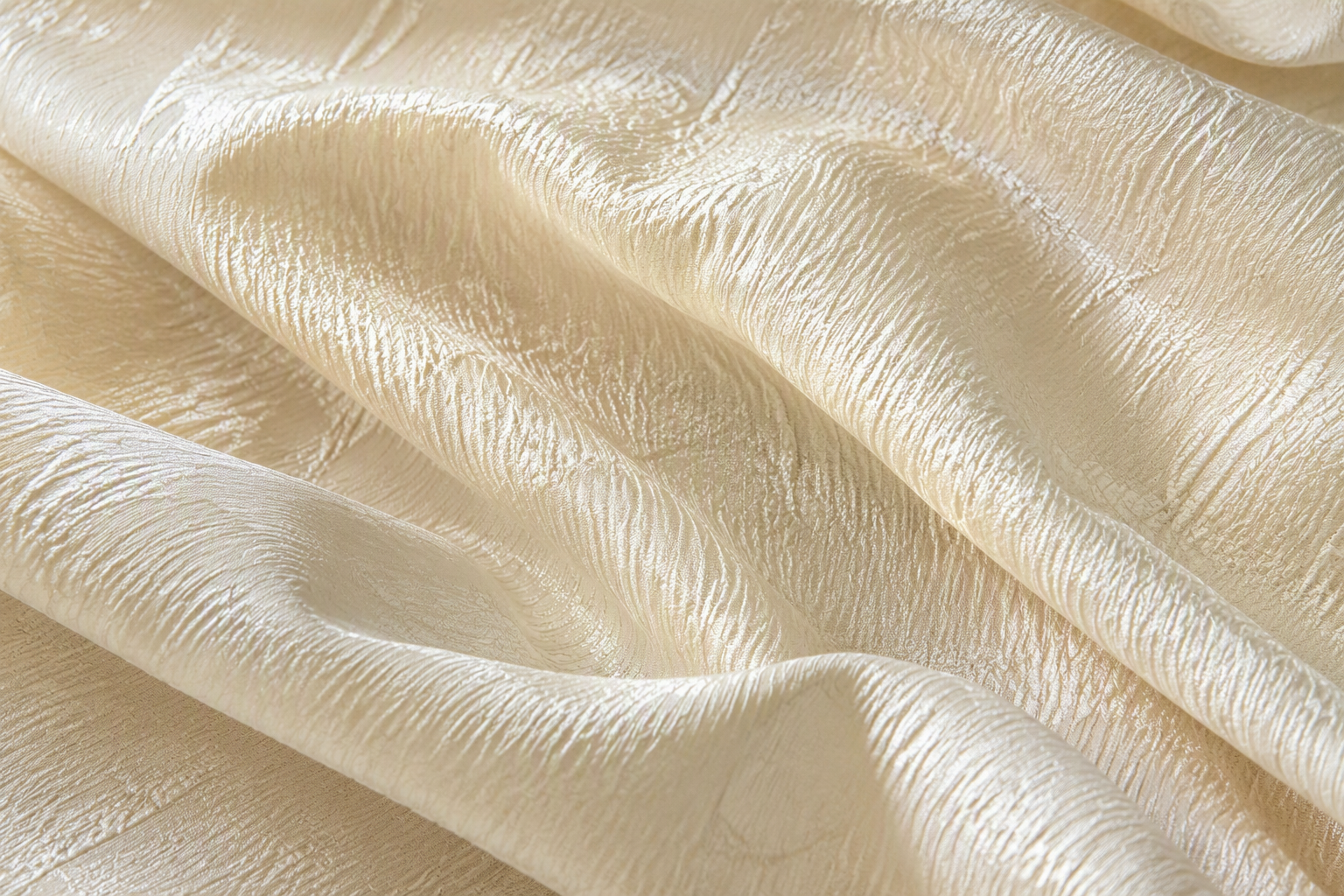
A wrinkled (crepe) taffeta starts as a taffeta base — a tightly woven, crisp fabric with a characteristic clean hand and a soft sheen — and then receives a crepe or crinkle finish on the surface. The finish gives the fabric its fine, controlled wrinkling and a slightly broken, luminous luster. Two things are worth understanding:
- The base is taffeta, not satin. Taffeta weaves crisper and stiffer than a satin face, so the cloth holds a clean drape and a flat table line rather than pooling. That structure is why the creple finish sits evenly across the surface.
- The wrinkle is a surface finish, not a weave fault. It is produced consistently across the fabric, which is why a whole cloth wrinkles as one — and why “wrinkled” here is a specification, not a defect. The distinction matters when you specify the order and inspect the delivery.
3. How to Recognise It
- Look: a soft, even luster with a fine crinkled surface — not the mirror gloss of a satin, not the matte of a woven poly. Light moves across it rather than reflecting off it.
- Touch: a crisp, structured hand with a slight bite — stiffer than a sateen, with a clean fall that holds the table line.
- Crease behaviour: a sharp crease relaxes but does not sit as a hard line the way a flat cloth would; the surface absorbs the fold into its texture.
- Sound and fall: the crisp hand gives the drape a clean, slightly structured edge — the same quality that makes a taffeta look intentional rather than slouchy.
4. How It Compares to the Alternatives
| Fabric | Surface | Hand & drape | Best for |
|---|---|---|---|
| Wrinkled taffeta | Lustrous, fine crinkle | Crisp, structured, clean fall | Formal & styled venues that want character |
| Plain taffeta | Smooth, soft sheen | Crisp, structured | Traditional banquet & formal looks |
| Satin / sateen | High gloss | Softer, pools slightly | Classic formal, high-shine settings |
| Woven polyester (colorwork) | Matte to low sheen | Soft, substantial | High-turnover commercial, patterned programs |
The practical read: if the goal is a lustrous cloth with a modern textured face that still photographs well, wrinkled taffeta is the choice. If the goal is the highest possible shine, satin wins; if the goal is a matte, substantial everyday cloth, a woven poly is the stronger value.
5. Colour and Finish Options
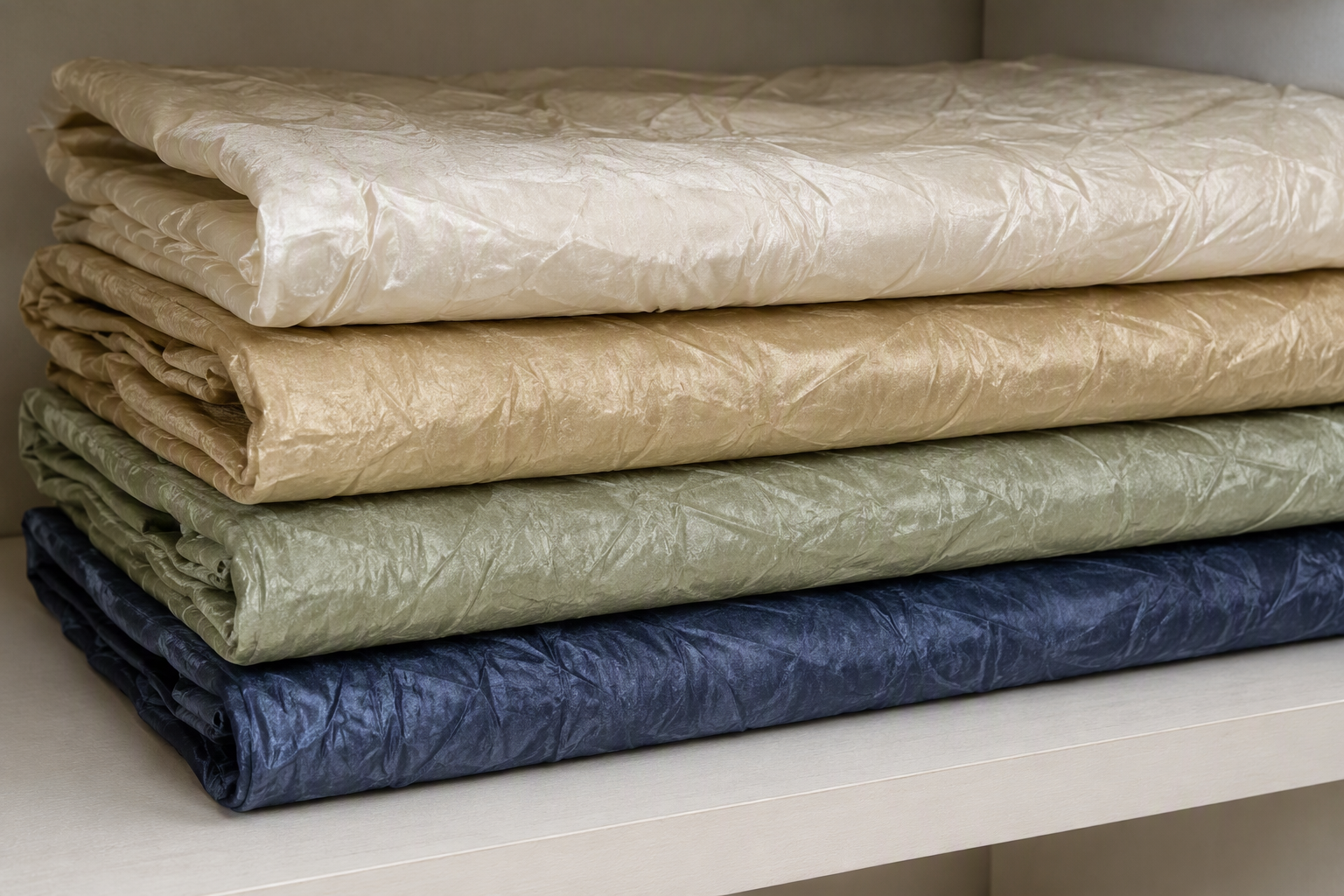
- Neutrals (white, ivory, oatmeal, light grey) are the program backbone — the luster reads clean and formal, and they pair with any runner or napkin.
- Tone-on-tone colours (champagne, sage, dusty blue, soft navy) are where the fabric shines: the crinkle gives the colour depth and movement a flat cloth cannot.
- Deep colours show the luster most dramatically — but verify colourfastness and check the shade under the actual venue light, exactly as with any dyed linen.
- Finish consistency is the quality marker: the crinkle should be even across the whole cloth; patchy or uneven creping is a process defect, not a look.
6. Sizing and Drape Behaviour
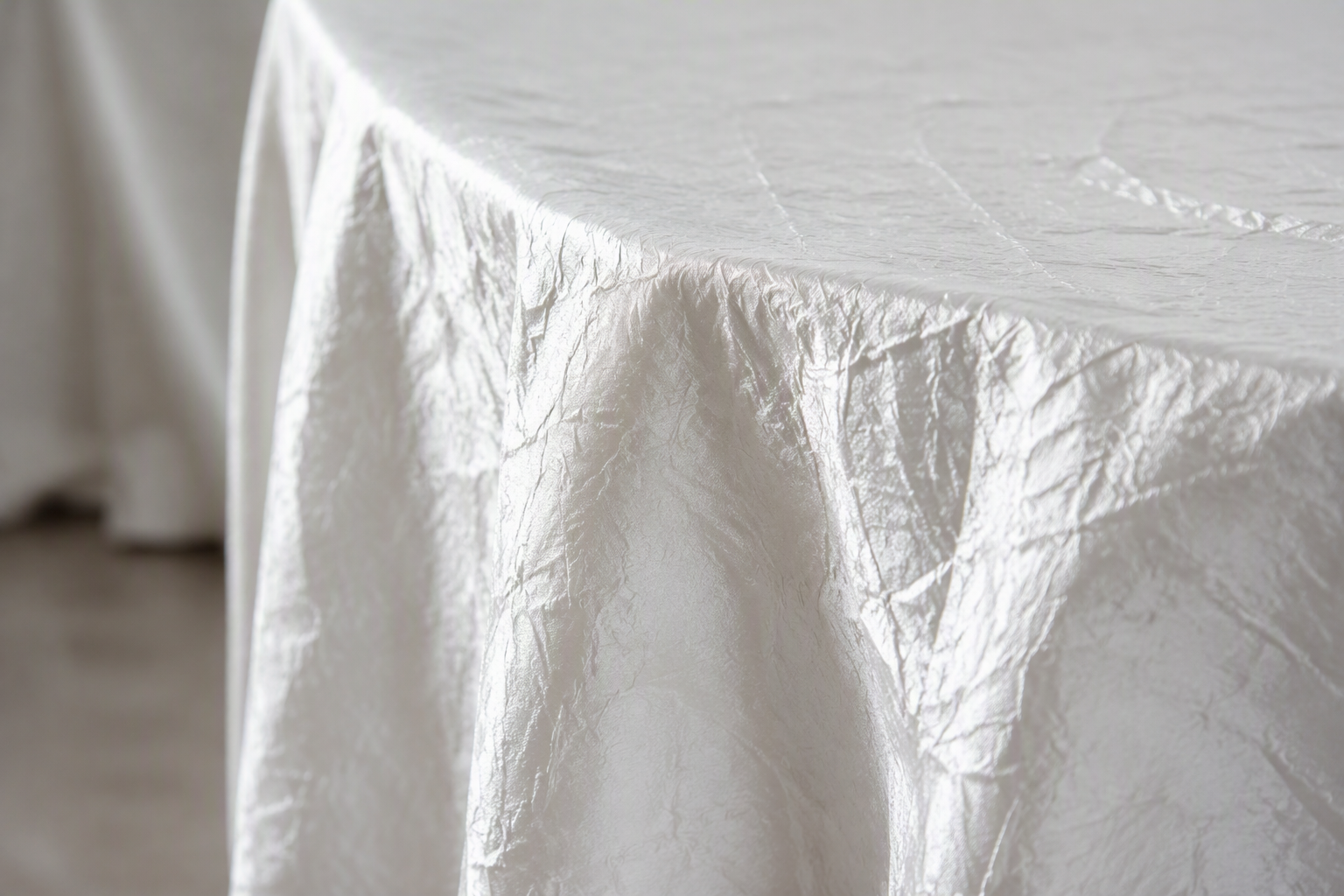
- Size by the same logic as any tablecloth: table dimension plus the drop you want at the sides and ends. The crisp hand means the drape falls as designed — a structured, clean line rather than a soft pool.
- Plan for the finish in the cut size. As with any woven cloth, confirm the quoted dimension is the finished size, and allow for the shrinkage figure the factory provides on the sample.
- The crinkle affects the visible drape: because the surface is textured, light plays across the hanging edge — the drape reads richer than a flat cloth of the same size, which is part of why the fabric photographs well.
7. Care
- Machine-wash on a cool/gentle cycle, mild detergent, no chlorine bleach — the same program as any polyester taffeta.
- The crepe is forgiving: minor creases read as texture, so the cloth is less pressing-critical than a flat satin. Steam to refresh before an event; avoid a hot iron pressed hard against the surface, which can flatten the finish and leave shine marks.
- Store dry, folded or hung, out of light — the standard program-linen storage that protects the colour as much as the fabric.
8. Where It Works Best
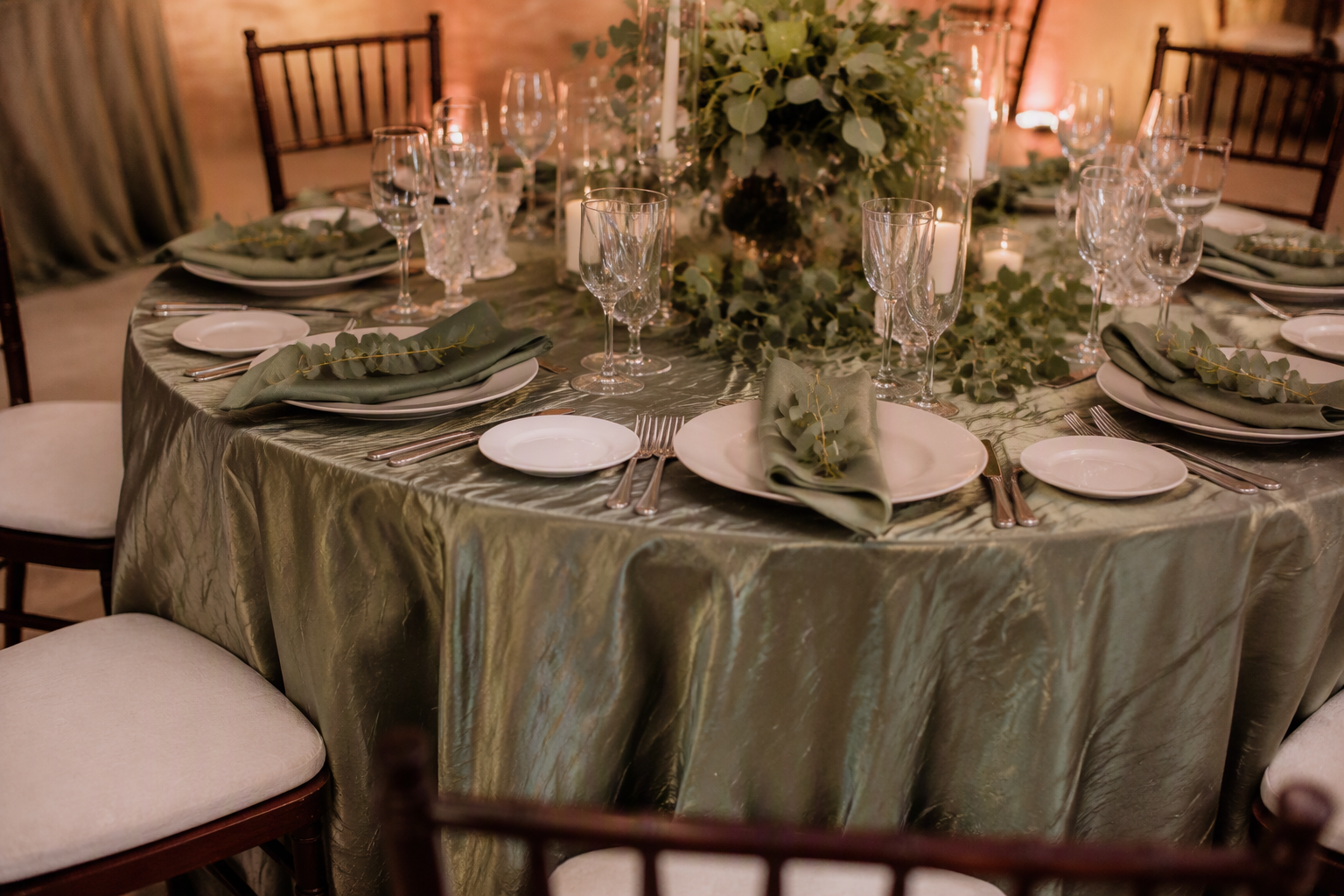
- Fine dining and restaurants: the lustrous textured surface elevates the table without the formality of silk — a strong look for restaurants moving up-market.
- Weddings and events: the fabric that photographs well is the one that gets re-ordered; wrinkled taffeta in the event palette is a current favourite for staged looks.
- Banquet and hotel: as a formal program cloth, it holds a clean table line across a room and survives the commercial wash program.
- Retail and styled programs: as a visible, characterful cloth it sells on the look — which is why it appears in both trade and retail assortments.
9. Buying Wrinkled Taffeta in Volume
- Specify the finish in writing: wrinkled/crepe taffeta, with the base taffeta and the intended use — so the delivery is the fabric you approved, not a close flat taffeta.
- Approve a finished sample on the table, not flat: the luster and drape only read correctly once the cloth is on a table under the venue light.
- Confirm the key numbers: fabric weight, the crepe finish consistency, shrinkage figure, and wet/light colourfastness — the same documentation that protects any dyed program.
- Match dye lots across the order and keep the lot code for reorders, particularly for coloured cloths where a shift would be visible across a room of tables.
- Order to the event calendar: production plus freight, scheduled well ahead of the dated function that needs the cloth.
10. Wrinkled Taffeta FAQs
Is the wrinkle permanent, or will it wash out?
The crepe is a finished surface that is stable through normal washing — it does not wash out. What changes over time is wear: the finish can soften slightly with heavy use, which is part of the working life rather than a one-wash failure.
How is it different from a satin tablecloth?
Three ways: the base is a crisp taffeta weave rather than a soft satin face, the luster is broken and luminous rather than mirror-bright, and the surface is textured rather than flat. Satin gives the highest shine; wrinkled taffeta gives more character with less fuss.
Will it wrinkle badly after washing?
Far less than a delicate cloth — the crepe surface absorbs minor creases as texture, so the cloth is forgiving between pressings. Steam before an event for a clean finish, but it is not the pressing-critical cloth that a flat formal satin is.
Can I get it in a custom colour and size?
Yes — dyed taffeta takes a broad palette, and the cloth is cut to your finished dimensions with the shrinkage allowance worked in. The colour and size are part of the specification, confirmed against the finished sample before production.
Final Thoughts
Wrinkled taffeta is the fabric for a table that should look intentional: the crisp taffeta base gives a clean, structured drape, the crepe finish gives a lustrous textured surface that photographs well, and the polyester behaviour keeps it practical under a commercial wash program. Specify the finish, the weight, the shrinkage, and the colourfastness in writing, approve the cloth fitted under your own light, match the dye lot across the order — and the look holds for the working life of the program.
We produce wrinkled and plain taffeta tablecloths in a full colour range, cut to your finished size, with weight, shrinkage and colourfastness figures supplied with the sample. Contact us for taffeta samples, sizing, MOQs, and wholesale pricing.