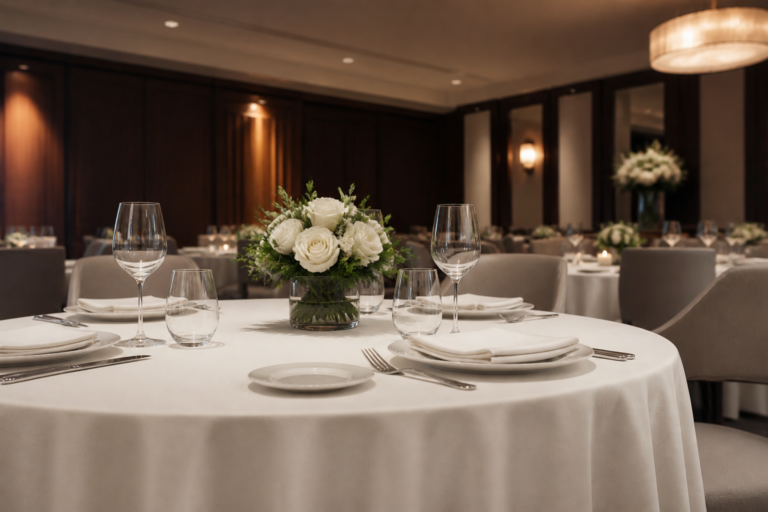
Velvet is the fastest way to make a table look expensive. No other fabric carries the same depth of colour, the same soft light-absorbing surface, and the same instant read of luxury — which is why it keeps appearing in fine dining, weddings, and seasonal programs. For a commercial buyer, the question is never whether velvet looks good. It is whether the velvet you order will survive the way you will use it. That depends on the base, the pile, and the care program — all of which are specifications, not luck.
1. Why Velvet, and Why Now
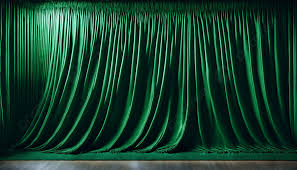
- The look is unmatched. Velvet’s pile absorbs and re-emits light, so the surface reads as deep, dimensional colour rather than a flat dye. Photographed under warm light — the way most dining rooms and events are lit — it is the strongest “expensive” signal in table linen.
- It carries colour. Deep tones that look flat on a sateen (burgundy, emerald, navy, charcoal) look rich and layered on velvet, which is why coloured velvet has become a staple of styled dining and seasonal programs.
- It works seasonal. Velvet naturally reads as autumn/winter and holiday, so a small velvet program lets a venue shift the room’s mood without rebuilding the whole linen set.
- It is practical when specified right. A polyester micro-fibre velvet, at the right weight, is wrinkle-tolerant, colourfast, and machine-washable — the same working behaviour as the other commercial fabrics in a program, in a far more characterful finish.
2. What Velvet Actually Is
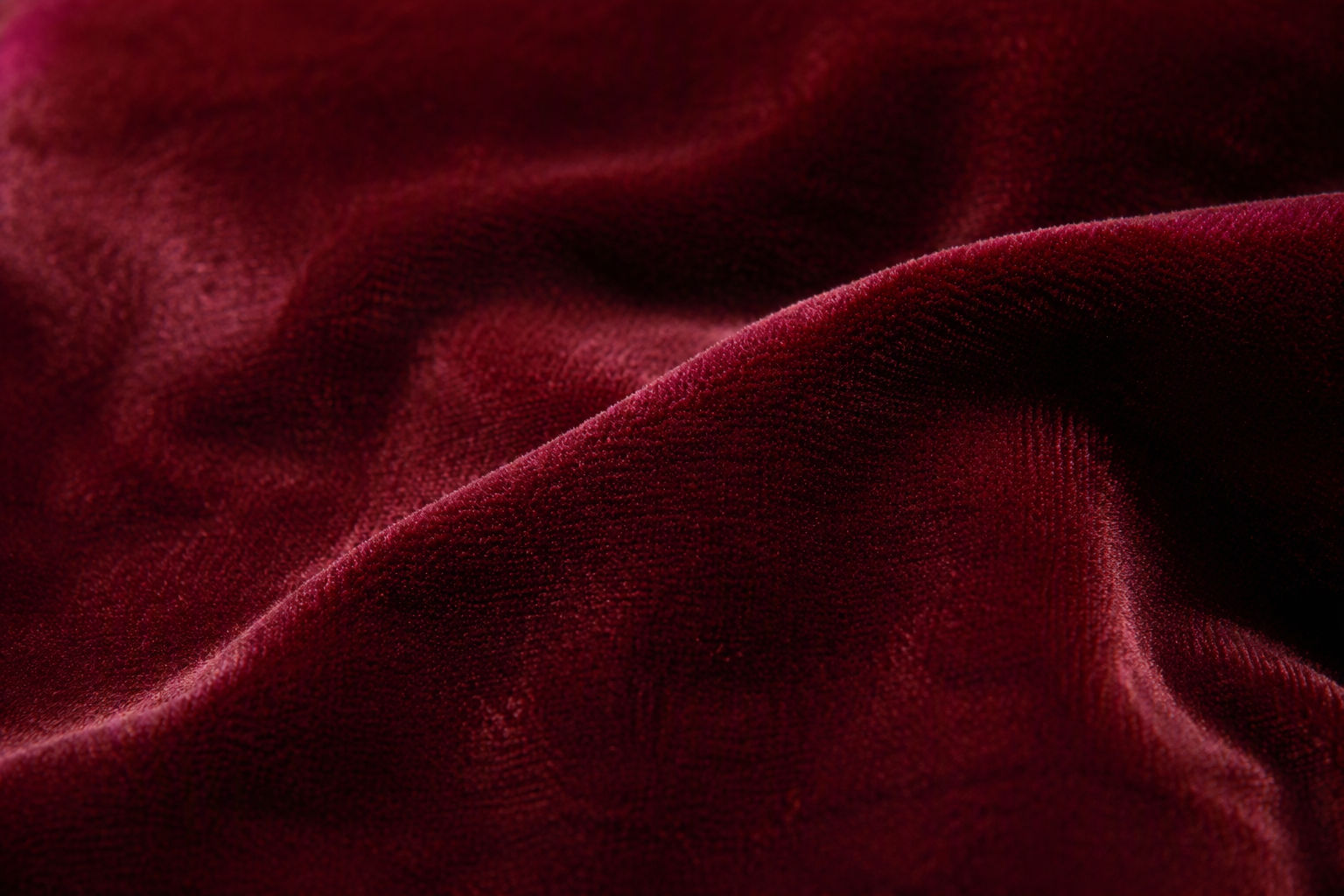
Velvet is a pile fabric: it is woven with extra floating yarns that are later cut, leaving a short, upright pile on the surface. What matters commercially is what that pile is made of and how dense it is:
- Micro-fibre polyester velvet: the commercial standard. A fine poly fibre gives a dense, even, soft pile that is wrinkle-tolerant, colourfast, and easy-care — the base to specify for table service.
- Short-pile velvet: a dense, low nap that resists crushing and shows the least pilling — the strongest choice for repeated commercial use.
- Crushed / devoré velvet: a textured, irregular nap for a softer, more decorative look — best as an accent or a single-use event piece rather than a standing cloth.
- Cotton and blended velvets: softer and more natural, but heavier in care — they crease, fade, and need more delicate handling, so they suit occasional and home-style use more than high-turnover service.
Two properties define quality on any velvet: pile density (a tight pile looks deeper, hides the ground cloth, and lasts) and pile direction consistency (the nap should run one way across the whole cloth — uneven nap reads as a manufacturing fault).
3. How to Recognise Good Velvet
- Look: a soft, light-absorbing sheen — velvet does not flash like satin. Light spreads across the pile rather than reflecting off it, which is what makes the colour read as deep.
- Run a hand across it: the nap should turn visibly under the hand and spring back evenly. A pile that stays flattened in one direction has weak resilience.
- Check the colour depth: good velvet shows the colour in two values — lighter where the nap stands, deeper where it lies down — instead of one flat tone.
- Stretch and fold: the ground cloth should have body. A thin ground shows through the pile and makes the fabric feel cheap and short-lived.
4. Velvet vs. Satin vs. Taffeta
| Fabric | Surface | Colour read | Best for |
|---|---|---|---|
| Velvet (micro-fibre) | Plush, light-absorbing | Deep, dimensional, two-tone | Formal looks, coloured programs, seasonal |
| Satin / sateen | Smooth, high gloss | Bright, mirror-like | Classic formal, high-shine settings |
| Wrinkled taffeta | Lustrous, fine crinkle | Soft sheen with texture | Modern formal, lustrous-but-casual looks |
The practical read: satin gives the brightest shine, wrinkled taffeta gives texture with a modern hand, and velvet gives depth — the richest colour of the three. They are complements in a program, not substitutes: many venues keep a white or ivory satin for classic formal service and a coloured velvet for styled and seasonal looks.
5. Colour
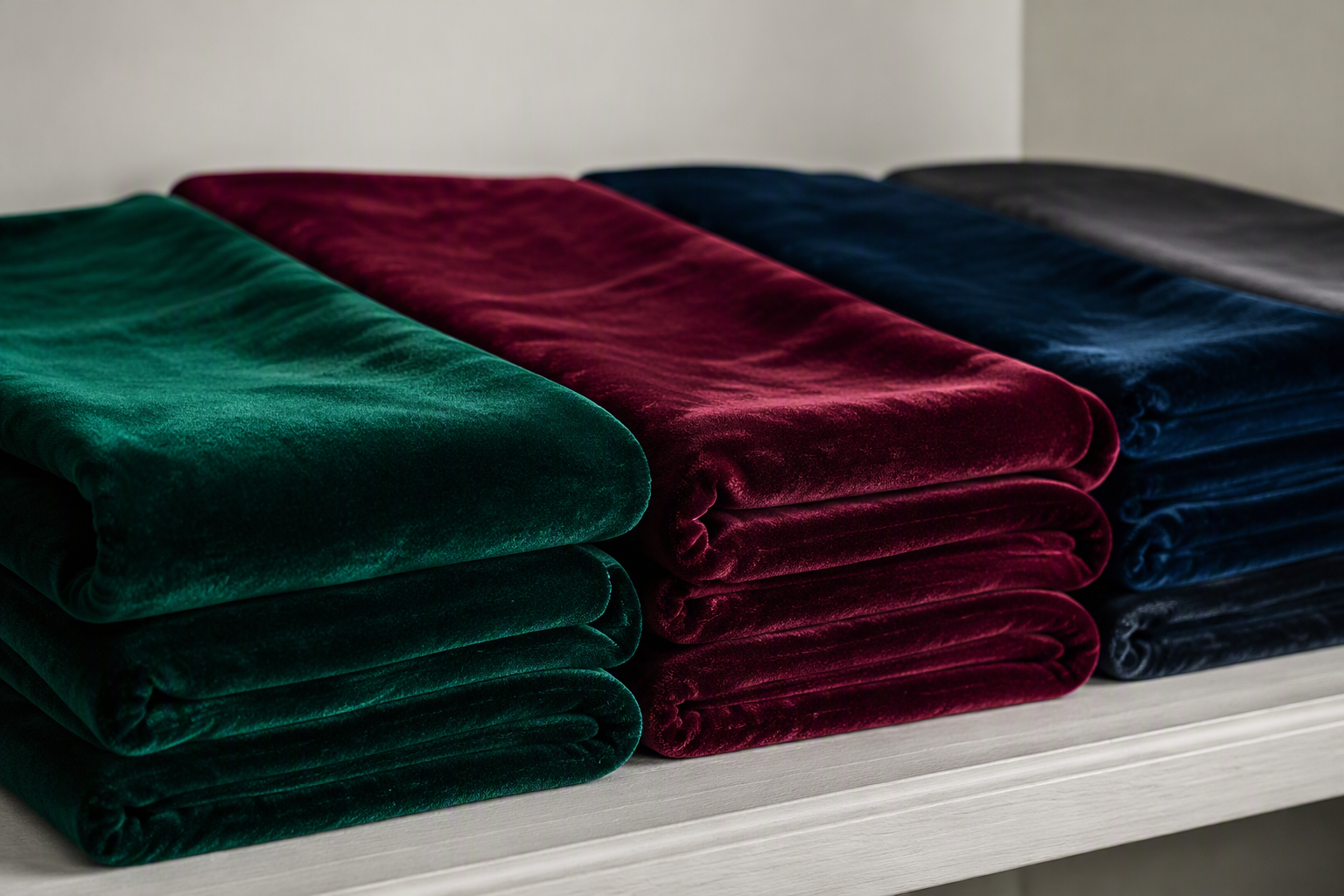
- Deep colours are velvet’s home: burgundy, emerald, navy, charcoal, forest — the pile gives these tones a depth a flat cloth cannot. This is the velvet palette for fine dining and seasonal programs.
- Light colours are the trade-off: ivory and light velvet photograph beautifully but show soil, ring marks, and nap direction far more than a light sateen. Specify a light velvet for low-soil, event-only use — not for daily table service.
- Check the nap under your light: because velvet shows two colour values, the shade read changes with light angle exactly as it does for any dyed linen — approve the sample under the venue’s actual lighting.
- Match dye lots across a room: a set of coloured velvet cloths makes a dye-lot shift far more visible than a single white cloth would — request lot matching and keep the code.
6. Sizing and Drape
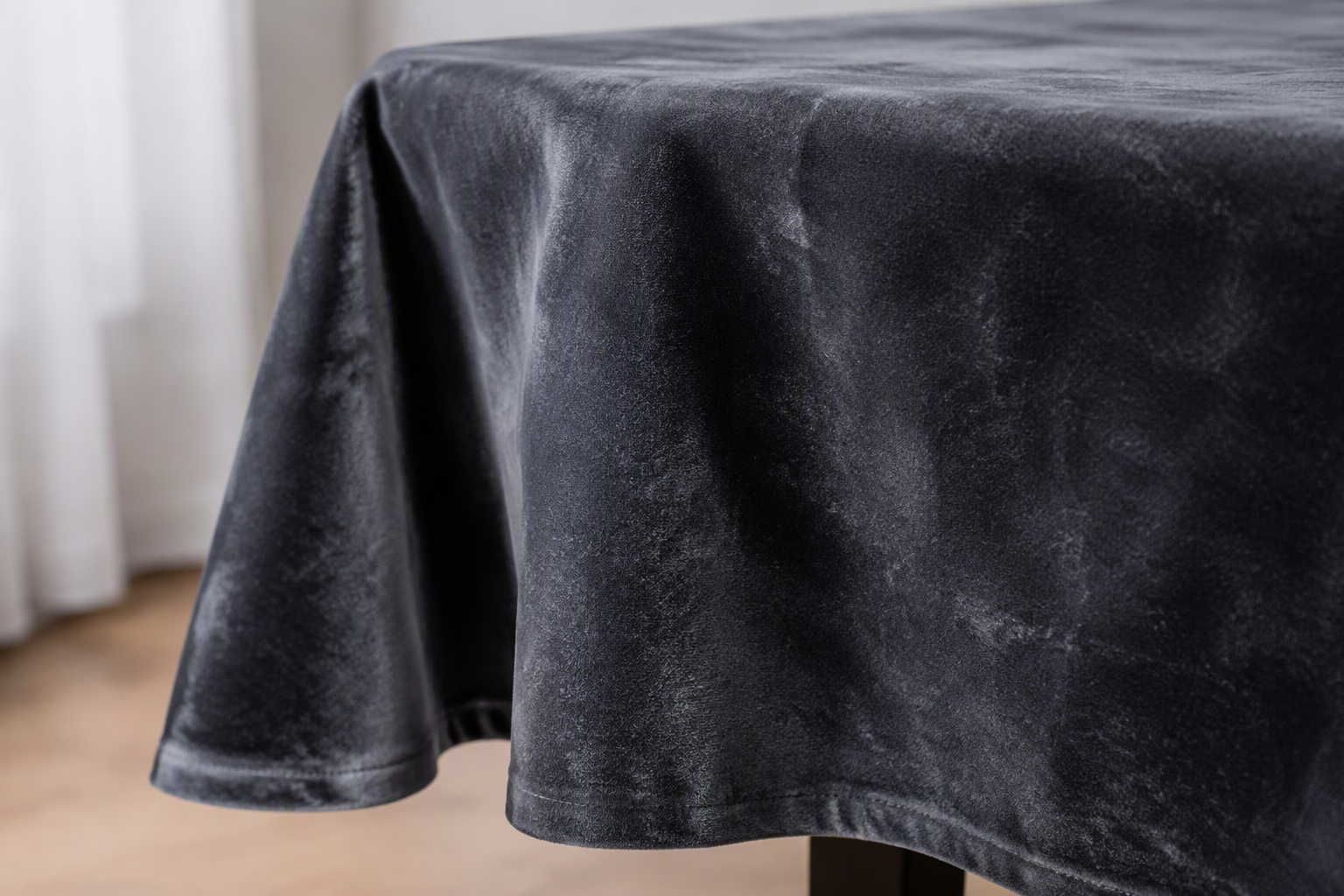
- Size by the standard logic: table dimension plus the drop you want. Velvet’s extra weight means the drape falls cleanly and holds the line — it does not blow or flutter the way a light cloth can, which is part of why it reads as “set” and deliberate.
- Confirm the finished size and the shrinkage figure on the sample, as with any woven program linen — the pile adds weight, not stretch, so the cut-size discipline is the same.
- Plan the drop for the room: floor-length is the formal look for velvet; a shorter, mid drop works for styled and display tables. Because the pile is visible down the whole fall, the hem finish at the bottom is part of the image — check it.
7. Care
- Machine-wash cool/gentle on the micro-fibre polyester base; mild detergent, no chlorine bleach. Follow the same program as the rest of the cloths so the velvet cycles with them.
- Never iron the pile directly. A hot iron crushes and shines the nap permanently. Refresh velvet with a garment steamer or a low, indirect press, and keep the nap direction as it was approved.
- Store on a roll or folded with the nap, out of light. A folded velvet held under weight (a stack of heavier cloths) keeps the crease line and flattens the pile where the fold sits — roll it, or fold it lightly and rotate the stack.
- Manage pilling and nap. Light pilling on the pile is normal working life; a fabric shaver on low, following the nap, restores the surface. A shorn or bald patch is the end-of-life signal — the same retire-and-replace discipline as any program cloth.
- Keep light-coloured velvet out of daily soil. The care cost of an ivory velvet in full service is the reason it is an event cloth, not a workhorse.
8. Where Velvet Works Best
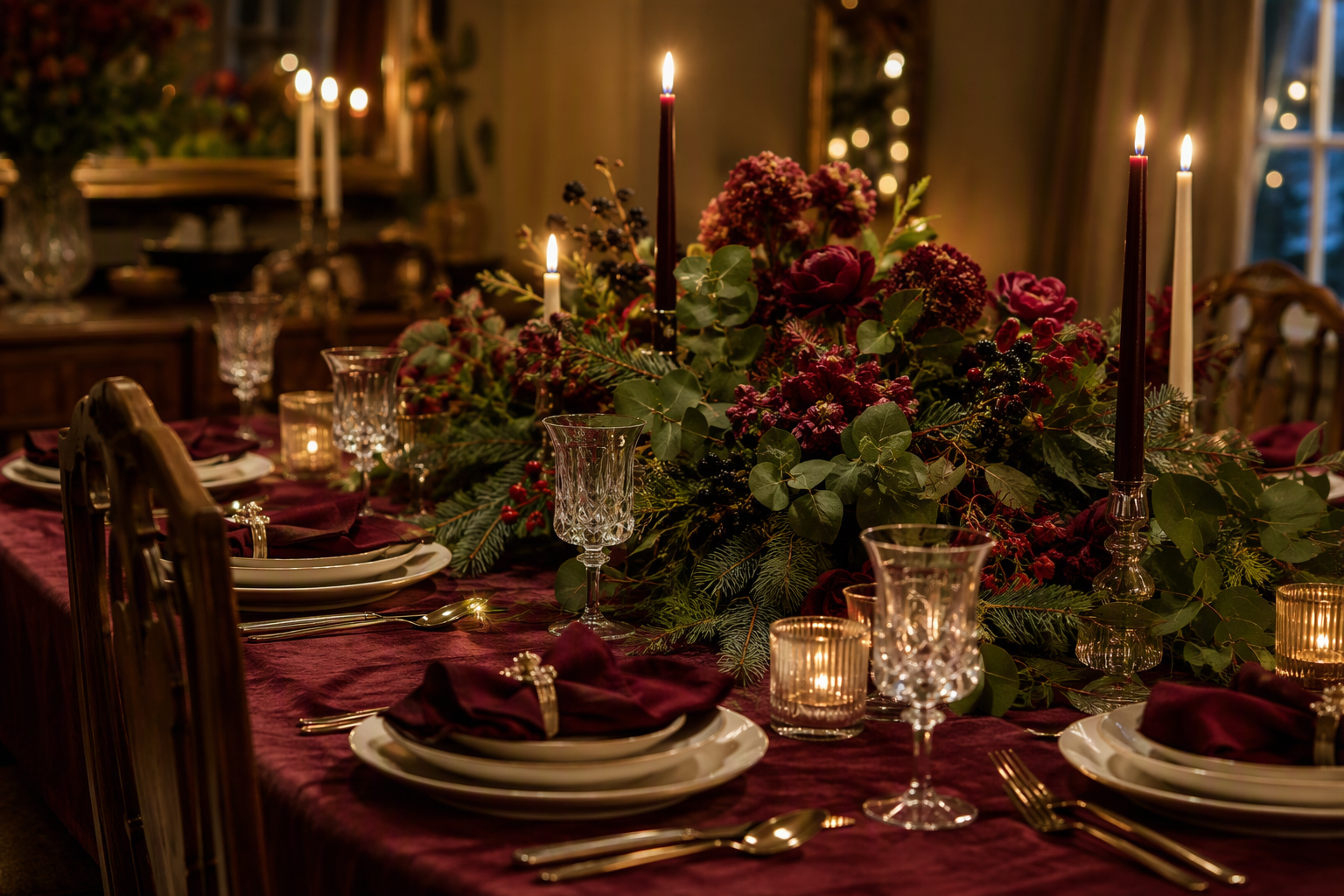
- Fine dining: a coloured velvet cloth is the single fastest upgrade to a table’s perceived class — and it photographs the way the venue wants it to.
- Weddings and events: deep velvet in the event palette is a current favourite for styled ceremony and reception looks.
- Seasonal programs: autumn and holiday are velvet’s season — a small coloured set shifts the whole room’s mood for the quarter.
- Boutique hotels and display: velvet works wherever the table is being shown as much as used — the display table, the head table, the branded surface.
9. Buying Velvet in Volume
- Specify the base and the pile in writing: micro-fibre polyester velvet, with the intended weight and pile type (short-pile for service) — so the delivery is the fabric you approved, not a lighter close look.
- Approve a finished cloth, not a swatch: nap, drape, and colour depth only read correctly on the table under the venue light.
- Confirm the numbers: fabric weight, pile density, shrinkage figure, and wet/light colourfastness — the same documentation that protects any dyed program, plus the nap-direction check.
- Match dye lots across the set and keep the lot code for reorders — a shift is most visible on a room of coloured velvet.
- Order the seasonal set ahead of the season: velvet for a holiday program is production plus freight, scheduled weeks before the first event, not after the calendar is set.
10. Velvet FAQs
Will velvet wrinkle badly?
Far less than a natural-fibre cloth — the micro-fibre polyester base is wrinkle-tolerant, and the pile hides minor creases. Refresh with a steamer rather than a hot iron, which is the one thing that will permanently damage the nap.
Can I use velvet for everyday table service?
Yes, if it is the short-pile micro-fibre base in a dark colour and the care program is right (cool wash, steam not iron, roll or light-fold storage). Light-coloured or long-pile velvet is better held for events, where it is not in daily soil.
How is velvet different from crushed velvet?
Crushed velvet has a textured, irregular nap for a decorative look; standard short-pile velvet has a smooth, even nap. For repeated commercial use, specify the smooth short pile — the crushed look is softer but less consistent over a wash life.
Can I get velvet in a custom colour and size?
Yes — the micro-fibre base dyed to the program colour and cut to your finished dimension with the shrinkage worked in. Approve the finished cloth under your own light, and match the dye lot across the set.
Final Thoughts
Velvet is the fabric a room reaches for when it wants to look expensive: deep, light-absorbing colour, a weighted clean drape, and a finish that photographs the way the venue intends. Specify the micro-fibre base and the short pile, approve the cloth fitted under your own light, keep it out of the iron and out of the heavy stack, and match the dye lot across the set — and the luxury look holds for the working life of the program.
We produce micro-fibre and short-pile velvet tablecloths in a full deep-colour range, cut to your finished size, with weight, shrinkage and colourfastness figures supplied with the sample. Contact us for velvet samples, sizing, MOQs, and wholesale pricing.