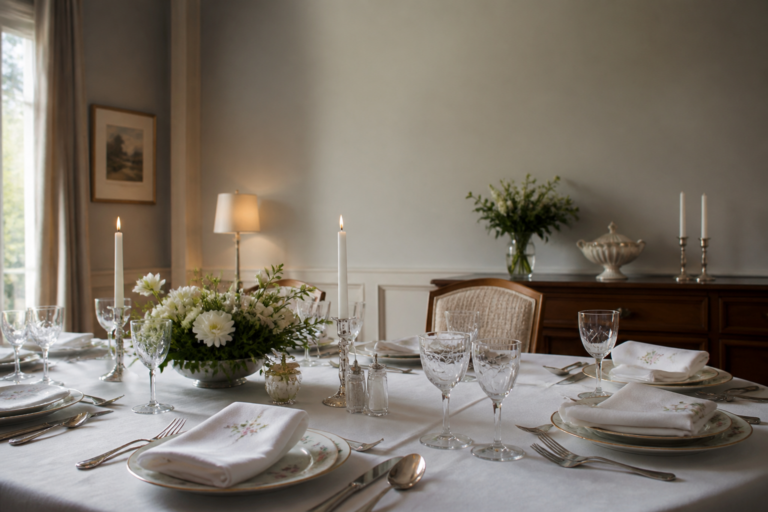
A flat napkin shows everything — the weave, the soil, the crease. A textured one does not. Gauze, waffle, pique and ribbed napkins have moved from a niche home-decor look into restaurant, café and event programs, and textured place settings are now among the fastest-moving styles in table linen. For a commercial buyer, texture is a real specification: it changes how the napkin looks, how it wears, how it folds, and how it washes. This guide covers the four textures that matter in trade, how they differ, and how to order them correctly.
1. Why Textured Napkins Are Trending
- The surface adds depth. A textured napkin carries light across its surface, so it reads as richer and more intentional than a flat cloth of the same colour — the reason styled tables and event photography favour them.
- Texture hides everyday wear. Minor creases, small ring marks and light soiling sit inside the texture instead of on a flat surface — a practical advantage in high-turnover service, and the reason textured napkins age more gracefully on camera and in person.
- Texture carries colour. The same oatmeal or sage reads calmer and deeper on gauze or waffle than on a flat sateen — one fabric, a different finish.
- Texture sets a style. Gauze says soft and natural, waffle says casual and modern, pique says sporty-clean, ribbed says structured — a venue changes its table story with the napkin, without changing the tablecloth.
2. The Four Trade Textures
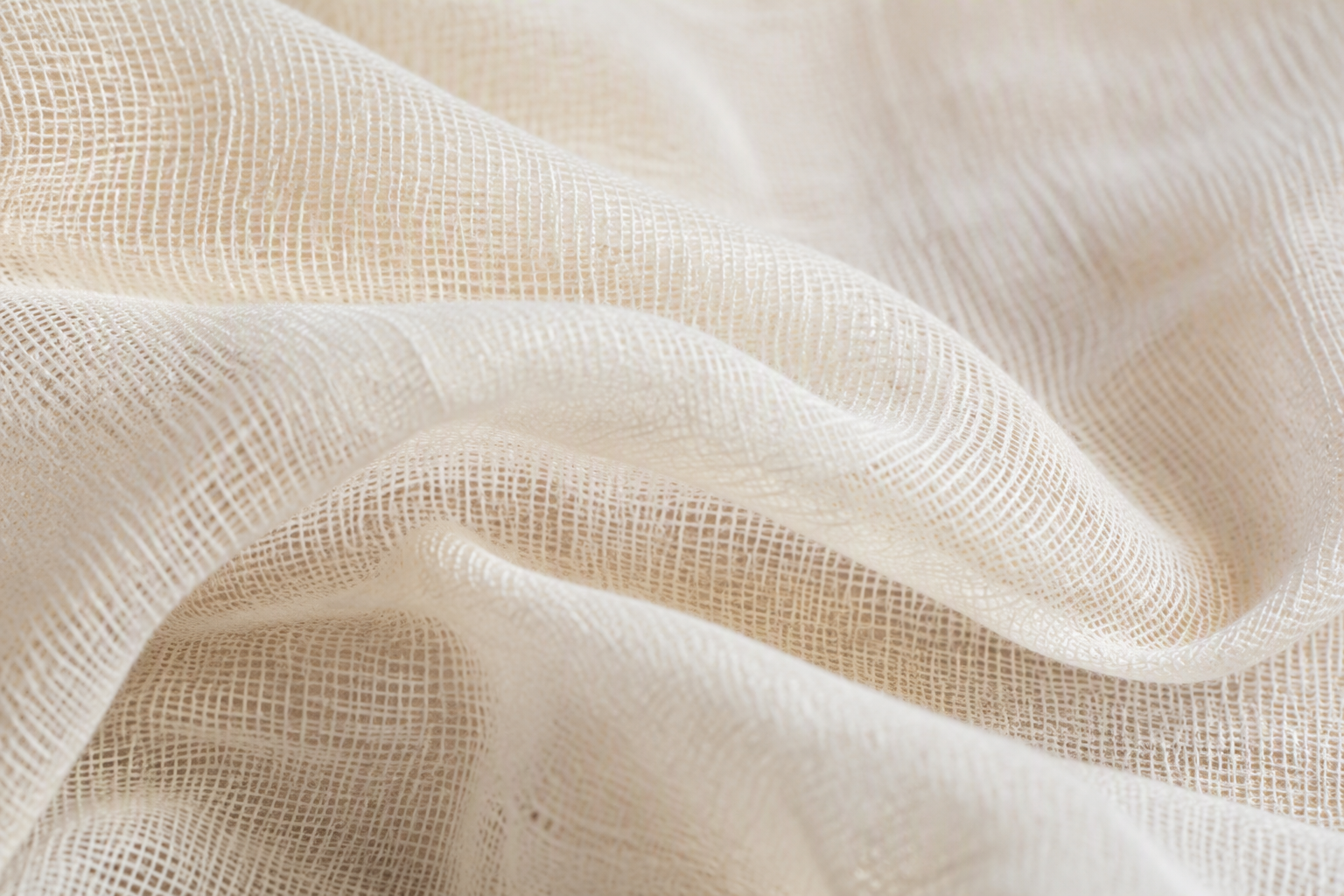
- Double gauze: two fine layers of an open weave stitched together. Soft, light, and slightly translucent, with a relaxed natural hand. The strongest “soft organic” look of the four — the gauze napkin is the one most associated with the current natural-table trend. Lighter, so it folds soft and drapes loosely rather than holding a sharp crease.
- Waffle weave: a raised honeycomb grid that gives the napkin real body and a cushioned hand. Waffle is the workhorse of the textured group: the pockets absorb spills, the raised structure hides creases, and the cloth reads modern-casual in almost any colour. The texture that has moved fastest into cafés and casual restaurants.
- Pique: a fine, dense honeycomb smaller than waffle — the fabric of a polo shirt, translated to the table. Pique gives a subtle textured surface with a clean, sporty finish. It is denser and crisper than waffle, so it holds a fold better and reads more polished.
- Ribbed: a vertical channel weave, like a corduroy at napkin scale. Ribbing adds a structured, directional texture that photographs with strong light-and-shadow lines. It is the most formal of the textured group and the one that pairs best with a dressed, styled table.
3. How They Compare
| Texture | Hand | Weight | Look | Best for |
|---|---|---|---|---|
| Double gauze | Soft, light, slightly sheer | Light | Natural, relaxed | Organic styling, home, soft-casual service |
| Waffle | Cushioned, absorbent | Medium | Modern, casual | Cafés, casual restaurants, everyday service |
| Pique | Crisp, fine texture | Medium | Clean, sporty-polished | Smart-casual, styled retail, mixed programs |
| Ribbed | Structured, directional | Medium-heavy | Defined, formal-leaning | Dressed tables, events, feature settings |
The practical read: if the goal is the natural look, specify gauze; if the goal is a hard-wearing everyday textured cloth, waffle is the value choice; if the goal is texture with a polished, crisp finish, pique; if the goal is a defined, structured statement, ribbed.
4. Texture and Colour
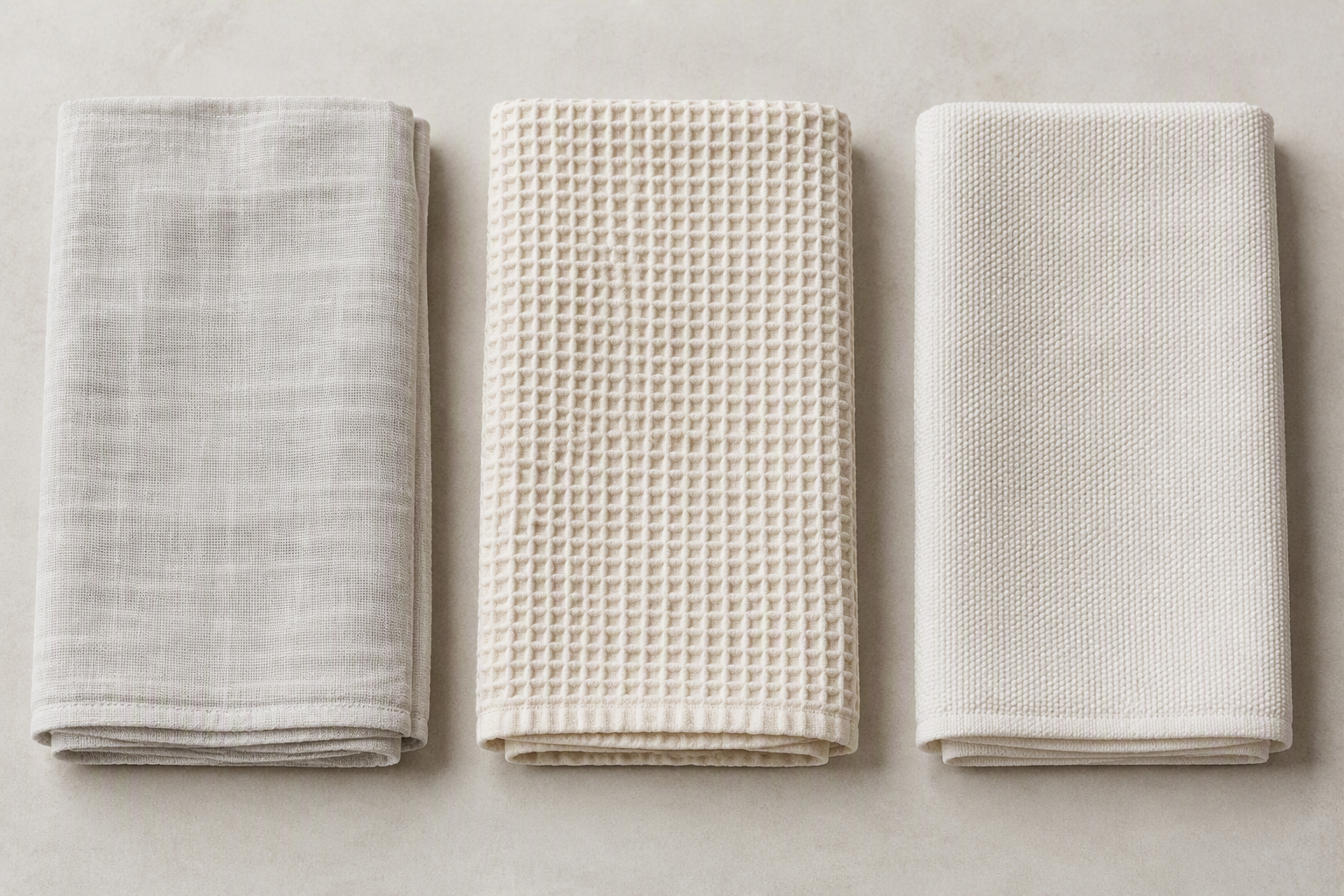
- Neutrals are the textured sweet spot: oatmeal, ivory, sage, grey, terracotta. The texture does the visual work, so the palette stays calm — this is why the trend reads as “natural” rather than “patterned.”
- Texture flatters mid-tones. A flat mid-grey can look dull; the same grey on waffle or gauze has depth. If a colour is not working flat, try it textured before rejecting it.
- Deep colours on ribbed and pique pick up the directional light — the formal end of the textured group handles a deep tone the way a plain velvet would.
- Approve the colour on the texture, not off it: the same dye reads lighter or deeper depending on how the surface scatters light. Confirm the shade on the finished textured napkin under your own light, exactly as with any dyed linen.
5. Texture and Durability
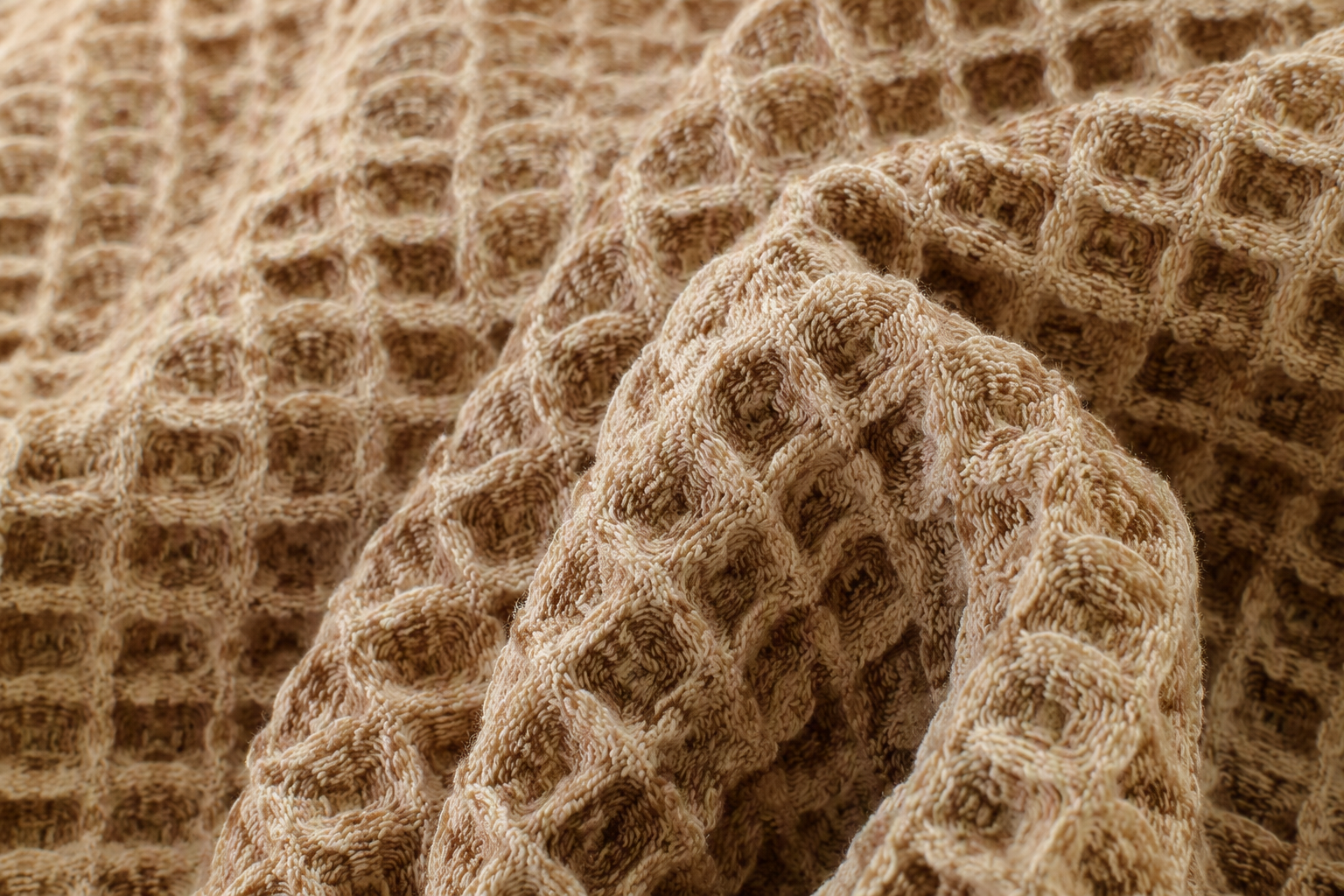
- Wrinkle behaviour differs by texture. Waffle and pique hide creases by design; gauze drapes and needs a light press; ribbed shows a hard crease across the channels. Set the pressing expectation to the texture, not to a flat cloth.
- Snag and wear points move. On a textured napkin, wear announces itself at the raised structure — a waffle pocket that flattens, a rib that frays at the edge. Inspect the texture as part of the cloth, not just the ground.
- Shrinkage is texture-sensitive. Structured weaves (waffle, pique, ribbed) hold their shape better through washes than a light gauze, which can relax and shrink more noticeably. Confirm the finished-size shrinkage figure on the textured sample — it is not the same number as the flat cloth.
- Follow the care program the texture was chosen for. Cool/gentle wash, no chlorine, mild detergent — the same discipline as the rest of the program. The texture is what sells the napkin, so the care must protect the texture, not just the fabric.
6. Texture and Folding
- Light gauze folds soft: simple, relaxed folds — a diagonal, a soft rectangle — suit the drape. Sharp architectural folds fight a light gauze napkin.
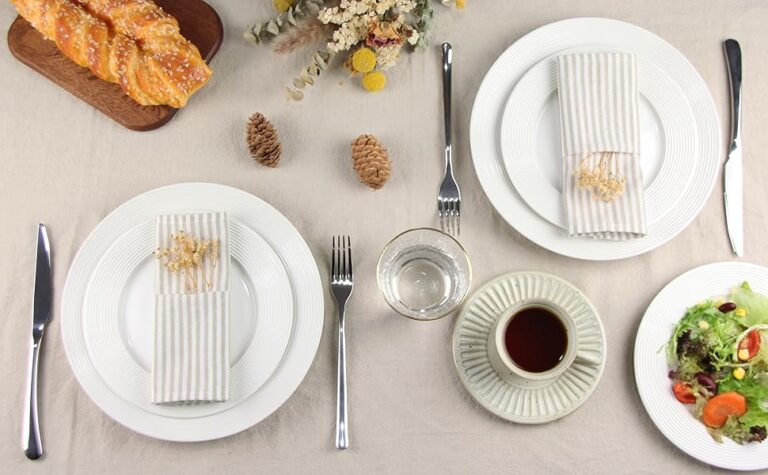
- Waffle and pique hold a fold: the body of the weave keeps a clean rectangle or simple fold crisp through the service — the textured equivalent of a standard cloth-napkin fold.
- Ribbed folds in the direction of the channels: fold across or with the rib deliberately — the direction is part of the look, and mixing directions across a table reads as inconsistent.
- Choose the fold to the texture, then standardise it. A textured program should have one signature fold per venue — the consistency is what makes the texture read as styled rather than incidental.
7. Where Textured Napkins Work Best
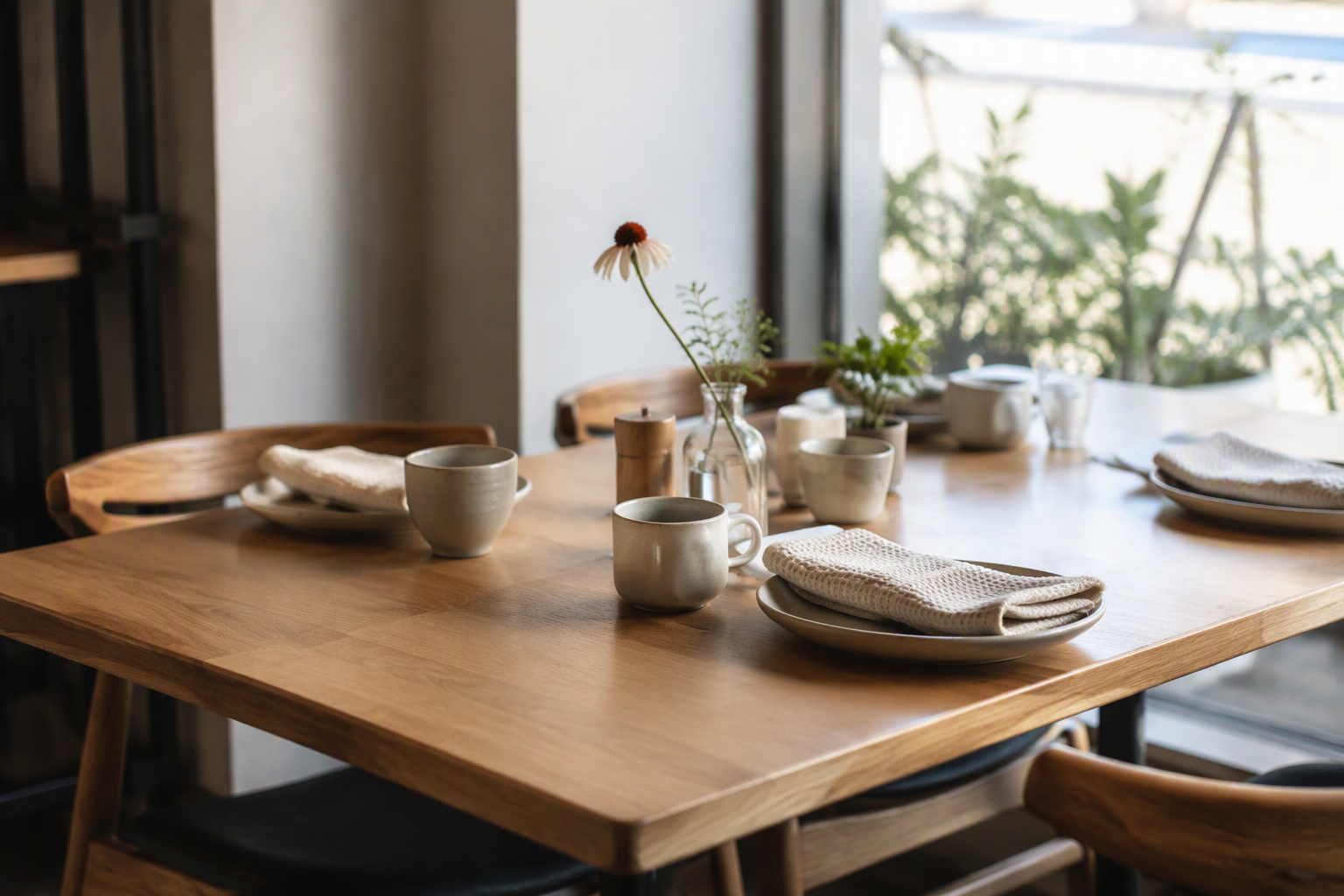
- Cafés and casual restaurants: waffle and gauze in a neutral palette are the default textured program — the look, the hide-wear, and the value all point the same way.
- Styled and natural tables: gauze is the strongest single move for the current organic table look, and it photographs the way the venue wants.
- Events and feature settings: ribbed and pique in the event palette add structure to a dressed table without a second tablecloth.
- Retail and home programs: textured napkins sell on the look in a retail assortment — a small textured range next to the flat program cloth is the current retail table-linen story.
8. Buying Textured Napkins in Volume
- Specify the texture in writing: the weave (double gauze / waffle / pique / ribbed), with the fabric weight and the intended use — so the delivery is the texture you approved, not a close flat cloth.
- Approve a finished napkin, not a swatch: the texture, the hand, and the colour depth only read correctly on the finished, folded napkin under the venue light.
- Confirm the numbers for the texture: weight, shrinkage figure, and colourfastness on the textured fabric — these are not carried over from a flat cloth of the same composition.
- Match dye lots and texture lots. A textured napkin shows a lot shift in the surface as well as the colour — request lot matching and keep the code for reorders.
- Order the program together. A textured napkin is a style decision for the whole place setting — plan it with the tablecloth and runner so the texture and the flat pieces sit in the same look.
9. Textured Napkin FAQs
Will textured napkins show stains more or less than flat ones?
Less, in everyday service — the texture holds light and minor soiling inside the surface instead of on it. A deep stain still shows, but the small everyday marks that fade a flat cloth sit invisibly in a waffle or gauze surface.
Which texture is the most durable for high turnover?
Waffle — the raised pocket structure hides creases, absorbs spills, and the medium weight gives the cloth body. Pique is a close second where the venue wants a crisper, more polished finish.
Can I mix textured and flat napkins in one program?
Yes, and it is common — a flat cloth for everyday service and a textured napkin for styled or seasonal settings, in a shared neutral palette. The mix reads as intentional when the colours are from the same family.
Can I get textured napkins in a custom colour and size?
Yes — the four textures are produced to the program colour and cut to your finished size, with the shrinkage worked in. Approve the finished napkin under your own light and match the dye and texture lots across the order.
Final Thoughts
Texture is the specification that changed how a cloth napkin is chosen — from a flat utility item to a style decision. Gauze gives the natural look, waffle gives the hard-wearing everyday value, pique gives the polished finish, and ribbed gives the structured statement. Choose the texture to the venue, specify it in writing with the weight and the shrinkage figure, approve the finished napkin under your own light, and keep the care program protecting the surface that is doing the work — and the textured napkin holds its look for the life of the program.
We produce double gauze, waffle, pique and ribbed cloth napkins in a full neutral and colour range, cut to your finished size, with weight, shrinkage and colourfastness figures supplied with the sample. Contact us for textured napkin samples, sizing, MOQs, and wholesale pricing.