Most venues know how many napkins to keep in rotation — but the tablecloth program still gets a casual “we will know when it is short” answer. That is where programs go wrong. A tablecloth par that runs short announces itself on the worst possible day: a mismatched cloth on the floor during a full service, a banquet set with three spare cloths and no buffer, or a delivery that arrives in two dye lots because the reorder was rushed. The good news is that a tablecloth par is not a judgment call. It is a formula with your own numbers in it — table count, turnover, and how long a cloth is out of service. This guide walks through the calculation, the scenarios it applies to, and how to buy the program so it holds up season after season.
1. Why a Tablecloth Par Matters
- One cloth failure takes out a whole table. A short napkin is a per-seat fix; a missing or damaged tablecloth is a table you cannot set. The unit of risk is bigger, so the buffer has to be bigger.
- Tablecloths spend more time out of service. A large cloth takes longer to wash, dry and press than a napkin, so the same number of turns per day needs more cloth in the program.
- Events spike the demand. A banquet or wedding night can pull floor-length cloths out of the everyday pool. Without planned event depth, the operation raids the daily service to cover it.
- Short programs show as inconsistency. When the count runs low, the floor mixes old and new cloths, matched and unmatched lots, and pressed and less-pressed pieces at once. Under-buying is visible in a way under-ordering napkins is not.
2. How a Tablecloth Par Differs from a Napkin Par
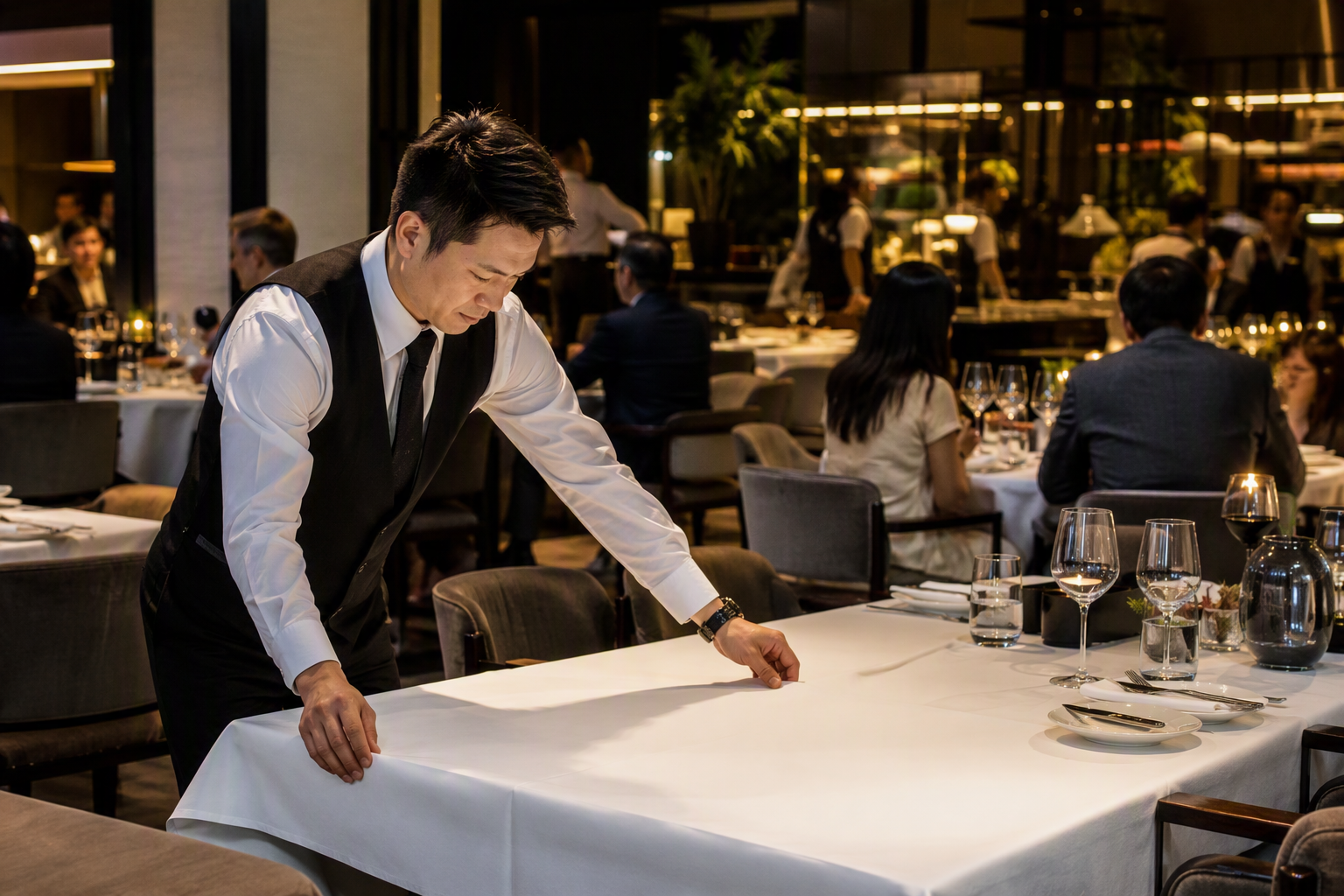
- Bigger items, slower round trips. A 78×120 cloth needs more wash, dry and press time than a 19×19 napkin, so the “out-of-service days” number in the formula is higher for tablecloths.
- Fewer SKUs, more at stake each. Table programs run in a small set of sizes (six-top, eight-top round, banquette) instead of many napkin formats — each SKU carries a heavier share of the floor.
- Fabric weight changes the math. Heavy program cloths — velvet, jacquard, woven textures — dry and press slower, adding out days. The everyday sateen and the seasonal velvet do not run the same par.
- Events are a separate program, not a surcharge. Rental and banquet depth is planned apart from the everyday par, with its own count and its own reorder logic.
3. The Par Formula
Par = Tables × Turns per day × Out-of-service days + Buffer
- Tables: counted by cloth size. Twenty-six-top tables and twelve eight-tops are two different pars — never one blended number.
- Turns per day: how many times a table is covered and cleared in a service day. Casual service runs two to three; fine dining three to five.
- Out-of-service days: how long a cloth is away from the floor in one cycle — in use plus out with the laundry. A same-day in-house cycle is one to two days; an outsourced round trip is three to five. This is the number most venues get wrong, because they plan for the laundry time only and forget the days in use.
- Buffer: five to ten percent, on top, for heavy-soil days, shrinkage retirements and the occasional broken cycle.
A worked line: 40 tables × 3 turns × 3 out days = 360 cloths, plus 10% buffer ≈ 396. That is the everyday program before any event depth.
4. What Different Operations Realistically Run
| Scenario | Typical turns | Out days | Cloths per table | Notes |
|---|---|---|---|---|
| Fine dining restaurant | 3–5 | 2–4 | 8–12 | Pressed everyday, white/ivory program |
| Casual restaurant | 2–3 | 2–4 | 5–8 | Mid-drop or table-size match |
| Café | 2–3 | 2–3 | 4–6 | Smaller formats, quicker cycle |
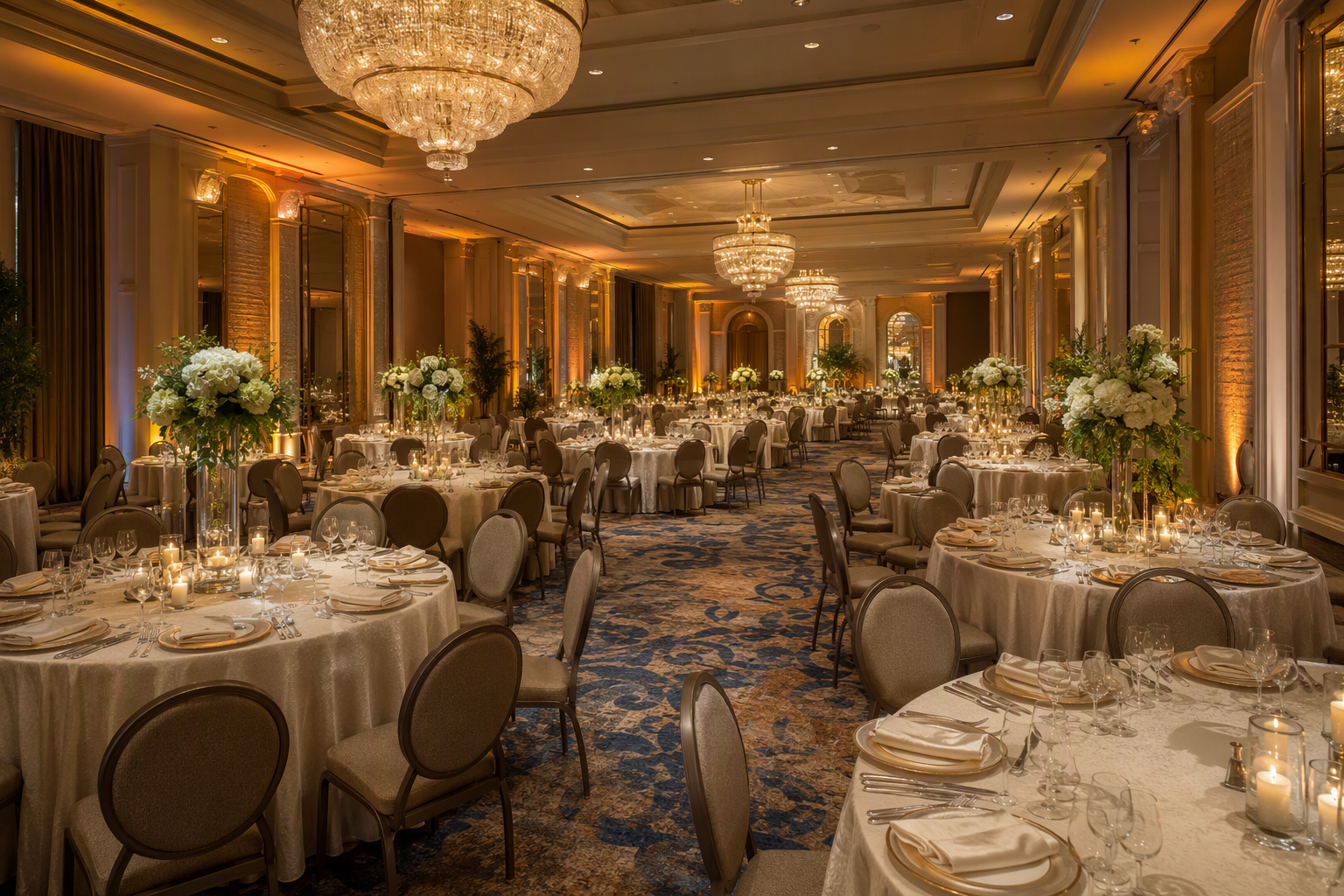
| Hotel dining rooms | 2–3 | 2–4 | 6–9 | Consistent with the F&B program |
| Hotel banquet (separate) | Event days | 3–5 | 10–15 | Floor-length, deep count |
| Event rental company | 1–2 per event | 3–6 | 12–20 | Heavy soil, high retire rate |
| Wedding / event planner | 1 per event | 2–4 | 6–10 | Style-specific programs |
Treat the per-table ranges as planning anchors, then replace each column with your own laundry times and service pattern — the formula is what makes the number yours.
5. Worked Example: a 120-Seat Restaurant
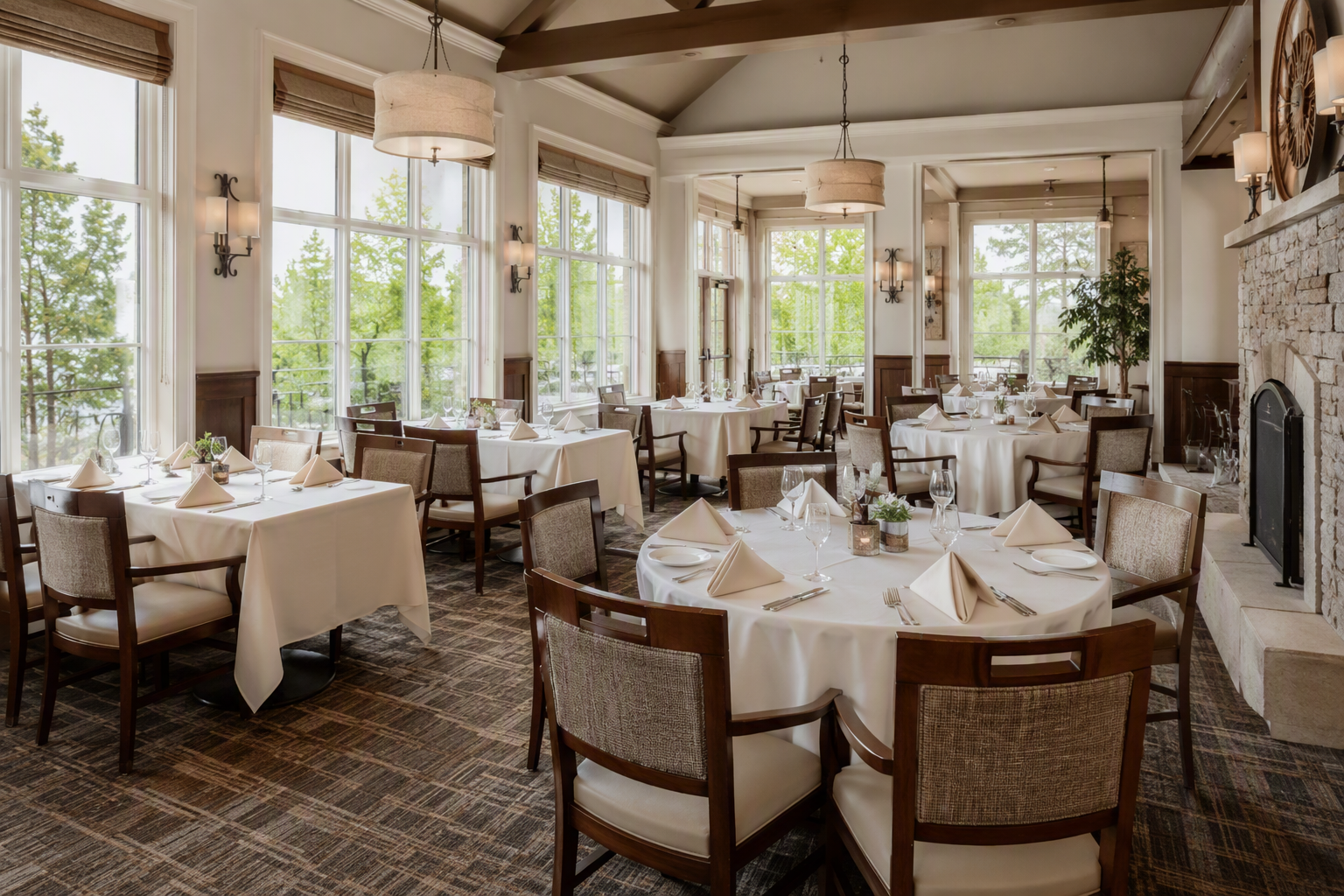
- The floor: 48 tables — 28 rectangular six-tops, 12 round eight-tops, 8 banquettes (10 ft).
- The cycle: 2 turns per day, outsourced laundry with a 3-day round trip (out days ≈ 3), 10% buffer.
- Six-tops: 28 × 2 × 3 = 168 → ≈ 185 cloths.
- Round eight-tops: 12 × 2 × 3 = 72 → ≈ 79 cloths.
- Banquettes: 8 × 2 × 3 = 48 → ≈ 53 cloths.
- Everyday total: ≈ 317 cloths across three sizes — then add the event tier separately (for example, 50 floor-length whites for banquet nights), not as a percentage on top.
- Sizing: each count is cut to the finished size for its table, with shrinkage worked in — the size discipline is the same as any program cloth.
6. Planning the Program, Not Just the Count
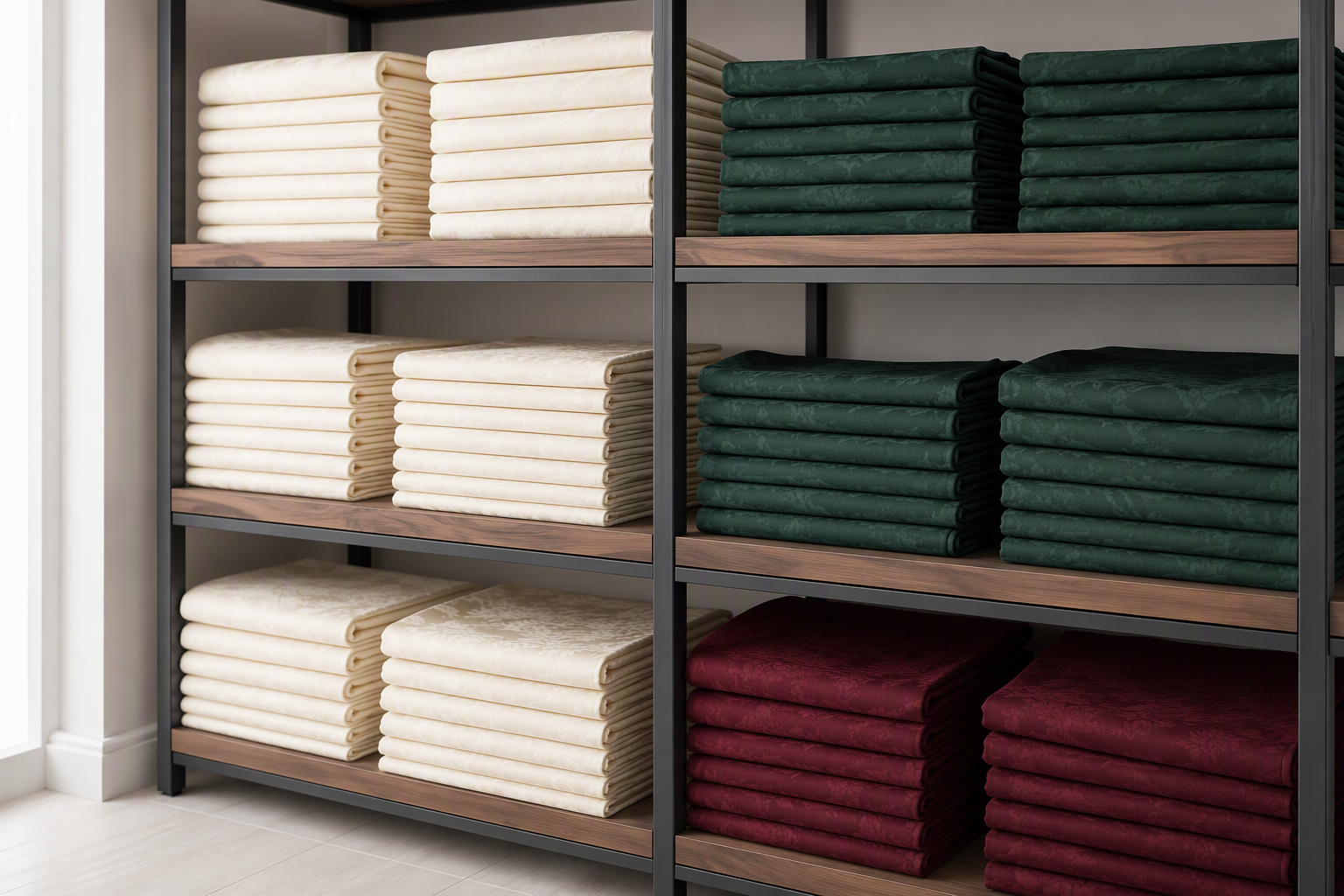
- Split the program into layers: an everyday workhorse tier (neutral, mid-drop, the highest count), an event tier (floor-length white/ivory, deep count), and a seasonal/colour tier (the lightest count, refreshed by season).
- Let colour run a leaner par. Light colours show wear faster, so a coloured seasonal tier can rotate a smaller count than the everyday tier and still look full.
- Feed the formula from the care reality. The out-days number should come from the actual wash-press cycle the operation runs, not from an assumed one — the care program and the par are the same decision told two ways.
- Stage the counts to the bookings. Build the everyday par first; add event depth when the first real booking lands, not before it.
7. Tablecloth-Specific Factors That Move the Number
- Drop changes the retire rate, not the par. A floor-length hem meets the floor and retires faster than a mid-drop hem. The formula does not change, but the standing reorder does — plan it.
- Heavy fabrics add out days. Velvet, jacquard and dense weaves dry and press slower — add a day to their cycle and the par grows with it.
- Stretch covers are a different animal. One fitted size per table, faster set-down, different handling — plan their par by table model rather than by turns.
- Large-format pressing takes time. A full banquet cloth on the press is minutes that add up over a program — budget the out time honestly or the buffer disappears.
8. Buying the Program in Volume
- Order the everyday par first, in the right size split. The 185/79/53 shape of the worked example — not one blended order. A program bought in the wrong size ratio is short where it matters and over where it does not.
- Build a standing reorder. Expect roughly five to ten percent of the program to retire in a season (hem soil, shrinkage, damage). A scheduled reorder at that rate keeps the floor consistent — and keeps the dye lot matched.
- Approve before the full order. A finished cloth in each size, the colour under your own light, and the shrinkage figure confirmed — the sample is what the par is built on.
- Keep the lot code per size. Reorders that drift in lot show up as mismatched tables — the most visible failure of a program that was otherwise calculated correctly.
9. Par Planning FAQs
Do I need more cloths for a white program than a coloured one?
The par is set by turns and laundry time, not by colour — a white and a coloured cloth on the same table turn at the same rate. Colour decides which tier runs lean: the everyday white program carries the deepest count, and the coloured seasonal tier can run smaller and still look full.
How much extra do I need for events?
Plan events as their own program, not a percentage on top — typically 10–15 floor-length cloths per banquet table for a hotel, 12–20 for a rental operation that takes heavy soil. The event tier is what protects the everyday floor on the busiest nights.
Does in-house laundry change the par?
Yes, and meaningfully. A same-day in-house cycle cuts out-days from three or five to one or two, which can bring the par down by a third or more. If the operation moves laundry in-house (or outsources it), the par should be recalculated the same quarter — it is not a one-time number.
Can I save cloths by switching to a mid-drop instead of floor-length?
A mid-drop does not change the par formula — turns still drive the count — but it cuts the hem retire rate, so the program lasts longer between reorders. For everyday service in a casual operation, mid-drop is the common value move; the floor-length cloth stays in the event tier where the look requires it.
Final Thoughts
A tablecloth par is the one number that separates a program from a pile of cloths. Count the tables by size, run the formula with your own turns and your own laundry time, add the buffer, and plan the event tier separately — then buy the program in the size split the calculation gives you, and keep it honest with a standing reorder. Done that way, the floor stays matched, the busy night does not raid the daily service, and the next season starts from a count you can defend instead of one you guessed.
We supply tablecloth programs to restaurants, hotels and event operators in the size split your plan calls for — matched dye lots, shrinkage-worked sizes, and standing reorders that keep the floor consistent season after season. Contact us for program sizing, samples, MOQs, and wholesale pricing.