A table skirt is the most unforgiving piece of a table program. It sits at floor level, where dust, foot scuffs and spills land first — and it is the most visible surface in the room, because it is the face of the desk, the stage, or the display. And yet it is usually the most neglected in the care program: a pleated skirt folded the wrong way loses its creases, a hem dragged along the floor wears out, and a stack of stored skirts comes back creased and dull. None of this is inevitable. A table skirt that is washed right, re-pleated, hem-checked and stored on its creases will outlast the program it dresses. This guide covers the full care cycle for pleated, flat, gathered and stretch skirts.
1. Why Table Skirt Care Is a Cost, Not a Chore
- The hem is a wear point, not just a finish. Everything a skirt ages from is at the bottom edge — floor contact, scuffs, and the wash itself. A hem that is checked and protected is the single biggest life-extension there is.
- Pleats are a setting, not a permanent state. A pleated skirt only looks right while the creases are set. Wash, fold or store it wrong and the pleats relax — and a relaxed pleat on a display desk reads as “lived in,” not “styled.”
- It is the visible face of the setting. A tablecloth can hide a small flaw under a centerpiece; a skirt has nothing to hide behind. The front of a reception or stage is judged on the skirt.
- Care is the cheapest re-order. A skirt that is washed cool, re-pleated and stored on its creases goes to the launderer and comes back presentation-ready. The one that is thrown in a hot cycle and balled up in a closet is the one that gets retired early — and re-ordered.
2. Before First Use
- Pre-wash before the first service. As with any program linen, a first wash sets the dimensions, removes finishing residues, and tells you the true shrinkage and colourfastness — before the skirt is on a table.
- Check the pleat setting on the actual table. A pleated skirt should be fitted and re-set on the real desk, not just checked flat — the pleat spacing, the top fix and the bottom fall only read correctly in place.
- Sort by fabric and finish before the program begins. Polyester, satin, taffeta, stretch and sequin skirts do not all take the same wash. Sorting them up front is what keeps the care program simple later.
- Read the care label and confirm the spec. The label — and the supplier’s written spec — should agree on temperature, pleat setting and hem finish. If they do not, resolve it before the first full order, not after the first wash.
3. Washing
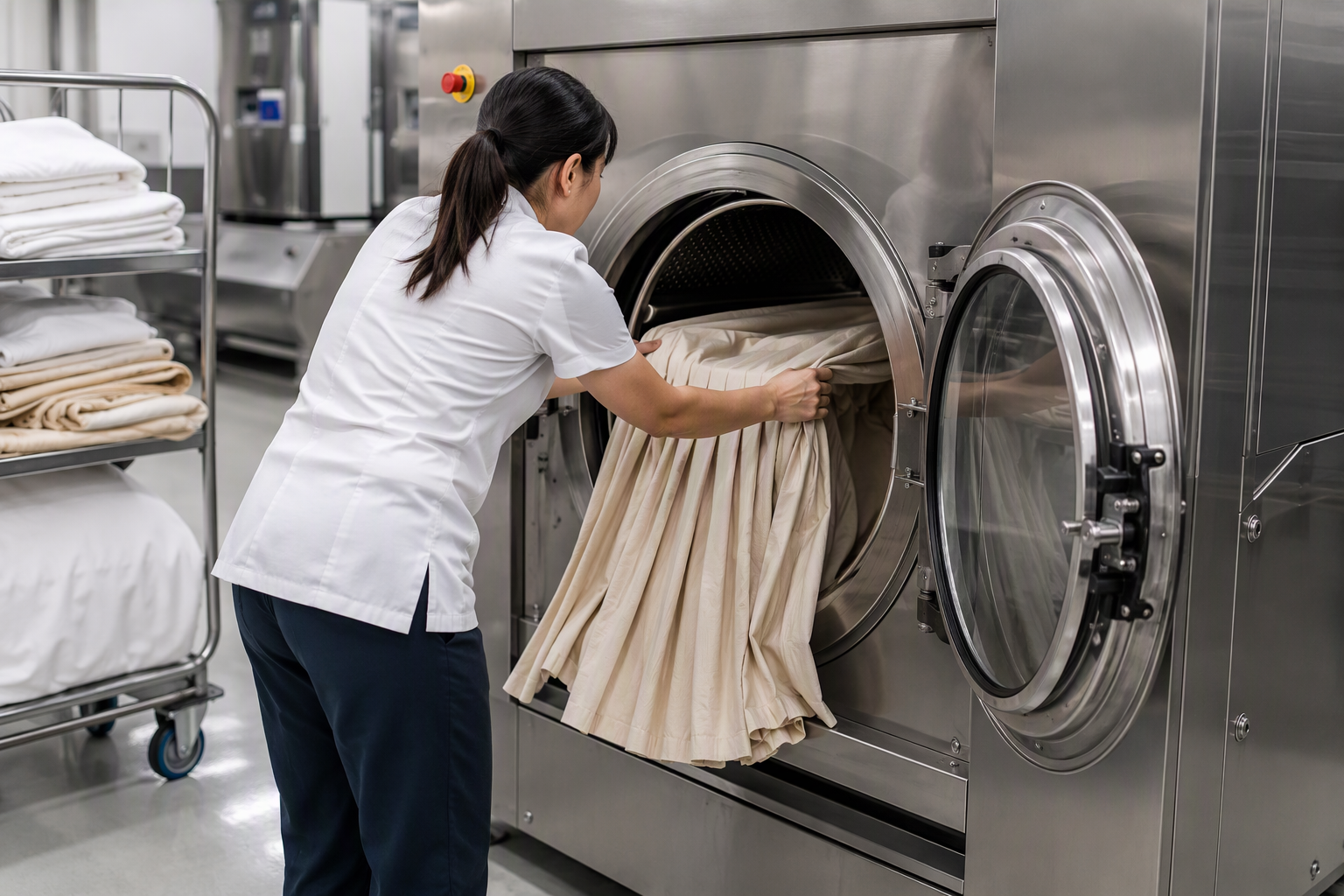
- Cool or warm water, gentle cycle. Satin, taffeta and stretch skirts take heat badly — high temperature dulls the sheen, relaxes the pleat setting and stresses the hem. Cool is the default for the decorative group.
- Mild detergent, no chlorine bleach. Chlorine is the fastest way to yellow a white skirt and fade a coloured one; an oxygen-based treatment handles soil without the damage. Use the recommended amount — over-sudsing leaves a grey film in the weave.
- Wash by fabric group, not in one big load. Keep pleated satin with pleated satin, stretch with stretch, and any sequin or beaded skirt out of the drum entirely. Mixed loads mix the care the group needs.
- Do not over-load. A skirt needs room to move through the cycle. A packed drum tangles the pleats, twists the top band and puts the whole weight of the load on the hem.
- Check the hem in the wash, not just before it. A loose thread at the hem will run during the cycle. Trim any loose ends and re-sew a small lift before the skirt goes in, so the wash does not turn a small repair into a long one.
4. Drying
- Low heat only — and often, none. Heat is what kills the pleat setting and dulls a satin or taffeta sheen. A low tumble or, better, air-drying on a line or rack keeps the finish intact.
- Hang to re-form the pleat while damp. A pleated skirt dried hung along its pleats comes out with the crease re-set, or nearly so. A skirt tumbled flat and pulled out wrinkled is one that needs a full re-pleat.
- Do not over-dry. A skirt left in the dryer past dry takes on a static charge and a set wrinkle that is harder to press out. Pull it out at the right moment, while it is still workable.
- Stretch skirts: hang by the top band. A stretch skirt should dry hanging from its top so the fabric returns to its rest length. Laid flat or balled, it holds the shape it was left in.
5. Pressing and Re-Pleating
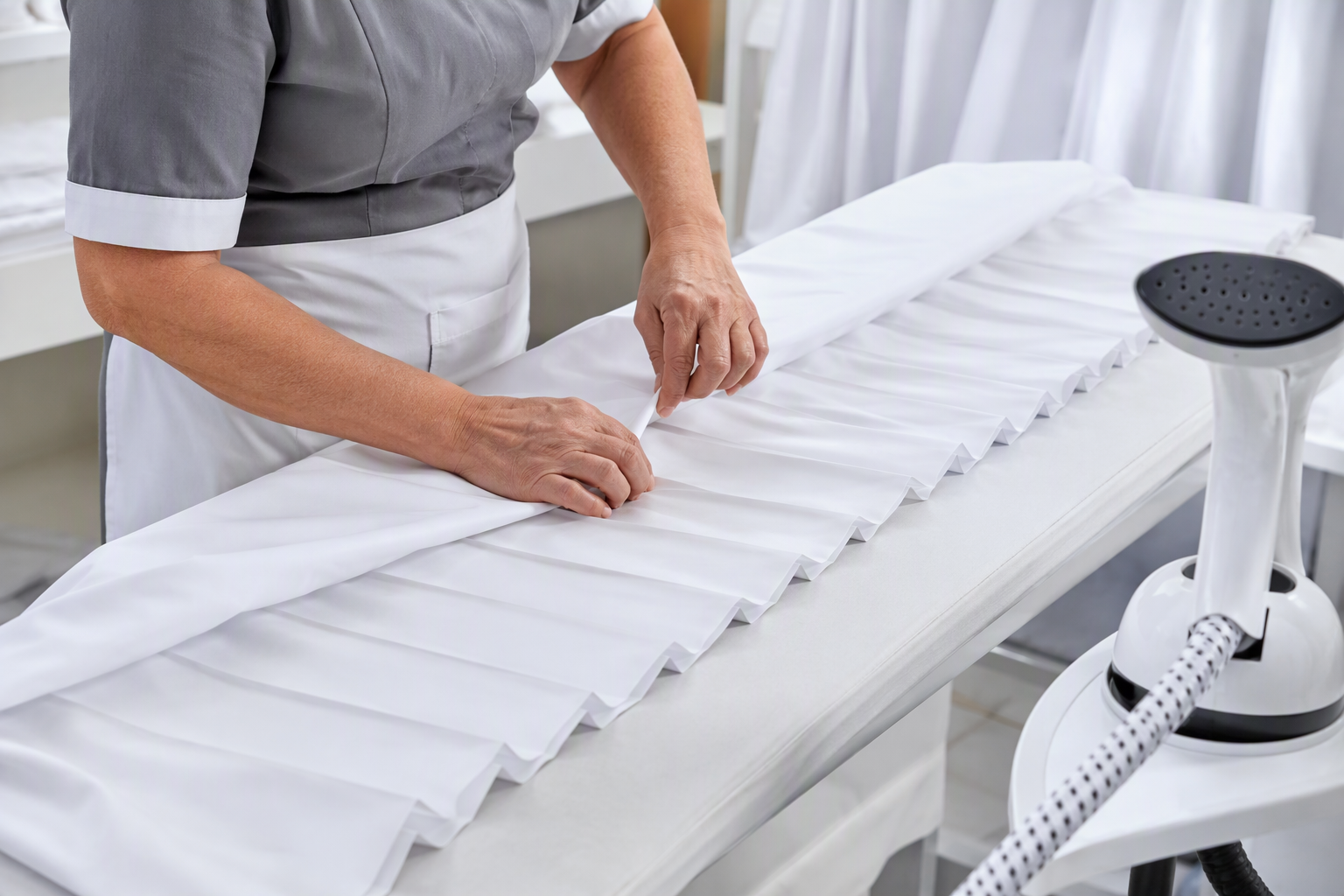
- Steam before you iron. A garment steamer or a low, indirect press restores the drape and relaxes a set wrinkle without flattening the finish. A hot iron pressed flat is the fastest way to kill a pleat and shine a satin.
- Keep the pleat direction as approved. When you re-fold the pleats, fold them the same way every time, in the direction the skirt was set. Mixed directions across one skirt read as a fault, not a style.
- Re-pleat from the top down. Start at the top band, walk the pleat down the length of the skirt, and set each fold before the next. A pleat set from the top stays even to the hem; one started at the bottom drifts.
- Set the pleat, then secure the top. Once the pleat is even, the top band — the hook-and-loop, the clip channel, or the sewn hem — is what holds it. A skirt with a loose top will open its pleat at the first service.
- Treat the re-pleat as part of the cycle. For a pleated program, the labor is wash + re-pleat, not wash. Budget the time, and the pleats hold for the life of the skirt.
6. Hem and Edge Care
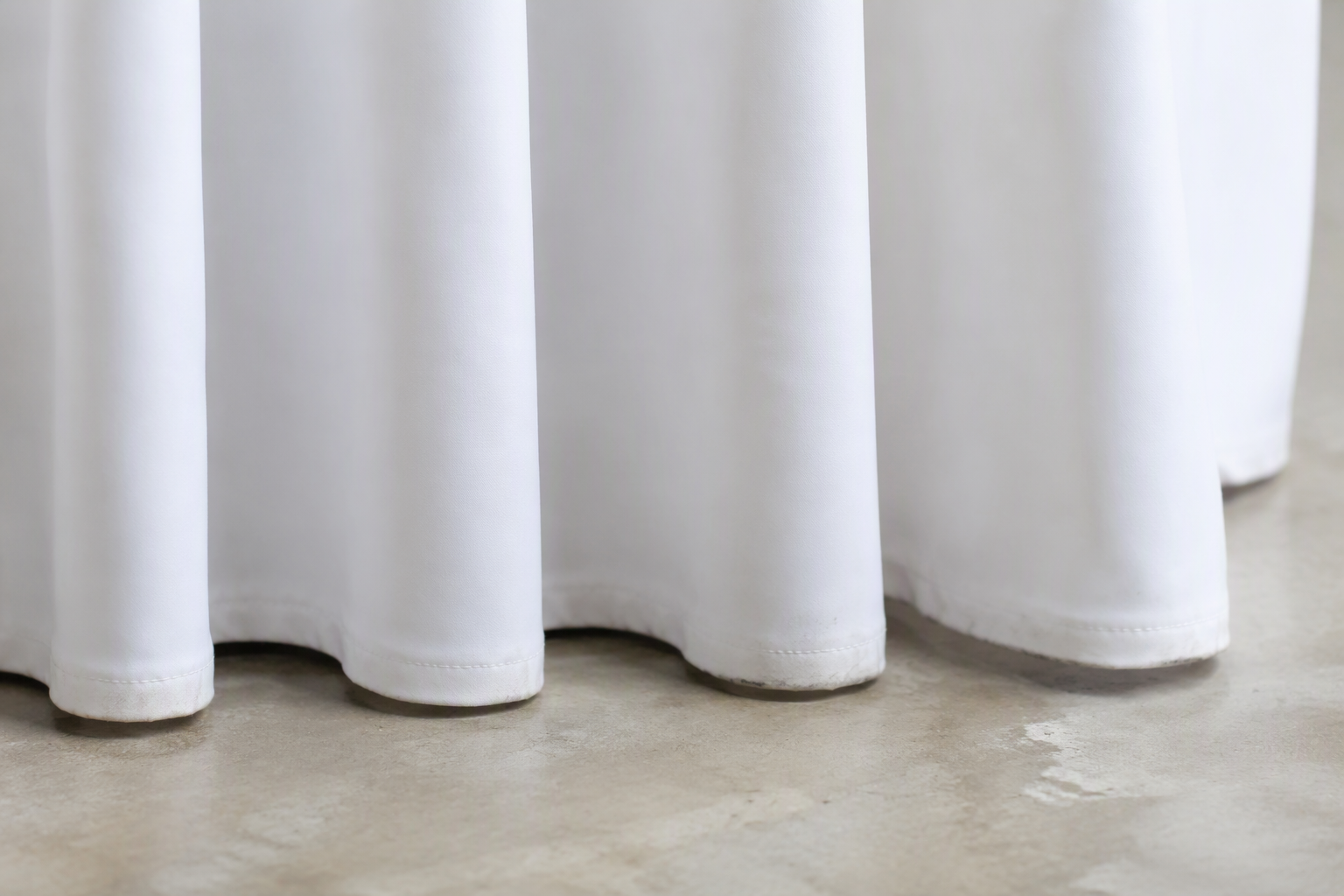
- The hem is the wear point. It meets the floor, catches the scuff, and takes the drag. Inspect the bottom edge on every rotation — a small lift or fraying caught early is a ten-minute repair, not a retired skirt.
- Re-sew a small lift before it runs. A lifted hem at the bottom of a pleat will unravel through the next washes. A few backstitches now stop a long repair later.
- Check the top band too. The top is where the fix is stressed — the hook-and-loop, the clip channel, the sewn hem. A top that is letting go is what opens the pleat and drops the skirt on the floor.
- Tassel and decorative hems need their own check. A tasseled or trimmed hem shows snags and dropped ends that a plain hem does not. These skirts are the display end of the program, so their edge is judged harder.
7. Stain Management
- Floor scuffs lift with a damp cloth and a touch of mild cleaner — do not scrub. The scuff is surface soil, not a set stain; a gentle wipe in the direction of the fabric brings the hem back without dragging the pleat or the sheen.
- Ring marks and dark spots get treated before the wash, not in it. A set ring is a wash problem that will not come out in the drum. Spot-treat it, then wash the skirt so the treatment and the soil go through the cycle together.
- Colour transfer is the one stain that does not wash out. A skirt that has taken a dye transfer from a floor marking, a chair, or a neighbouring cloth is usually a retire-and-replace decision, not a wash decision. Check the hem for transfer early.
- Deal with it at the rotation, not at the event. A stain found the night before the function is a triage; a stain found at the regular hem check is a routine repair. The rotation is what turns the first into the second.
8. Storage
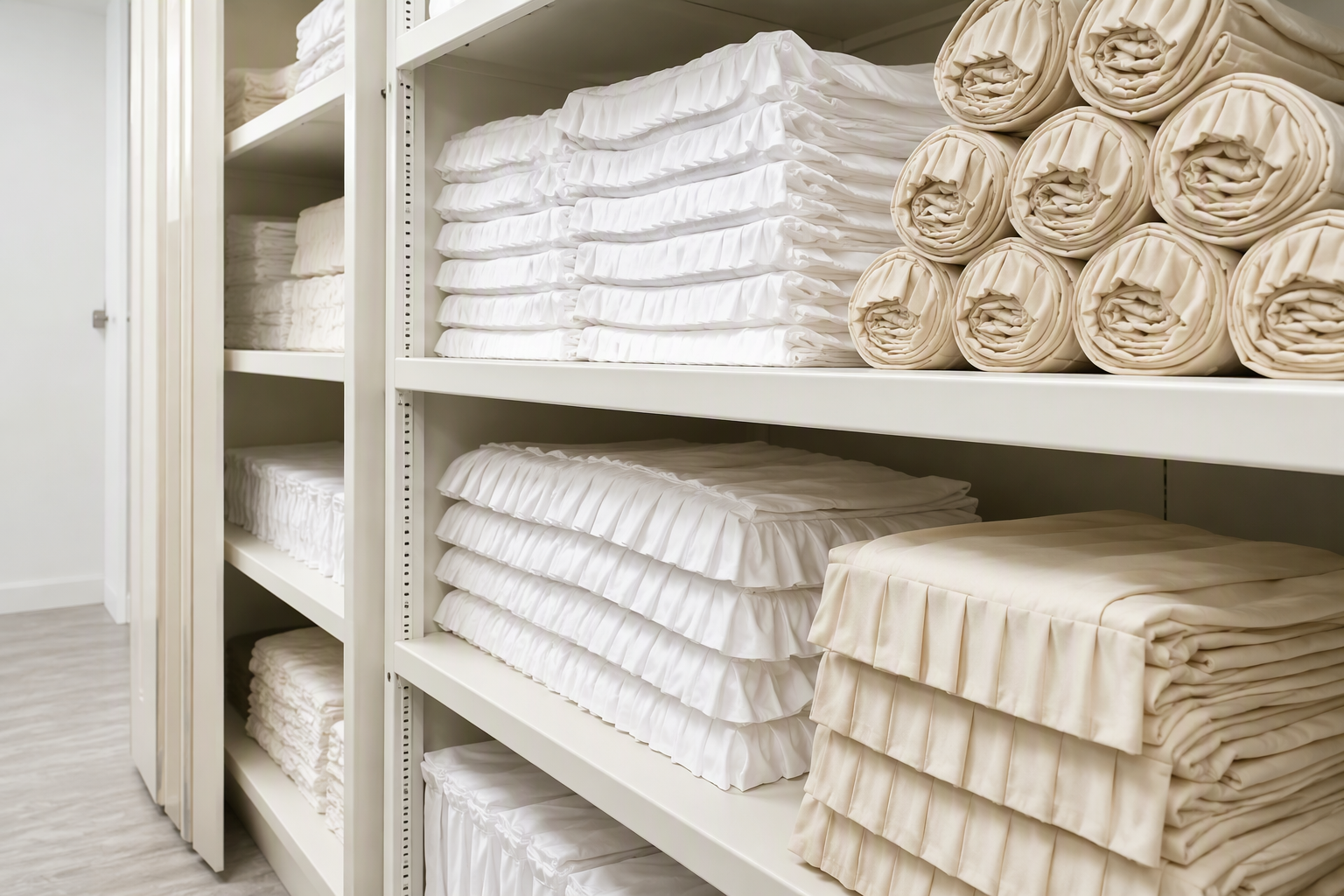
- Store on the crease, or roll it. A pleated skirt folded along its pleats — or rolled around the top band — keeps the setting through storage. Folded against the pleat, or balled in a stack, it comes out creased and needs a full re-pleat.
- Keep it dry, cool and out of light. The same program-linen storage that protects colour protects the pleat setting: dry and cool so the fabric does not relax, out of light so the colour does not shift.
- Separate by fabric and by finish. A satin skirt pressed under a heavy taffela stack holds the crease it was stored in. Keep the decorative group apart, and keep stretch with stretch so nothing is held under tension.
- Store by event, and label it. A program that runs several events keeps its skirts in labelled lots — the wedding lot, the trade-show lot — so the right skirt is the one that comes out, pre-set and hem-checked.
- Seasonal re-check before storage and after. A skirt going into season storage gets a hem check and a re-pleat first; a skirt coming out gets the same before it goes on the desk. The two checks bookend the season and keep the lot consistent.
9. Lifespan and Rotation
- Know the wear signals. A hem that frays past a quick repair, a top band that will not hold the fix, a sheen that has gone flat, a pleat that will not stay set, a colour that has shifted — each of these is the end of a skirt’s presentation life, and most of them show first at the hem.
- Rotate the full set, not the visible half. The same rotation logic as any program linen: run the whole lot so no single skirt takes every wear and the set ages even. A few over-worn skirts in a matched set are more visible than a few lightly worn ones.
- Plan a refresh rate. Budget a working percentage of the lot to retire and re-order each season, so the replacement is planned and lot-matched rather than a rushed one-off that shifts the colour across the program.
- Mix new and working so the swap is invisible. Introducing the refresh across the set — not all at once — is what keeps the front of the room consistent through the changeover.
10. What to Ask Your Supplier
- The care label and the written spec — and that they agree. Temperature, pleat setting, and hem finish should be stated and consistent, so the care program is set before the first order, not discovered after the first wash.
- The pleat setting method and its durability. How the pleat is set, and whether it holds through the wash cycle — the difference between a skirt that re-pleats in minutes and one that has to be re-folded by hand every time.
- The hem and top construction. The hem finish at the bottom and the top fix — what holds the pleat and what takes the floor wear. These are the two points that decide the skirt’s life.
- Colourfastness and shrinkage figures. Wet and light fastness for the colour, and the shrinkage number for the finished size — the same documentation that protects any dyed program, carried to the skirt.
- A finished sample, fitted. The skirt on the actual table under the venue light, before the full order — because the pleat, the hem and the colour all read correctly in place, not flat on the cart.
11. Table Skirt Care FAQs
Can I machine-wash a pleated table skirt?
Yes — on a cool or warm gentle cycle, mild detergent, no chlorine, and without over-loading the drum. The key is what comes after: hang it to re-form the pleat while damp, and re-set the crease before it goes back on the desk. The wash is the easy half; the re-pleat is what keeps it looking right.
How do I restore a pleated skirt that has lost its creases?
Steam it to relax the fabric, then re-fold the pleat from the top down, in the same direction it was originally set, and secure the top band. A skirt that has been folded against the pleat or balled in storage may need a full re-fold; one that is simply creased from the wash usually comes back with a steam and a top-down re-set.
Why does the bottom of my skirt get dirty faster than the rest?
Because the hem is at floor level — it takes the scuff, the dust and the drag that the top of the skirt never sees. That is normal and expected; the answer is a hem check at every rotation, a quick spot treatment before the wash, and a re-sew of any small lift before it runs. Protect the hem and the skirt’s life extends with it.
How should I store a table skirt between events?
Fold it along its pleats or roll it around the top band, dry and cool and out of light, separated by fabric and finish, and labelled by event. A pleated skirt stored on its crease comes back set; one balled in a stack comes back creased and needs a full re-pleat before it can go on the desk.
Final Thoughts
A table skirt is the piece of the program that is both hardest worked and most watched — at floor level for the dirt, and at the front of the room for the show. Wash it cool and gentle, hang it to re-form the pleat, re-set the crease from the top down, check the hem at every rotation, and store it on its crease. Do that, and the skirt that is the face of the desk, the stage and the display stays presentation-ready for the working life of the program — and the re-order comes on your schedule, not the floor’s.
We supply pleated, flat, gathered and stretch table skirts in a full fabric and colour range, cut to your table, with the pleat setting, hem finish, shrinkage and colourfastness figures supplied with the sample. Contact us for table skirt samples, sizing, MOQs, and wholesale pricing.