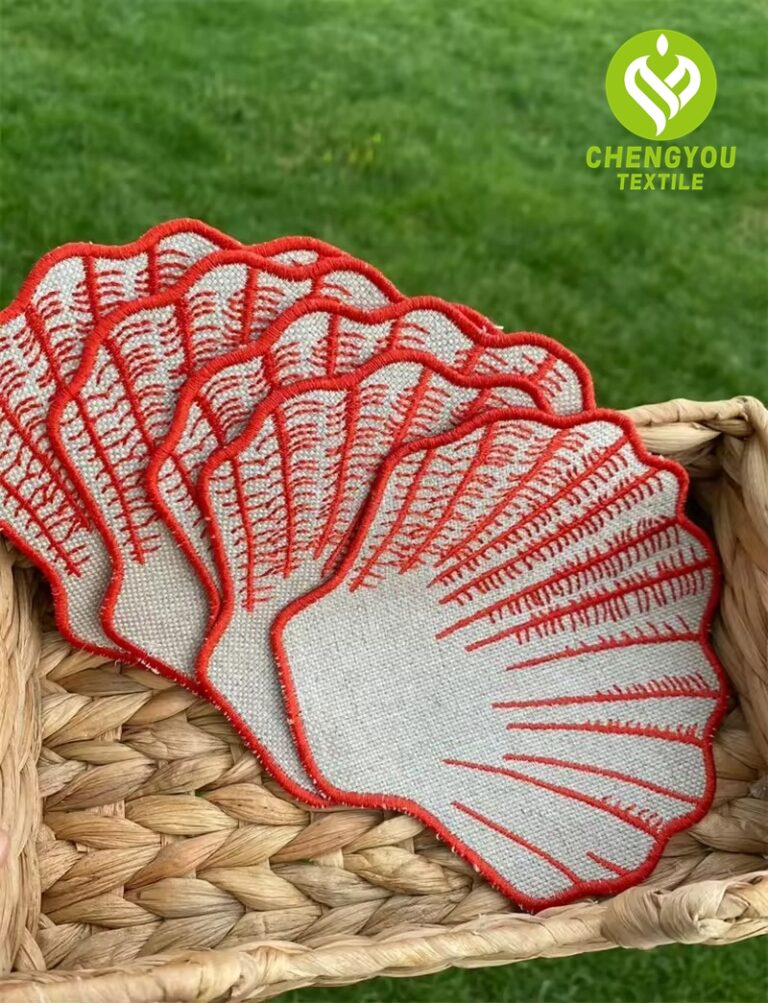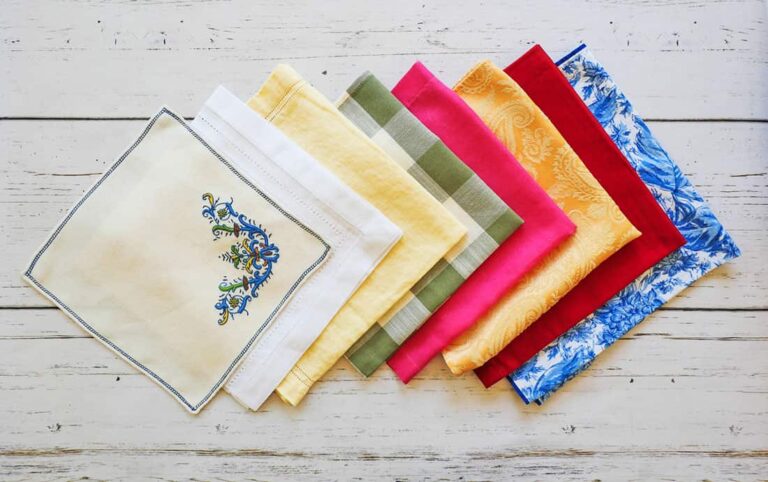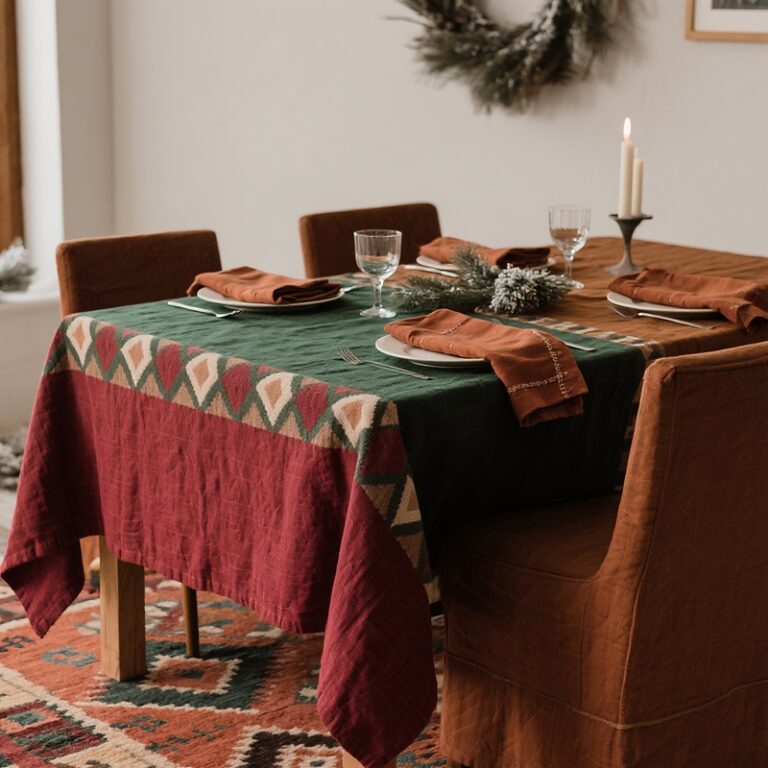
A printed tablecloth carries its pattern in ink. An embroidered one carries it in thread. That single difference changes everything about how the cloth behaves in a program: the mark will not crack or ghost the way a print does, it reads differently at the distance of a dining room, and it costs and takes time the way a print does not. Embroidery is the tablecloth that carries a mark — a logo, a monogram, a border — the way the rest of the linen carries a colour, and it is the piece where the decisions that look like decoration are actually engineering. This guide is about getting those decisions right, from the thread to the density to the placement, so the embroidered cloth survives the par it is built for.
1. Why Embroidery on a Tablecloth Is Different
- The tablecloth is the largest canvas in the program, so the mark has to be built for scale. A logo that reads cleanly on a 19-inch napkin becomes a statement on a 78-inch cloth. The motif, the density and the placement are all re-judged at the size of the table, and the embroidery that works at napkin scale does not automatically work at cloth scale.
- Thread is not ink, and that is the whole point. A print sits on the surface of the cloth and ages with it — it fades, it ghosts, it cracks at the fold. An embroidered mark is built into the cloth with thread, and it does not fade the way a dye does. The mark that is going to be on the table for years, the one that carries the name, is the one that is embroidered.
- The mark is read at arm’s length and from the end of the table. Guests see the cloth across the table, down its length, and at the corner. The embroidery is designed and placed for those sight lines, not for the flat proof on a screen, and the density is set so the motif reads at the distance it will actually be seen.
- It is the piece where decoration is engineering. The thread, the density, the placement and the finishing all have to work together to hold on the cloth through the par of washes. An embroidered tablecloth that is beautiful in the sample and ragged in the program is one where one of those four decisions was made at napkin scale instead of cloth scale.
2. What Embroidery Adds to a Tablecloth
- A mark that carries the name. The logo, the monogram, the hotel or the venue — the embroidery is where a plain cloth becomes a branded one, and where the program carries its identity on the largest surface in the room.
- A border that frames the table. The embroidered band along the edge is the finish that turns a plain hem into a designed edge, and it is the piece that reads as made, not just cut.
- A motif that sets the tone. The centre piece, the corner element, the all-over pattern — the motif is the style statement of the cloth, the one that moves a plain program into a styled one without changing the base fabric.
- A texture on a plain ground. Even without a mark, the embroidery adds a woven texture to a flat cloth, the relief of the thread over the ground that catches the light and reads as made.
3. The Five Kinds of Tablecloth Embroidery
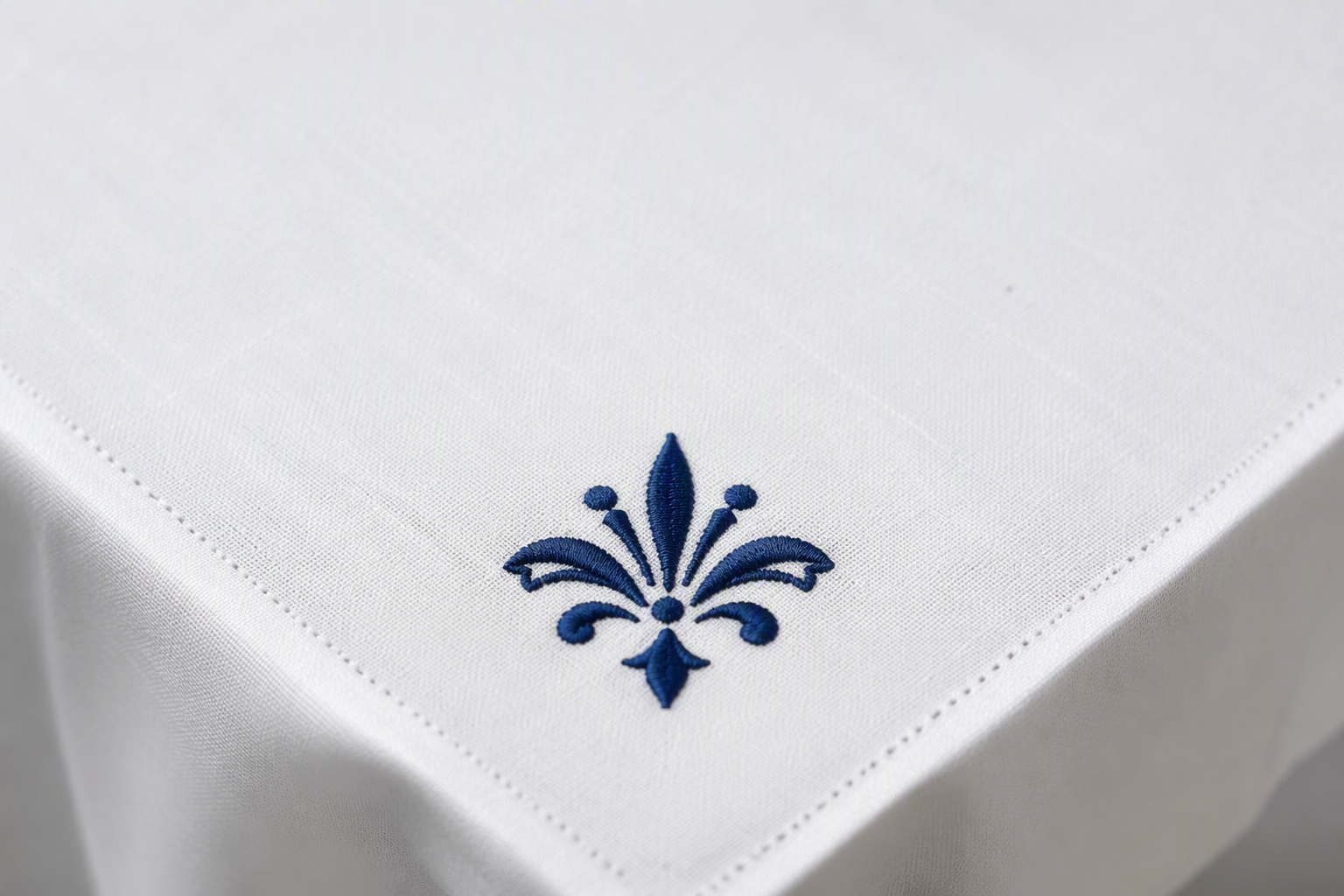
- The corner logo or monogram. The mark sits in one or two corners of the cloth, the position that reads first at the end of the table. It is the most common branded placement, and the one that needs the least cloth to do its work.
- The centre motif. The motif sits at the middle of the cloth, the piece that is seen down the length of the table. It is the statement placement, and it is the one that carries the most pattern and the most thread.
- The full border. The embroidered band runs the edge of the cloth, all four sides, the finish that frames the whole table. It is the most thread of any placement and the one that reads as the most made.
- The border-and-corner combination. The band runs the edge and the element sits in the corner, the two working together — the border frames the cloth and the corner carries the mark. It is the classic branded tablecloth, and the one that reads as the most complete.
- The all-over motif. The pattern covers the field of the cloth, the piece that is a pattern as much as a mark. It is the most thread and the most time, and it is the one that is usually built for an event or a suite rather than the everyday par.
4. Thread and Base
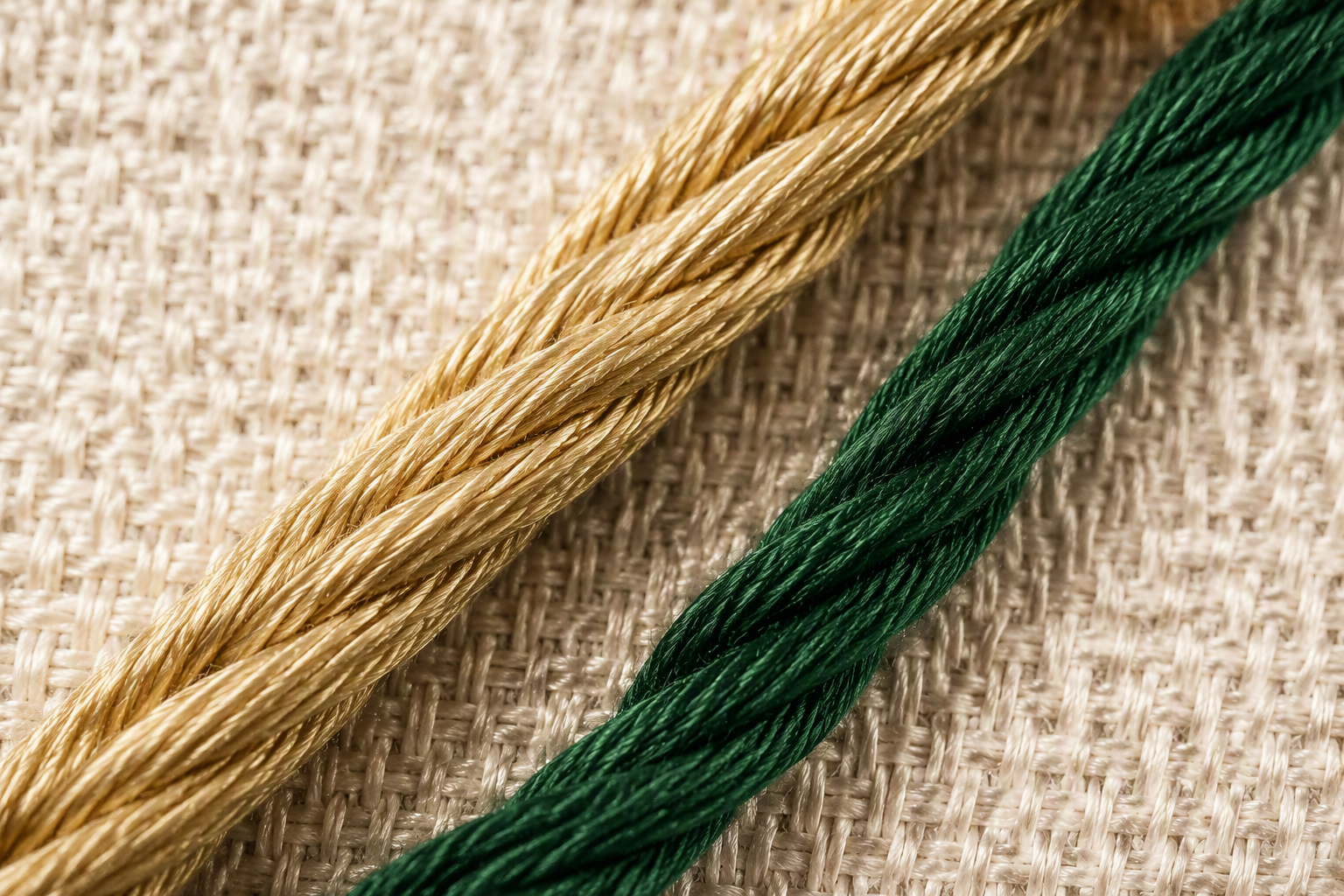
- The thread sets the sheen. The rayon thread carries the soft sheen that reads as refined, and the polyester thread carries the flat, workable sheen that takes the wash harder. The sheen of the thread is the first thing the eye reads on the mark, and it is chosen with the ground it sits on.
- The thread weight sets the relief. A finer thread lays down a smooth, close mark, and a heavier thread builds a raised, tactile one. The weight is chosen to the distance the mark is read at — the finer the distance, the finer the thread.
- The base has to hold the stitch. The cloth under the embroidery has to be dense and stable enough to take the pull of the needle without puckering or bagging. A loose, open weave under a tight motif will ripple, and the mark will read as moving on the cloth. The base is specified to the density of the stitch, not just to the drape of the cloth.
- The contrast is the colour decision. A dark thread on a light ground reads sharp and clean, and a light thread on a dark ground reads soft and worked-in. The contrast of the thread to the base is the colour decision of the mark, and it is made the same way the rest of the program’s colour is made — against the ground, in the room’s light.
5. Density and Stitch Count
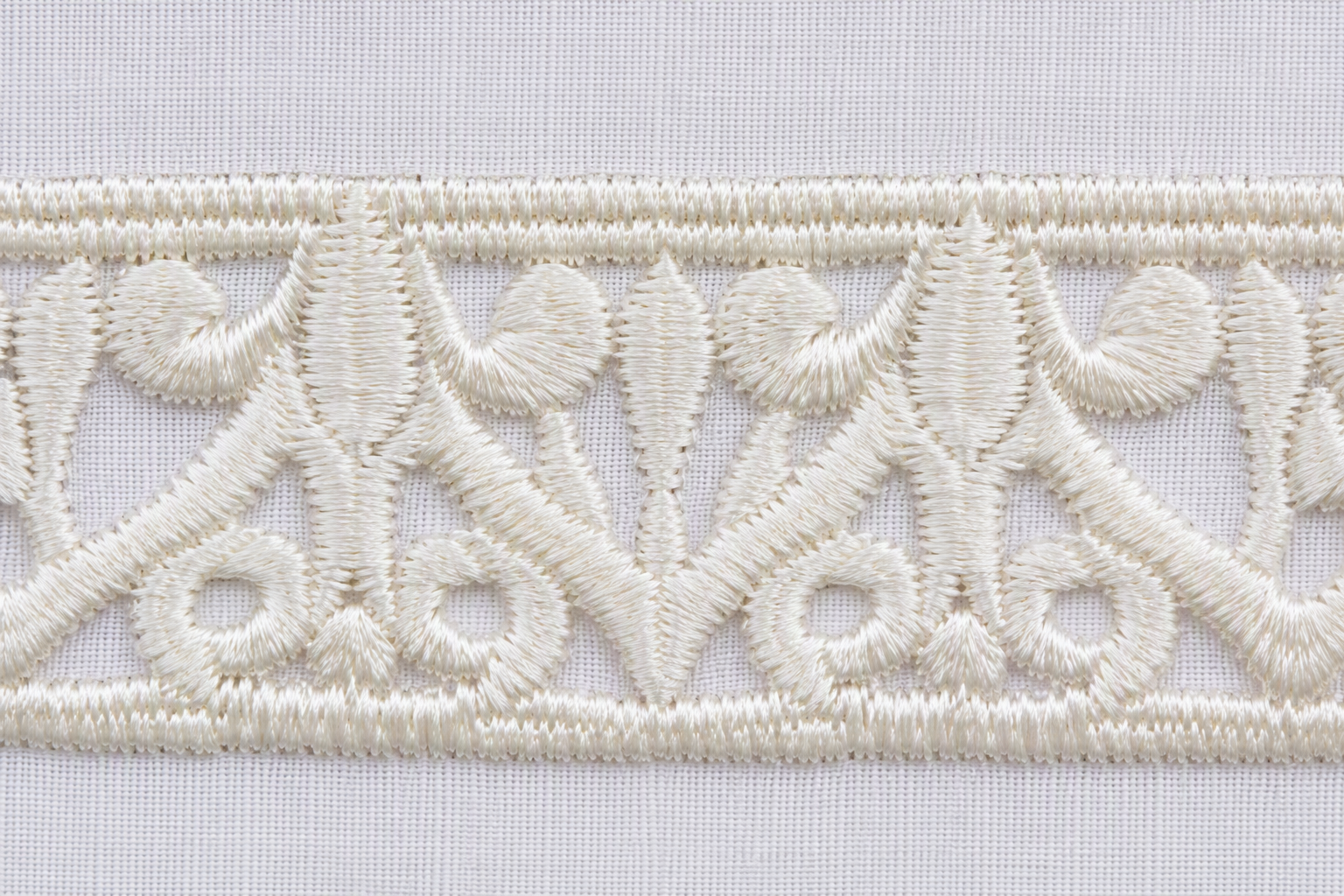
- Density is set to the distance. The motif has to be dense enough to hold its shape at the distance it is read, and open enough that the ground does not pucker under the pull of the thread. The density is the balance between a mark that reads and a cloth that ripples, and it is set once, on the sample, at the scale of the table.
- Too dense puckers and costs. A motif that is over-filled pulls the ground in, and the cloth ripples around the mark. It also uses more thread and more machine time, and the cost and the lead time go up with the density, line for line.
- Too sparse reads weak. A motif that is under-filled does not hold its shape at the distance of the room, and the mark reads as a sketch instead of a statement. The sparse is the cheap look, and it is the one that ages as a fault.
- The stitch count is the cost and the time. The total number of stitches in the mark is the figure the factory prices and the figure that sets the machine time. The stitch count is the number behind the quote and the number behind the lead time, and it is the one to confirm in writing before the run.
6. Placement on a Full Cloth
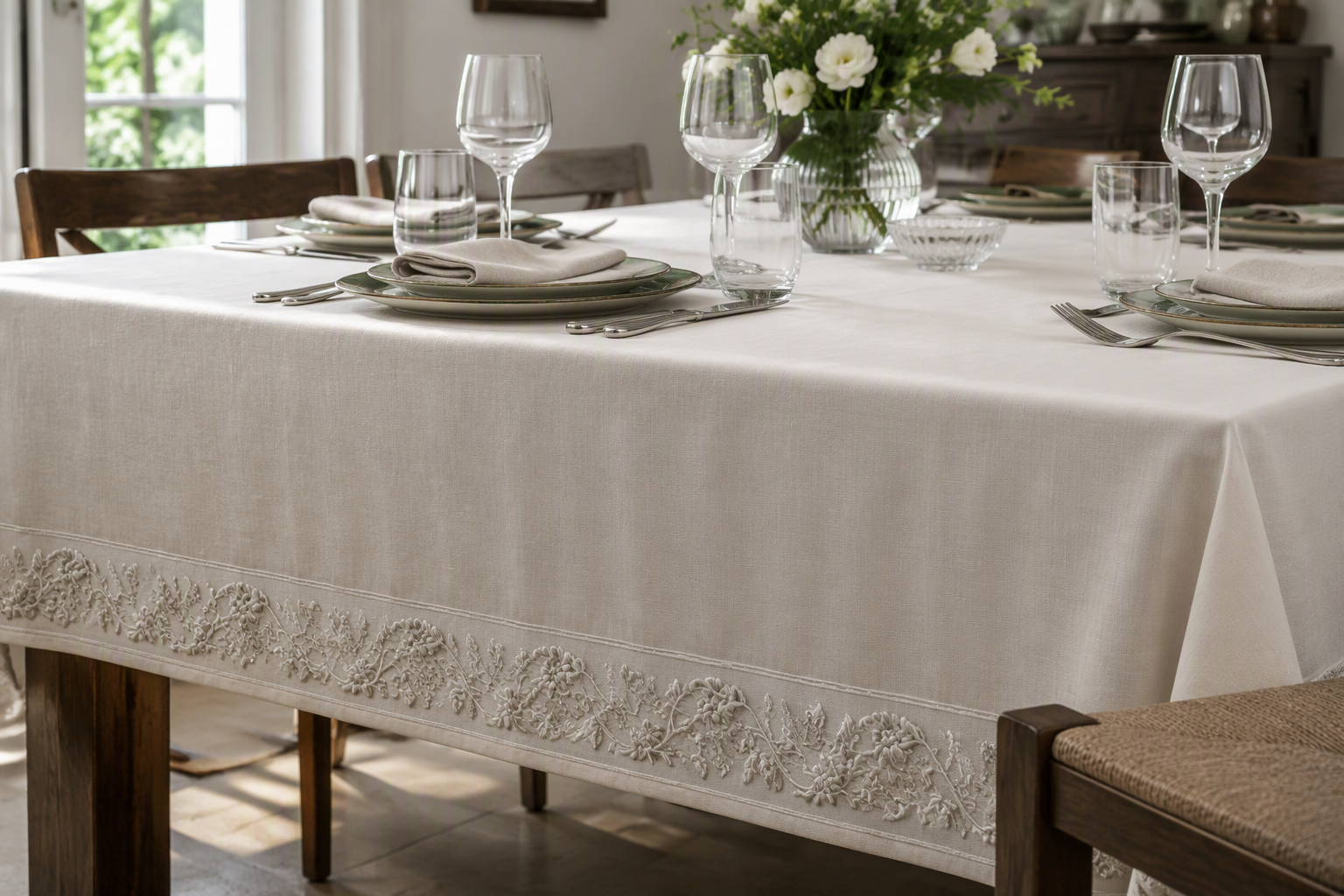
- The mark is placed from the edge, not the table. The cloth is set, moved, lifted and reset with every service, and the mark has to hold its position on the cloth, not on the table. The placement is measured from the hem and the edge of the cloth, so the mark sits in the same place on the cloth no matter where the cloth is on the table.
- The corner placement reads against the setting. The corner element is placed so it clears the place setting — it has to sit inside the corner of the cloth, clear of the plate and the cutlery, and far enough in that it is seen, not caught. The distance from the corner is set to the setting that will sit on it.
- The border placement runs with the drop. The embroidered band is set a fixed distance from the raw edge, and it holds that distance through the drop. The band that is set too close to the edge is caught in the hem, and the one set too far in floats off the line the eye expects.
- The cloth moves, so the placement is checked on the set table. The mark that is centred on a flat cloth can sit off once the cloth is draped and the setting is on. The placement is confirmed on the dressed table, in the position the cloth will actually be, before the run is released.
7. Embroidery and Care
- Wash it with the program, not above it. The embroidered cloth takes the same cycle as the rest of the par — the thread is built to the wash, and it is washed with the cloth it is on, at the temperature and the handling the program already runs.
- Press it without crushing the mark. The embroidery is pressed with the cloth, the steam smoothing the ground around the mark without flattening the relief of the thread. A press that is too hard crushes the mark, and the one that is too soft leaves the ground rough under it.
- The thread retires before the base. On an embroidered cloth, the thread is the part that shows its age first — it fuzzes, it frays at the edge of the motif, and it loses the sheen it was chosen for. The care is run to the life of the thread, and the retirement of the cloth is planned to the mark, not the ground.
- Shrinkage is worked before the stitch. The cloth is shrunk before it is embroidered, so the mark does not distort as the ground moves in the first wash. The shrinkage is a step before the embroidery, not after it, and the placement is set on the cloth as it will be after the break-in.
8. Where Embroidered Tablecloths Work Best
- The branded table of a hotel or venue. The mark that carries the name on the cloth is the piece of the program that says where the guest is — the embroidered corner and the border that frame the table with the identity on it.
- The fine-dining table that wants a made edge. The border that reads as designed, the centre motif that sets the tone — the embroidered cloth is the piece that moves a plain program into the made, the refined one.
- The wedding suite that carries the monogram. The initial, the date, the family mark — the embroidered suite is the piece that is built to the event and retired to the drawer after it, the mark that is the memory of the table.
- The event program that wants the statement. The all-over motif, the heavy centre piece — the embroidered event cloth is the statement of the program, the one that is built for the date and pulled for the season.
- The home program that wants the mark without the print. The embroidered cloth that carries the initial or the motif for the home table — the mark that will not fade the way a print does, and the one that is passed down with the cloth.
9. B2B Specifications for Embroidered Tablecloths
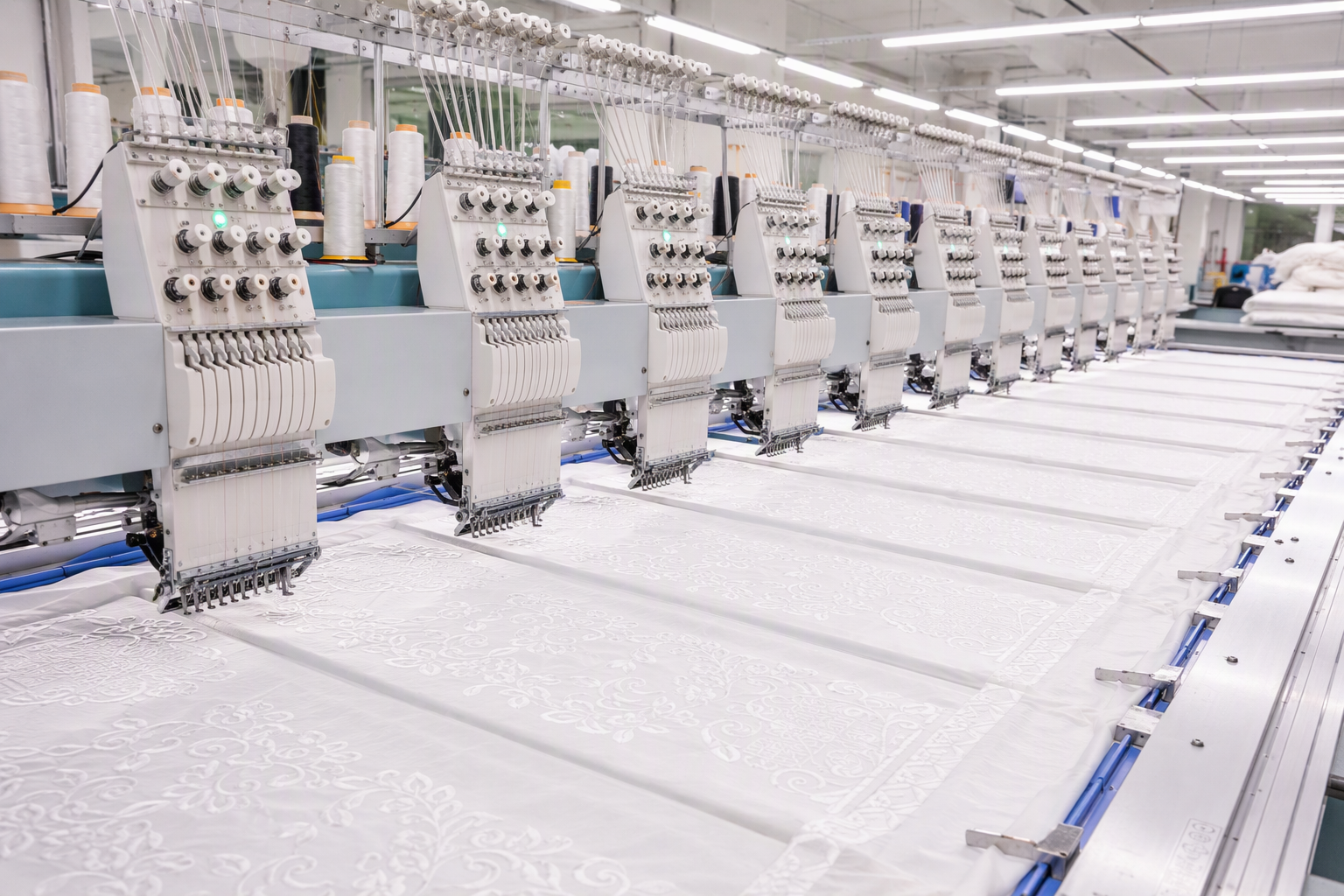
- Send the mark, get the digitised file back. The logo or the motif is sent to the factory, and it is built into a digitised embroidery file that the machines run. The file is the master of the mark, and it is confirmed on the sample before the cloth is cut.
- State the thread and the base in writing. The thread — the sheen, the weight, the colour — and the base cloth are the two figures the mark is built on, and they are stated on the order so the embroidered cloth that arrives is the one that was sampled.
- Confirm the density and the stitch count. The density of the motif and the total stitch count are the figures that set how the mark reads and what it costs, and they are the two to confirm in writing, on the sample, before the run is released.
- Fix the placement to the edge of the cloth. The distance of the mark from the hem and the corner is the placement spec, and it is set on the dressed table, in the position the cloth will be, so the mark holds its place through the service.
- Approve an embroidered finished sample, not a flat file. The mark on the screen is not the mark on the cloth — the embroidered sample, on the actual base, in the actual size, pressed and dressed, is the piece that carries the decision. The flat file approves the drawing, and the finished sample approves the cloth.
10. Embroidered Tablecloth FAQs
Why embroider the cloth instead of printing the mark?
Because the mark has to last the life of the program. A printed mark sits on the surface and fades, ghosts and cracks at the fold as the cloth is washed. An embroidered mark is built into the cloth with thread, and it holds the shape and the colour the way a print does not. The mark that is going to be on the table for years, the one that carries the name, is the one that is worth embroidering.
Will the embroidery pucker the cloth?
Not when the density and the base are matched. The puckering happens when a tight motif is filled too dense on a ground that is too loose — the thread pulls the cloth in and it ripples. The fix is the balance: the density set to the distance the mark is read at, and the base dense enough to hold the stitch. On a properly specified cloth, the mark sits smooth on the ground, and the cloth still drapes the way it did before the stitch.
How do I keep the mark centred on a large cloth?
By placing it from the edge, not the table. The cloth is set, lifted and reset with every service, so the mark is measured a fixed distance from the hem and the corner, and it holds that position on the cloth no matter where the cloth is draped. The placement is confirmed on the dressed table, with the setting on, so the mark clears the plate and sits where the eye will find it.
How is the price of an embroidered tablecloth set?
By the stitch count, on top of the cloth. The embroidered cloth is the base fabric, the size and the finishing, plus the thread and the machine time the mark takes, and the stitch count is the figure that sets that time. The more dense and the more covered the mark, the higher the count and the higher the price. The stitch count is confirmed in writing on the sample, and it is the number the quote is built on.
Final Thoughts
An embroidered tablecloth is a plain cloth with a mark built into it, and the mark is the decision. Get the thread to the ground, the density to the distance, the placement to the edge of the cloth, and the stitch count to the quote, and the embroidered cloth carries the mark through the par it is built for — clean, centred and true to the program, wash after wash. That is the difference between a cloth that is embroidered and a cloth that is made.
We embroider tablecloths to your mark — the logo, the monogram, the border or the motif, digitised from your file, built on the base cloth and at the density your table needs, with the placement fixed to the edge and the stitch count confirmed on an embroidered finished sample before the full run. Contact us for embroidered tablecloth designs, samples, sizing, MOQs, and wholesale pricing.