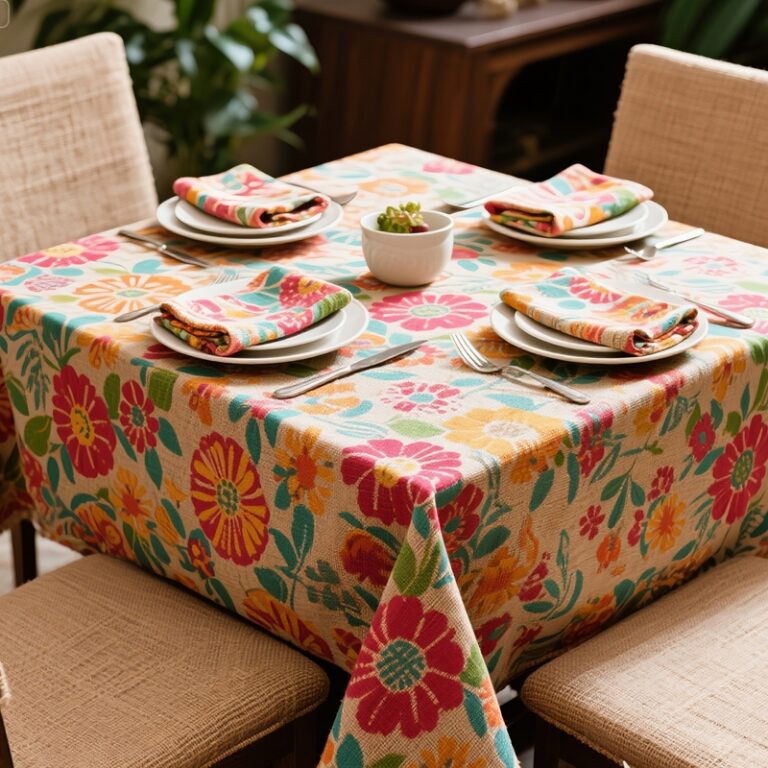
The table runner is the one piece of a table program that is allowed to carry the pattern. The tablecloth is the field — it should read as one calm surface — and the napkin is the accent — small enough that a print on it reads as detail. The runner is in between: a long strip down the middle of the table, wide enough for a pattern to speak, narrow enough that it never overwhelms. That is why the printed runner is the workhorse of the styled table, and why it is also the piece where print decisions matter most — the pattern scale, the print method, the edge finishing and the colourfastness all show up on one narrow strip that the whole room looks down. This guide is about buying that strip right.
1. Why the Runner Is the Print Product
- It is the table’s accent position, and the accent is where the pattern lives. A printed tablecloth changes the whole room; a printed runner changes the mood of the table. The runner is the piece you reach for when the program wants a pattern, a season or a theme without committing the entire floor to it.
- It is the cheapest way to change a program. A runner is a shallow depth of a small cut — the least cloth, the least money and the least commitment of anything in the table program. A seasonal or a themed change that starts with the runner is a change that can be reversed at the end of the window.
- It reads at arm’s length, so the print has to be built for it. The runner is viewed down its length, from the end of the table and from the side. A print that works at the scale of a tablecloth can read busy or broken at the scale of a strip — the pattern is chosen and cut for the runner’s viewing geometry, not just its size.
- It is the piece that dates a program, and the piece that rescues one. A dated pattern on a tablecloth ages the whole room; a dated pattern on a runner ages one strip that comes off the table and into storage. The runner is where a program takes its style risks, because the risk is contained.
2. The Print Methods, and What Each Buys
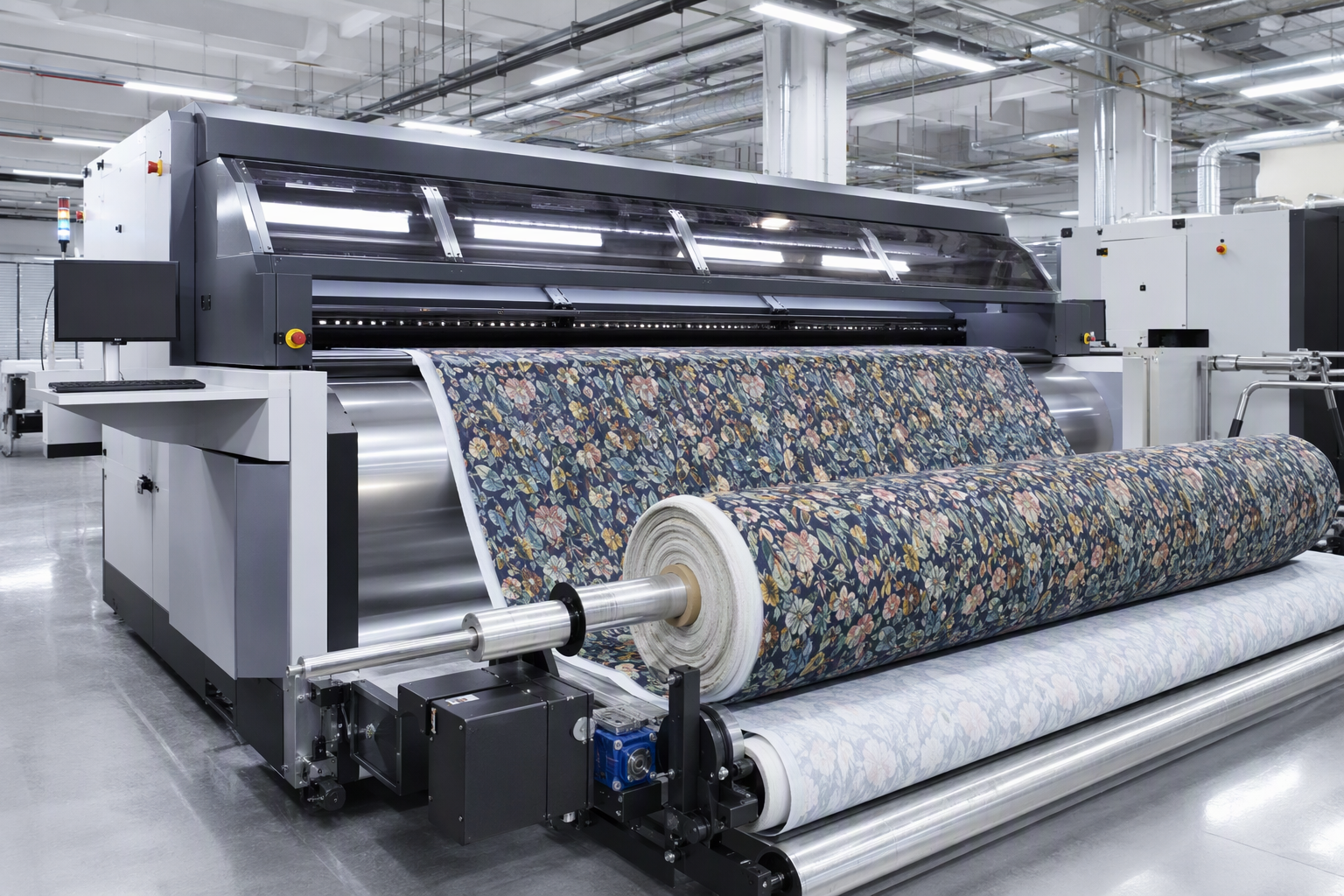
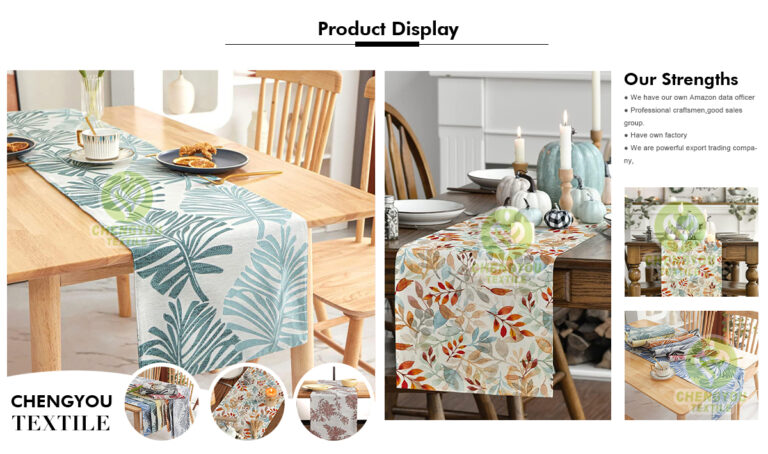
- Digital print: the flexible one. The pattern is jetted onto the fabric, which means the repeat is not locked to a screen — the design can be placed, centred or scaled for the runner’s strip, and the run length can be short without the cost of a screen. It is the method of the seasonal, the themed and the low-depth program, and the one that carries a complex pattern with many colours.
- Screen print: the high-run one. The pattern is pushed through a mesh, colour by colour, which sets a cost floor in the screens and a sweet spot in the run length. A simple, bold, few-colour pattern on a deep par is where the screen print earns its keep — and the repeat is built into the screen, so the pattern must be designed to the run.
- Transfer print: the detailed one. The pattern is pressed from a paper onto the fabric, carrying fine detail and a full colour range in one pass. It is the method of the photographic and the intricate pattern, and it sits on the base the same way — the feel of the hand is set by the fabric underneath, the picture by the transfer.
- The base weave is part of the print decision. A print is only as good as the cloth it sits on — the weave, the weight and the finish of the base set how the pattern reads, how it takes the wash and how it drapes. A pattern printed on a coarse open base reads casual; the same pattern on a fine dense base reads refined. The base is specified with the print, not after it.
- The finishing is what holds the print to the edge. Whatever the method, the print is finished — the ink is fixed, the face is set, the cloth is ready for the hem. A print that is not finished to hold the wash will fade, crack or bleed at the edge, and the finishing is the part of the spec that keeps the pattern alive in the program.
3. Pattern Scale on a Narrow Strip
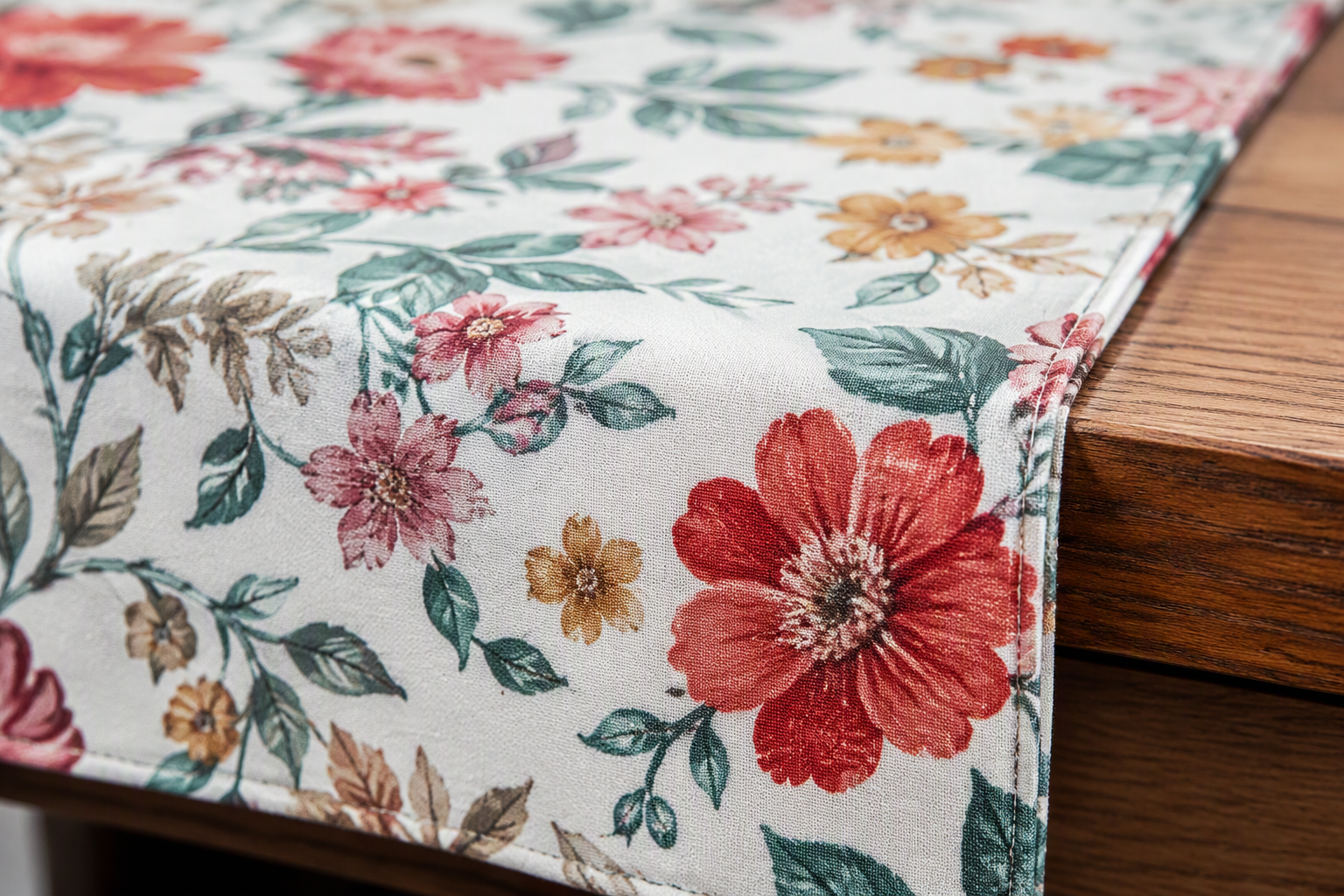
- The repeat is sized to the width. On a tablecloth the repeat can spread across a wide field; on a runner the strip is narrow, so the repeat has to sit within the width — a pattern scaled to a tablecloth will crowd a runner, and a pattern scaled to a runner will look sparse on a cloth. The repeat is chosen for the strip it is cut to.
- Centre, not edge, is the reading line. The runner is read down its centre, so the pattern is placed to sit on the middle of the strip — a centred motif or a balanced repeat down the line reads as designed, and a repeat that breaks at the hem or the selvedge reads as a fault. The placement is part of the cut, and the cut is part of the spec.
- The ends are the seen edges. A runner’s two ends hang over the short sides of the table, and they are the first place the room looks — the pattern at the end is either a designed moment or a broken repeat. The end of a printed runner is where the scale decision shows, and it is where the finishing closes the pattern.
- A bold pattern needs a calmer base, and a fine pattern needs a finer weave. The contrast between the print and the ground is what makes the pattern read — a loud pattern on a busy base muddies, and a fine pattern on a coarse weave loses. The base and the pattern are one decision, and they are approved together on the finished strip.
- Shrinkage moves the repeat. The cloth shrinks in the wash, and a repeat that is centred on the dry cloth can drift off centre on the wet one. The finished size of a printed runner is worked to the washed dimension, so the pattern sits true after the break-in, not just before it.
4. Edge Finishing for a Printed Runner
- The hem is what the pattern meets. A printed edge folded into a hem shows the pattern on the inside of the fold, and the hem line is the frame of the strip. A clean, even hem keeps the pattern reading straight down the length; a heavy or uneven hem pulls the line and the eye with it.
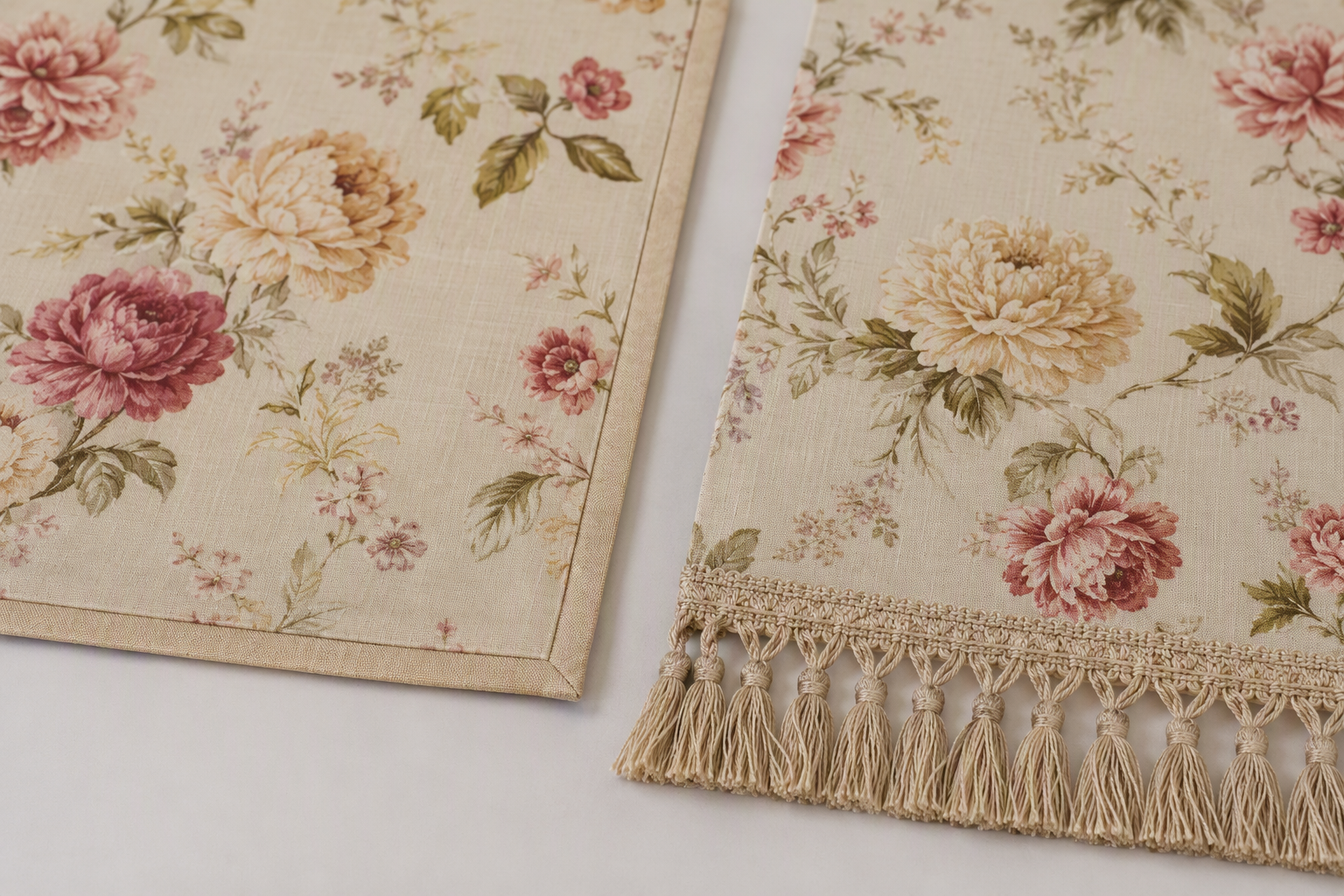
- A bound edge frames a fine pattern. The narrow bound tape along the raw edge is the finishing that suits a fine, quiet pattern — it gives a sharp line that does not compete with the print, and it holds the edge of a light printed cloth without the weight of a full hem.
- A tassel or fringe is the finishing of a styled print. The fringe is where the boho and the themed runner lives — the pattern runs to the edge and the fringe closes it with a decorative weight. It is the finishing that makes the print read as styled, and the care it takes is the price of the style, the same way it is on any tablecloth.
- The finishing is chosen with the pattern, and stated with it. The edge is part of the print decision — a formal print wants a hem or a bound edge, a casual print wants a serged line, a styled print may want the fringe. The finishing is written into the order the same way the pattern and the base are, so the runner comes off the line as the strip that was approved.
5. Colour and Colourfastness
- The print carries the accent colour, and the accent is the runner’s job. The tablecloth holds the core neutral and the runner is where the programme’s colour lives — the deep, the seasonal and the themed. The colour of the print is the colour of the table, and it is the one the room reads.
- Wet and rub fastness, in writing. A print is judged on what it does in the wash and under the friction of the table — the fastness figures are the difference between a pattern that holds for the life of the program and one that grays and ghosts by the fortieth wash. The figures are the spec, and they are stated with the method.
- A dark ground and a light ground age differently. A pattern printed on a dark base holds its depth but shows dust and lint; a pattern on a light base reads clean and shows the wear. The ground colour is a care decision as much as a style one, and it is chosen with the service the runner has to do.
- The run is held to a lot. A print run is a dye lot and an ink lot together, and a re-order that drifts from the original is a pattern that reads as a different one on the same table. The approved printed sample is the reference the lot is judged against, the same discipline as the colour program it sits inside.
6. Size and Placement
- The width sets the pattern’s voice. A narrow runner carries a fine, quiet line; a wide runner carries a bold, statement pattern. The width is chosen with the pattern — a loud print on a narrow strip crowds, and a fine print on a wide strip whispers. The two are one decision.
- Centre, end or cascade — the placement is the style. A runner laid straight down the centre reads formal; one weighted to an end reads styled; one that cascades to the floor reads soft. The pattern follows the placement, and the size is cut to the placement the program wants.
- The ends do the design. Because the ends are the seen edges, the pattern at the end is a design element — a centred motif, a repeated border or a fringe that closes the line. The size and the cut are worked so the pattern lands where the room will look.
- The size is the finished, washed size. A printed runner is cut to the dimension it will be after the break-in wash, so the placement holds after the program is running, not just at the first table setting. The size on the order is the size on the table, after the wash.
7. Caring for Printed Runners
- Wash them inside out, cool and gentle. The print sits on the face of the cloth, and the wash is what wears it. Inside out, cool and gentle keeps the pattern on the surface where it belongs and keeps the base soft under it.
- Keep the chlorine off the pattern. A bleach or a chlorine-heavy cycle is how a print grays and the ground yellows — the two moving apart until the pattern reads as a ghost of itself. The detergent is mild and the cycle is cool, and the print holds the colour it was approved with.
- Press from the reverse, or steam. The face of a print does not want the iron’s direct heat — a press from the back or a steam keeps the pattern soft and the base smooth. A hard press on the face is how a print cracks and a base shines in the wrong places.
- The print ages faster than the base. The cloth underneath will outlive the pattern on top of it, and the retirement of a printed runner is usually the print fading before the base wears. The care program is run to the life of the pattern, and the rotation is planned to it.
- Rotate the program, not just the cloth. A printed program is rotated like any other — the runner comes off, goes to the wash, and comes back set. The pattern that is rotated with the rest of the program is the one that holds, and the one that is left on the table through every service is the one that fades first.
8. Where Printed Runners Work Best
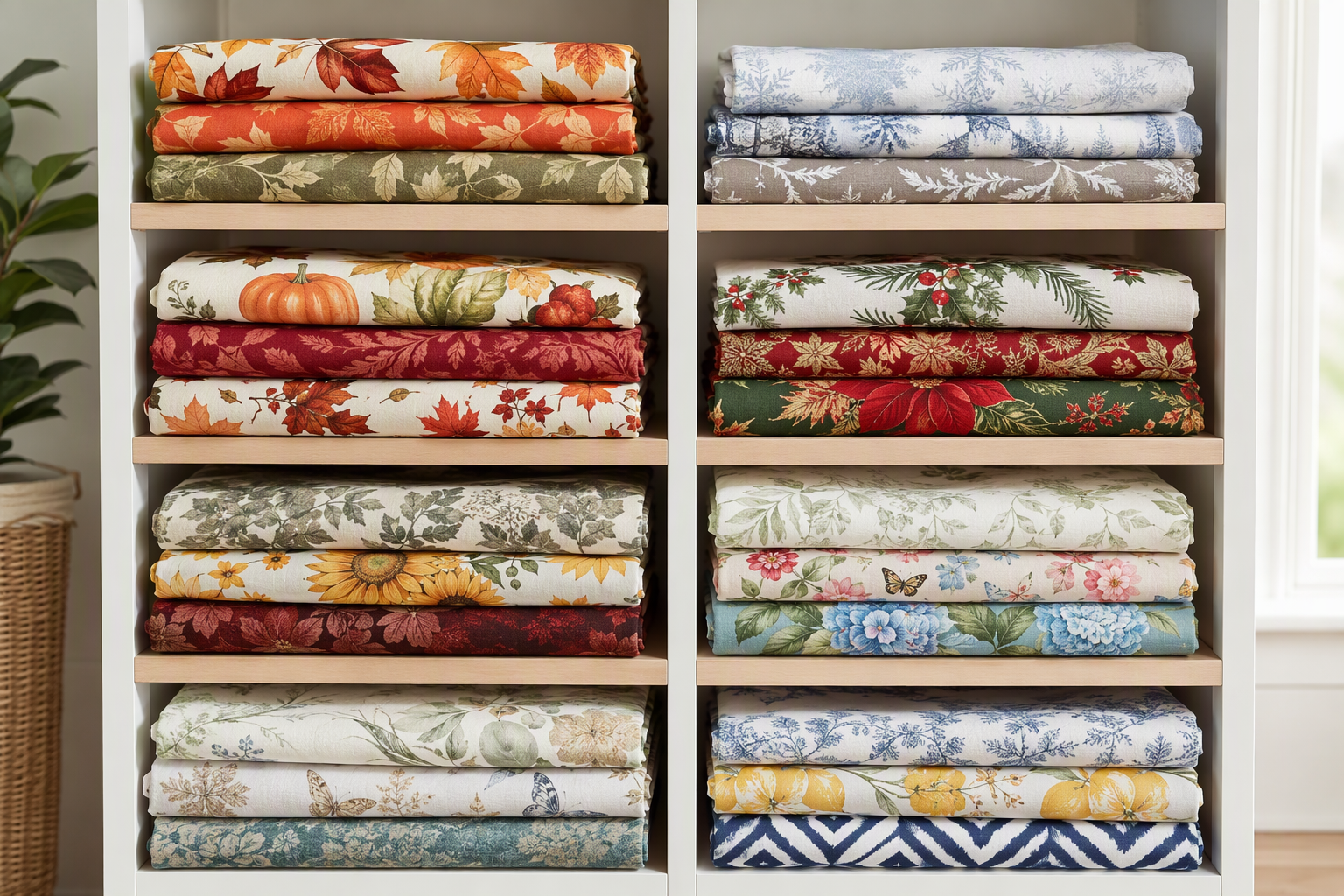
- The seasonal tier of any program. The printed runner is how a room marks the season without changing the cloth — the autumn print, the holiday pattern, the spring line, each in a shallow depth that comes in and out on schedule.
- The themed table of an event. A wedding, a brand table or a function that wants a specific look is where the printed runner does its strongest work — the pattern built to the theme, the depth built to the room, the run built to the date.
- The zone accent of a large venue. A big dining room that wants a different voice in each zone uses the printed runner to set it — the bar, the patio and the private room each carrying a pattern that marks the space without touching the core.
- The branded table of a program. A venue or a brand that wants its mark on the table uses the printed runner to carry it — the logo or the monogram in the pattern, the depth kept shallow enough that the mark reads as styled, not as advertising.
- Any table that wants a pattern without a commitment. The printed runner is the pattern with the smallest footprint in the program — the piece that gives the table its style and comes off it at the end of the season.
9. Ordering Printed Runners in Volume
- Specify the method, the base and the repeat in writing. The print method, the fabric the pattern sits on, and the scale of the repeat are the three figures that decide the runner — the method sets the cost and the detail, the base sets the hand and the drape, the repeat sets the scale. All three are stated on the order, and the quote is read against all three.
- Approve a printed finished sample, not a flat proof. The pattern on a screen is not the pattern on the cloth — the finished strip, printed, cut and hemmed, in the size it will be, is the sample that carries the decision. The flat proof approves the picture; the finished sample approves the runner.
- State the colourfastness and the run length. The wet and rub fastness of the print, and the length of the run the pattern is built to, are the figures that hold the lot. A re-order is judged against the approved sample within the run, and the run length is what makes the re-order possible at all.
- Write the finishing into the order. The hem, the bound edge or the fringe is part of the printed runner’s spec, the same standing as the pattern and the base — the runner that comes off the line is the strip that was approved, edge included.
- Plan the lead time for the print, not just the cut. A printed runner carries the time of the print run and the finishing on top of the cloth, and the seasonal and the themed runner is the one that is built to a date. The lead time is planned from the print, and the order that wants the pattern on a date is the one that states the date.
10. Printed Table Runner FAQs
Which print method should I use for a seasonal runner?
For a seasonal, themed or low-depth runner, the digital print — the repeat is not locked to a screen, the run length can be short without the cost of a screen, and the complex multi-colour pattern is carried in one pass. The screen print earns its keep when the pattern is simple and bold and the depth is deep enough to cover the screen cost. The method is chosen against the depth and the pattern, and the quote is read with the method stated.
How do I keep the pattern centred on a narrow runner?
By cutting it to be centred — the repeat is placed on the middle of the strip before the cut, and the finished size is worked to the washed dimension so the pattern does not drift off centre in the break-in. The centring is part of the cut spec, and the finished sample is what confirms the pattern sits where the room will look, down the middle of the strip.
Will the print hold up in a commercial laundry?
A print finished to hold the wash will — the figures that decide it are the wet and rub colourfastness, stated in writing with the method. Wash the runner inside out, cool and gentle, keep the chlorine off the pattern, and press from the reverse. The print will age faster than the base underneath, and the rotation of the program is what keeps the pattern holding across the depth of the lot.
Can I reorder the same printed runner later?
Within the run length the pattern was built to, yes — the re-order is judged against the approved printed sample, in the same method, the same base and the same finishing. The run length is the figure that makes the re-order possible, and it is stated on the order with the lot, so the pattern that comes back is the pattern that was approved, not a close one.
Final Thoughts
The printed runner is the pattern with the smallest footprint in the table program — the piece that gives the table its style and comes off it at the end of the season. Buy it as the three decisions it is: the method that sets the cost and the detail, the base that sets the hand and the drape, and the repeat that sets the scale on the strip. Centre the pattern, choose the finishing with it, hold the colourfastness in writing, and approve the finished strip in the room’s light before the full run. Done that way, the runner carries the pattern the program wants — the seasonal, the themed and the styled — and hands it back clean at the end of the window.
We print table runners to your pattern — digital, screen or transfer, on the base fabric and at the repeat your table needs, with the finishing, the colourfastness and the run length stated on the order and a printed finished sample approved before the full run. Contact us for printed runner patterns, samples, sizing, MOQs, and wholesale pricing.