Ask a guest what makes a table look expensive and they will point at the fabric, the colour, the drop. Ask a laundry what kills a tablecloth first and they will point at the edge. The hem and the four corners are the most worked area of the whole cloth — they take the weight of the drop, the friction of the chair, the scuff of the floor, and the attention of every eye in the room — and the finishing that holds them together is the decision that sets how long the program lasts. This guide compares the five finishing methods a buyer actually has, what each costs, what each survives, and how to specify and inspect it so the edge is not the weak point of the cloth.
1. Why the Finishing Matters More Than the Buyers Think
- The edge is the first place quality shows. A guest may never feel the weave, but they see the hem every time the table is dressed. A clean, even, well-pressed edge reads as a made cloth; a loose or uneven one reads as a cheap one, no matter what the fabric is.
- The edge is the first place the cloth fails. Soiling lands at the hem, friction works at the corners, and the stress of the drop pulls at the seam. A cloth with the wrong finishing for its service retires at the edge before the body has worn out — the most expensive way to lose a tablecloth.
- Finishing is a cost decision, not an add-on. The difference between a serged hem and a mitered corner is real money, because it is mostly real labour. The buyer who does not specify the finishing is the one who finds out its cost at the invoice, or in the year the hem lets go.
- It is a spec, and it should be written. The finishing method is part of the tablecloth specification the same way the fabric and the size are. A cloth ordered without the edge stated is a cloth built to the factory’s default, not the program’s need.
2. What “Edge Finishing” Actually Means
- It is the construction that holds the raw edge. Every cut edge of a tablecloth is a raw edge that will fray. The finishing — the fold, the stitch, the binding, the corner treatment — is what turns that raw edge into a hem that can take the wash, the press and the service.
- It is not the decorative trim. A contrast border, a printed band or an embroidered edge is decoration on top of the construction. This guide is about the construction underneath — the part that keeps the cloth one piece — which is what decides how long it does.
- It covers the hem and the corners. The two are built together: the hem is the length, the corner is the join. A finishing is only as good as its corner, because the diagonal is where the stress concentrates and the fault shows.
3. The Five Finishing Methods, and What Each Brings
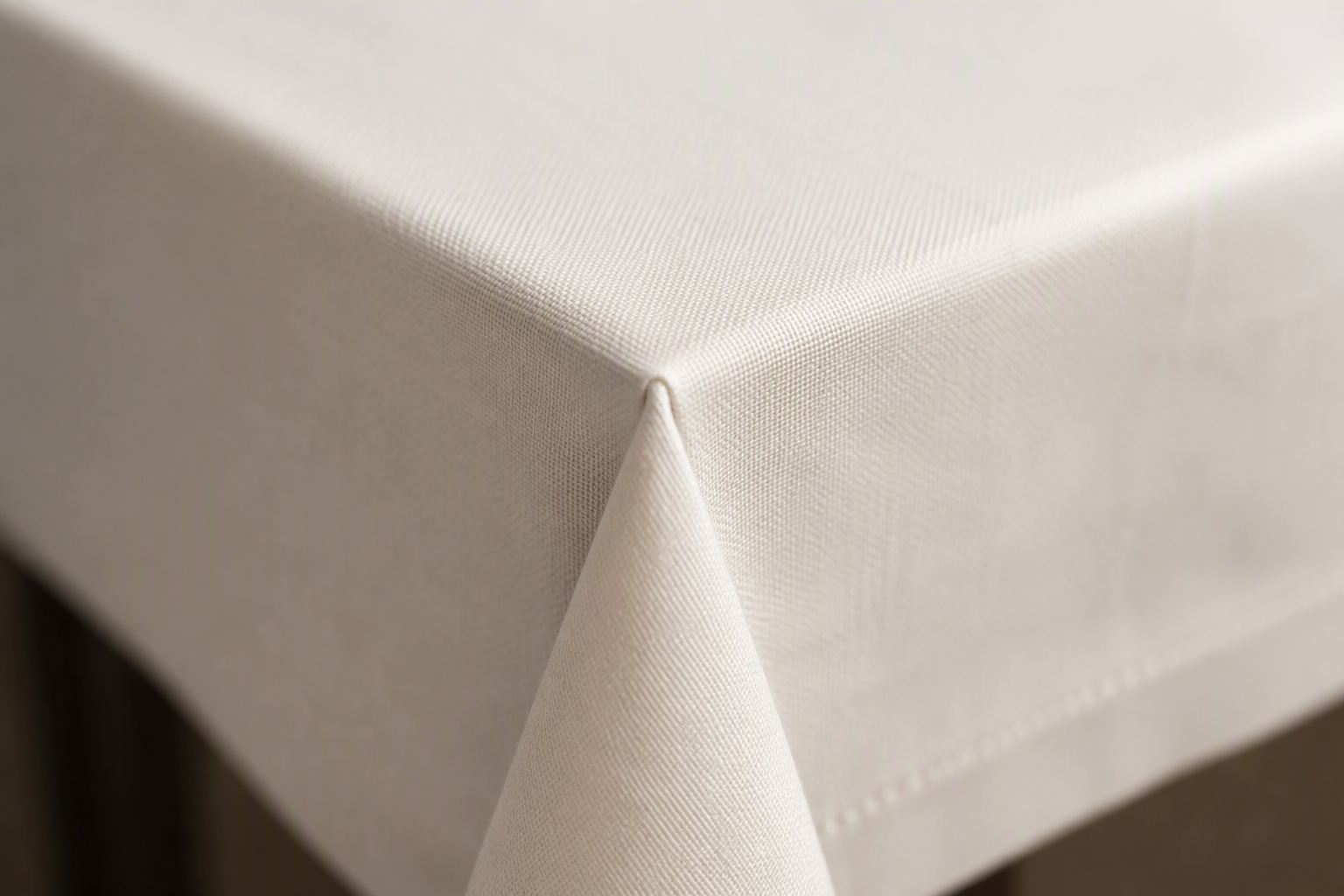
- Mitered corner: the premium line. The hem is folded at 45 degrees and the two edges meet on a clean diagonal. It is the most finished look on a floor-length cloth, the one that reads as made for the venue, and the one that is most labour-intensive to build and to press back true after the wash.
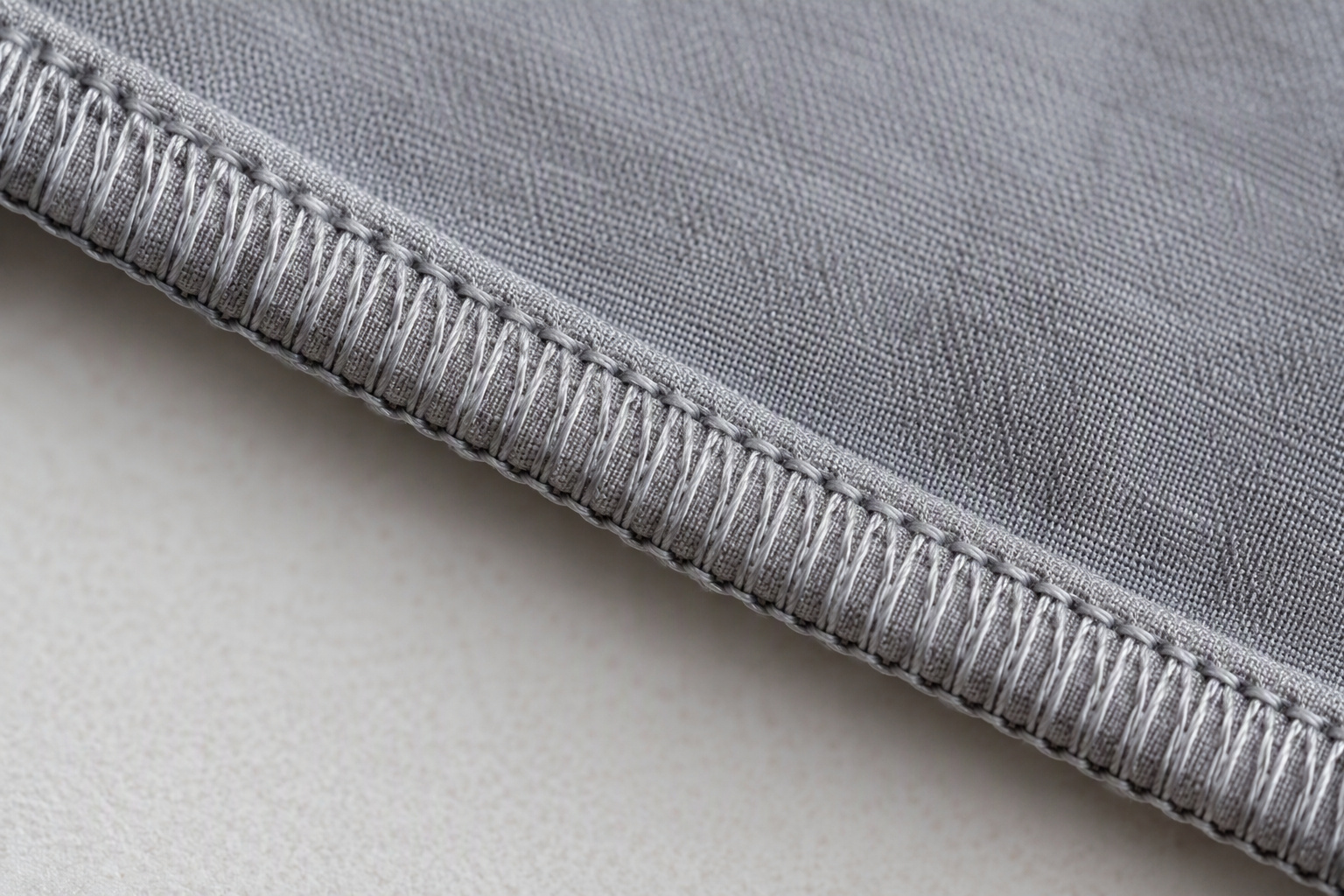
- Serged hem: the workhorse. A machine overlock locks the raw edge and holds the hem in one pass. It is fast, durable and honest — the finishing of the high-turnover program where the cloth has to take the laundry and come back clean. It reads industrial next to a miter, but it does the job.
- Bound edge: the sharp line. A strip of fabric wraps the raw edge and is stitched down, giving a clean, flat, finished line with no raw thread at all. It sits between the serged and the mitered in cost, and it is the finishing that holds a neat line on a mid-drop cloth without the diagonal of the miter.
- Double (narrow) hem: the classic. The edge is folded twice and stitched — the simple, versatile finish that sits on most everyday cloths. It is cheap, durable and unobtrusive, the finishing you choose when the program is about the cloth, not the edge.
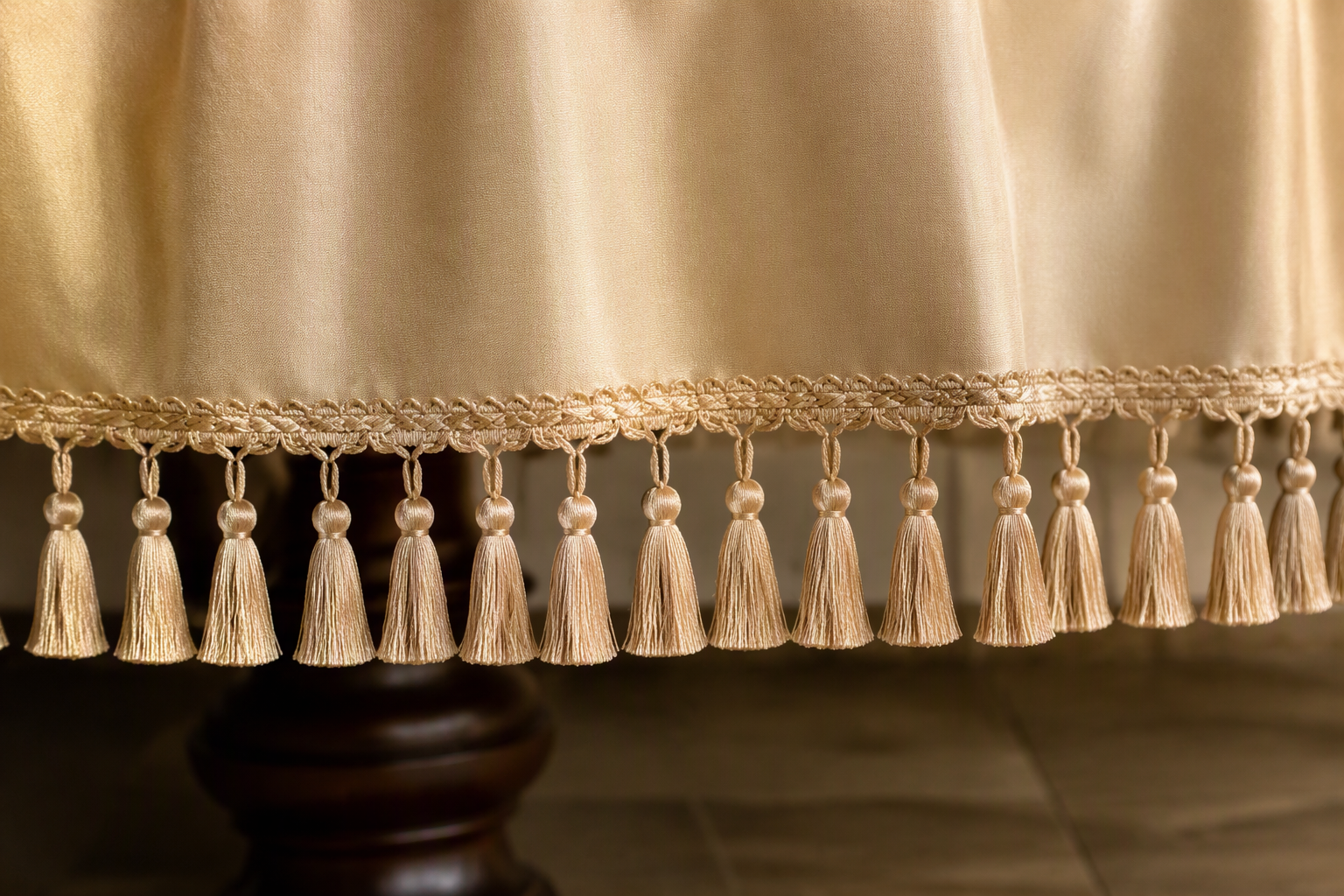
- Tassel or fringe edge: the statement. The cut fringe or sewn tassels along the bottom line the cloth with a decorative weight. It is the boho and styled-table finishing — a look decision that also carries a care decision, because the fringe is the first thing a chair leg or a table edge will catch.
4. Choosing the Finishing for the Program
- Formal floor-length programs run the miter. A banquet, a fine-dining room or a venue that dresses the table to the floor is the case for the mitered corner — the clean diagonal is what the drop is meant to show, and it is the finishing that holds that line through the press.
- High-turnover casual programs run the serged or the double hem. The cloth that comes off the table every hour and goes to the wash the same night does not need the miter’s labour — it needs an edge that holds the seam and survives the cycle. The serged hem is the honest choice for that service.
- The mid-drop cloth often runs the bound edge. A cloth that stops at mid-height shows less of the corner and more of the line, and the bound edge gives a neat, flat line without the cost of the diagonal. It is the finishing of the cloth that is styled but not formal.
- The fabric decides how much the finishing can carry. A heavy, dense cloth holds a miter and a bound edge without fighting; a light, open or sheer cloth needs a finishing built to its weight, or the hem will pull the drop out of shape. The finishing is chosen with the fabric, not after it.
- The tassel is a style choice with a service limit. The fringe finishing belongs on the styled and seasonal tables, not on the workhorse of a high-turnover room — the care it takes and the snag it invites are the price of the look, and the program should decide whether it is worth paying it.
5. Finishing and Cost
- The finishing is mostly labour, and the labour is in the corner. The hem length is machine time; the mitered corner is hand work. That is why the difference between a serged cloth and a mitered cloth is not in the fabric at all — it is in the hours at the edge, and it shows in the price.
- Premium finishing is a per-cloth cost, not a per-order cost. Every cloth in the par carries the finishing with it, so the choice of edge multiplies across the whole program. The decision is made once, but it is paid for on every table, every season.
- The cost is best read per wash, not per unit. A mitered cloth that holds its corner for three hundred washes is cheaper than a serged one that lets go at the corner on the fiftieth and has to be retired — the finishing that survives the service is the one that costs less over the life of the cloth.
- State the finishing in the quote, and the quote is comparable. Two suppliers quoting the same fabric and the same size can be at very different prices because they are building different edges. The finishing written on the quote is what makes the two numbers mean the same thing.
6. Finishing and Durability
- The corner is where the cloth retires. On a floor-length program the four mitered corners take the scuff, the chair and the floor, and they are the first place a finishing shows it has given up. A corner that keeps its diagonal and its stitch is a corner that keeps the cloth.
- The serged hem is the strongest in the wash. The overlock holds the raw edge under the abrasion of the commercial cycle better than a simple fold, which is why the workhorse programs run it — the edge that survives the laundry is the edge that survives the program.
- The miter needs the press to stay true. A mitered corner that is not pressed back to its diagonal after the wash softens and rounds, and the clean line is the whole point of the finishing. The miter’s durability is in the care, not just the build.
- The fringe is a snag risk by design. The tassel edge invites the hook — a chair leg, a ring, a table edge will catch it, and a caught fringe is a pulled one. The finishing is as durable as the room is careful with it, and that is the trade the style makes.
7. Keeping the Finishing Consistent Across the Program
- One program, one finishing. The par is built to read as one table story, and the edge is part of that story. A program that mixes mitered and serged cloths in the same room shows the mix the moment the tables are dressed — the finishing is chosen for the room, not cloth by cloth.
- The re-order carries the finishing forward. A top-up that changes the edge — a serged re-order on a mitered program — is a fault the room will see. The finishing is recorded with the lot, the same way the colour and the size are, and the re-order is judged against it.
- The sample approves the edge, not just the cloth. The finished sample that carries the decision is the cloth with its hem and its corner, pressed and laid as it will sit. A sample that approves the fabric but not the finishing is a sample that has not approved the tablecloth.
8. How to Inspect the Finishing
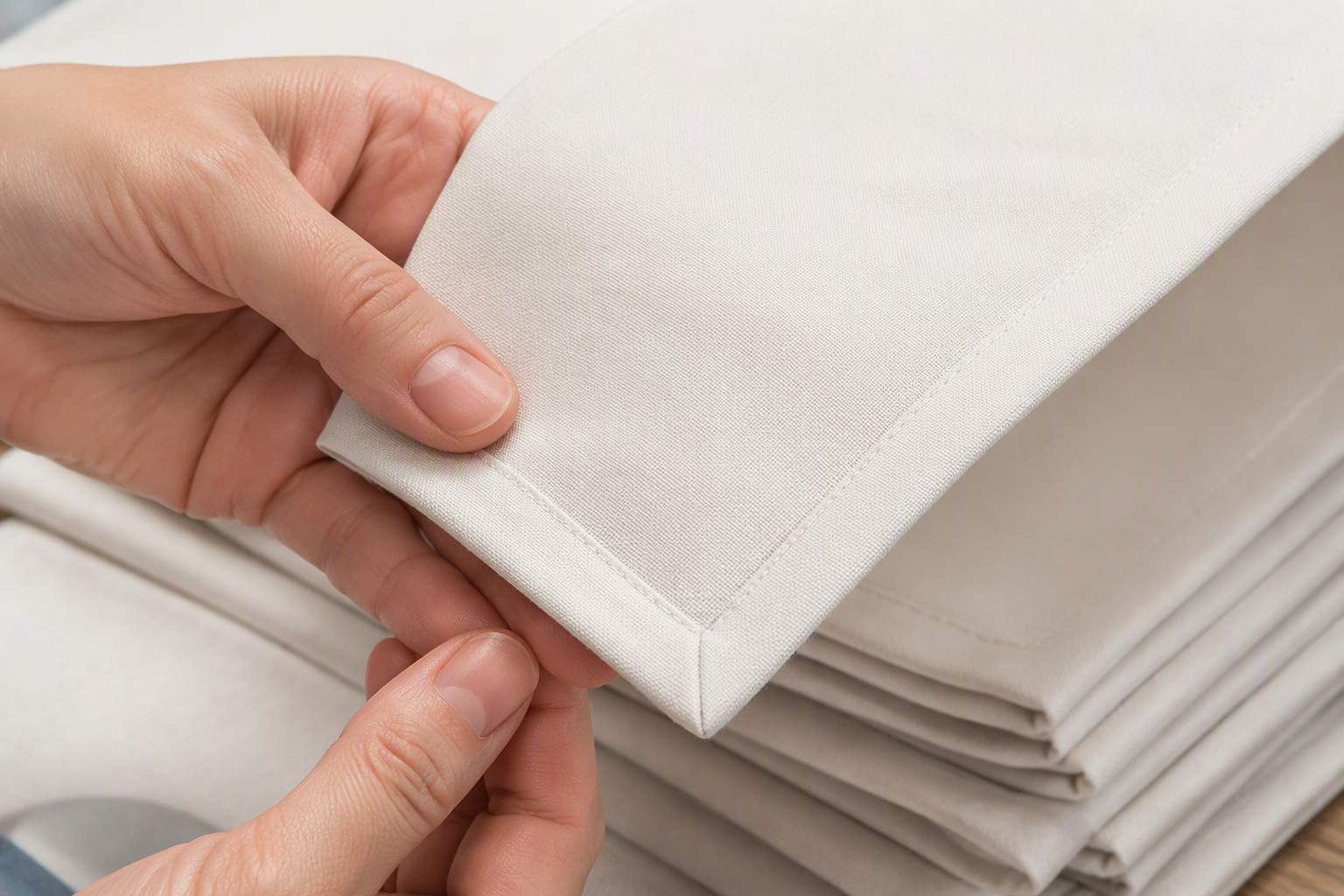
- Check the corner before the length. The diagonal is the join that carries the stress, and a fault at the corner is a fault the whole edge is built around. Look at the four corners first — the angle, the stitch, the way the two hems meet.
- Pull the hem, gently. A finished edge should hold the pull. A hem that stretches, a stitch that gives, a bound edge that shifts under the finger is an edge that will not hold the service.
- Look for the raw thread. A clean finishing has no raw edge showing — no loose thread at the fold, no open pick at the corner, no fraying at the seam. The raw thread is the unfinished edge, and it is the one that will fray into the wash.
- Check the hem weight and the evenness. The hem should run the same width all the way round, and it should carry enough to keep the drop true. A hem that is narrow in one corner and wide in the next is a hem that was not built to a spec.
- Wash the sample and look again. The finishing that matters is the finishing after the cycle — the corner that keeps its line, the seam that keeps its stitch, the edge that comes out of the wash clean and true. The edge is approved on the washed cloth, not the dry one.
- Match the edge to the spec you wrote. The last check is the one against the paper — the finishing method, the hem width, the corner treatment, the tassel length if there is one. The cloth that is not the edge you ordered is the cloth you will not be able to re-order.
9. Ordering Tablecloth Finishing in Volume
- Write the finishing into the order. The method (mitered, serged, bound, double hem, tassel), the hem width, and the corner treatment are part of the specification, the same standing as the fabric and the size. The order that does not state the edge is the order that gets the factory’s default.
- Price the finishing into the decision. The finishing is the line on the quote that separates the two “same” cloths, and it is the line to read before the comparison. The cloth with the edge you need, at the price the edge costs, is the cloth to buy.
- Plan the lead time for the premium edge. The mitered and the bound finishing carry more hand time than the serged, and the hand time carries into the lead. A program that wants the premium edge on a tight date is a program that ordered the finishing late.
- Hold the finishing to the lot. The edge that is approved on the sample is the edge the lot is built to, and the re-order is judged against it. The finishing, like the colour and the size, is a standing spec the whole program is held to — the one that keeps the room reading as one table story, season after season.
10. Tablecloth Finishing FAQs
Is a mitered corner worth the extra cost over a serged hem?
For a floor-length, formal program — yes, because the diagonal is what the drop is meant to show, and it is the finishing that holds that line through the press. For a high-turnover casual room where the cloth comes off every hour, the serged hem does the job at a lower cost and the miter’s labour is spent the room will not see. The finishing is bought for the service the cloth has to do, not for the spec sheet.
Which finishing survives a commercial laundry best?
The serged hem, because the overlock locks the raw edge under the abrasion of the cycle. The double hem is a close second and the cheaper of the two. The mitered corner survives too, but it needs the press to keep its diagonal — its durability is in the care as much as the build. The tassel edge is the one to keep off a hard commercial cycle, because the fringe takes the snag.
Can I mix finishing methods across one program?
Across different rooms, yes — a formal room on the miter and a casual room on the serged is a normal split. Within one room, no — the par should read as one table story, and a mixed edge shows the moment the tables are dressed. The finishing is chosen for the room, and the re-orders carry it forward.
How do I make sure a re-order matches the original edge?
By holding the finished sample — the cloth with its hem and its corner, pressed as it will sit — and judging the re-order against it, with the finishing method recorded on the order the same way the lot and the size are. A re-order that changes the edge is a fault the room will see, and the stored sample is the reference that keeps it from happening.
Final Thoughts
The edge is the first place a tablecloth shows its quality and the last place it survives — it takes the weight of the drop, the friction of the chair and the scuff of the floor, and it is what the room sees every time the table is dressed. Choose the finishing for the service the cloth has to do: the miter for the formal floor-length table, the serged for the high-turnover workhorse, the bound for the styled mid-drop, and the tassel where the look is worth the care. Write it into the order, price it into the decision, inspect it on the corner and on the washed cloth, and hold every re-order to the stored sample. Done that way, the edge is not the weak point of the program — it is the part that makes the room read as made.
We build tablecloths to your finishing spec — mitered, serged, bound, double hem or tassel, in the fabric and the size your program needs, with the hem width and the corner treatment stated on the order and the finished edge approved on a sample before the full run. Contact us for finishing options, samples, sizing, MOQs, and wholesale pricing.