Few tablecloths are as instantly recognisable as a checked one. A red-and-white gingham cloth says bistro before a single word is spoken; a crisp awning stripe says seaside café. Checked and striped tablecloths have never gone out of fashion, which is why they remain one of the steadiest sellers in hospitality linen — and why so many buyers get tripped up by one detail that decides how long the cloth will actually look good: whether the pattern is woven or printed.
1. The Classic Pattern Families
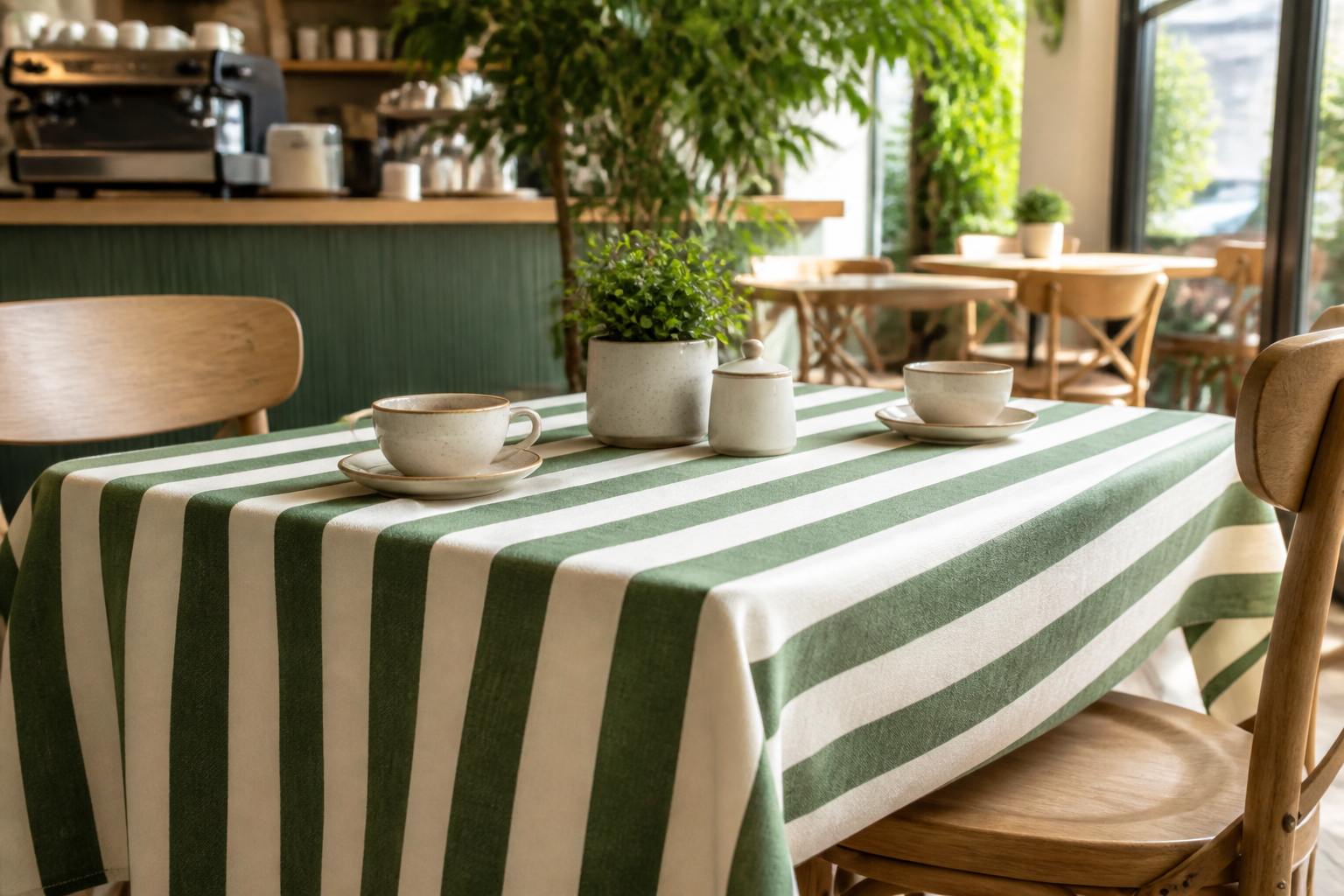
Most checked and striped tablecloths sold in hospitality fall into a handful of recognisable families:
- Gingham (check): The two-tone even check — white crossed with one color. Casual, cheerful, and the definitive bistro and farmhouse look.
- Buffalo check: A larger, bolder two-color check, usually in strong reds, greens, or blacks. Rustic and graphic.
- Tattersall: A smaller, finer check with a lighter ground, often with a subtle overcheck. Traditional and understated — popular in classic dining rooms.
- Windowpane: A fine line grid on a plain ground. Modern and restrained; works well in minimal interiors.
- Awning / bistro stripe: Bold, wide stripes reminiscent of café awnings. High visual impact, very popular for terraces and casual venues.
- Pinstripe and fine ticking: Narrow, evenly spaced stripes. Quiet and versatile — suits both restaurants and retail styling.
2. The Distinction That Matters: Yarn-Dyed vs. Printed
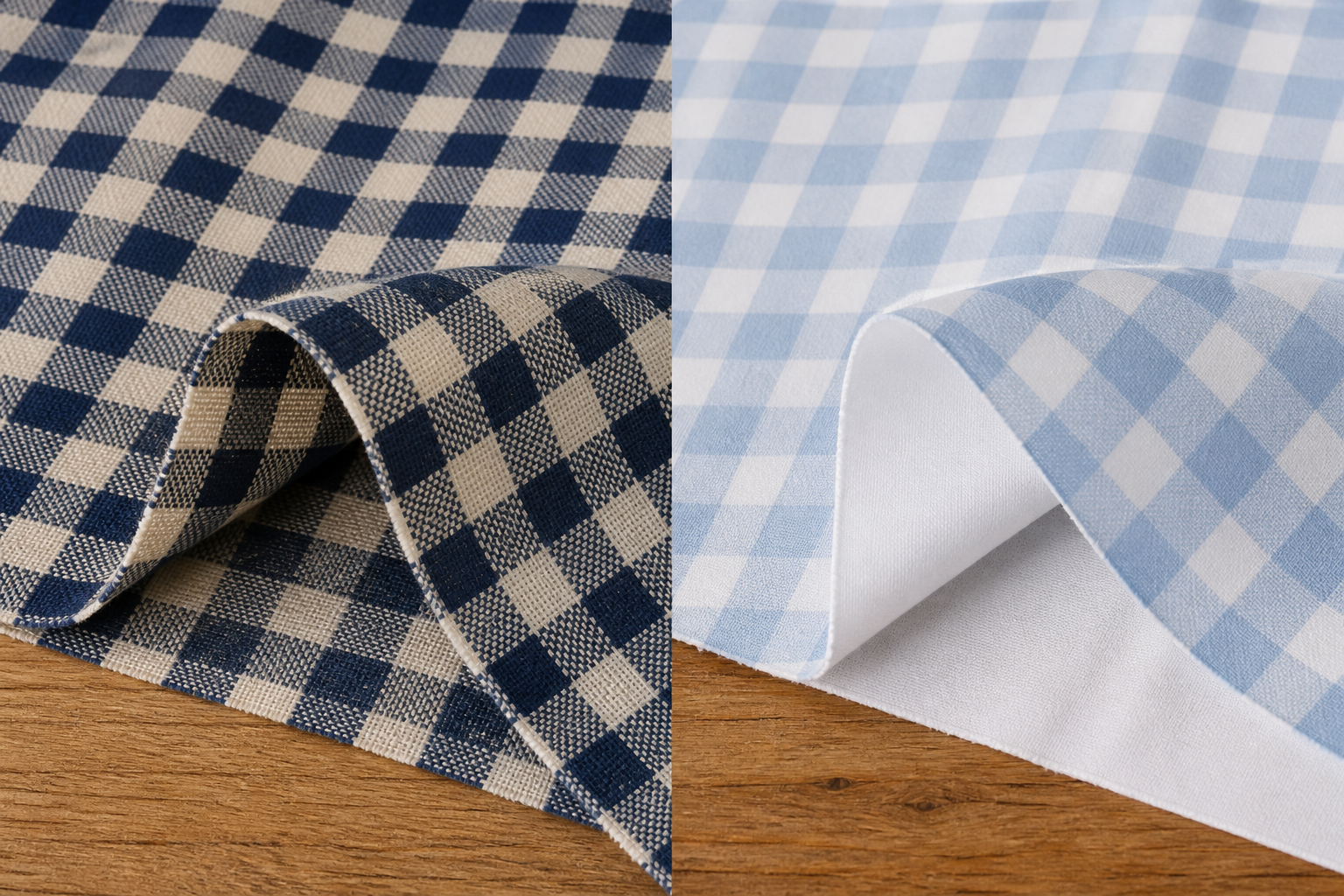
This is the single most important thing to understand when buying checked or striped tablecloths:
- Yarn-dyed (woven): The yarns are dyed before weaving, then woven into a check or stripe. The pattern is part of the cloth’s structure, so it appears on both faces and runs through the fabric. It does not fade in the wash, crack, or peel — because there is no print layer to lose. Colors stay crisp for the life of the cloth.
- Printed: A plain fabric is woven first and the pattern is printed onto the surface afterwards. This is faster and cheaper, but the print sits on top of the cloth: the reverse side is typically plain, and heavy laundering gradually dulls and fades the design. Surface prints can also feel slightly stiff where the ink sits.
For a café using a tablecloth dozens of times a month, this difference decides whether the cloth still looks sharp after a year or looks tired after three months. Yarn-dyed construction costs more per metre — and is usually the better value over the life of the linen.
3. Why Yarn-Dyed Checks Hold Up
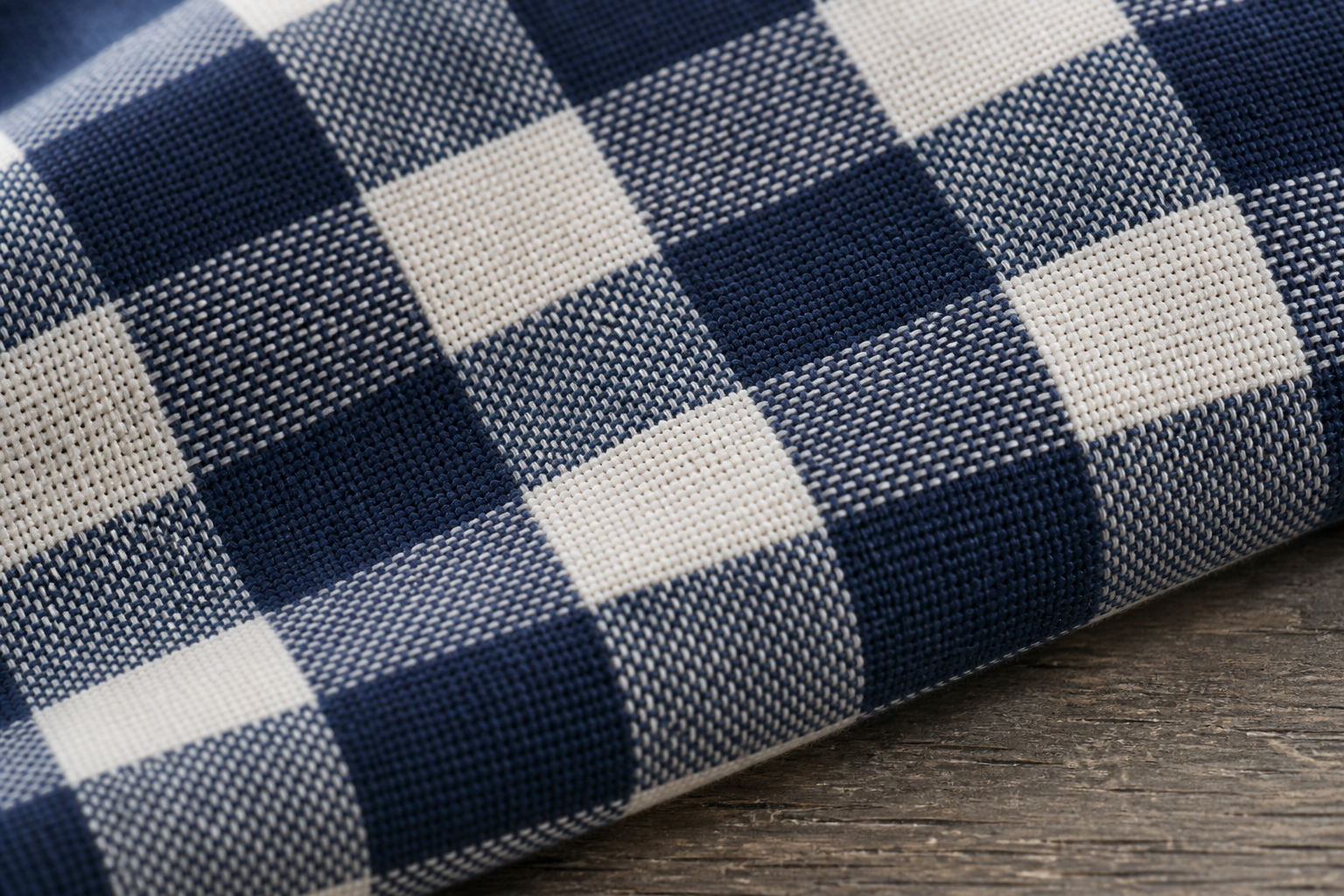
- Color integrity: Because the color comes from the yarn itself rather than a surface layer, repeated commercial washing does not strip the pattern.
- Two good faces: The reverse shows the same pattern in inverted tones, so the cloth looks intentional however it is folded or draped.
- Texture and hand: Woven checks have a natural fabric hand; the check reads as part of the weave rather than a coating.
- Consistent appearance: No ink pooling, no uneven print edges, and no visible print registration lines along folds.
4. Fabric Choices
- 100% cotton: The traditional option — absorbent, natural hand, and softens with washing. Best for venues with good in-house pressing.
- Cotton-polyester blends: The hospitality workhorse — the cotton provides the look and feel, the polyester delivers wrinkle resistance and longer life under frequent laundering.
- Spun polyester: Durable, colorfast, and easy-care; the closest synthetic match to a cotton look and the most practical choice for high-volume operations.
- Linen blends: A more premium, textured version of the classic check — crisp and slightly rustic, well suited to upscale farm-to-table concepts.
Weight matters as much as fiber: a very light check cloth can look flimsy on the table and crease quickly, while a mid-to-heavy weight drapes better and withstands more wash cycles.
5. Cutting and Pattern Matching
With a checked or striped cloth, the cut matters as much as the fabric. Buyers should confirm with the supplier:
- Pattern alignment: Whether the check or stripe is centered and run straight along the table’s edges, so the cloth does not look skewed.
- Hem finishing: How the hem is turned — a straight-grain hem on a striped cloth should follow the stripe, not cut across it.
- Consistency between pieces: For a set of tablecloths used together, the pattern scale and repeat should be identical across all sizes.
6. Where Checked and Striped Cloths Work Best
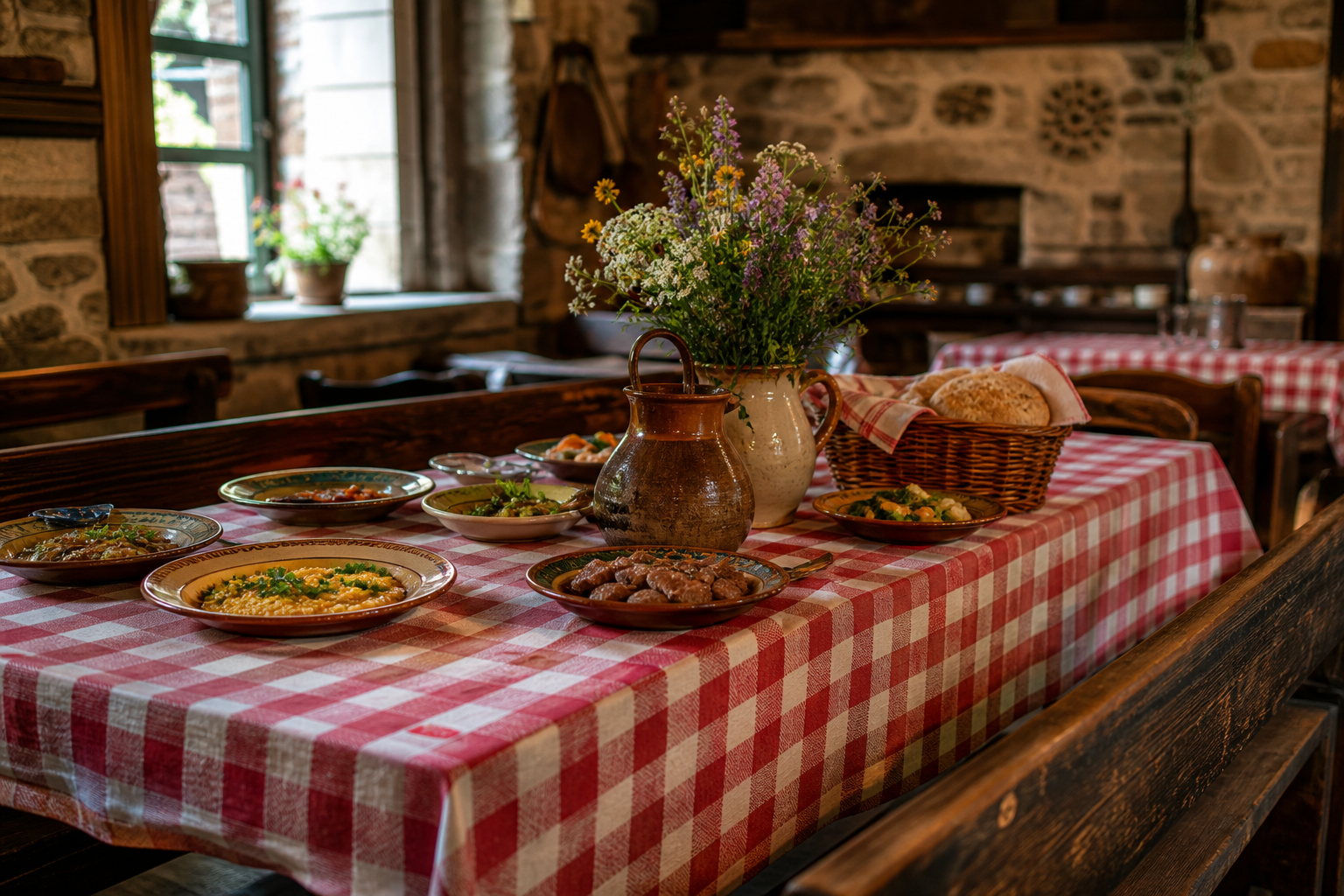
- Cafés and bistros: The classic pairing — gingham or narrow stripes with simple crockery and wooden furniture.
- Farm-to-table and country restaurants: Buffalo checks and heavier weaves in muted or earthy palettes.
- Bakeries and delis: Fine stripes and windowpane patterns for a clean, tidy counter look.
- Terraces and outdoor dining: Bold awning stripes add visual energy and hide everyday wear well.
- Boutique hotels and holiday rentals: Coordinated checks across dining areas create a cohesive, memorable look.
- Retail and events: Seasonal checks (holiday reds, spring pastels) give displays a fresh, styled feel.
7. Buying Checklist for Bulk Orders
- Confirm the construction. Ask explicitly whether the pattern is yarn-dyed or printed, and request a swatch of each if you are comparing.
- Approve a color standard. For yarn-dyed checks, confirm the color against a physical swatch or lab dip — color is set in the yarn, so it must be right before weaving.
- Specify sizes precisely. Confirm table dimensions and the drop you want; checked cloths are more sensitive to a poor fit because the pattern draws the eye to the edges.
- Order a pre-production sample. Wash and press the sample once before committing to volume — this is where a good yarn-dyed cloth proves itself.
- Plan for shrinkage. Ask about pre-shrinking or sanforizing, and order with enough tolerance for repeated laundry cycles.
- Keep a repeat-order reference. Retain the color standard and pattern details so later production runs match your existing stock.
8. Care for Checked and Striped Linen
- Wash warm, dry low. Standard commercial cycles suit yarn-dyed cotton and poly-cotton checks; avoid very hot cycles that stress the weave.
- Skip chlorine bleach on colored checks. Oxygen-based bleaching protects both the color and the white blocks of the pattern.
- Press along the pattern. Pressing with the check lines helps the cloth sit straight on the table.
- Rotate stock. Rotating tablecloths evenly keeps wear and color consistent across a set.
9. Checked Tablecloth FAQs
Is printed check always worse than yarn-dyed?
Not always — printed cloths can suit short-life promotional use, seasonal displays, or disposable-style applications where price dominates. For daily hospitality use and repeated laundering, yarn-dyed is the more durable and better-value choice.
Can a yarn-dyed check be customized?
Yes. Because the color is set in the yarn, custom color combinations, check scales, and stripe widths are all achievable through weaving — which is how venues and brands get a signature look others cannot copy off the shelf.
Why does the reverse of my check look different?
That is normal for a woven check: the yarns cross over each other, so the pattern inverts on the reverse side. A truly plain reverse usually indicates the pattern was printed.
How many tablecloths should we stock?
Most venues keep four to six cloths per table to cover laundry cycles and peak service, plus a small reserve for damage.
Final Thoughts
Checked and striped tablecloths earn their place in hospitality because they are warm, familiar, and endlessly flexible — but the pattern is only half the story. Whether the check is woven from dyed yarns or printed onto the surface determines how the cloth will look after fifty washes. Buy the construction, not just the design.
We weave yarn-dyed checks and stripes in our own mill — custom color combinations, check scales, stripe widths, and finished linens in cotton, poly-cotton, and spun polyester. Contact us for swatches, color standards, MOQs, and wholesale pricing.