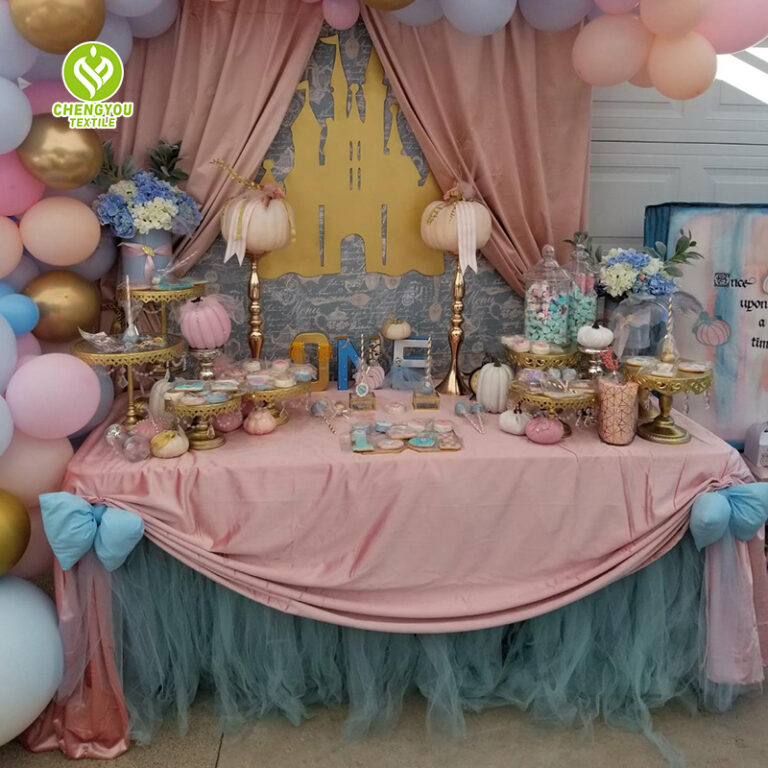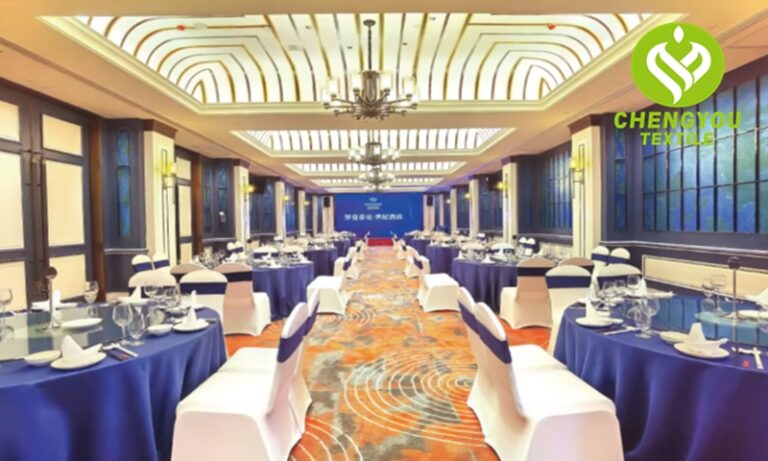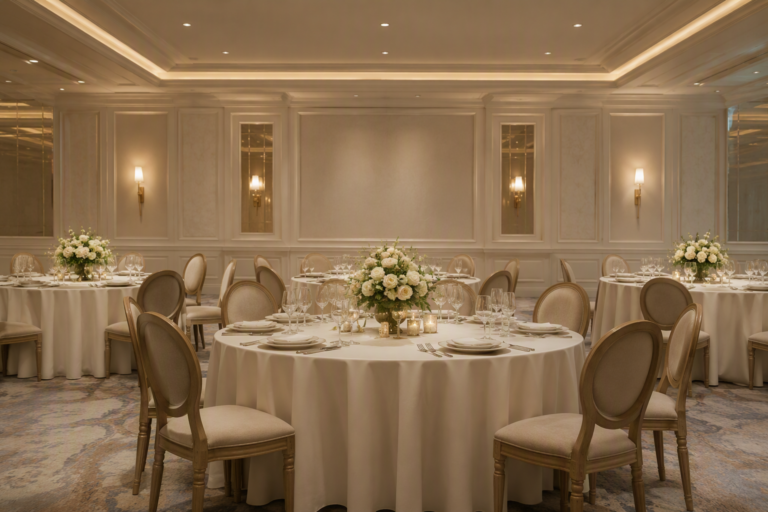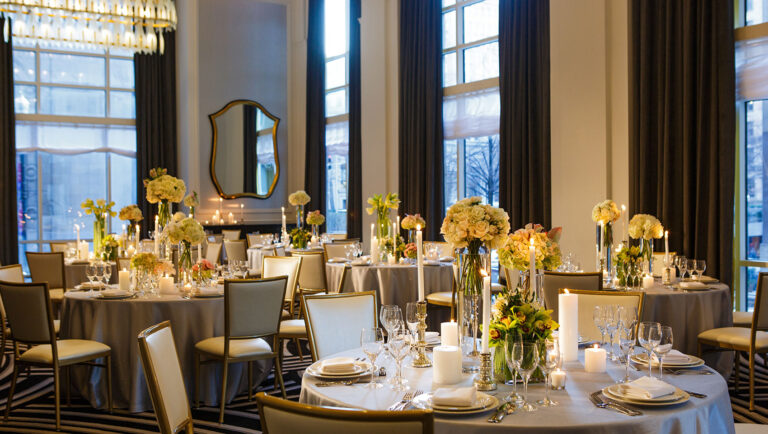
A tablecloth is where the food sits; a table skirt is where the eye goes. The front of a reception desk, a stage table, a buffet, or a display booth is the visible face of the setting — and it is usually the most photographed part of a room. That is what makes the skirt a specification, not an afterthought: get the type, the fabric, and the length wrong and the whole table looks unfinished, no matter what sits on top of it.
1. What a Table Skirt Is and Where It Works
A table skirt is a panel of fabric attached along the top edge and hanging down the side(s) of a table, concealing the legs and the structure beneath. Where a tablecloth drapes over the top and all sides, a skirt works on the visible face only — which is exactly what makes it the right answer in several situations:
- Reception and front desks — the table is worked from the top, but the front is the image.
- Stage and ceremony tables — altar and speaker tables where the drape must read as clean and deliberate.
- Buffet and serving counters — long runs of tables where a full cloth is impractical but a clean line is essential.
- Display and trade-show tables — booths where the skirt carries the brand colour and keeps the presentation uniform.
- End tables and trestles — banquet styling where the sides are dressed but the top stays a runner or a cloth of its own.
2. The Four Main Types
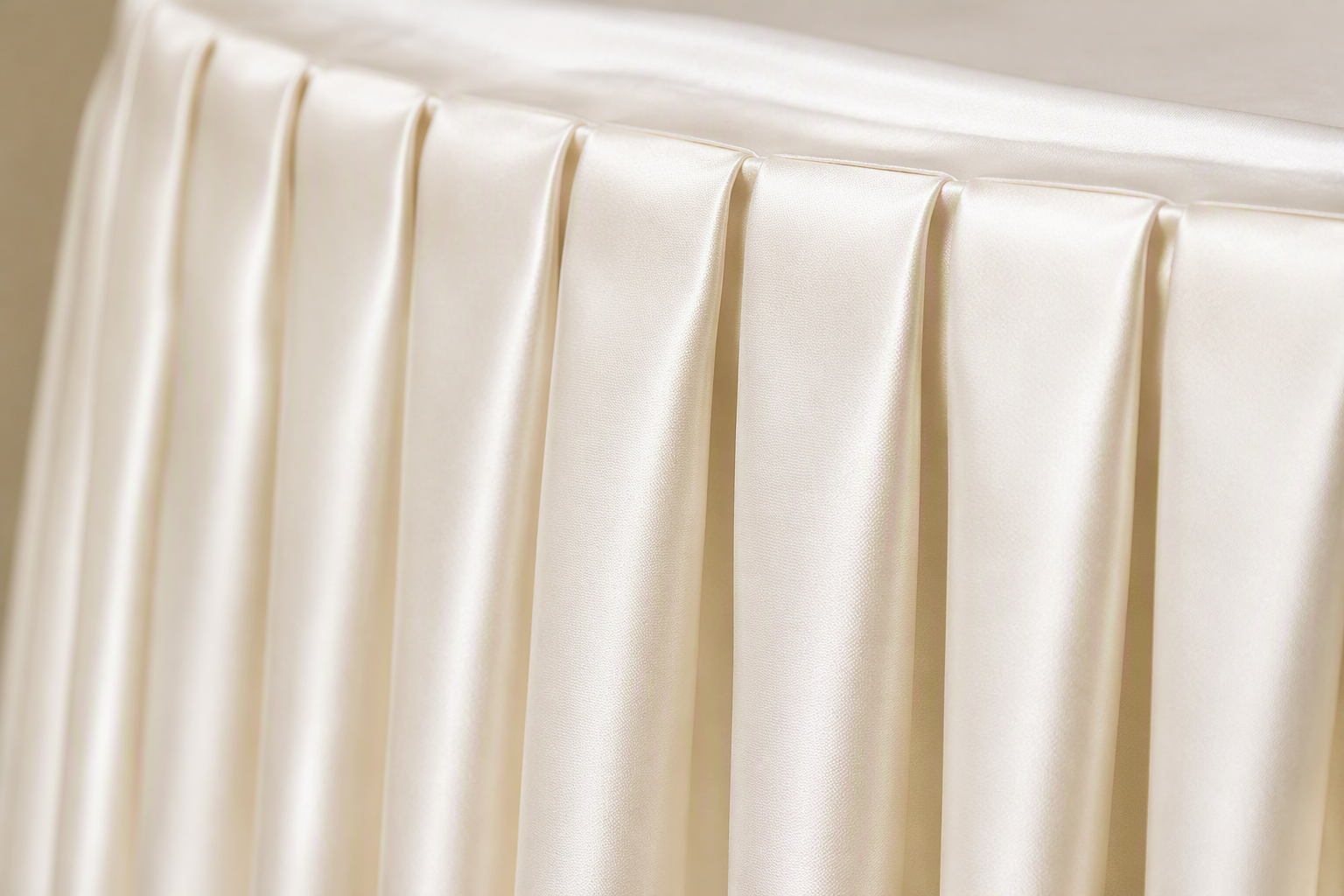
- Pleated (accordion / box pleat): the standard for formal and celebratory use. The fabric is folded into regular vertical pleats that hold their shape, giving the clean, structured look of a reception or stage table. Pleated skirts are the most fabric-intensive type and the most finished-looking.
- Flat (hemmed): a straight panel with a clean hem, no pleating. Simpler and lighter, it reads as modern and understated — the default for display tables, booths, and venues that want colour without formality.
- Gathered (ruched): the fabric is eased and gathered along the top so it falls in soft, irregular folds. A softer, more romantic look than pleating, popular for styled and home-event settings, though the folds are less uniform over time.
- Stretch (spandex / elastic): a fitted panel that stretches over the table edge and hugs the structure, often used where the skirt has to stay taut and wrinkle-free, or over non-standard shapes. It behaves more like a fitted cover than a hanging panel.
3. Fabrics for Table Skirts
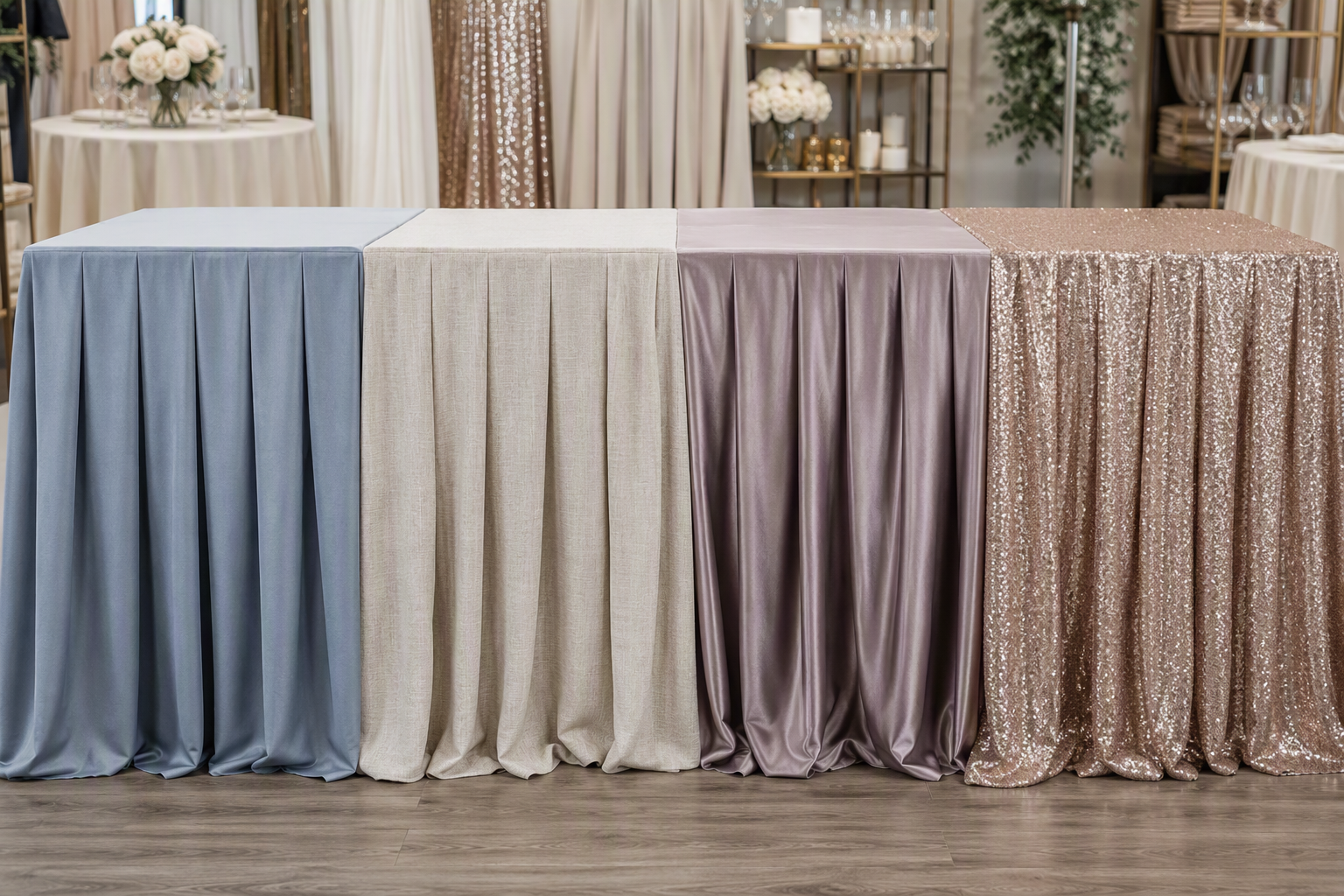
- Polyester: the workhorse — wrinkle-resistant, colourfast, easy-care, and economical. The default for display, buffet, and high-turnover commercial use.
- Linen-look (faux linen): the textured, matte finish of linen with synthetic practicality — popular for styled and modern venues that want natural look without the care.
- Taffeta / satin: the crisp, slightly formal hand with a soft sheen; the go-to for pleated reception and stage skirts where the drape has to hold and the surface has to read as premium.
- Stretch / spandex blends: for fitted skirts that must stay taut and conform to the table structure.
- Sequin and metallics: decorative, for specific celebration looks — best used as an accent or a single-event piece rather than a standing program.
4. Sizing a Table Skirt
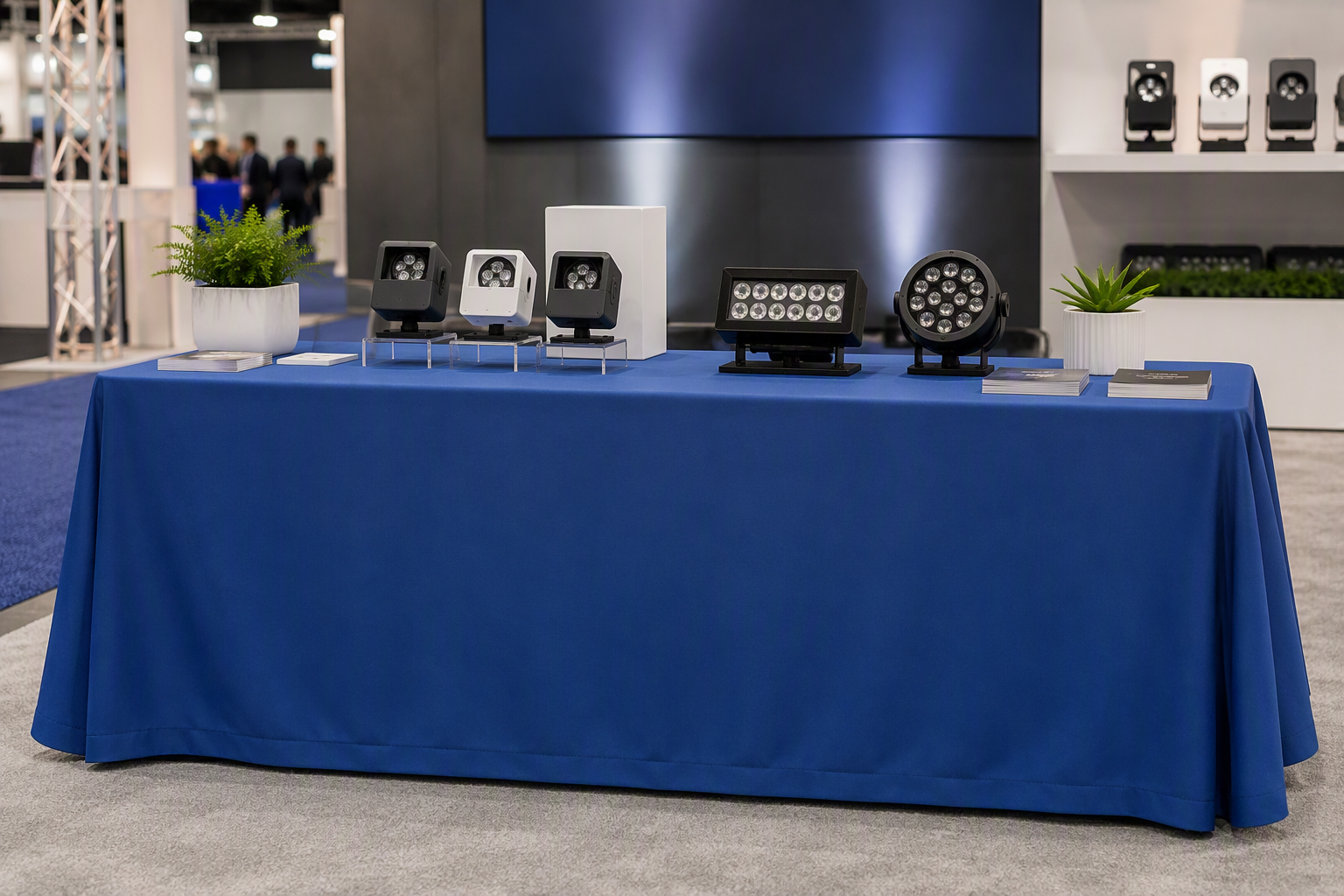
A table skirt is sized by two dimensions: the length it must cover along the table, and the drop — how far it falls from the tabletop. Get these right and everything else follows.
- Measure the covered length — the full run the skirt must span (for a single-sided skirt, one length; for corner-wrapped or full surrounds, the perimeter).
- Measure the drop — from the tabletop down to the intended finish line. Floor-length is the most common for formal use; a shorter drop is standard where the table is against a wall or the style is modern.
- Add the pleat factor. A pleated skirt uses multiple times the finished length in raw fabric, because the folds consume width. The pleat ratio is part of the specification — it is what separates a crisp, evenly-pleated skirt from one that looks scrunched. This is the main reason pleated skirts cost more in fabric than flat ones of the same finished size.
- State the finished size, not the cut size. As with any linen, the specification is the measured finished panel — and the supplier should confirm whether the quoted dimension is cut or finished.
| Use | Typical drop | Type & fabric that fit |
|---|---|---|
| Formal reception / stage | Floor-length | Pleated, taffeta or satin |
| Hotel front desk | Floor or 1–2″ above floor | Pleated or flat, polyester or taffeta |
| Buffet / serving counter | Mid to floor | Flat or pleated, polyester |
| Trade-show / display booth | Short to mid drop | Flat, polyester or linen-look |
| Styled home / boutique event | Floor-length | Gathered or pleated, linen-look or satin |
5. Pleat and Edge Details
- Pleat type and depth: box pleats read more formal and structured; knife pleats are lighter. The depth and regularity of the pleat is the main quality marker on a pleated skirt — uneven pleats are the fastest way to cheapen the look.
- Top attachment: how the panel is fixed to the table edge (sewn channel, hook and loop, clips, or a header) affects both the install and how clean the top line looks. The attachment should be specified, not assumed.
- Bottom hem: a clean, even hem at the finish line — floor-length hems in particular should be checked for evenness, because a short corner shows at the foot of the skirt.
- Corners and wraps: for corner-wrapped or surround skirts, the corner construction is where the panel is most likely to fail visually — specify and inspect it.
6. Choosing by Setting
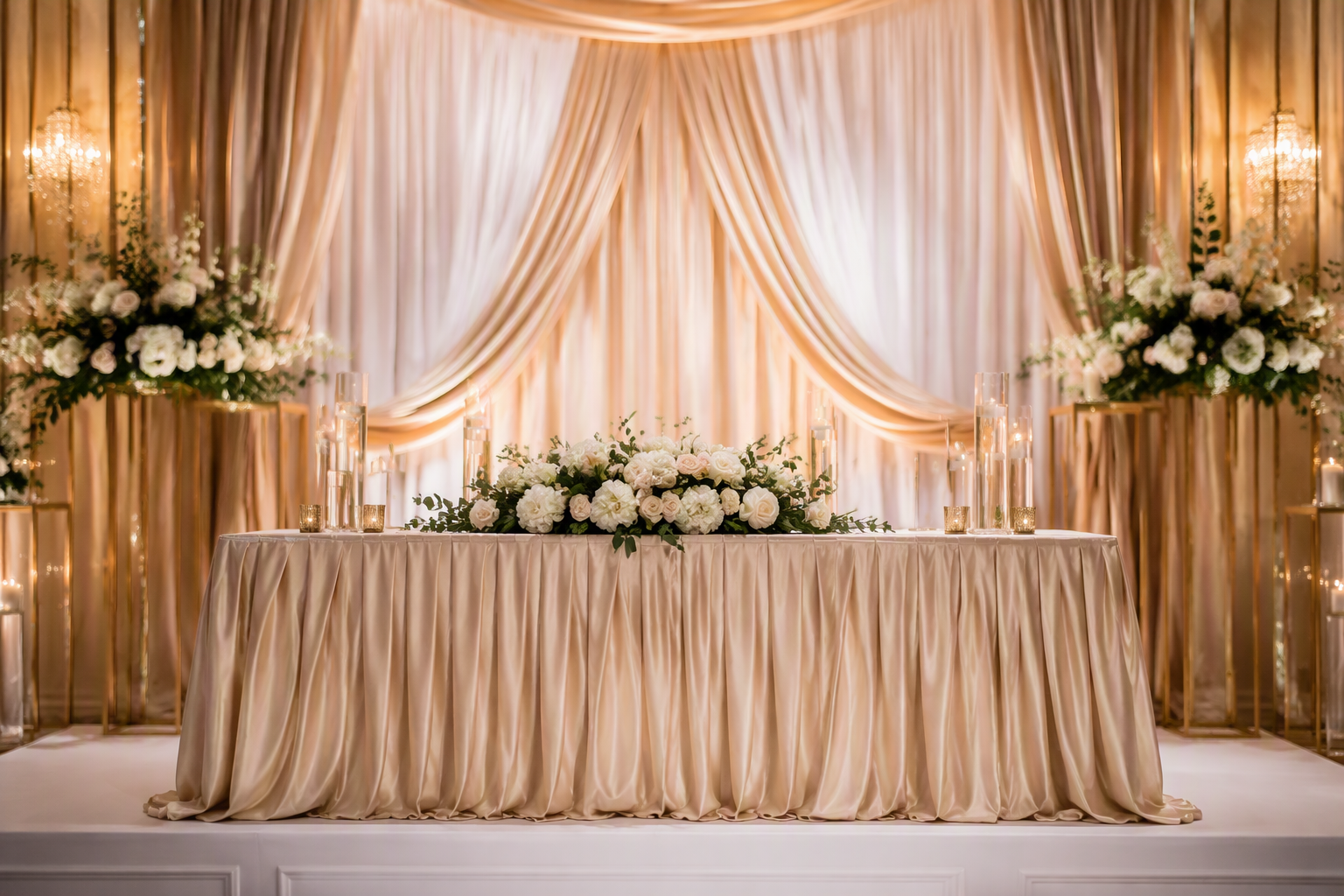
- Wedding and ceremony: pleated taffeta or satin in the program colour, floor-length, matching the backdrop and cloth — the skirt is part of the stage image, so it should be approved against the full setting.
- Hotel and front-of-house: a clean pleated or flat skirt in a neutral that survives daily service and matches the house palette — durability and consistency beat decoration here.
- Trade shows and displays: flat, wrinkle-resistant polyester in the brand colour, sized to the booth standard — the skirt is signage as much as fabric, so colour accuracy and a clean top line matter most.
- Buffets and serving: practical, easy-care, long runs — flat or lightly pleated polyester, sized for the full counter length.
- Styled and home events: gathered or pleated in a softer fabric, where the look is relaxed and textured rather than structured.
7. Buying Table Skirts in Volume
- Specify type, fabric, pleat, length, drop, and attachment in writing — a skirt is a multi-part specification, and any one of those left to a default is where programs go wrong.
- Approve a finished sample on the actual table. A skirt on the flat looks different from a skirt draped over a real table edge — the approval should happen fitted.
- Match dye lots for multi-piece programs. A long run of skirts or a set for several tables shows a dye-lot variation more than a single piece ever will — request lot matching and keep the code.
- Confirm the finished dimensions — cut vs. finished, and the pleat ratio — so the delivered panel is the size the room actually needs.
- Plan lead time for events. As with all event linen, a skirt needed for a dated function has to be ordered well ahead — production plus freight, on the calendar, not at the last moment.
8. Care
- Follow the fibre’s care — polyester and taffeta are forgiving and machine-washable on cool/gentle; linen-look and satin need a gentler hand; stretch skirts avoid heat.
- Pleated skirts: wash to keep the pleats, don’t set them wrong. Store and press pleated skirts so the folds stay even — a pleat that is creased flat in storage stays flat in service.
- Steam rather than hard-press to refresh a skirt before an event, keeping the surface and the pleat both clean.
- Store dry, flat or folded with the pleats, out of light — the same storage logic as any program linen.
9. Table Skirt FAQs
Pleated or flat — which should I choose?
For formal, staged, or reception looks, pleated reads as more finished and traditional. For modern, display, or practical high-turnover use, flat is cleaner and more economical. The setting decides; the fabric and pleat quality then decide how good it looks.
How much longer does a pleated skirt need to be than a flat one?
Finished length is the same; raw fabric is not. A pleated skirt uses a multiple of the finished length because of the folds — that is the pleat ratio, and it is part of the specification, not something to guess.
Can I use a table skirt as a tablecloth?
No — a skirt covers the side(s) only, with an open or separately-dressed top. It works where the top is a runner, a serving surface, or left bare; where the top must be covered too, that is a tablecloth or a fitted cover, not a skirt.
What attachment should I specify?
It depends on how the skirt is installed and how often it comes off — a sewn channel, hook and loop, or clips each suit a different setup. State the attachment in the specification and confirm it on the sample, because the top line is the first thing a close look finds.
Final Thoughts
A table skirt is the visible face of the table — and the part that finishes the room. Choose the type to the setting (pleated for formal, flat for practical, gathered for styled, stretch for fitted), the fabric to the working life, and specify the length, drop, pleat, and attachment in writing. Approve it fitted on the real table, match the dye lot across the program, and order it to the calendar — and the front of the table reads exactly as designed, instead of as an afterthought.
We produce pleated, flat, gathered, and stretch table skirts to your specification — with taffeta, satin, polyester, and linen-look fabrics, matched dye lots, and finished-size samples approved before production. Contact us for skirt samples, sizing guidance, MOQs, and wholesale pricing.