A gingham ruffle tablecloth is the kind of cloth you look at twice. It doesn’t ask for attention the way a printed one or a shiny one does. You set it down on the table, the check reads, the ruffle falls, and suddenly the table has a mood to it — the farmhouse mood, the café mood, the picnic mood. That’s the thing worth appreciating: it’s not a busy cloth, it’s a cloth that settles a room. This is the one I like to slow down with. Not a spec sheet — an appreciation. Let me walk you through what I actually look for when I hold one of these up and read it.
1. The Gingham Ruffle: The One Worth Slowing Down For
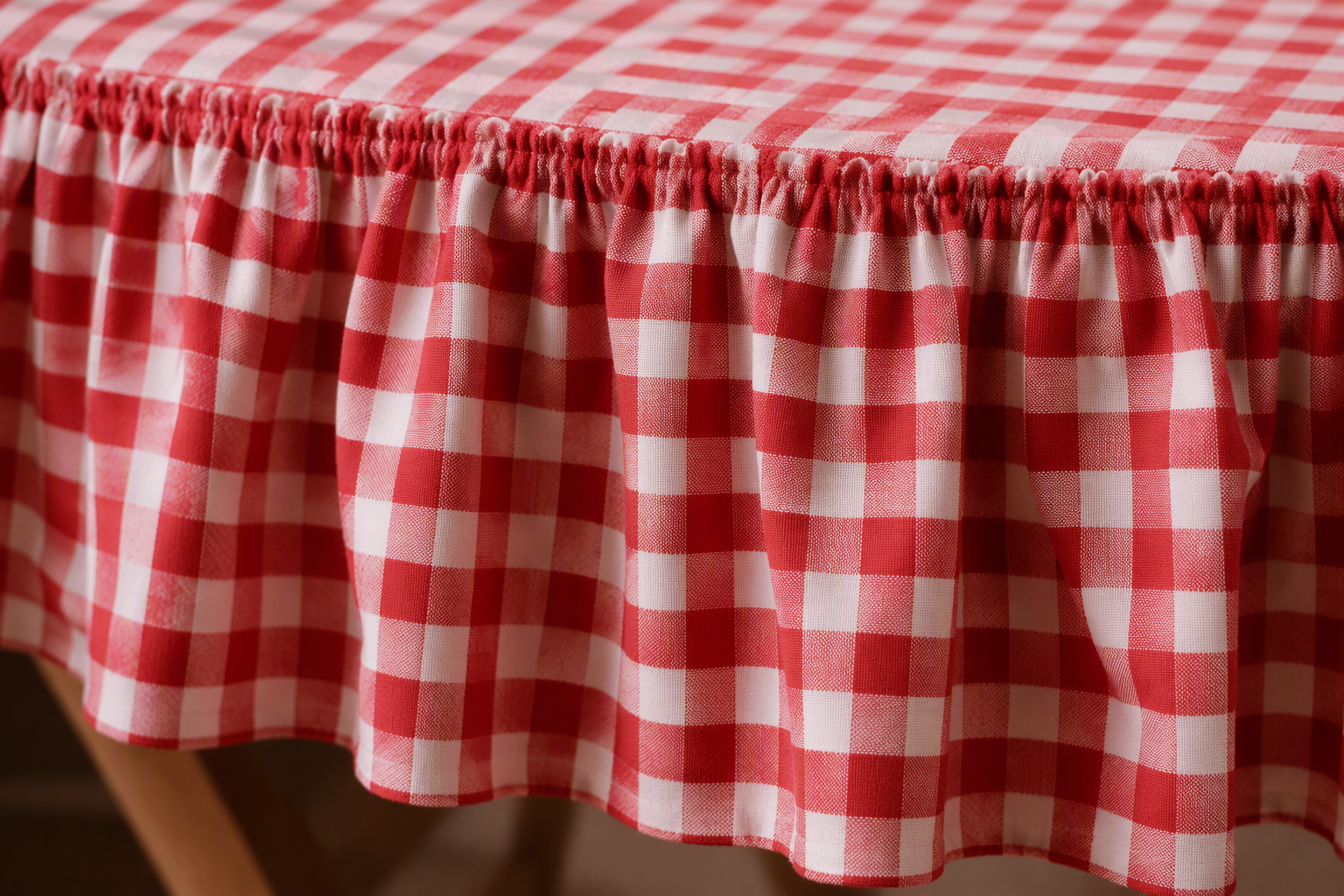
A few things put this cloth in a class of its own. First, the check. The gingham is a woven check, not a print — the squares are made of the yarn, dyed before the weave, so the check goes right into the cloth. You can feel the cloth, you can wash it a hundred times, and the check stays. Second, the ruffle. The border is gathered, not hemmed flat. That little fall of fabric is what gives the table the soft, finished look instead of the flat, sheet look. And third, the colour. Gingham is a colourway family, and the red-and-white you see most is just the loudest one of a wide range.
So when I appreciate this cloth, I’m looking at three things together: the check, the ruffle, and the colour. None of them is fancy on its own. Together they make the cloth that reads as the farmhouse classic.
2. Reading the Check: Fine vs. Bold
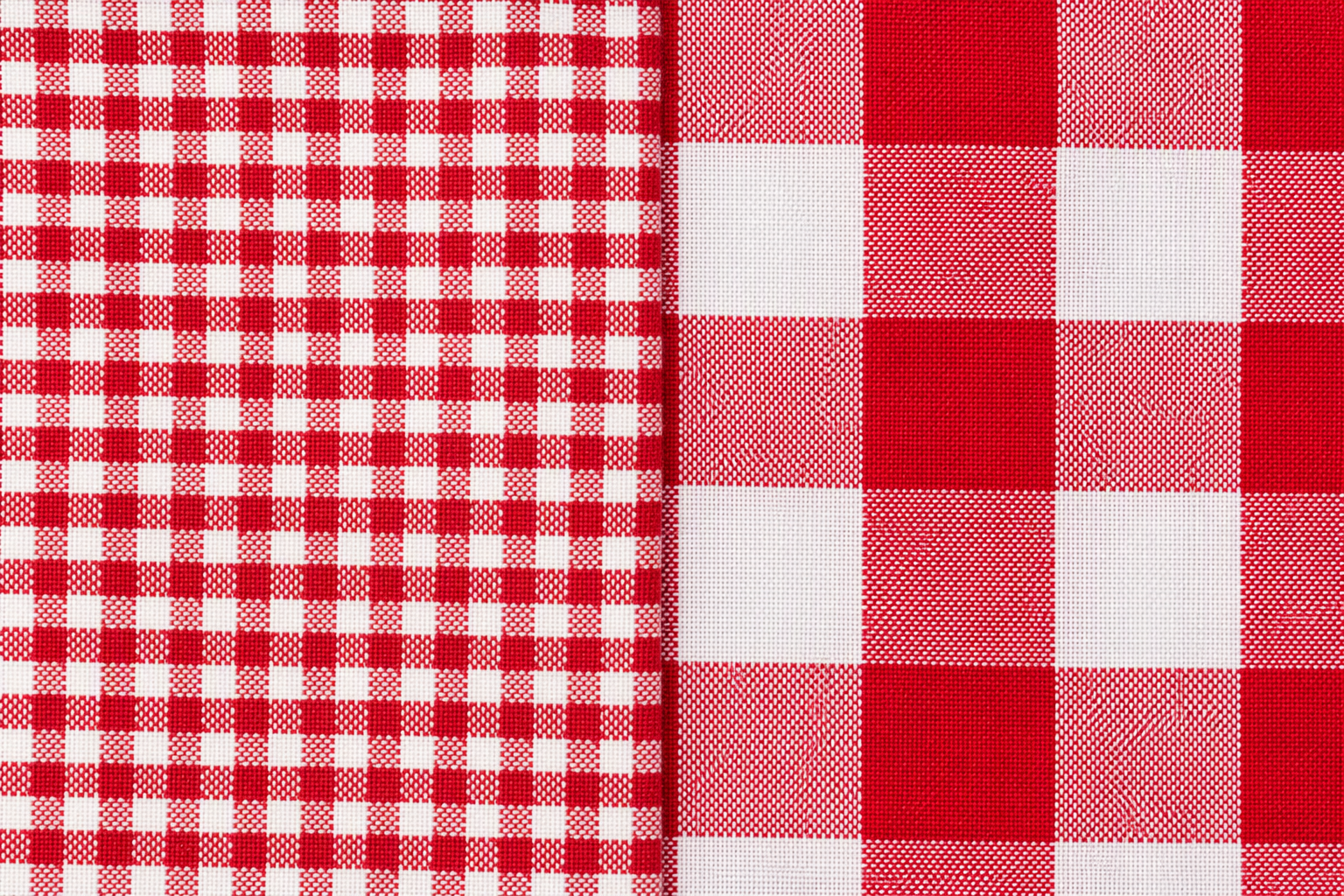
The first thing I look at is the size of the check. This is the detail buyers miss, and it changes the whole read.
- The fine check is the one with the small, dense squares — almost a texture from a distance. It reads calm and clean. This is the one for the smaller table, the café, the place where you want the pattern present but not loud.
- The bold check is the one with the big squares that reads from across the room. This is the one that announces itself. It’s the one for the long farmhouse table, the event table, the place where the cloth is the statement.
For the appreciation, I think the fine check is the more forgiving one. It works in more rooms, with more colours around it, with more tableware. The bold check is the one that makes the room — but it wants the room to be simple around it. Both are good. I just read them differently. The check is the first line of the cloth. Get the scale to the table, and the rest of the appreciation follows.
3. The Colourways: Red Is the Classic, the Palette Runs Wide
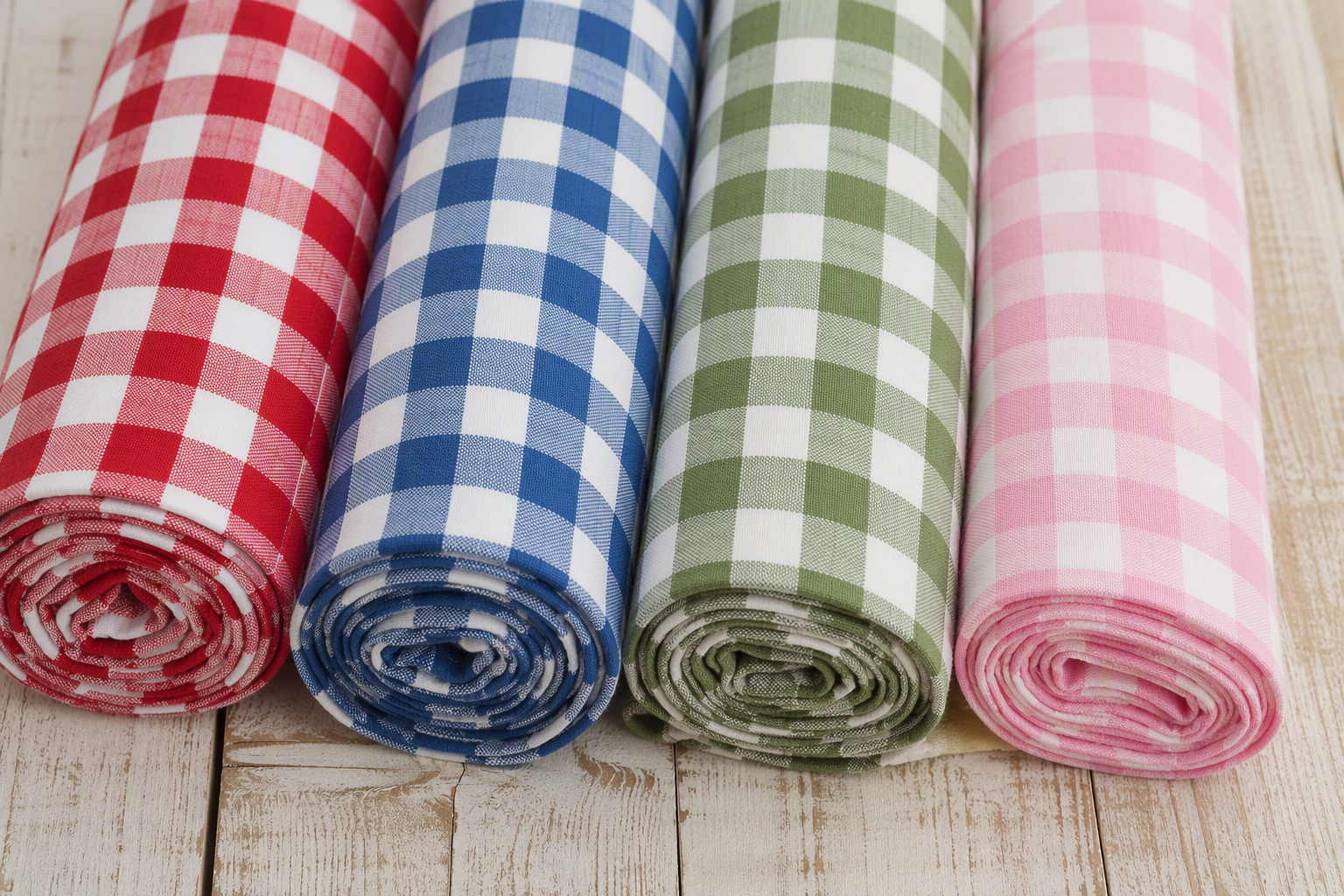
People think gingham is red-and-white, because that’s the one that made it famous. But the palette runs wide, and I like to look at the whole range.
- Red-and-white — the classic. The one everyone knows. The outdoor one, the picnic one, the farmhouse one. You can’t go wrong with it, which is also why it’s everywhere.
- Blue-and-white — the softer classic. It reads calm and clean, a little café. It’s the one that goes with almost any room and any season.
- Green-and-white — the fresh one. Spring and garden. It reads lighter than the red, and it’s the one I reach for when the room wants a breath of colour.
- The pastels — soft pink, soft yellow, the seasonal colours. These are the ones that turn the check from a classic into a season.
The appreciation here is the range. Gingham is a family, and the colourway is the first thing you pick — before the size, before the ruffle. The colour sets the mood, and the check and the ruffle follow it.
4. Red-and-White: The Outdoor Classic
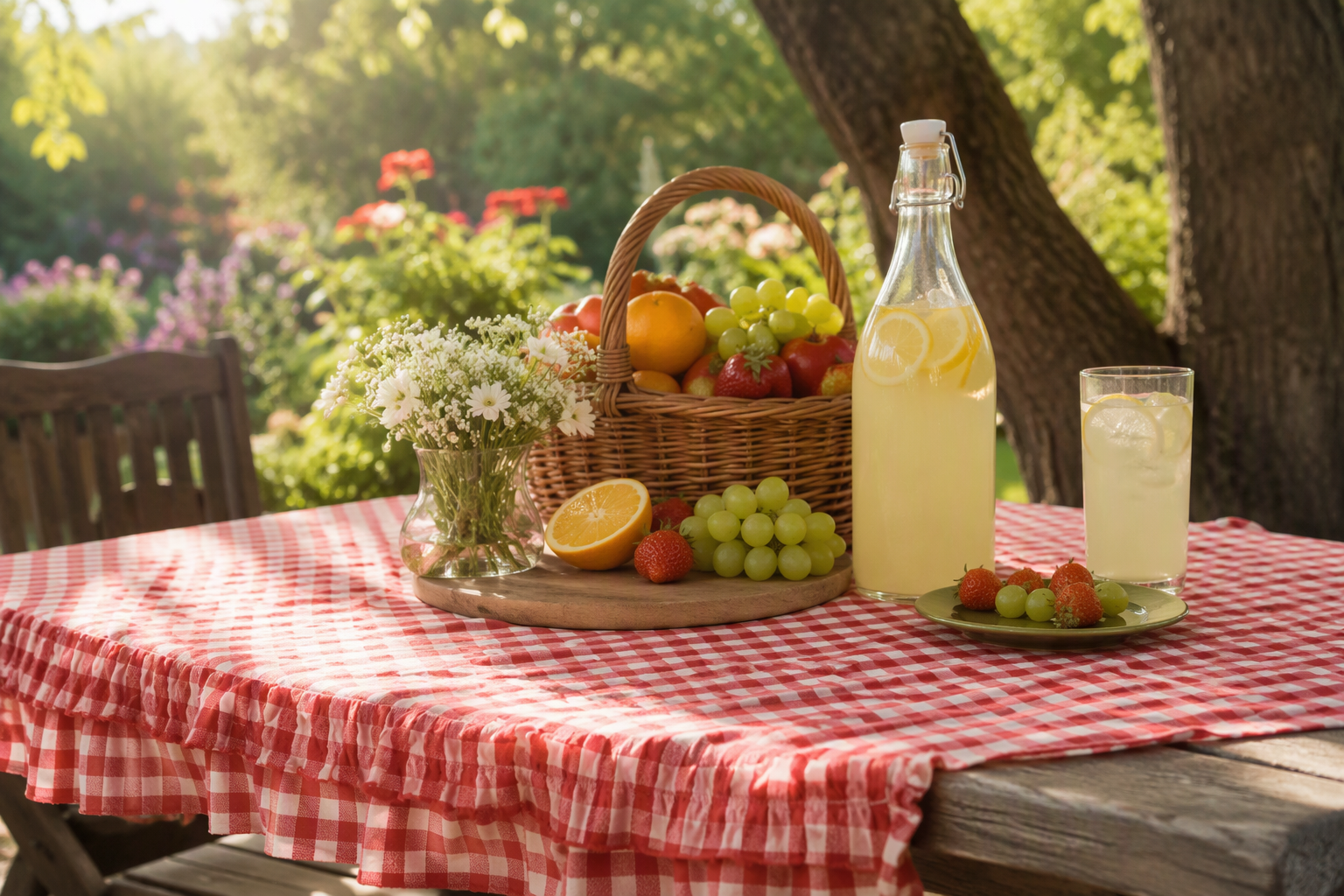
Red-and-white is the one that owns the outdoors. Set it on a garden table and the whole scene reads as summer. The check is bright, the ruffle falls soft over the edge, and the cloth does the decorating without anything else having to.
I appreciate the red-and-white for its ease. It doesn’t need a centerpiece to work. A bowl of fruit, a bottle of lemonade, and it’s done. It’s the cloth that makes a table look set without a lot of effort, and that’s the whole of the farmhouse read. If you’re buying one colourway and it’s the only one, this is the one. It’s the classic for a reason.
5. Blue-and-White: The Café Colourway
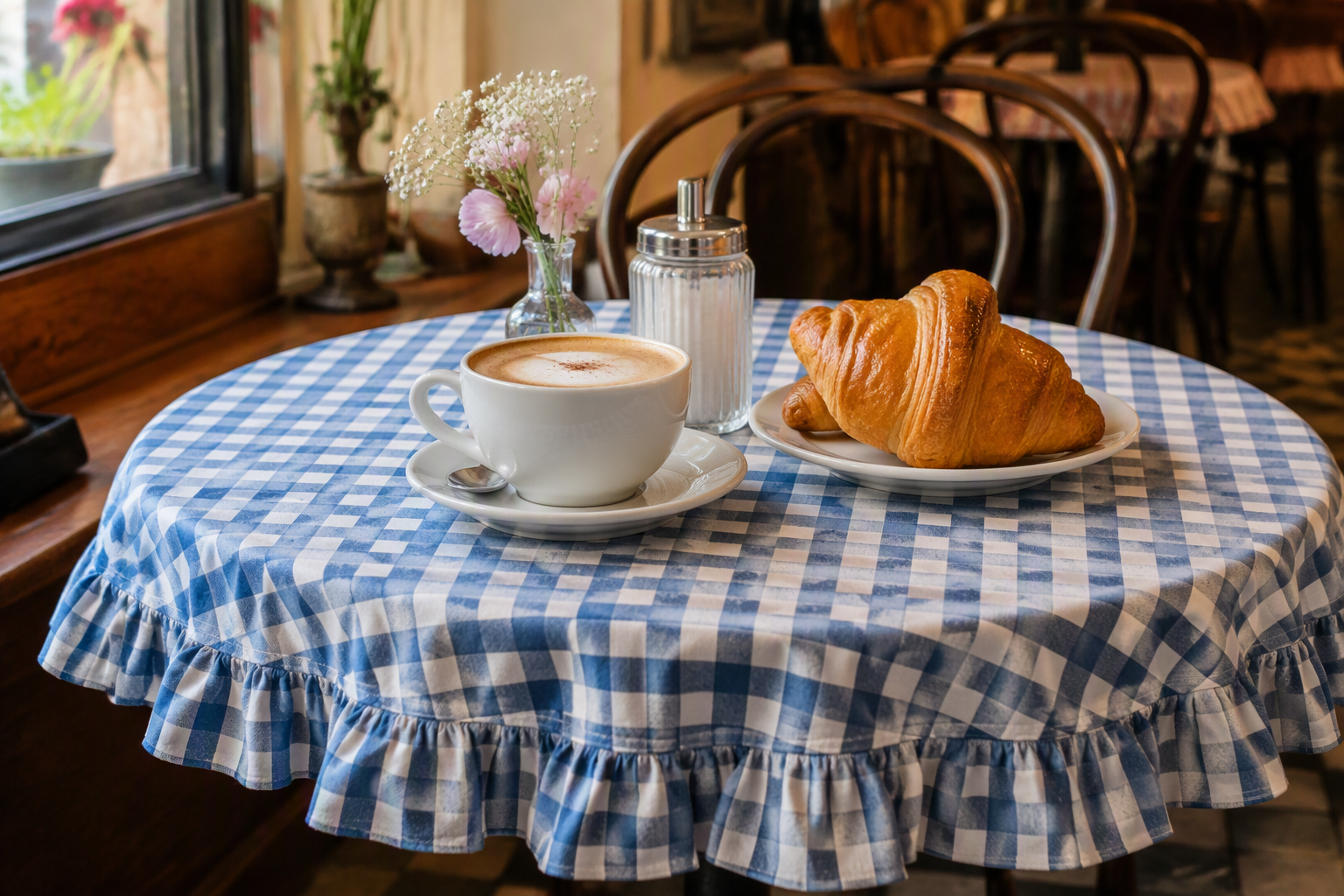
Blue-and-white is the colourway I think of when I picture a café table. It’s calm, it’s clean, and it reads friendly without being loud. On a small round café table it does exactly what you want — it makes the place feel set and a little special, without the pattern fighting the room.
I like the blue for the indoors. It works with wood, with white, with a lot of different tableware. It’s the one that goes in more rooms than any other colourway in the family, and that versatility is what I appreciate about it. The blue is the one I’d spec for a café or a restaurant that wants the check but wants it to sit still and work quietly all day.
6. The Soft Seasonal Colourways
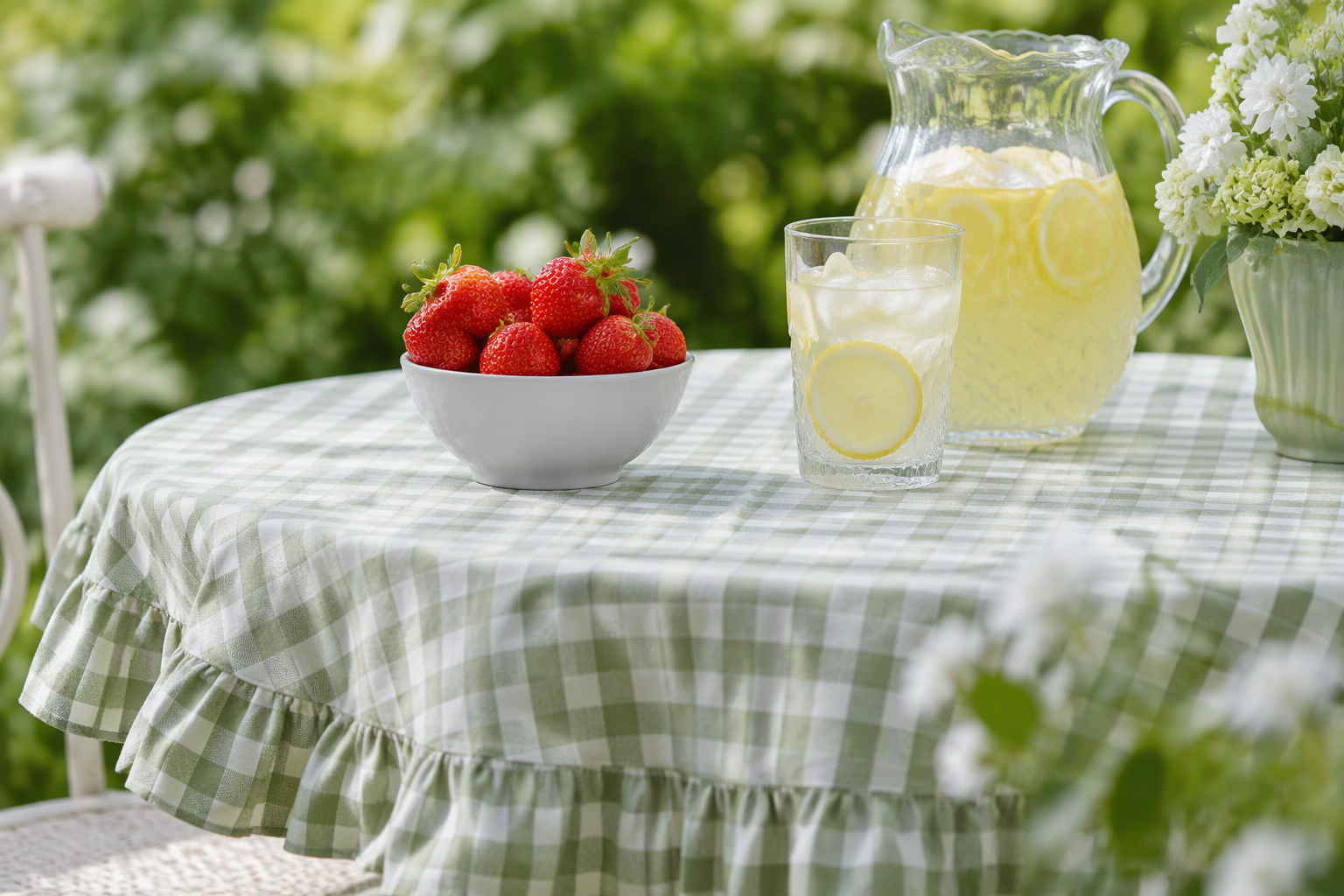
The soft colours are where gingham gets interesting. A pastel green-and-white in spring, a soft pink in the warmer months — these are the ones that turn the classic check into a season. They read light, they read fresh, and they’re the ones buyers ask about when they want the gingham look but want it to feel new.
I appreciate the seasonal colourways for the range they give a program. A café that wants to change with the season can keep the same cloth and swap the colourway. The check stays the same, the ruffle stays the same, and the colour does the seasonal work. The soft colourways are the appreciation of gingham as a program, not a single cloth. One family, a lot of moods.
7. Where It Lives: Farmhouse and Restaurant
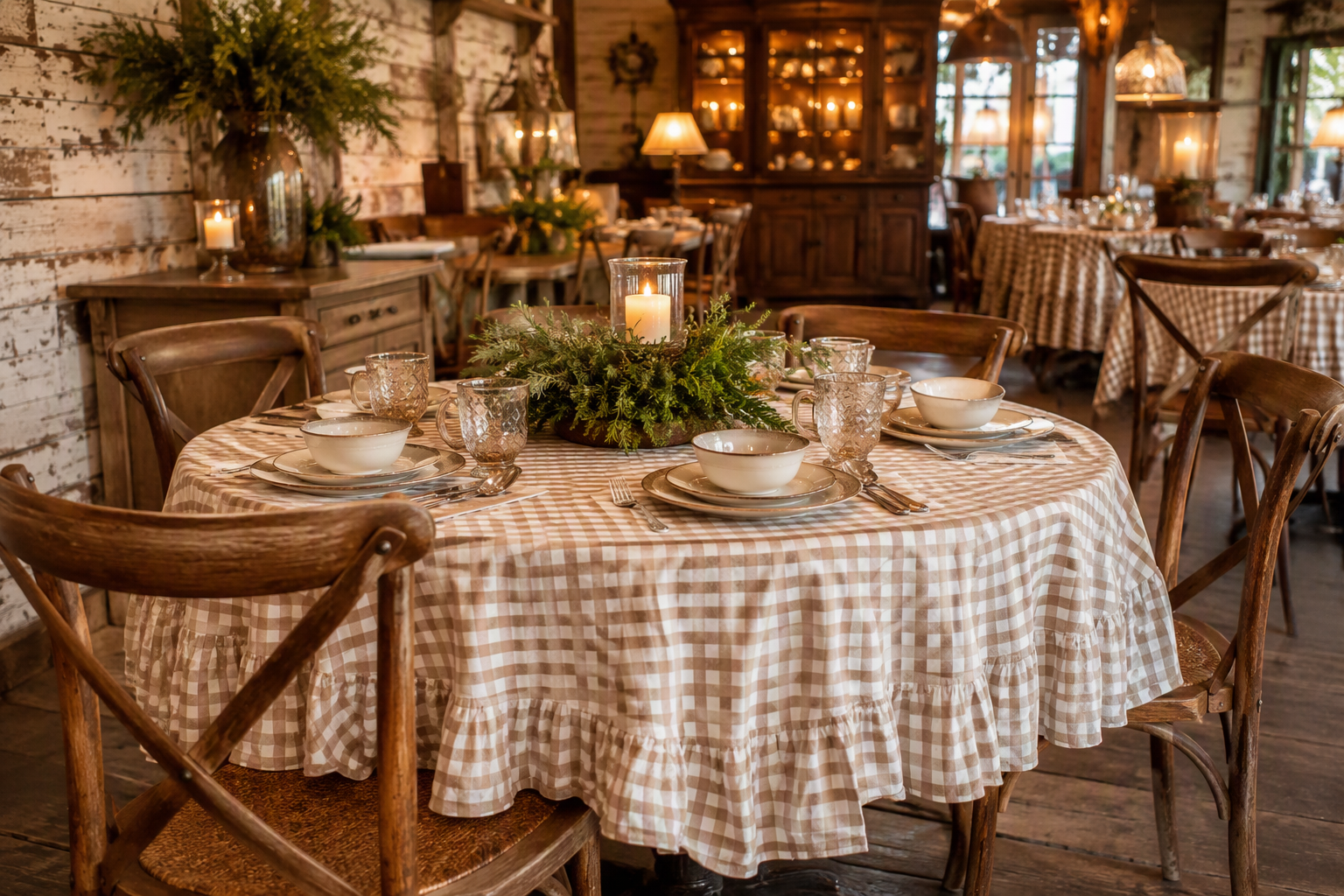
The farmhouse is where the gingham ruffle was born, and it’s still the room it lives in best. Set it on a wooden table and the check reads warm, the ruffle reads finished, and the room reads the farmhouse the way it’s supposed to.
But it’s moved. I see it in the restaurant now, in the café, in the home. The reason it moved is that it works. It’s easy to read, easy to match, and it never looks out of place. A cloth that can move from the farmhouse to the restaurant and still read as itself is a cloth worth appreciating. The gingham ruffle is one of the few patterns that has gone from the country to the city and stayed loved. That travel is the sign of a classic.
8. The Event Read: Round Tables and Weddings
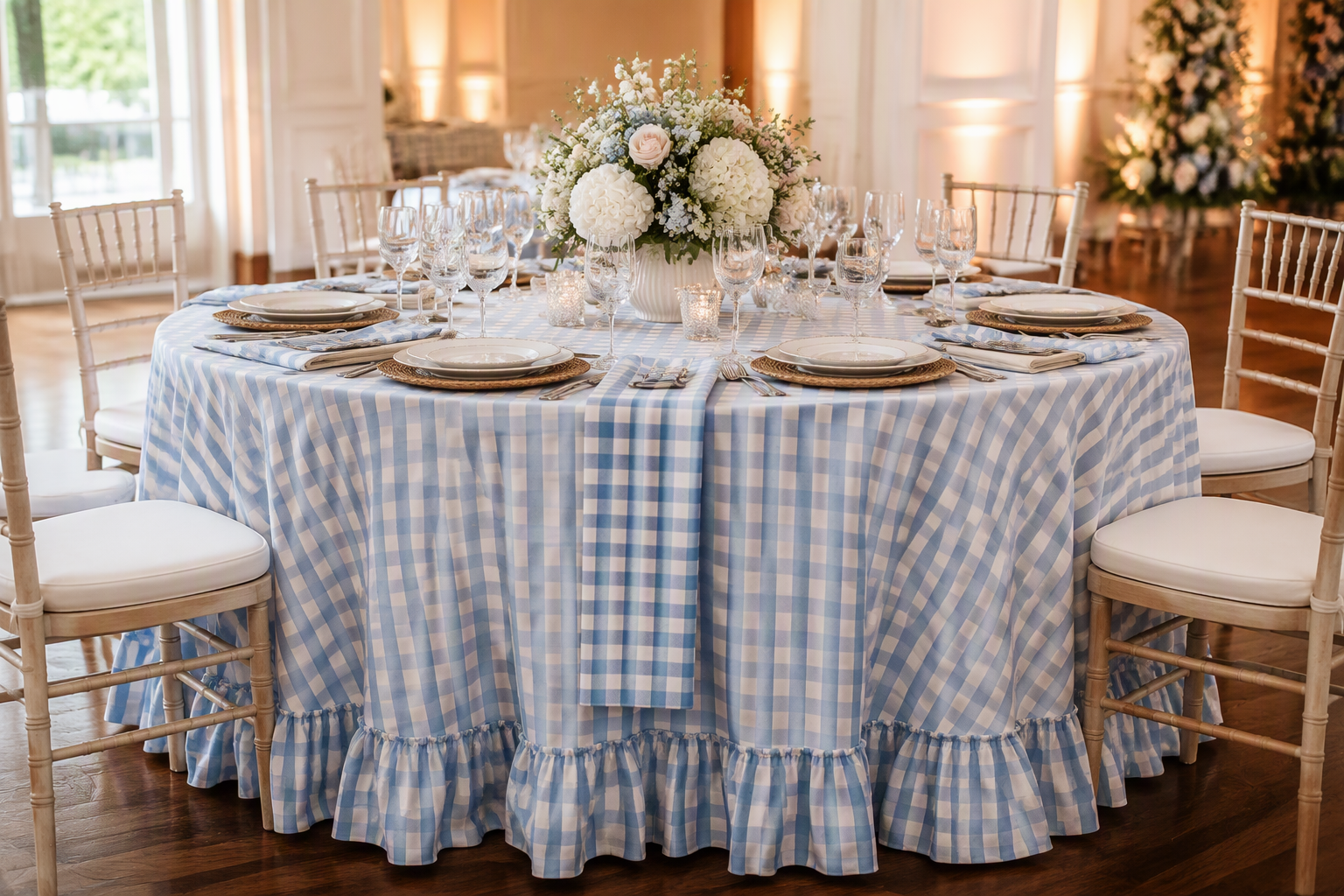
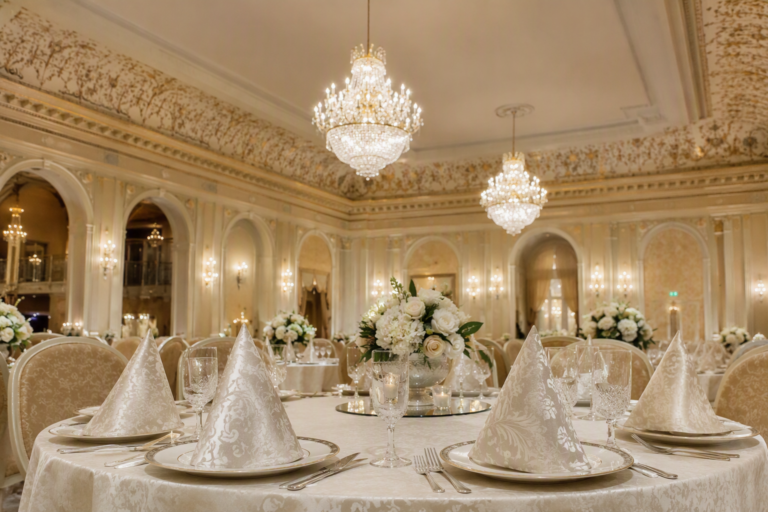
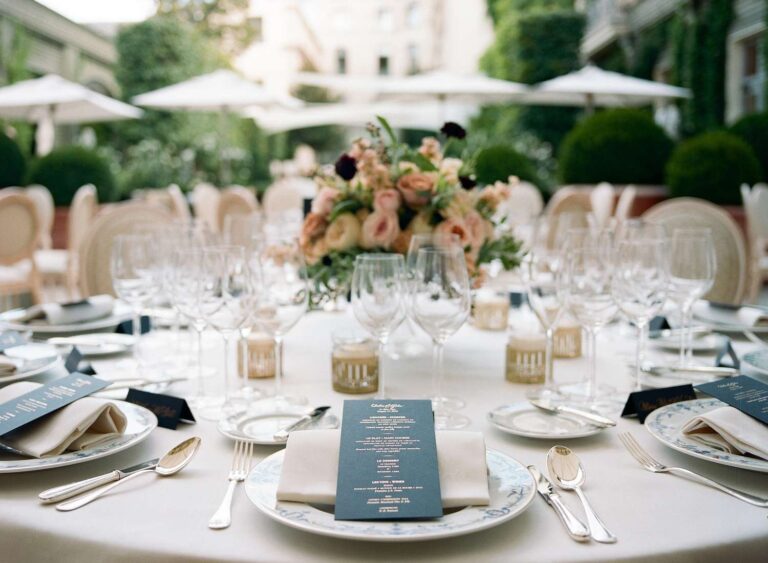
Put the gingham ruffle on a round event table and it reads different again. The ruffle falls evenly around the circle, the check reads clean, and with a matching runner down the middle it becomes a full setting. This is the one I see in the wedding and the event now — the gingham as the soft, warm, not-too-formal table.
For the event, I appreciate the ruffle especially. On a round table the gathered border is what makes the cloth look set, and it’s what reads well in the photograph. The check gives it the pattern, the ruffle gives it the finish, and together they make the table that photographs the way it should. If a buyer wants the event table that feels warm and a little casual without losing the finish, this is the cloth to look at.
9. The Ruffle: The Border That Does the Work
The ruffle is the second half of the appreciation, and it’s the thing buyers ask about least. The check is the eye. The ruffle is the finish.
A flat-hemmed gingham reads as a sheet. A ruffled gingham reads as a set table. That little gathered border is what changes the cloth from something you lay on the table to something that dresses the table. The gathers fall soft over the edge, and they do the work of the border and the finish at the same time.
I read the ruffle by the evenness of the gather. An even gather falls the same all the way around, and it looks made on purpose. An uneven gather looks like a fault. The ruffle ratio — how much extra fabric is gathered into the border — is what sets the fullness. We cover the ruffle ratio and the drape in our ruffle tablecloth guide; for the gingham, I just want the gather to be even and the fall to be soft.
The ruffle is what makes the gingham ruffle. Take it off and you’ve just got a gingham. Keep it on and you’ve got the classic.
10. The Weave, the Hand, and the Care
The weave of the gingham is a plain weave — the simple over-under that gives the check its clean edge. The hand is what you want to check: a good gingham should feel like a cloth, not a film. The check should be crisp at the square, and the cloth should drape instead of standing stiff. The yarn-dyed check is the detail that separates a gingham from a cloth printed to look like one, the way we talk about it in our checked and striped tablecloth guide.
On the care, gingham is the forgiving one. It’s made to wash, and a woven check is made to wash a lot. A couple of things to read before you order:
- The check is yarn-dyed, so it holds the wash and the colour the way a print won’t. This is the detail that makes gingham last.
- Wash it cool, dry it low, and the check keeps its edge. The ruffle wants a light press to keep the fall soft.
- Match the colour to the lot, the way you match any dyed cloth, so the program doesn’t show a line across the tables.
Gingham is the cloth you buy to use, not to keep. Appreciate it that way, and it’ll work for a long time.
11. A Buyer’s Appraisal: What to Read Before You Order
When a buyer brings me a gingham ruffle, this is what I read, in order:
- The check scale first — fine or bold, and does it fit the table and the room.
- The colourway second — the mood, and does it match the program.
- The ruffle third — the evenness of the gather, and the fullness of the fall.
- The hand fourth — does it feel like a cloth, and does it drape.
- The lot last — the colour matched to the run, so the program holds.
A sample is the piece that carries the decision. I’d want to read it on the table, in the light of the room, with the ruffle falling the way it will fall in use. The gingham ruffle is a cloth you appreciate by looking, and the sample is where the looking happens.
12. Gingham Ruffle FAQs
Is fine check or bold check the better one?
It depends on the table and the room. The fine check is the more forgiving one — it works in more rooms and with more around it. The bold check is the one that makes the room, but it wants the room to be simple. Read the check to the table, and you’ve got the answer.
Why does the ruffle matter on a gingham?
Because the flat-hemmed gingham reads as a sheet, and the ruffled one reads as a set table. The gathered border is the finish that changes the cloth from something you lay down to something that dresses the table. It’s the second half of the appreciation.
Which colourway should a buyer start with?
Red-and-white if you want the classic and the outdoors. Blue-and-white if you want the one that works indoors in more rooms. The soft seasonal colours if you want the program to change with the season. Start with the colour, and the check and the ruffle follow.
Is gingham good for a restaurant that washes a lot?
Yes — gingham is the forgiving one. The check is woven in, dyed before the weave, so it holds the wash the way a print won’t. Wash it cool, dry it low, press the ruffle light, and it’ll work for a long time.
Final Thoughts
A gingham ruffle tablecloth is the kind of cloth you appreciate by looking. The check is the eye, the ruffle is the finish, and the colour is the mood. None of them is fancy on its own. Together they make the farmhouse classic that has moved from the country to the city and stayed loved. That’s the thing worth reading: a cloth that settles a room without asking for it.
We supply gingham ruffle tablecloths to your specification — the check scale and the colourway, the ruffle and the hand, with a sample read on the table in the light of the room before the full run. Contact us for gingham ruffle designs, samples, sizing, MOQs, and wholesale pricing.