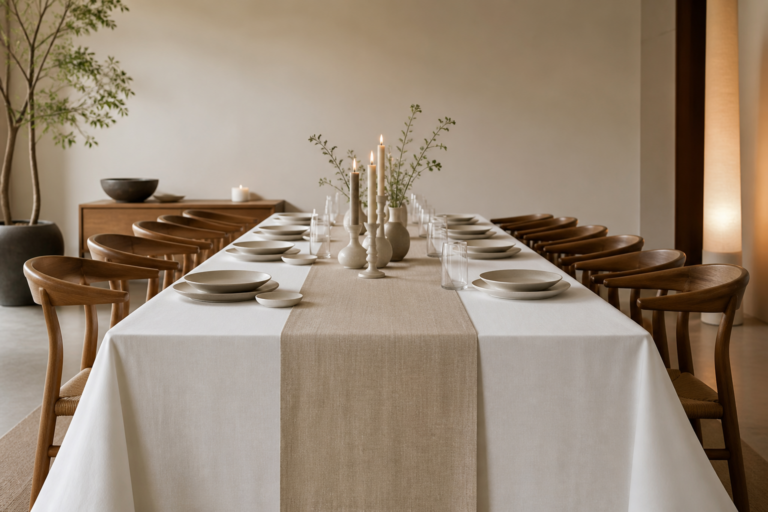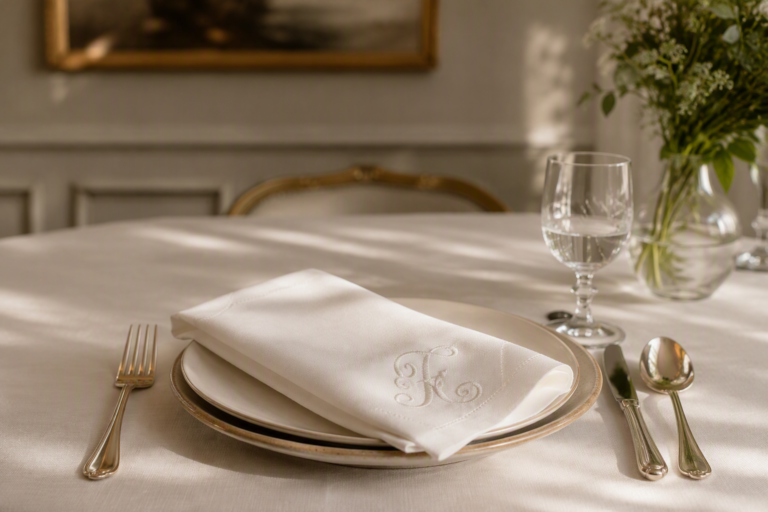
Ask any hotel or event supplier what the most common ordering mistake is, and the answer is usually the same: the wrong tablecloth size. A cloth that is a few inches too short looks unfinished — too long, and guests trip or chairs catch the fabric. For B2B buyers ordering in volume, the cost of a size error multiplies across every piece. This guide explains drop, table sizes, and how to calculate the right cloth every time.
1. What Is “Drop”?
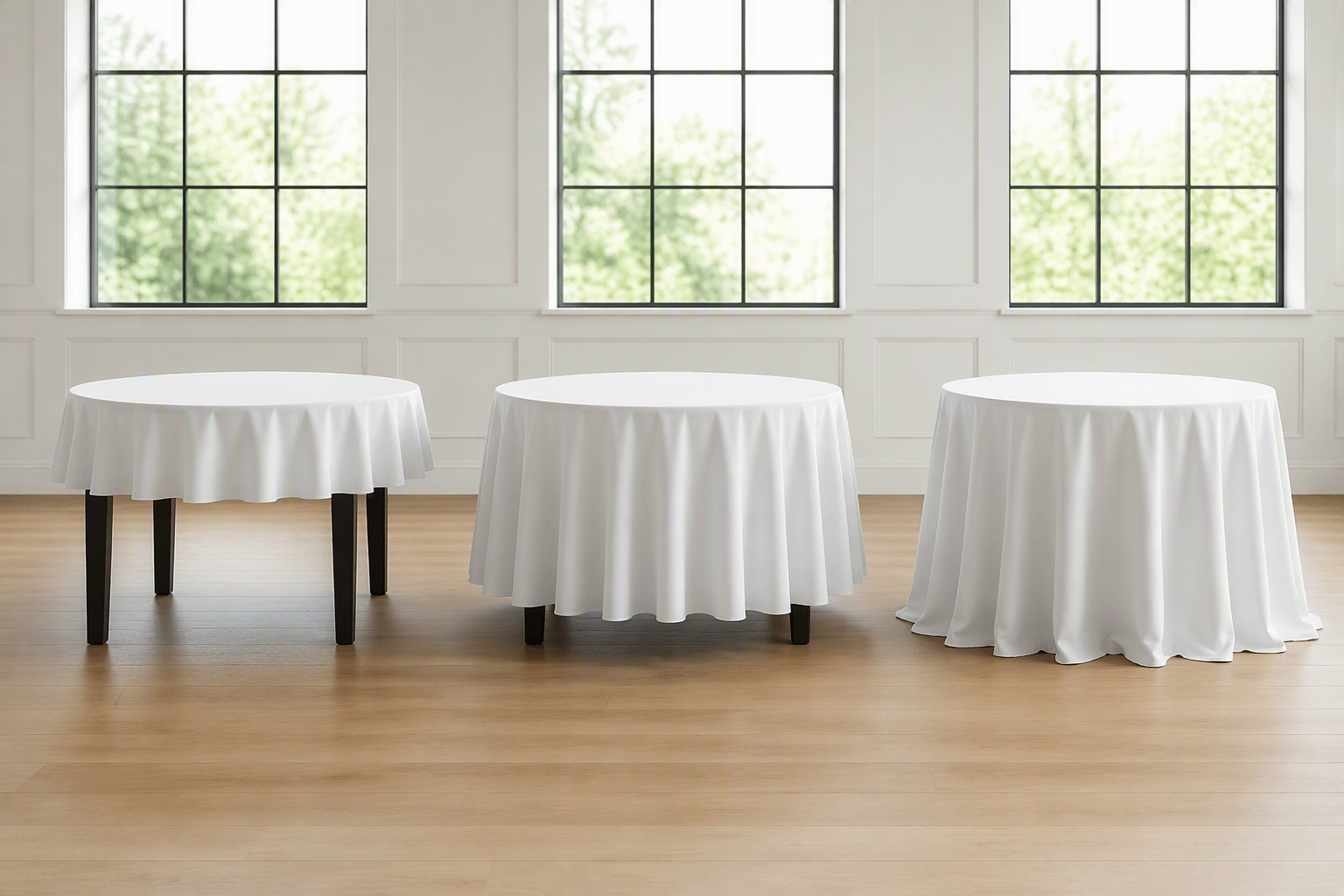
Drop is the distance from the edge of the tabletop down to the bottom of the tablecloth. It determines how formal and finished a table looks. There are three standard choices:
- Short drop (4–8 inches): Casual and practical — popular for buffets, catering stations, and everyday restaurant use where guests sit close.
- Standard drop (10–12 inches): The classic choice for dining — long enough to look proper, short enough that chairs and knees clear the fabric comfortably.
- Floor-length drop (to the floor): Formal and elegant — used for weddings, galas, and banquet round tables to create a polished, dramatic look.
2. Standard Table Sizes and Matching Cloths
Most commercial tables come in a few standard sizes. Here are the most common matches (with a standard 10–12 inch drop):
| Table type | Table size | Recommended cloth |
|---|---|---|
| Round banquet | 60″ (152 cm) | 84″ round |
| Round banquet | 72″ (183 cm) | 96″ round |
| Round banquet | 90″ (229 cm) | 114″ round |
| Round banquet | 120″ (305 cm) | 132″ round (floor-length) |
| Rectangle banquet | 30″ x 72″ | 60″ x 96″ |
| Rectangle banquet | 30″ x 96″ | 60″ x 120″ |
| Rectangle 6-ft trestle | 30″ x 72″ | 60″ x 120″ (floor-length) |
| Square dining | 36″ x 36″ | 60″ x 60″ |
3. How to Measure and Calculate
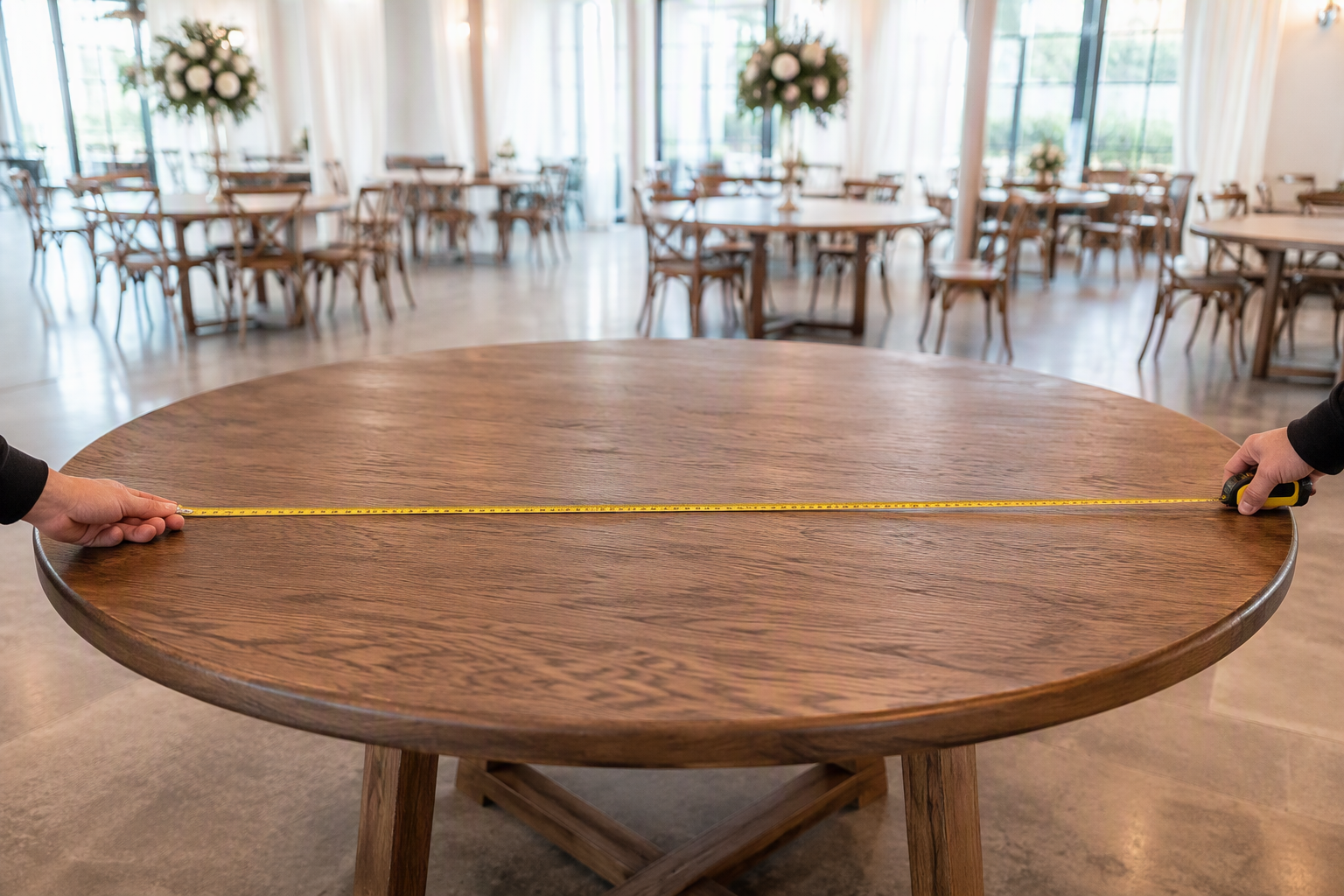
Ordering the right size is simple math. For round tables: add twice your desired drop to the table diameter. For example, a 72-inch table with a 12-inch drop needs a 72 + 12 + 12 = 96-inch round cloth. For rectangle and square tables: add twice the drop to both the length and the width. A 30 x 96-inch table with a 12-inch drop needs a 30 + 24 = 54, so 60-inch wide cloth, and 96 + 24 = 120-inch length — a 60 x 120-inch cloth.
Two practical rules: always measure the actual table (manufacturers’ “standard” sizes vary), and if you are between two cloth sizes, choose the larger one — a slightly longer drop looks intentional, while a cloth that is too short cannot be fixed.
4. Round Tables: The Banquet Standard
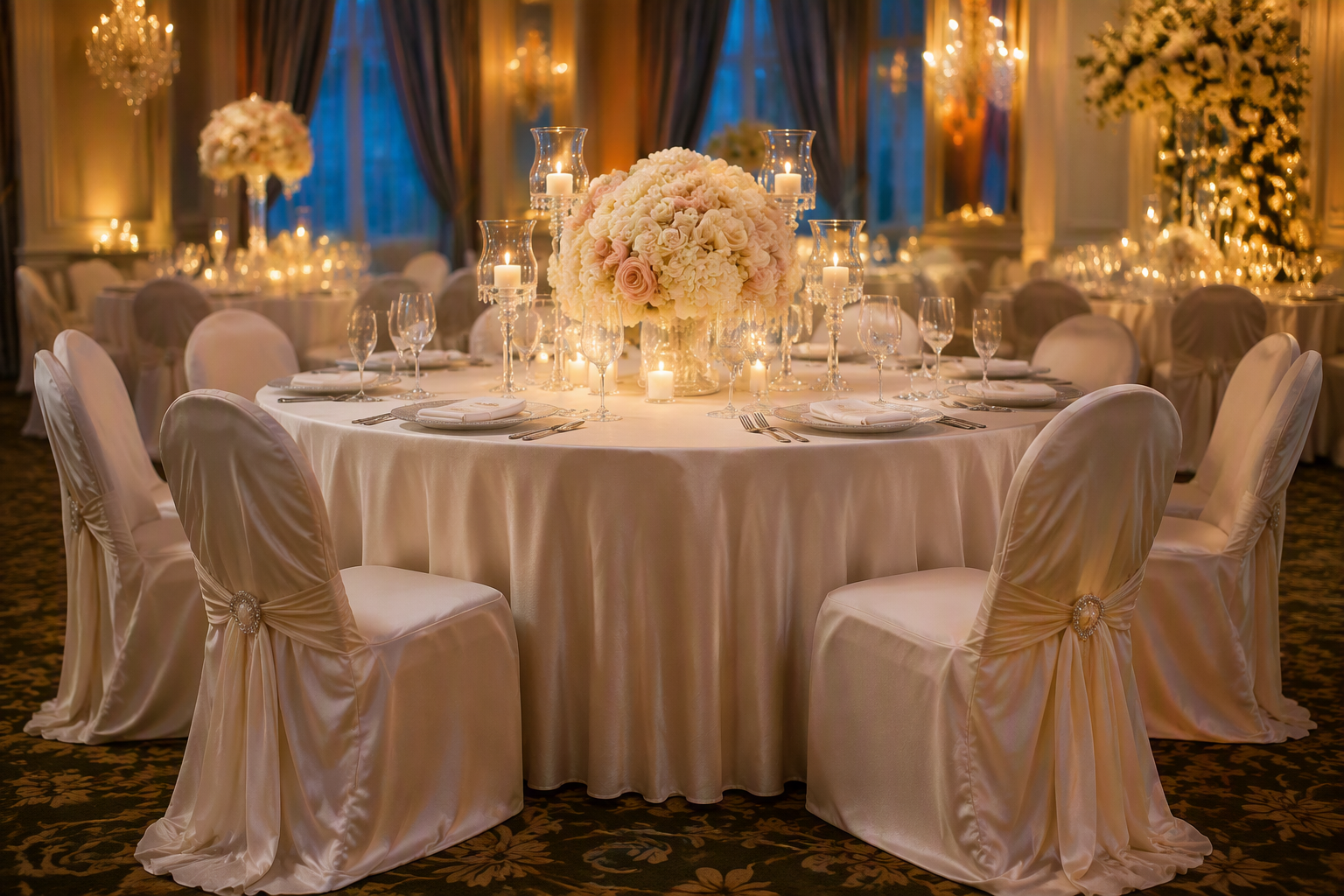
Round banquet tables dominate the event industry — and their cloth sizes follow a predictable ladder. The 60-inch and 72-inch rounds take 84-inch and 96-inch cloths for standard drops; the 90-inch round takes a 114-inch cloth. For formal weddings, the 120-inch round with a floor-length 132-inch cloth is the classic combination. When ordering for a venue, check the actual table diameter first — older tables are often slightly larger or smaller than their nominal size.
5. Rectangle and Trestle Tables
Rectangle tables are used for buffets, conferences, and head tables. The key measurement is width plus drop, because a cloth must clear the table’s legs and any skirting. For 30-inch wide tables, a 60-inch wide cloth gives a 15-inch drop per side — the standard for floor-length presentation with skirting underneath. Lengths follow the same formula, and 60 x 96, 60 x 120, and 60 x 144 inches cover most standard configurations.
6. Common Size Mistakes to Avoid
- Ordering from memory. Table sizes vary by manufacturer — always measure the actual tables in your venue.
- Confusing diameter and circumference. A 120-inch cloth is not “12 feet around” — it is 10 feet across the top.
- Forgetting the drop on both sides. For rectangles you add the drop twice to each dimension — a common double-error source.
- Skimping on formal events. A 6-inch drop at a wedding looks casual; budget for floor-length cloths when the occasion calls for it.
- Buying one size for all tables. Venues with mixed table sizes need matched cloths per table — confirm your inventory covers each size.
7. Buying Tips for B2B Orders
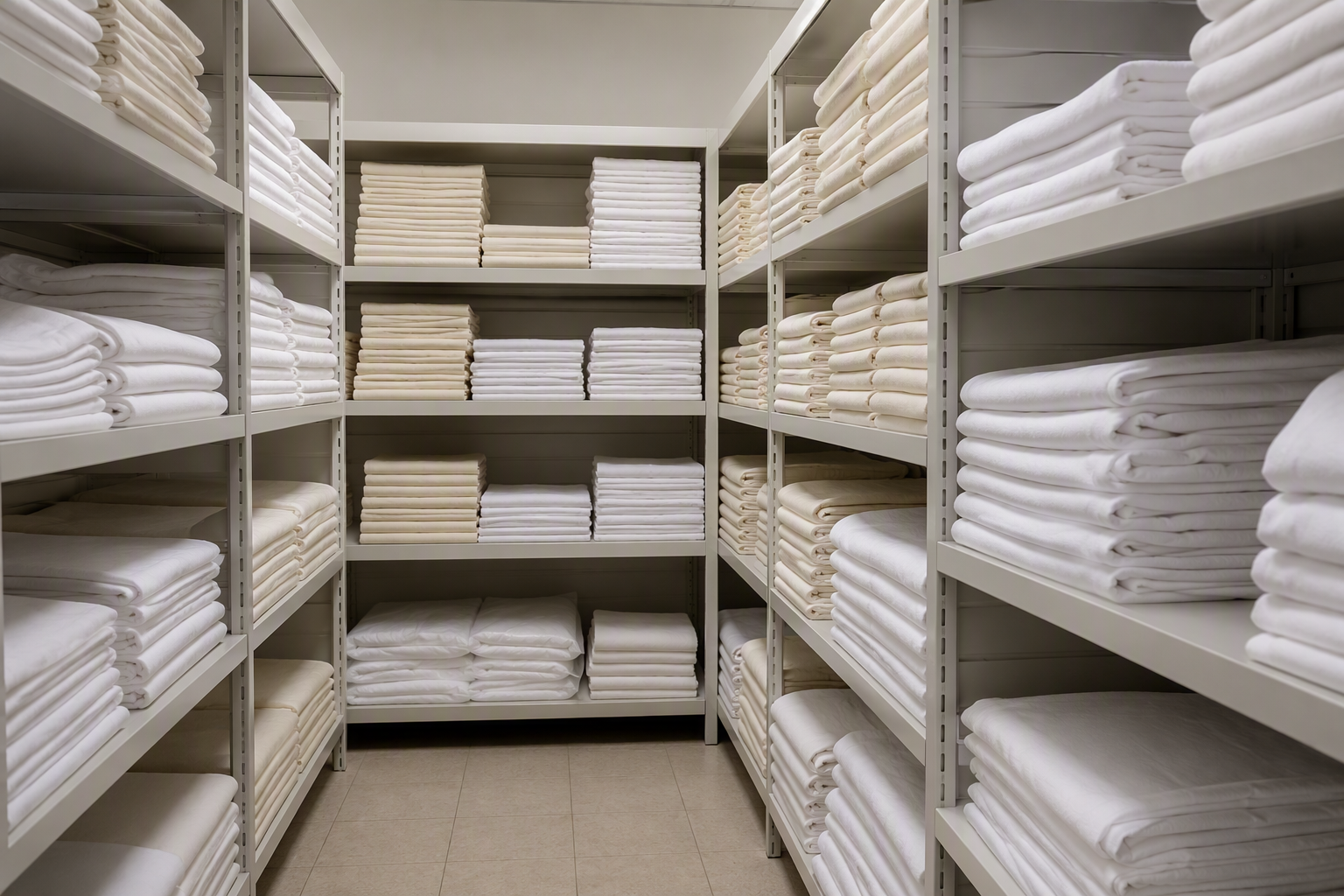
- Inventory your tables first. Count tables by size and shape before ordering — most venues need a mix of round and rectangle cloths.
- Plan for a 10–15% spare ratio. Hotels and caterers typically keep spares for stains, tears, and same-day turnovers.
- Standardize your drops. Pick one standard drop per occasion type so all tables in a room look consistent.
- Order custom sizes for odd tables. If your tables are non-standard, custom-sized cloths are worth the small premium and longer lead time.
- Bundle your linens. Ordering cloths with matching runners, napkins, and chair covers in one shipment simplifies logistics and improves pricing.
8. Tablecloth Size FAQs
What drop should I use for a wedding?
Floor-length (to the floor) is standard for formal weddings and galas. For casual or outdoor receptions, a 12–15 inch drop still looks polished.
How much bigger should a tablecloth be than the table?
Add twice your chosen drop to each dimension — that is the entire calculation. For a standard 10–12 inch drop, add 20–24 inches to the diameter or to each side measurement.
Can I get custom tablecloth sizes?
Yes — most manufacturers offer custom sizes for non-standard tables. Custom orders need accurate measurements, confirmed samples, and longer lead times, so plan ahead.
Should I order the same size for all my tables?
Only if the tables are the same size. Mixed venue furniture needs matched cloths per table size — this is one of the most common oversights in bulk ordering.
Final Thoughts
Getting tablecloth sizes right is simple once you understand drop: measure the table, decide the drop, add twice the drop to each dimension, and order a small spare ratio. It saves returns, keeps tables looking consistent, and prevents last-minute rental panic — the kind of detail that separates professional buyers from costly guesswork.
Planning a linen order? We manufacture and customize tablecloths, runners, napkins, and event linens in our own factory — in standard and custom sizes, with consistent quality and reliable lead times. Contact us for a size chart, samples, MOQs, and wholesale pricing.