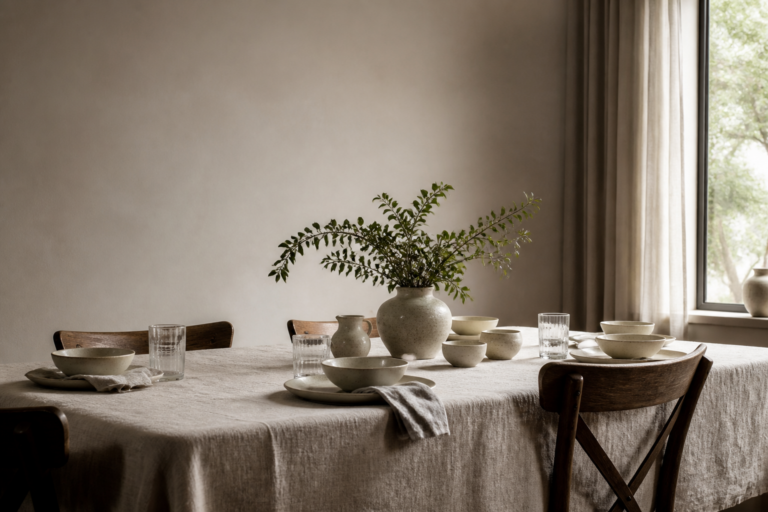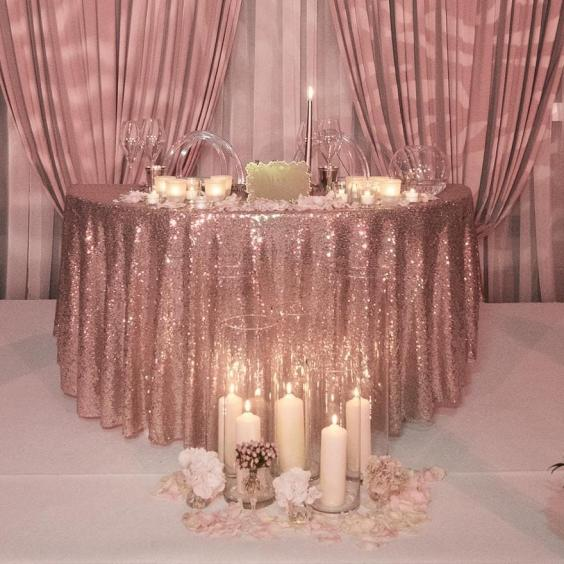
Linen napkins can cost one dollar each — or fifteen. Both may be called “linen,” and both may look similar in a product photo. But the difference between a real, well-made linen napkin and a cheap imitation is enormous: in feel, in durability, in how it looks on the table after a year of use. This guide shows you how to tell them apart before you buy, the way textile buyers do.
1. Real Linen vs. Imitation “Linen”
The first thing to check is what the napkin is actually made of. Real linen is woven from flax fibers — the plant-based fiber prized for its strength, breathability, and natural luster. A quality linen napkin contains a high percentage of flax (look for “100% linen” or “linen blend” with flax clearly listed). Cheap “linen-look” napkins are often 100% polyester or cotton-polyester blends, textured and printed to imitate linen’s slubby surface. Imitation can look convincing on screen, but it does not breathe, soften, or age like real flax linen — and it often pills and stiffens instead.
2. Fabric Weight and Density
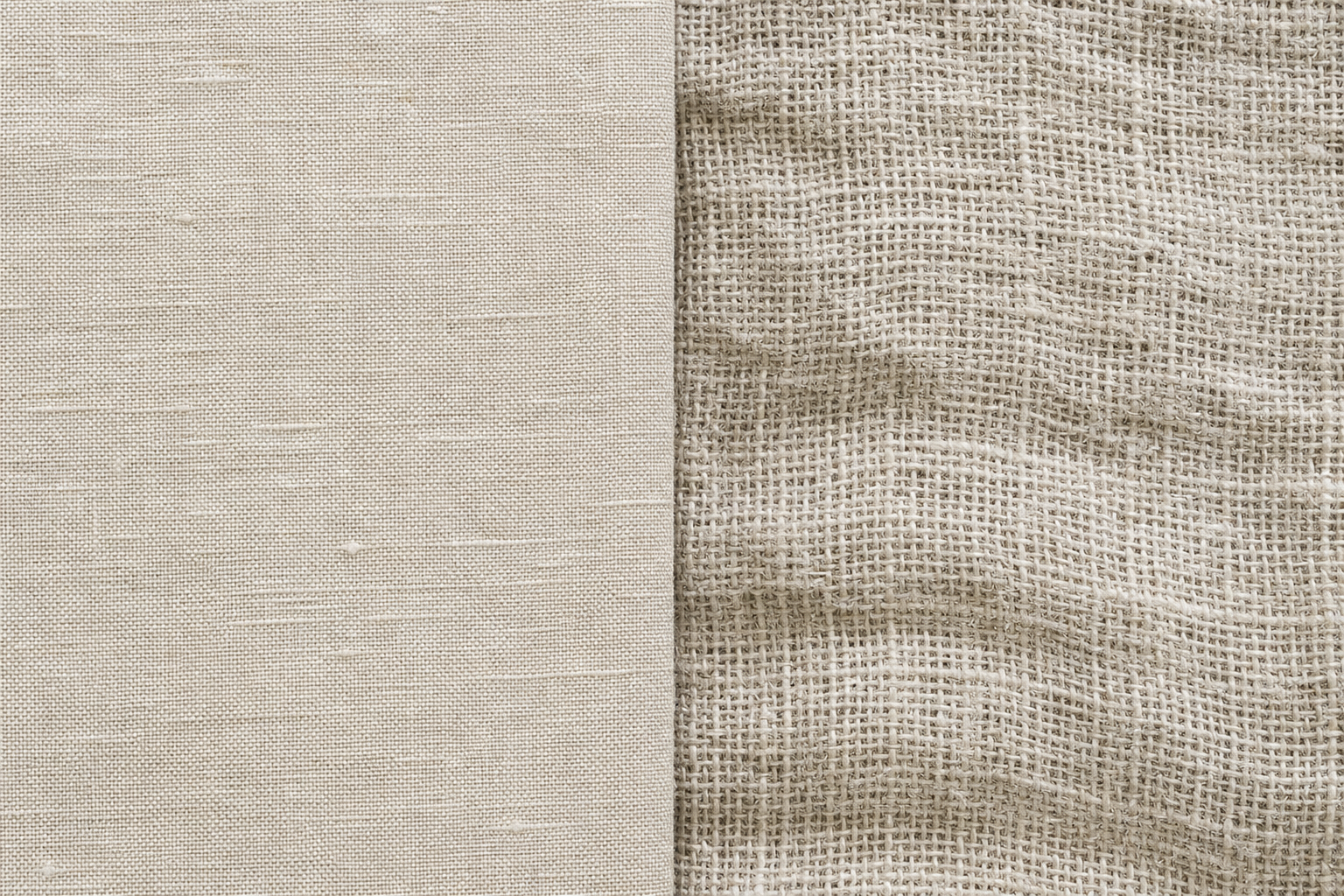
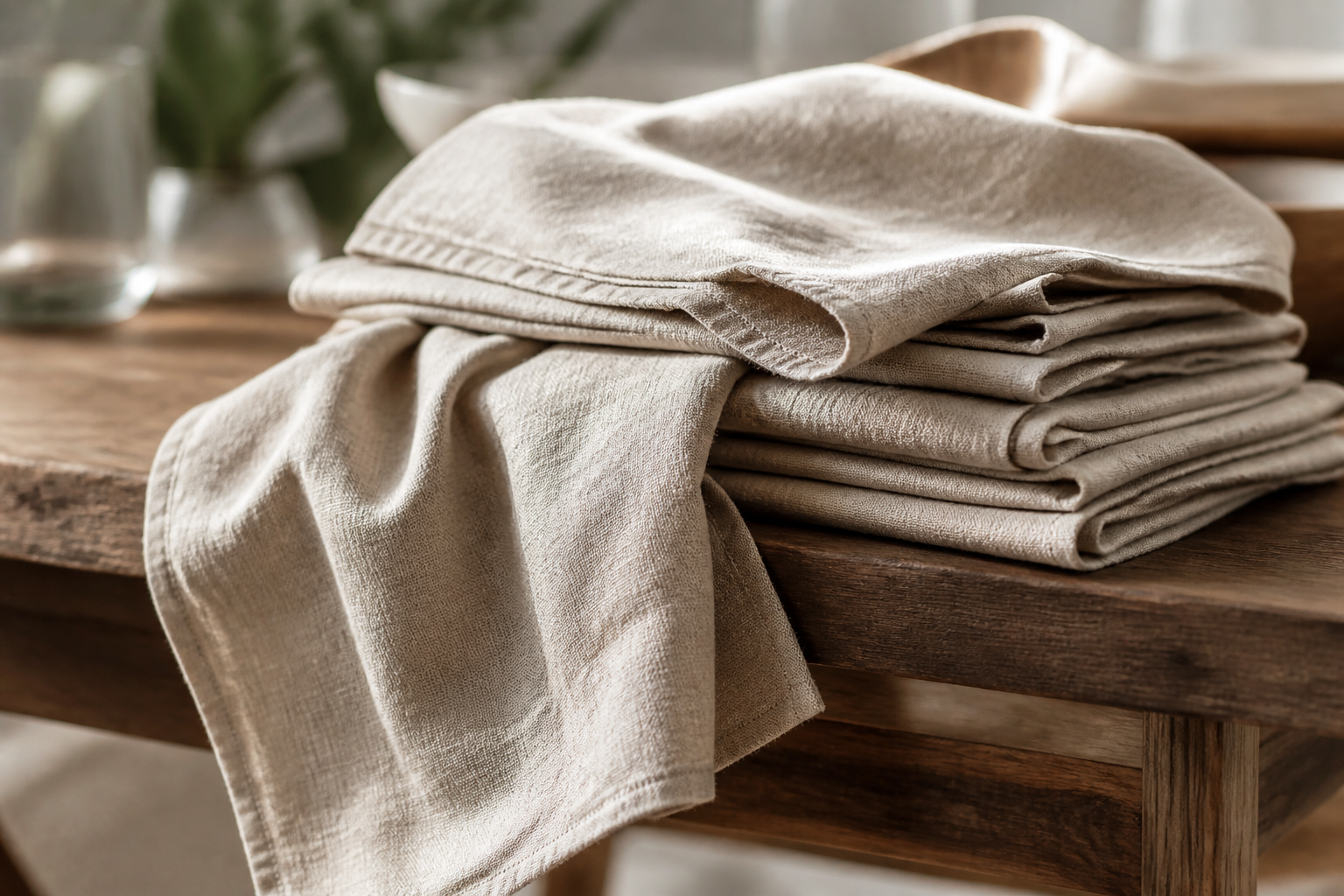
Quality linen napkins feel substantial. A good one has a dense, even weave with enough weight to drape beautifully and absorb well — typical quality linen napkins run 150–220 gsm. Cheap ones feel thin and papery, with a loose weave you can see through when held to the light. Rub the surface: real linen has a characteristic cool, crisp-then-soft feel with subtle natural slubs; cheap imitation feels slick, stiff, or rough in a synthetic way.
3. The Weave and Finish
Look at the weave closely. Fine linen yarns produce a smooth, even surface with a soft natural sheen — the hallmark of good flax. Cheap linen-look fabrics show uneven yarn, a fuzzy or “hairy” surface, and inconsistent texture that signals low-quality fiber or heavy synthetic content. Finishing matters too: quality linen goes through proper washing and softening (and often stone-washing) that gives it that sought-after relaxed, broken-in feel. If the napkin arrives stiff as cardboard, it is either low-grade linen or an imitation that will never soften properly.
4. The Hem and Corners
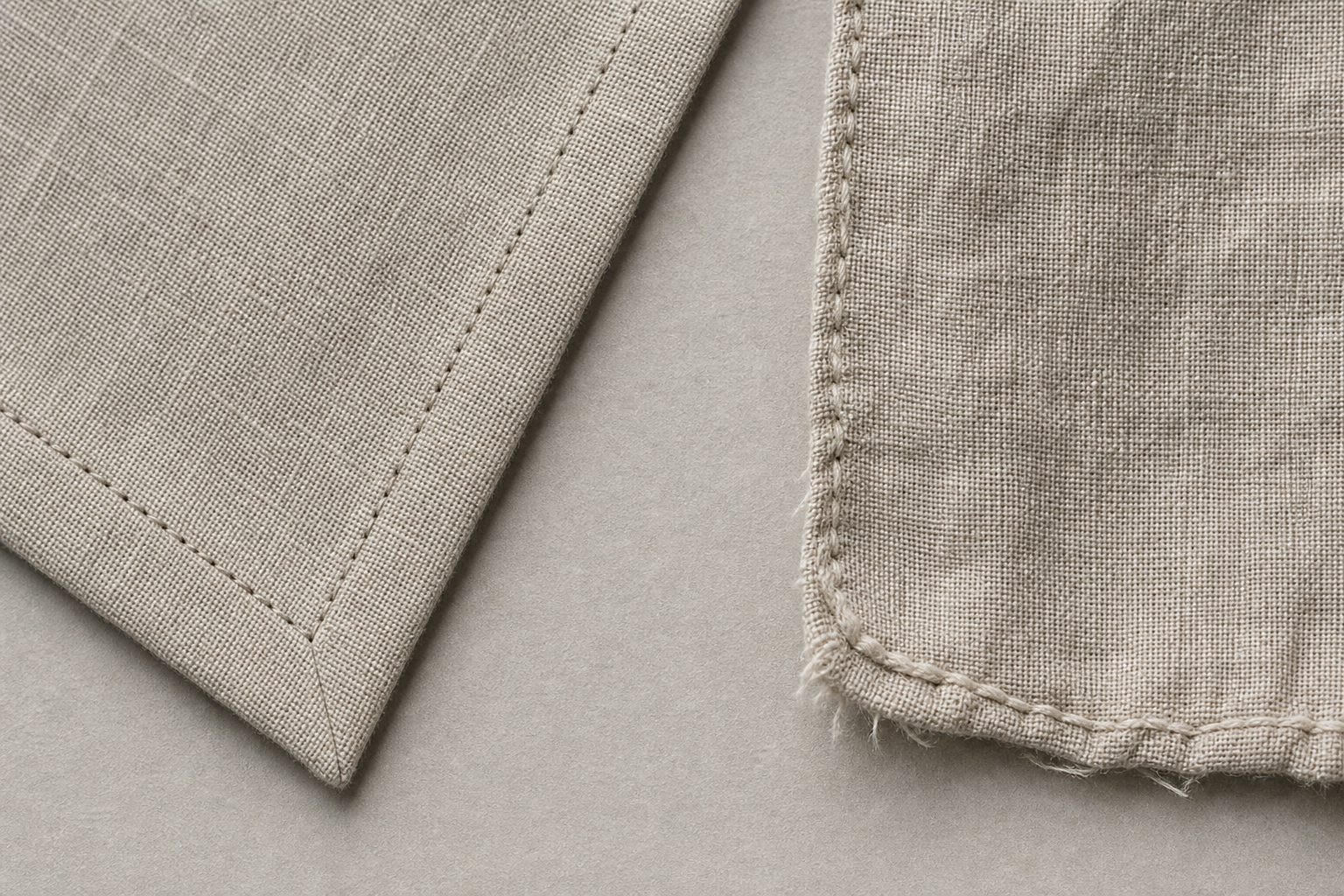
Workmanship is where good linen napkins earn their price. Quality napkins have clean, even hems with mitered corners — the corner folds are crisp, symmetrical, and stitched tight. Cheap napkins have rolled or single-fold hems, uneven stitch spacing, wavy edges, and loose threads that fray in the first wash. Run your fingers along the edge and inspect the corner: a well-made linen napkin feels firm and finished; a cheap one feels flimsy and unfinished.
5. Color and Dyeing
Natural linen has a beautiful, slightly irregular tone — ecru, oatmeal, and stone shades are part of its charm. Good dyed linen uses quality dyes with proper colorfastness: colors are even, deep, and stay true through many washes. Cheap linen (or linen-look) napkins fade quickly, show uneven dyeing, and may bleed onto other linens in the wash. When ordering white or natural shades, check that the tone is clean and consistent across the batch — a sign of proper bleaching and finishing.
6. Shrinkage and Durability
Linen naturally shrinks — but good linen is pre-shrunk before cutting, so the finished napkin keeps its size and square shape wash after wash. Cheap linen shrinks unevenly: napkins come out of the dryer crooked, edges pull, and the weave skews. Durability follows the same pattern. Flax is one of the strongest natural fibers — a quality linen napkin softens and improves with use and can last for years. Cheap linen-look fabric pills, fades, and frays within months. Ask for shrinkage data and wash-test results before ordering in volume.
7. How to Inspect Before You Buy
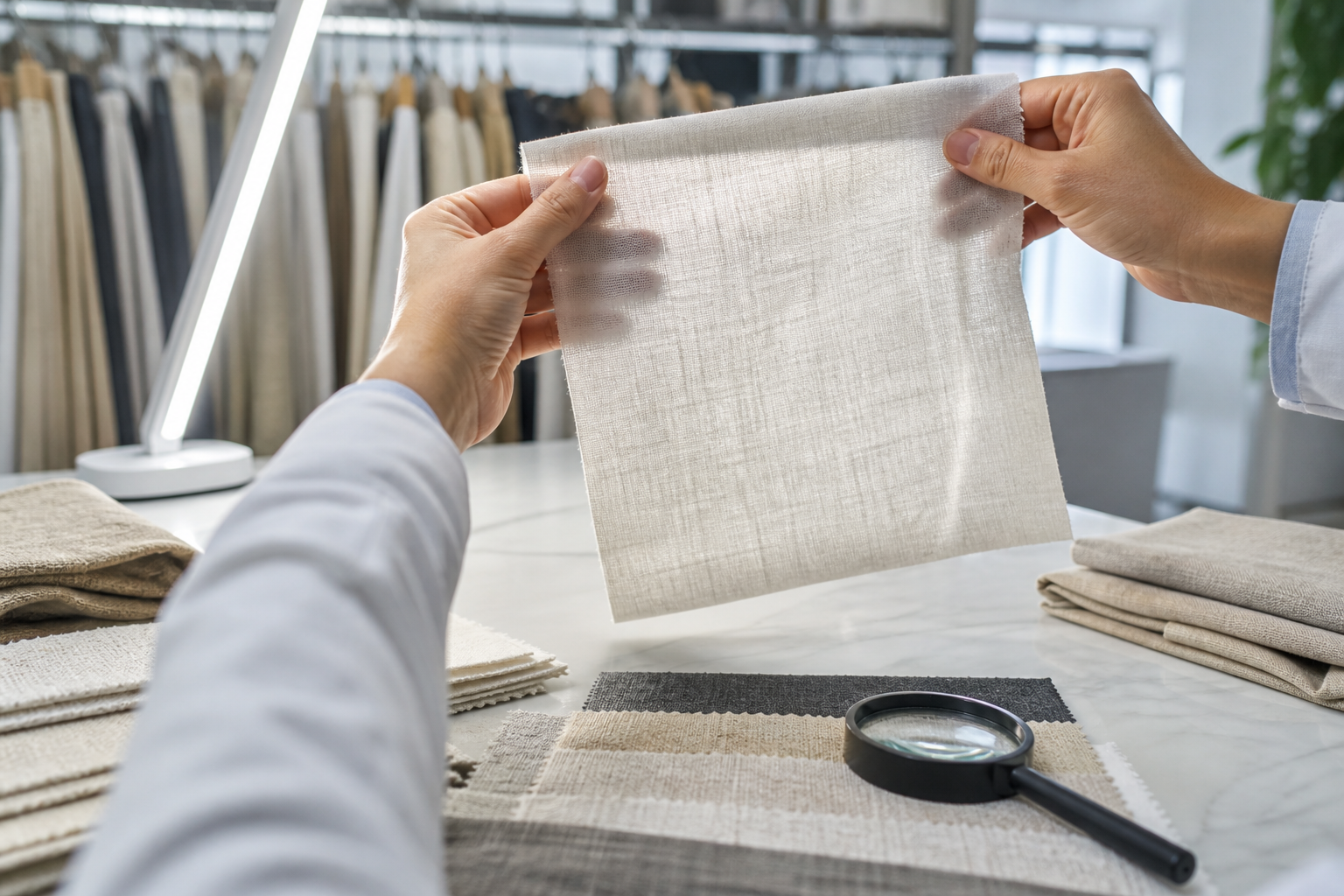
- Read the label. Check fiber content — the flax percentage tells you more than the word “linen.”
- Feel the fabric. Quality linen is cool, dense, and softens in your hand; imitation feels slick, stiff, or plastic-like.
- Hold it to the light. A dense, even weave with natural slubs signals real flax; a see-through or fuzzy weave does not.
- Inspect the hem. Check mitered corners, stitch density, and loose threads.
- Wash a sample. Wash one napkin before bulk ordering — check shrinkage, color bleed, and how the fabric feels after drying.
8. Price Traps and Buying Tips
- “Linen” without a fiber spec. If the listing does not state flax content, assume it is not real linen.
- Fake weight claims. Verify gsm with a physical sample rather than trusting a number.
- Unwashed linen. Some sellers ship stiff, unwashed linen that shrinks dramatically on first wash — confirm pre-washed/pre-shrunk.
- Color bleed. Deep-dyed linen can bleed; ask for colorfastness ratings in writing.
- Order samples. For any linen purchase, a sample is not optional — it is the only way to verify quality.
Final Thoughts
A good linen napkin is an investment in feel, longevity, and the impression your table makes. Once you know how to check fiber content, weight, weave, hem, color, and wash behavior, the difference between real quality and cheap imitation becomes obvious in minutes. Check before you order, and your linen will keep looking better with every wash.
We manufacture linen and linen-blend napkins, tablecloths, and runners in our own factory — with real flax sourcing, proper pre-washing, and clean mitered finishing, plus custom sizes, colors, and embroidery. Contact us for samples, MOQs, and wholesale pricing.